

Ormolu Side Cabinet
When you look for an ormolu side cabinet, you encounter disciplined pieces from the nineteenth century that bring together figured woods and cast metal mounts.
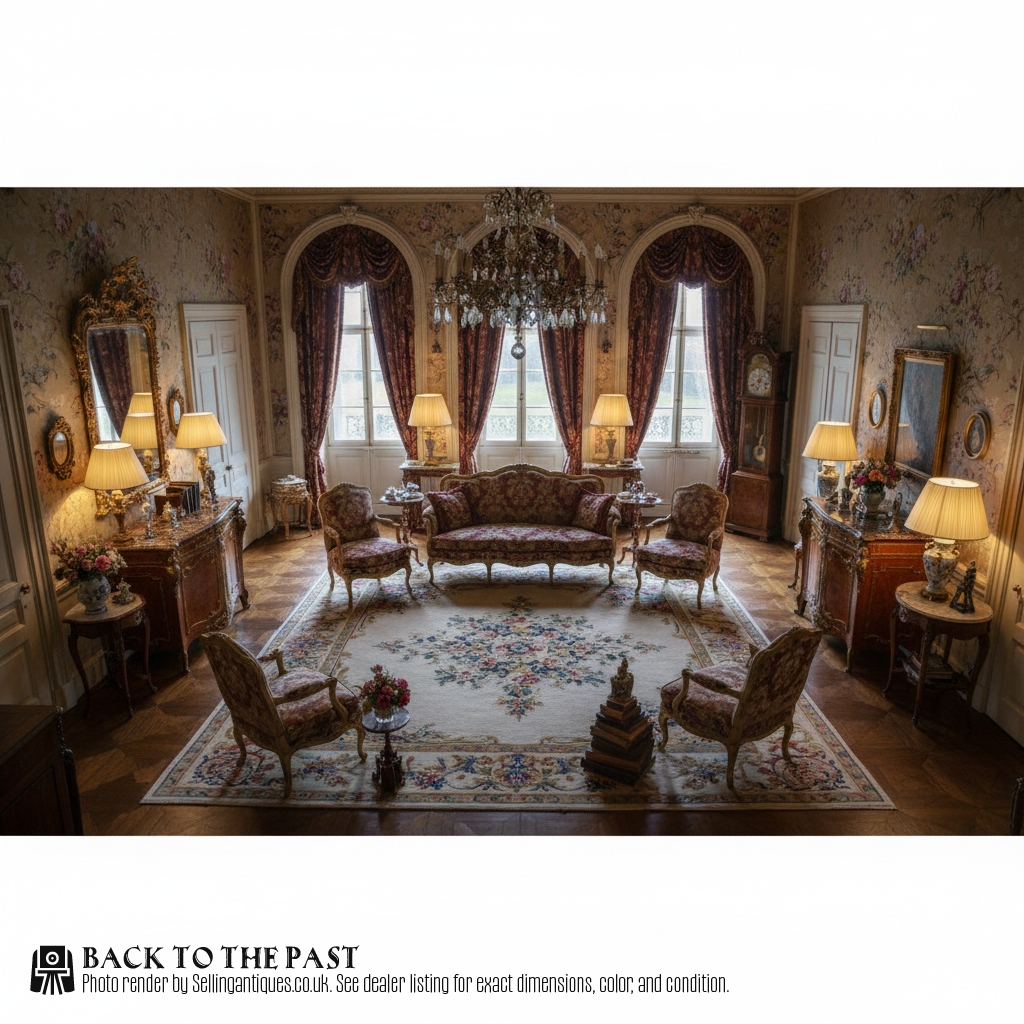
Ormolu Side Cabinet
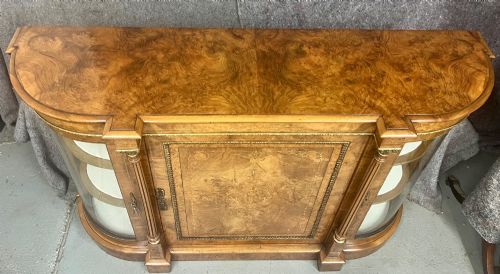
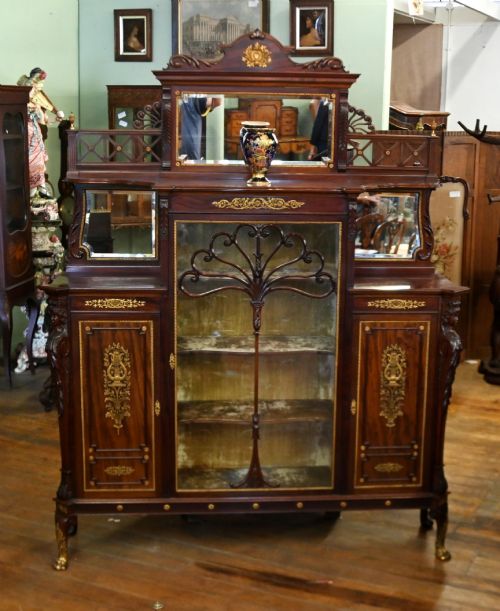
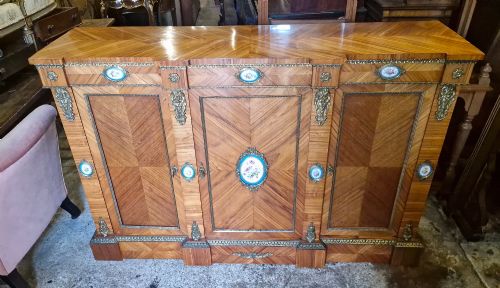
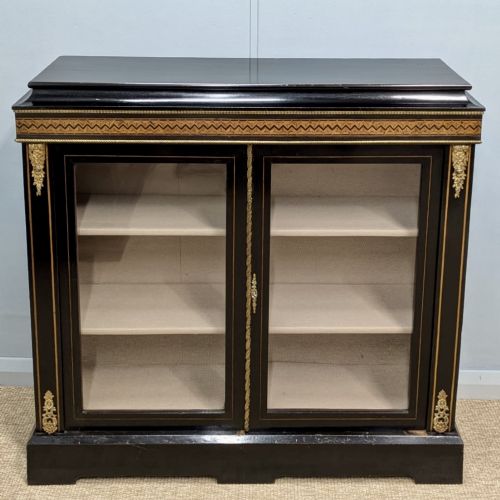
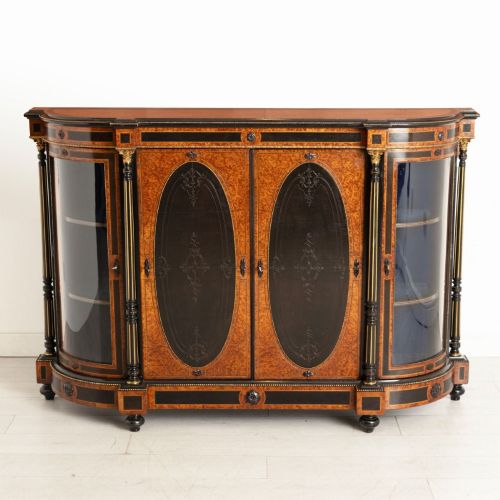
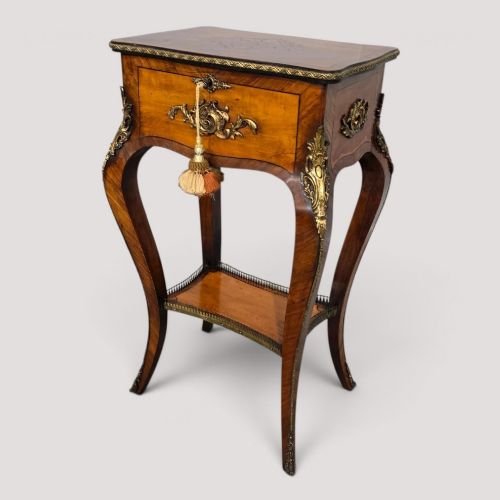
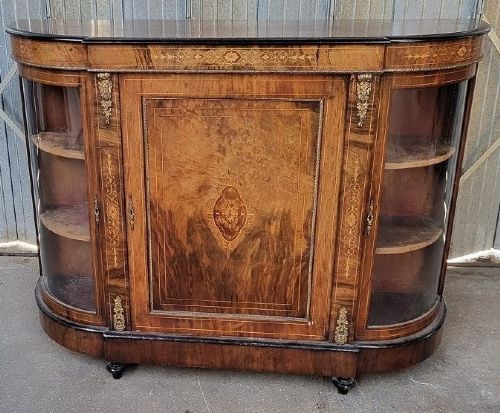
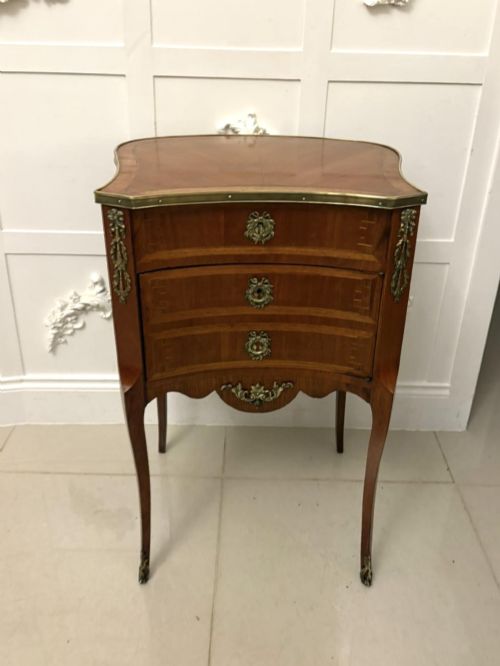
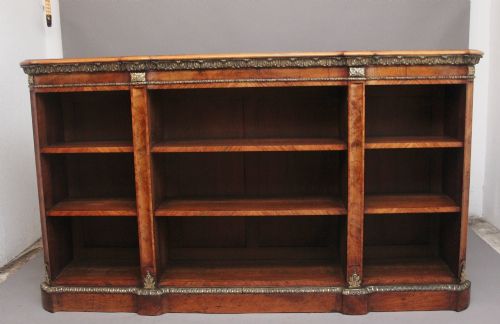
An ormolu side cabinet combines a substantial timber body with cast and gilt bronze mountings along doors, plinths and corners. These items span Victorian English workshops and French revival movements, taking the form of credenzas, pier cabinets, and compact bedside pieces.
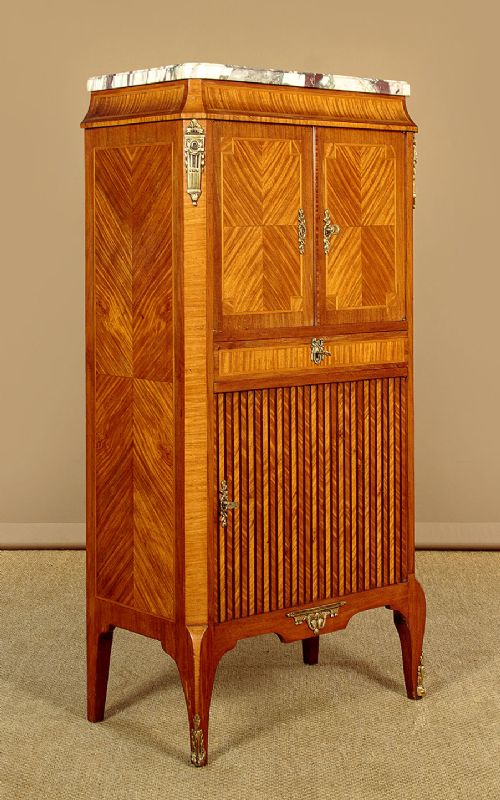
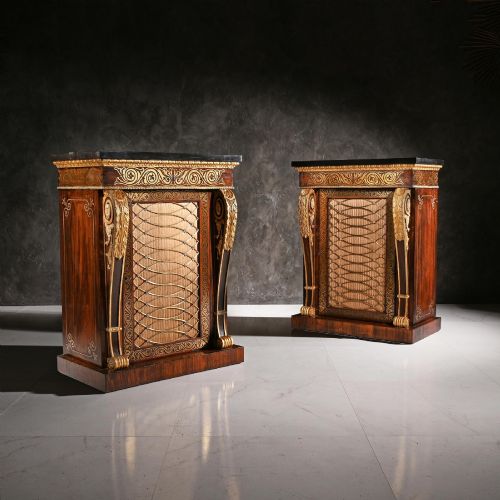
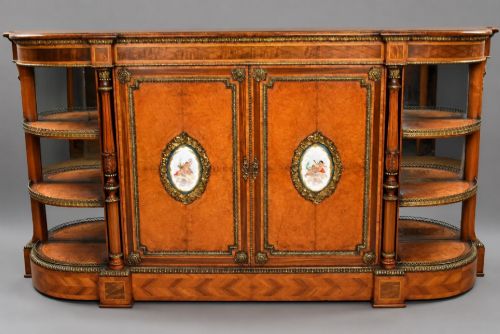
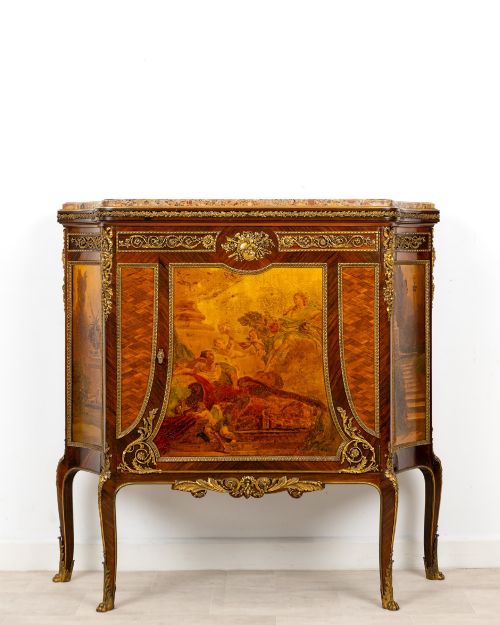
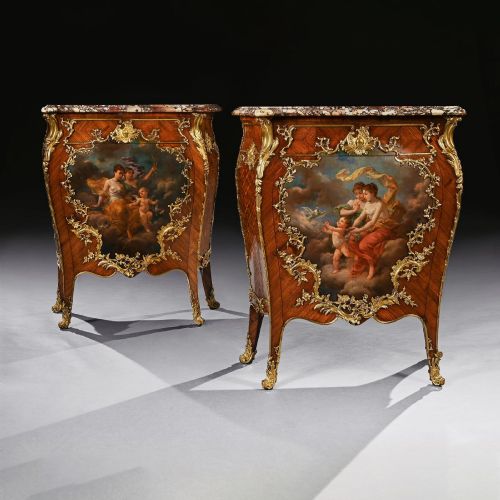
The English examples lean towards burr walnut and ebonised finishes inlaid with floral marquetry or fitted with porcelain plaques. French iterations favour kingwood and mahogany, frequently topped with marble slabs and shaped into serpentine or demi-lune profiles.
Buyers select these forms to anchor a room with functional surface area and enclosed display space. The integration of gilded bronze accents provides a structural framing that defines the silhouette of each piece.
Materials and construction methods
Makers built these cabinets using dense carcases of oak or pine veneered in figured timbers such as burr walnut, kingwood, rosewood, and ebonised fruitwood. Marquetry panels utilise contrasting veneers cut by hand to form geometric or botanical motifs across doors and drawer fronts.
The ormolu decoration consists of cast brass or bronze finished with a mercury-gilding technique or a later electroplated gold wash. These mounts are secured to the timber using small threaded pins and brass screws positioned discreetly through the casting.
Marble tops on French pieces were slabbed, shaped to follow the serpentine or demi-lune contours of the carcase, and polished to a smooth finish. Glazed doors utilise individual wooden glazing bars to hold shaped glass panes within the main frame.
Ormolu Side Cabinet Retail Price Guide 2026
Typical asking prices for ormolu side cabinet among the pieces listed under this phrase on Sellingantiques today, from the lower quarter to the upper quarter. They describe what is for sale here now, not the wider market.
Listings feature walnut, kingwood, rosewood, and mahogany cabinets, alongside marble tops and cast ormolu mounts dating from the Regency era through the nineteenth-century Victorian period and into the 1930s.
Distinctions in construction and design
The definition and depth of the ormolu casting separate standard production from finer work. Superior mounts display crisp hand-chasing after casting, which sharpens foliage and scrollwork details, whereas lesser examples remain soft and flat.
The selection and book-matching of timber veneers govern the visual harmony of the surface. Master cabinetmakers aligned grain patterns across multiple doors and drawers to create symmetrical reflections, while simpler pieces employ random patching.
Internal fitting and structural integrity reveal the standard of the workshop. Secondary timbers like solid oak drawer linings, tight door seating, and original brass locks distinguish superior builds from later modifications.
Johnstone and Jeanes·François Linke·Gillows·Edward Holmes Baldock·E. Kahn
The Ormolu Side Cabinet Glossary
- Ormolu
- Gilt bronze mounts applied to furniture. The technique involves treating brass or bronze with gold to create a bright metallic finish that resists tarnishing.
- Credenza
- A large formal side cabinet featuring a central cupboard flanked by curved glazed display sections. This form frequently incorporates porcelain plaques and extensive marquetry.
- Pier Cabinet
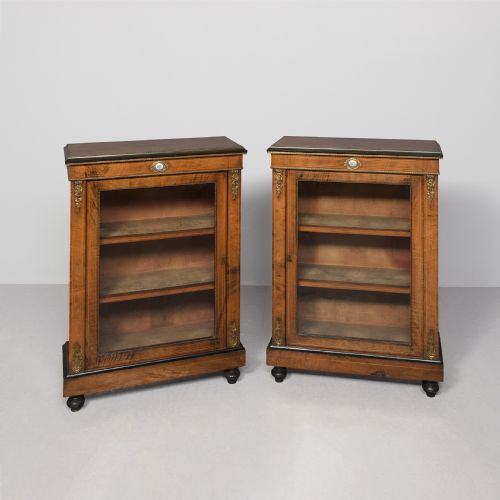
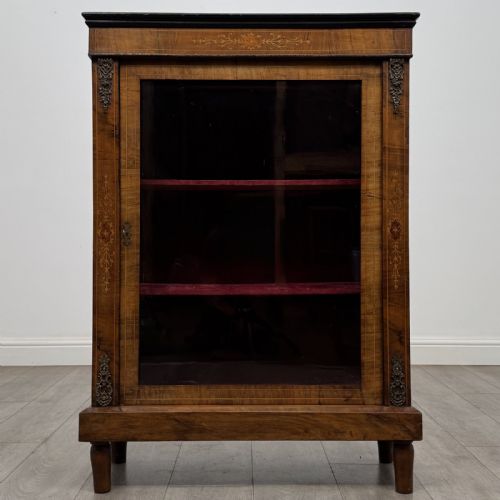
- A narrow upright display cabinet designed to fit wall spaces between windows. They usually feature a single glazed door enclosing tiered wooden shelves.
- Marquetry
- Inlaid wood veneers assembled into pictorial or decorative patterns. Artisans cut contrasting pieces of timber and fit them together before gluing them to the carcase.
- Vernis Martin
- A European lacquer technique simulating Asian japanning. It produces a glossy, translucent finish often decorated with figures or landscapes over a coloured ground.
- Demi-Lune
- Half-moon or semicircular in plan. This shape appears frequently on the front profiles of French commodes and side cabinets.
Ormolu Side Cabinet: Frequently Asked Questions
What rooms suit a pier cabinet?
Pier cabinets function well in reception rooms and hallways where floor space is restricted. Their narrow depth allows them to sit against flat wall expanses without obstructing movement.
They provide display capacity for small ceramics or glass collections behind glazed doors. The flat upper surface also accommodates lighting or decorative objects.
How do English and French cabinets differ?
English Victorian examples often utilise burr walnut with ebonised mouldings and porcelain plaque inserts. Their structural lines tend to be rectilinear with balanced cupboard layouts.
French pieces from equivalent periods frequently employ kingwood veneers, marble tops, and serpentine contours. Their ormolu mounts are often more abundant and fluid in their asymmetry.
What is a credenza used for?
A credenza serves as a low storage and display unit traditionally placed against a dining room or drawing room wall. The central section usually conceals shelving for tableware or documents.
Flanking glass doors allow for the exhibition of decorative objects while protecting them from dust. The broad top surface offers space for serving items or lamps.