



Sevres Plaque Cabinet
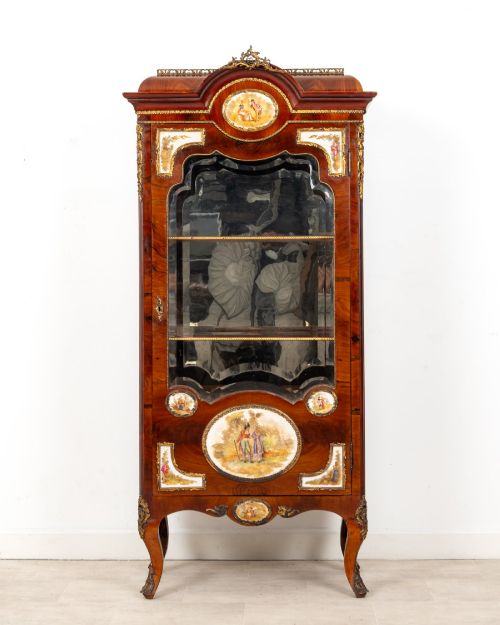
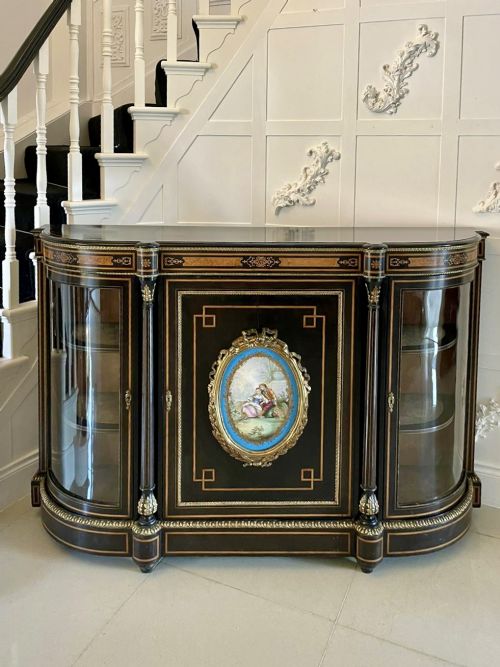
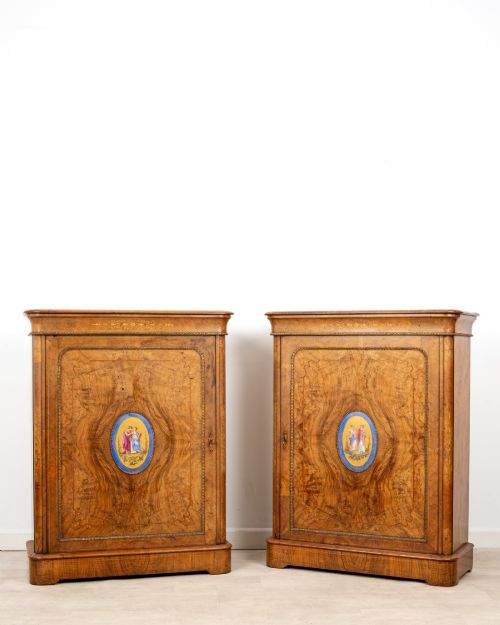
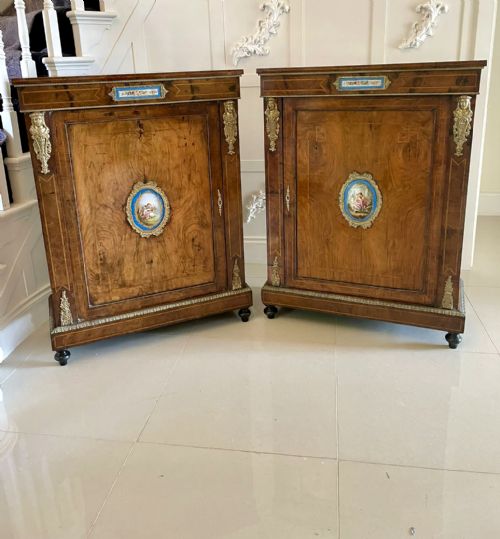
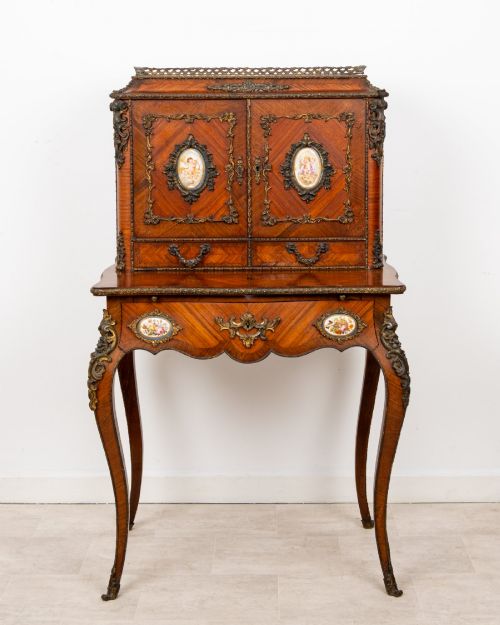
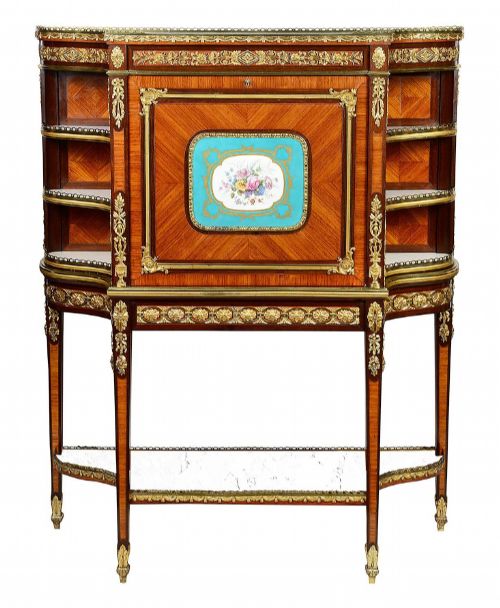
These sevres plaque cabinet items are decorative Victorian display pieces featuring hand-painted porcelain set into rich timber frames, prized for their classic French revival aesthetic.
What a sevres plaque cabinet is
When you search for a sevres plaque cabinet, you are looking at Victorian display furniture designed to showcase ceramics alongside decorative porcelain plaques. These pieces incorporate porcelain roundels or panels directly into the timber structure, often drawing on Louis XV Revival and Rococo Revival styles.
The versions you are most likely to meet on this page include pier cabinets and credenzas dating from 1880 and the wider nineteenth century. These items originate from both French and English workshops, taking the form of freestanding display cabinets, sideboards, and wall-hung cabinets.
How they were made
Maker workshops built these cabinets using timber frames of ebonised wood, kingwood, burr walnut, and tulipwood. Ormolu mounts and brass details were cast and applied to accentuate the structural lines and frame the porcelain plaques.
Glass panels were fitted to doors and sides for display purposes, while glazed porcelain plaques were inset into the wood body. The construction relies on nineteenth-century cabinet-making techniques suited to housing delicate ceramics within heavy furniture.
Retail Price Guide 2026
Typical UK retail prices for sevres plaque cabinet, calculated from the Sellingantiques database of over a million retail prices indexed since 2003. This retail price guide relies exclusively on Sellingantiques data; no external sources or auction records are used, so the figures do not describe the wider market.
Listings include items from 1880 and the nineteenth century, utilising porcelain, glass, ebonised wood, brass, ormolu, kingwood, burr walnut, and tulipwood.
What varies in quality
The distinction between standard examples and top-tier pieces lies in the refinement of the timber veneers and the intricacy of the cast ormolu mounts. Finer cabinets display balanced proportions, select burr walnut or kingwood grains, and crisper chasing on the metal mounts.
The quality of the porcelain plaques themselves dictates the upper range of these cabinets, marked by detailed hand-painted scenes rather than simpler decorative motifs. Matching pairs and integrated mirror backs also represent more ambitious original commissions.
Town and Emanuel
The Sevres Plaque Cabinet Glossary
- Ormolu
- Gilded bronze applied as decorative mounts on furniture. It provides bright metallic contrast against dark woods.
- Pier cabinet
- A tall, narrow cabinet designed to stand against a wall pier between windows. These pieces often feature glass doors and porcelain insets.
- Credenza
- A sideboard or low cabinet used for display and storage. Nineteenth-century versions frequently incorporate porcelain plaques.
- Kingwood
- A dense, heavily figured timber used in fine cabinet-making. It appears frequently in French revival furniture of this period.
Frequently Asked Questions
Where were these cabinets placed originally?
These cabinets stood in formal Victorian reception rooms and drawing rooms where guests gathered. Pier cabinets specifically occupied the narrow wall spaces between large windows.
Larger credenzas and sideboards were positioned against main dining room or parlour walls to hold decorative items and serve food.
How do I care for the wood and porcelain?
Dust the timber surfaces regularly with a soft, dry cloth to prevent dirt accumulation. Avoid modern silicone polishes which can damage nineteenth-century finishes.
Clean the porcelain plaques gently with a dry or barely damp cloth, taking care not to wet the surrounding wood or loosening the ormolu mounts.
What styles influence these cabinets?
Victorian cabinet-makers drew heavily on French eighteenth-century designs, specifically Louis XV and Rococo revival styles. These aesthetics feature curved lines, floral motifs, and ornate gilt mounts.
English interpretations often adapted these French decorative elements into more restrained freestanding or wall-hung formats.
How do I identify a nineteenth-century piece?
Examine the timber construction, carcass materials, and hand-cut joinery typical of the period. The presence of ebonised wood, burr walnut, and kingwood points directly to Victorian workshop practices.
Check for authentic ormolu casting techniques and period hardware that match the 1880 era and nineteenth-century manufacturing standards.