
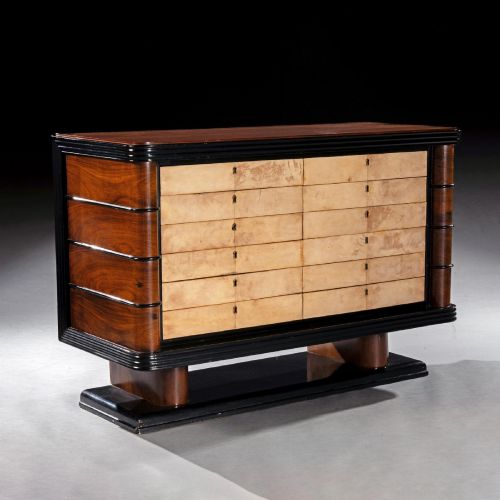
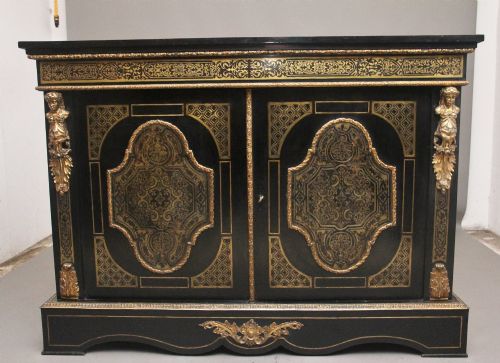
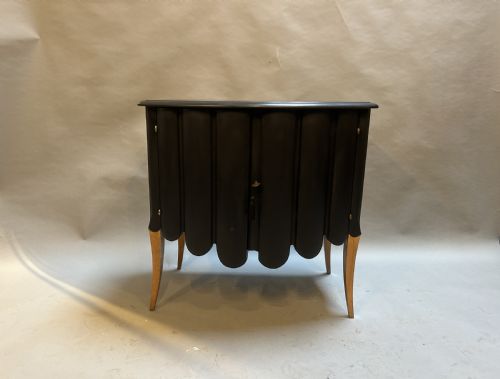
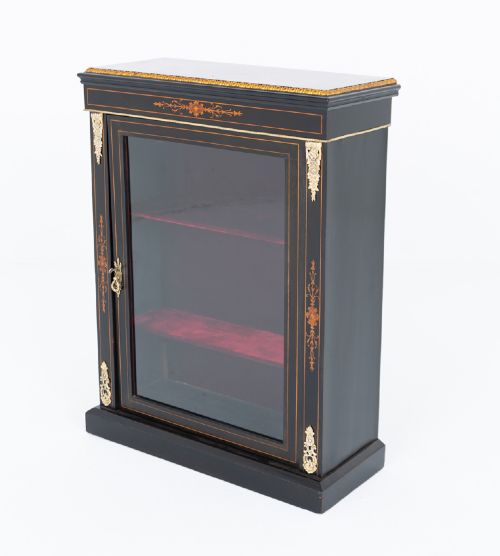
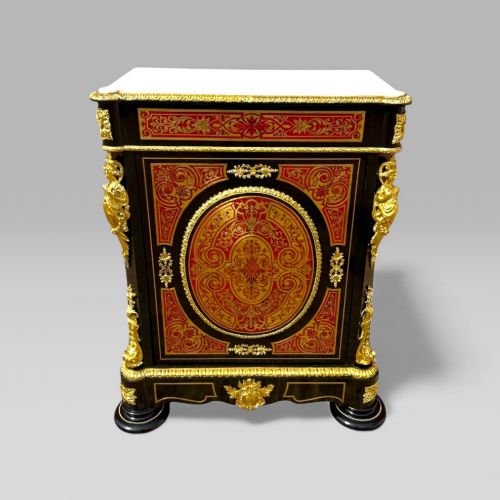


French Ebonised Credenza
A french ebonised credenza brings dark, polished elegance and striking gilt mounts to a grand interior, offering both display and storage.
French Ebonised Credenza
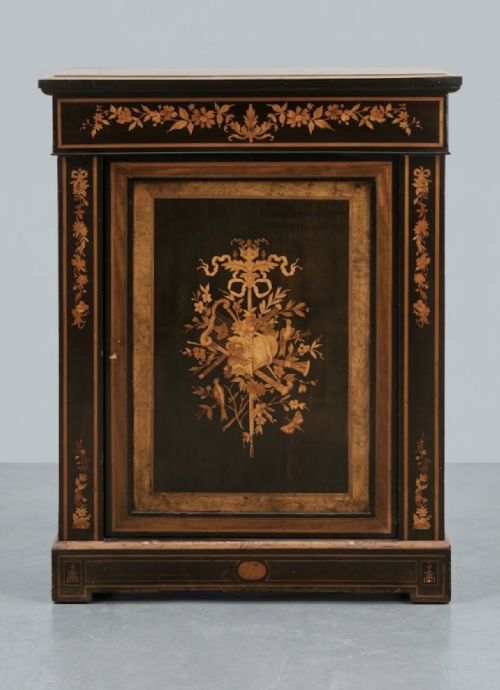
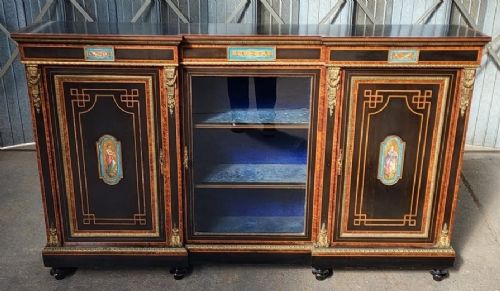
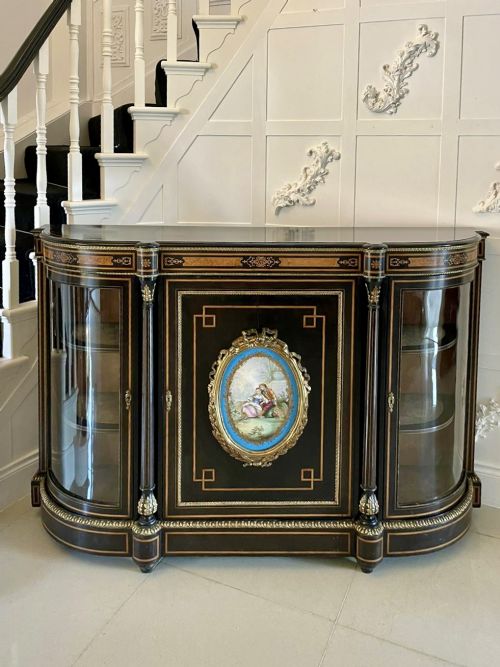
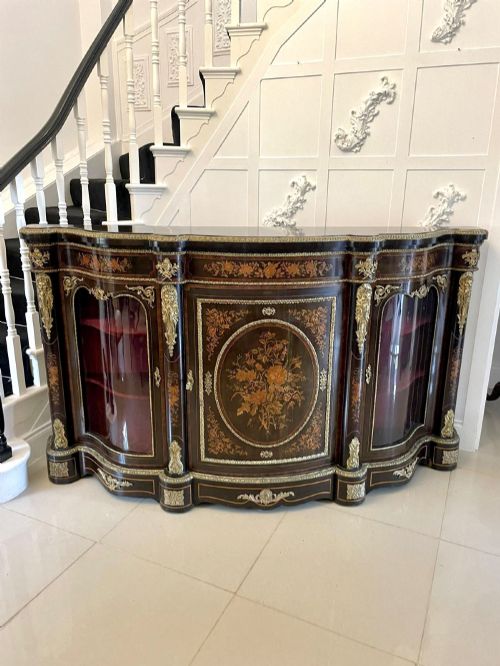
A french ebonised credenza is a low, substantial cabinet designed for formal reception rooms, frequently combining glazed central display sections with side cupboards. These pieces predominantly date from the nineteenth century, aligning with Victorian and Napoleon III aesthetics.
The selection here encompasses side cabinets, pier cabinets, and serpentine credenzas. Alongside standard ebonised wood, variants incorporate burl walnut, amboyna, and rosewood.
Originating largely from nineteenth century workshops, these items serve as both functional storage units and decorative centerpieces. Buyers encounter serpentine fronts, marble tops, and glazed doors designed to showcase ceramics and silver.
Construction and Materials
The method relies on staining hardwood to imitate ebony, providing a deep black finish that contrasts sharply with applied metal. Carcass construction utilises solid timbers overlaid with veneers such as walnut or amboyna.
Decoration incorporates intricate marquetry, brass inlay, and tortoiseshell work known as boulle. Cast ormolu mounts and gilt bronze frame the doors, panels, and corners, adding structural definition and ornamental detail.
Marble tops, often shaped in serpentine or demi-lune profiles, sit atop the wooden carcass. Porcelain plaques, including Sevres style ceramics, are frequently integrated into the frieze or doors alongside glazed viewing panels.
Tortoiseshell inlay catches candlelight, glowing with amber warmth across dark ebonised panels during evening gatherings.
Assessing Quality
Quality reveals itself in the crispness of the ormolu mounts and the precision of the marquetry inlay. Finer examples display hand-chased gilt bronze rather than cast metal with soft definition.
The depth and consistency of the ebonised finish indicate superior workshop standards. Timber selection matters, with denser underlying woods and rich veneers like tortoiseshell or amboyna marking out ambitious pieces.
Structural integrity of the serpentine fronts and the quality of the fitted marble tops distinguish standard production from exceptional cabinet work. Original porcelain plaques and intact glazing elevate the standing of the piece.
The French Ebonised Credenza Glossary
- Ebonised
- Wood treated to resemble ebony through staining or painting. This process creates a dark, uniform surface popular in nineteenth century furniture.
- Credenza
- A low dining or reception room cabinet used for storage and display. These items often feature a central door flanked by curved glass cabinets.
- Ormolu
- Gilt bronze mounts applied to furniture for decoration. The technique involves treating metal with a mercury and gold amalgam.
- Boulle
- Marquetry work combining brass and tortoiseshell. This decorative style is named after the French cabinetmaker André Charles Boulle.
- Marquetry
- Patterned wood veneers applied to a furniture carcass. Artisans use contrasting timbers and organic materials to form floral or geometric designs.
- Pietra Dura
- Inlay work utilising polished, coloured stones. Hardstones such as lapis lazuli or marble form pictorial or geometric panels.
French Ebonised Credenza: Frequently Asked Questions
What is a french ebonised credenza?
A french ebonised credenza is a nineteenth century low cabinet featuring a dark, polished finish and ornamental metal mounts. These items were built for formal reception rooms to display ceramics and store household valuables.
They combine wooden carcasses with glass panels, marble tops, and intricate marquetry. The form bridges decorative display and practical storage.
How do I identify Napoleon III pieces?
Napoleon III pieces often feature extensive boullework, combining brass and tortoiseshell inlay on an ebonised surface. They showcase elaborate ormolu mounts and curved serpentine silhouettes.
These items reflect the revival of earlier French royal styles during the mid to late nineteenth century. Their decoration is typically denser and more theatrical than standard Victorian furniture.
Where should I place a credenza?
A credenza suits a dining room, hallway, or large living space where its low profile allows paintings or mirrors to hang above it. The flat marble or wooden top provides a surface for lamps and decorative objects.
Because these cabinets are deep and wide, they require adequate floor space away from heavy traffic. Placing them against a blank wall lets the silhouette and gilt mounts stand out.
Are marble tops original?
Marble tops on nineteenth century cabinets are generally original to the piece, cut to match the serpentine or straight contours of the wood. They provide a durable, heavy surface that anchors the structure.
Variations in marble colour and thickness correspond to the specific period and workshop origin. Edges are often bevelled or moulded to match the style of the base.
What is pier cabinet furniture?
A pier cabinet is a tall, narrow display unit designed to fit the wall space between windows. These pieces share materials and decorative traits with credenzas, including ebonised wood and ormolu mounts.
They feature single glazed doors for showcasing porcelain collections. Their compact footprint makes them useful for smaller rooms.