
Ebonised Sideboard Cabinet
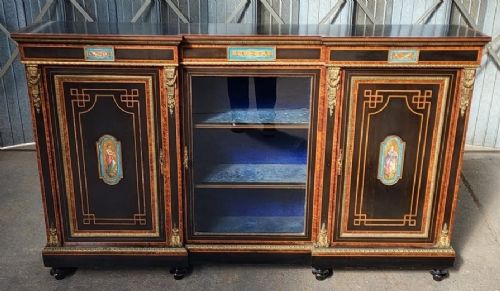
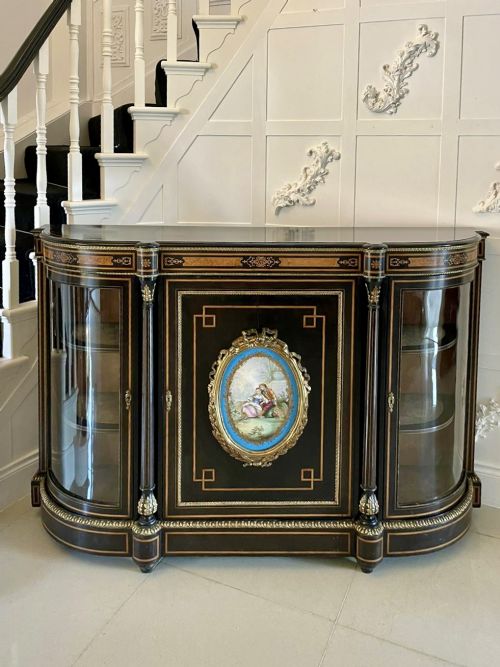
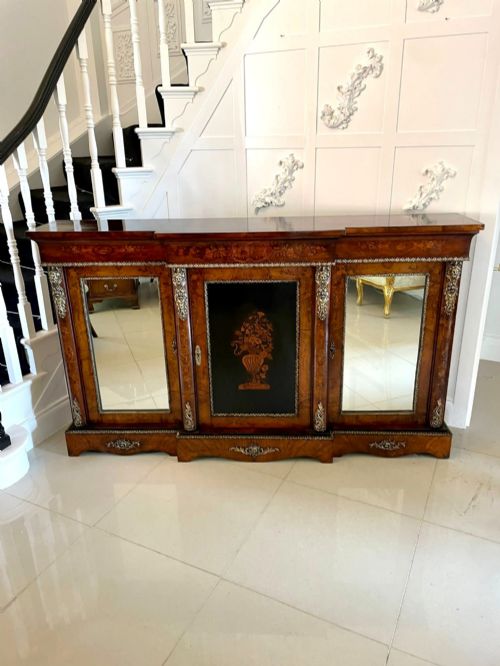
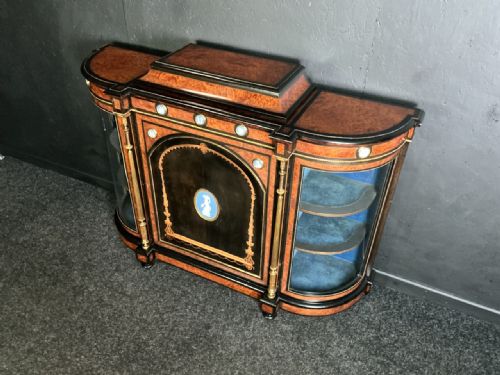
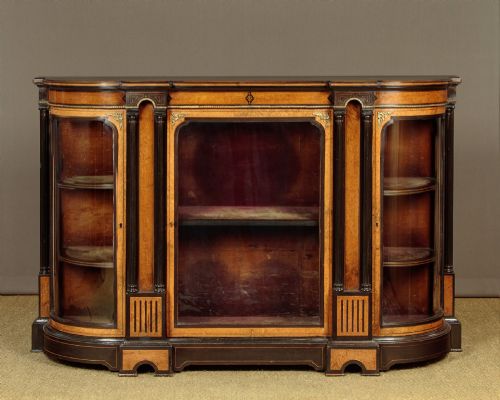
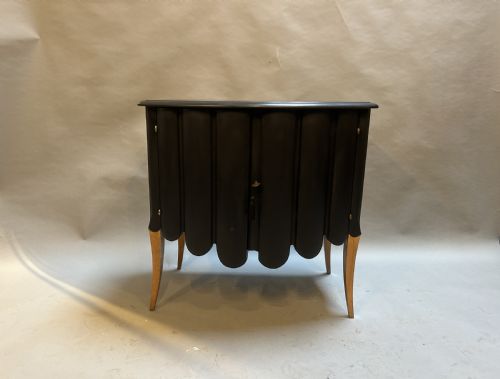
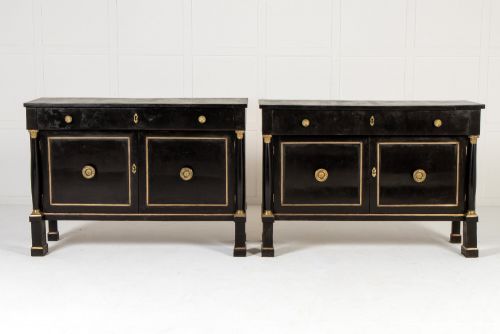
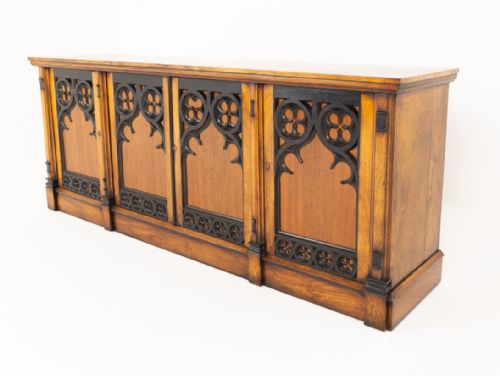
These ebonised sideboard cabinet examples bring together dark timber finishes, brass mounts and glass panels for formal display and storage.
Ebonised Sideboard Cabinet
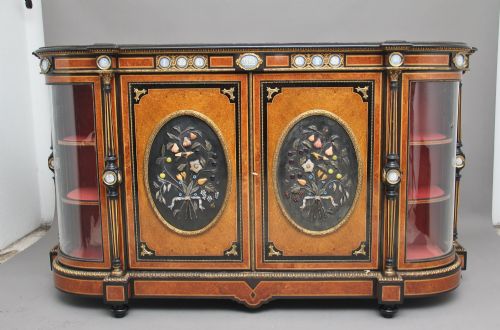
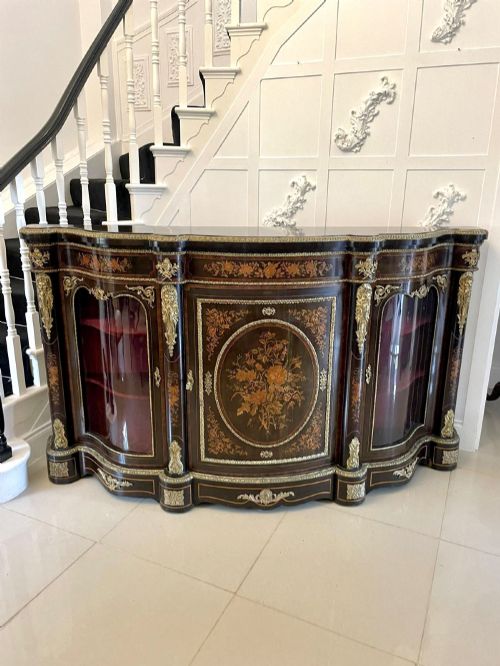
An ebonised sideboard cabinet search leads to dark timber storage furniture originating primarily from the Victorian and nineteenth-century periods, alongside French Napoleon III and Aesthetic Movement examples. These pieces combine closed cupboards with central display sections or glazed doors to hold glassware and decorative items.
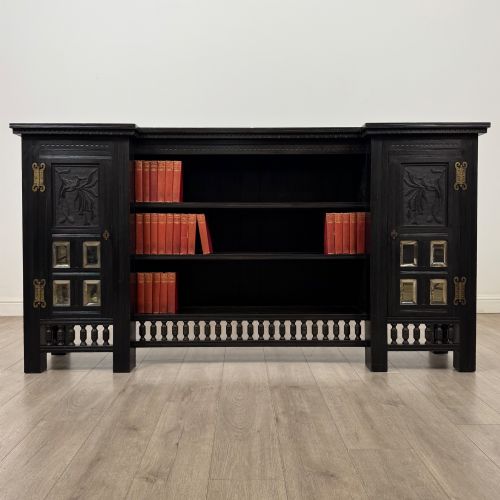
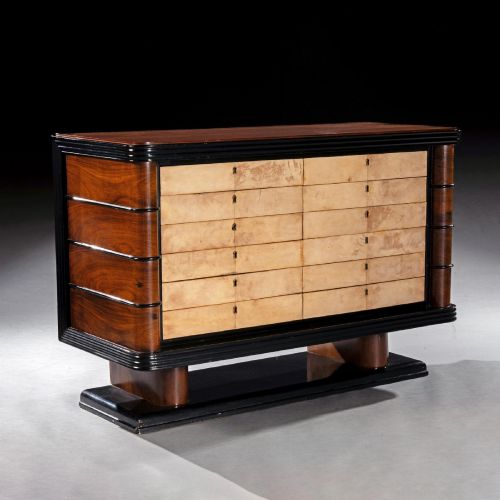
Buyers encounter credenzas, breakfront bookcases and side cabinets most frequently on this page. The designs draw on styles ranging from ornate marquetry to clean-lined Art Deco forms.
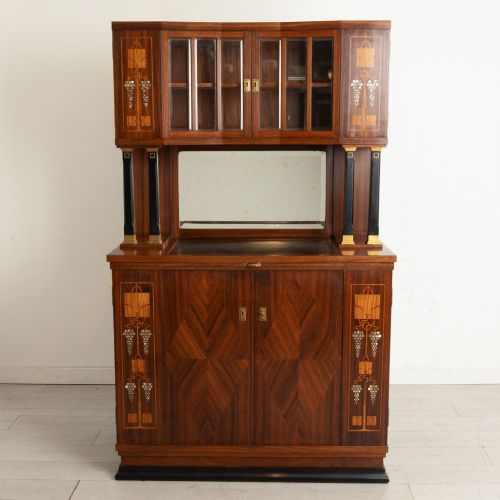
Origins span English workshops, French ateliers and Austrian studios, showing diverse regional interpretations of dark polished finishes.
How They Were Made
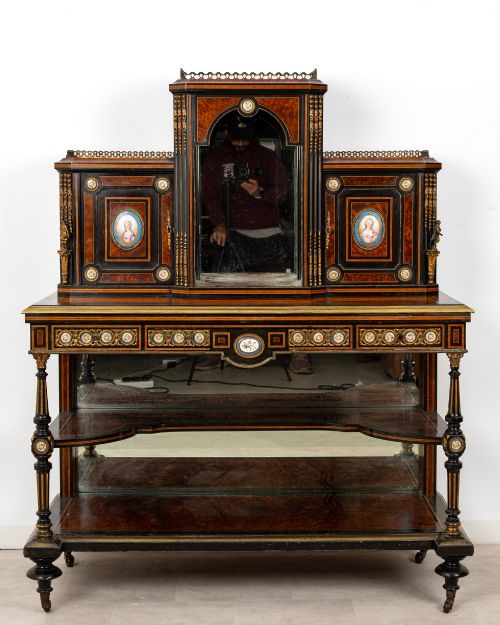
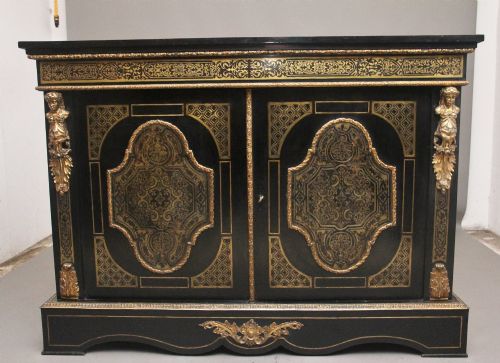
Cabinet makers used fruitwoods and pine treated with dark stain or polish to simulate solid ebony, often combining this dark ground with contrasting veneers like amboyna, burr walnut and rosewood. Surface decoration frequently incorporates floral marquetry, tortoiseshell and hand-cut brass boullework.
Structural enrichment relied on cast ormolu mounts, brass stringing and marble tops. Glazed doors utilised timber framing fitted with bevelled or flat glass plates to protect the interior contents.
Periods represented span the eighteenth century, the Victorian era, the Aesthetic Movement, the Napoleon III epoch and Art Deco.
What Varies in Quality
The standard of an ebonised sideboard cabinet depends on the precision of the cabinet work and the complexity of the surface ornamentation. Finer examples display meticulous hand-cut marquetry and crisp, securely fitted ormolu mounts rather than cast metal elements with softened detail.
Timber selection dictates the baseline quality, with dense hardwoods and well-figured burr veneers providing greater durability and visual depth than plain secondary woods.
August Ungethüm·Garnett And Sons·Gillow·Lamb Of Manchester
The Ebonised Sideboard Cabinet Glossary
- Ebonised
- Wood treated with stain or paint to imitate the dark, dense appearance of solid ebony. This finish gained popularity during the Victorian period for formal reception rooms.
- Ormolu
- Gilt bronze ornamentation applied to furniture corners, door frames and feet. Artisans chased the cast metal surfaces by hand to achieve crisp textural details.
- Boulle
- Marquetry technique employing tortoiseshell and brass inlaid in scroll patterns. The method takes its name from André-Charles Boulle, court cabinetmaker to Louis XIV.
- Marquetry
- Decorative veneer work forming pictures or geometric patterns using various wood types. Craftsmen cut thin sheets of timber together to ensure tight joints.
- Credenza
- A low cabinet featuring cupboards and sometimes glass-fronted side sections. Originally developed in Italy, the form evolved into a central piece of nineteenth-century drawing-room furniture.
Ebonised Sideboard Cabinet: Frequently Asked Questions
What is an ebonised sideboard cabinet used for?
These cabinets served primarily in Victorian and nineteenth-century dining rooms or formal drawing rooms to store table linen, silver and china. The central display sections also held prized decorative objects and ceramics.
Today, they function as focal storage pieces in living spaces and dining areas, offering surface space for lamps and decorative displays alongside enclosed shelving.
How do I identify a Victorian ebonised cabinet?
Victorian examples typically feature dark ebonised wood grounds combined with contrasting amboyna or burr walnut panels. Look for hand-cut floral marquetry, gilt bronze ormolu mounts, and glazed central doors.
Construction methods such as hand-cut dovetails on interior drawers and traditional timber framing help confirm nineteenth-century production dates.
Where were these cabinets made?
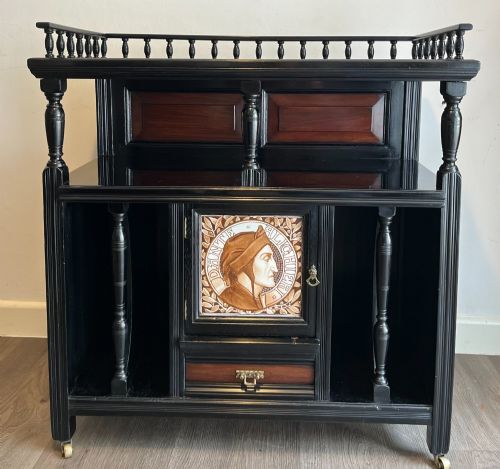
The pieces listed originate from English, French and Austrian workshops spanning the nineteenth and early twentieth centuries. French cabinets often exhibit Napoleon III styles with elaborate brass inlay, while English examples frequently reflect Aesthetic Movement design principles.
Regional variations appear in the choice of secondary timbers and the specific style of marquetry or metal mounts used by local cabinet makers.
How should I care for an ebonised finish?
Protect the dark polished surfaces by keeping cabinets away from direct sunlight and extreme temperature fluctuations, which can cause timber movement and veneer cracking. Dust regularly with a soft, dry cloth.
Avoid silicone-based polishes and excessive moisture, using professional conservation waxes sparingly when the timber requires nourishment.