


Brown Amboyna Cabinets
Brown amboyna cabinets bring rich, figured timber and striking presence to an interior, offering both display space and practical storage.
Brown Amboyna Cabinets
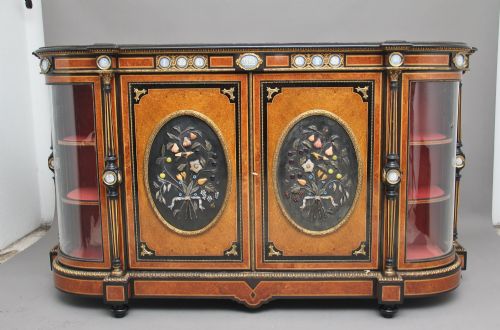
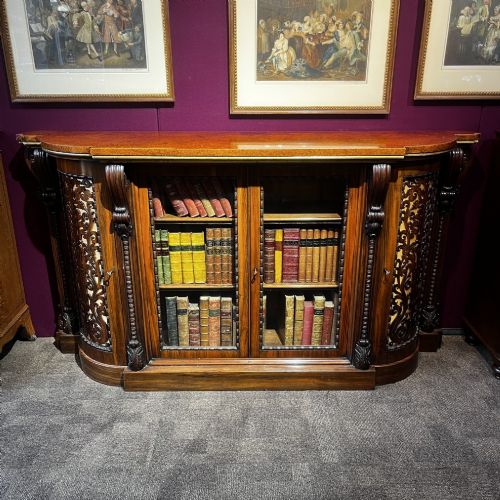
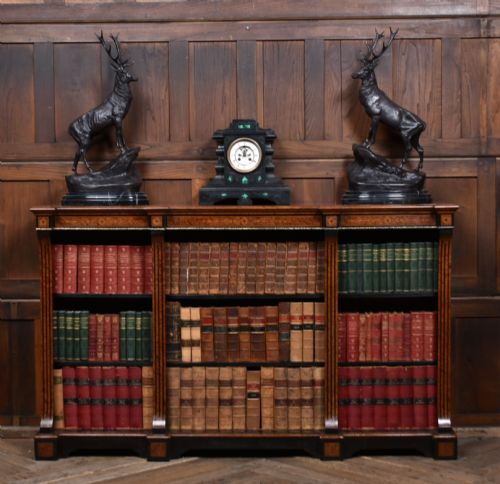
When you search for brown amboyna cabinets, you encounter a refined group of furniture pieces spanning several centuries, from the seventeenth century through to the art deco period. These items appear in various forms, including side cabinets, bookcases, credenzas, writing bureaux, and compact miniature chests of drawers.
The pieces on this page most commonly reflect Victorian and Regency design, alongside earlier William and Mary examples and twentieth-century French cocktail bar carts. Such forms combine display capabilities with enclosed storage, utilising rich tropical hardwoods to create focal points within a room.
How they were made
Cabinetmakers utilised amboyna wood and amboyna veneer for its intricate, swirling grain patterns, frequently applying these decorative veneers over secondary woods such as walnut. These surfaces are often paired with contrasting materials like ebonised timber and polished brass to accentuate the natural figuring of the wood.
Construction techniques range from traditional cabinet joinery on seventeenth-century pieces to specialised veneering methods seen on nineteenth-century sideboards and etageres. Metal mounts, glass panels, and brass gallery details complete the manufacture of these sophisticated storage items.
Listings feature items spanning the 17th, 19th, and 20th centuries, utilising amboyna, walnut, brass, and glass across various cabinet forms.
What varies in quality
The distinction between standard examples and the finest items rests upon the density and visual impact of the burr amboyna veneer chosen by the maker. Superior pieces exhibit deeply knotted, highly figured grain patterns that cover the surfaces evenly and harmonize with secondary timbers such as gonçalo alves or walnut.
Execution of secondary details, including crisp brass mounts, precise ebonising, and the balance of proportion across complex forms like side cabinets and secretaire abattants, defines the upper tier of quality. The integrity of the underlying construction and the preservation of the original polished finish further separate exceptional items from simpler productions.
The Brown Amboyna Cabinets Glossary
- Gonçalo Alves
- A dense exotic hardwood with distinct contrasting grain marks, often utilised alongside amboyna in high-status nineteenth-century pieces.
- Secretaire abattant
- A tall writing cabinet featuring a drop-front panel that conceals a fitted interior of small drawers and pigeonholes.
- Etagere
- An open tiered piece of furniture designed for the display of small decorative objects or books.
- Credenza
- A sophisticated low cabinet used for storage and display, frequently associated with Victorian and revival dining rooms.
Brown Amboyna Cabinets: Frequently Asked Questions
What periods do these cabinets come from?
The listings span from the seventeenth-century William and Mary period through Regency and Victorian eras, extending into twentieth-century art deco designs.
Each period imparts distinct proportions and decorative treatments to the amboyna timber and cabinetry.
How are amboyna cabinets used in a home?
These pieces serve as functional storage units, display surfaces, and focal points in living rooms, studies, and dining spaces.
Compact versions function as writing desks or side tables, while larger sideboards and bookcases accommodate books and tableware.
What materials accompany the amboyna veneer?
Cabinetmakers combined amboyna with walnut, gonçalo alves, and ebonised wood to create contrast and structural stability.
Brass hardware, glass panels, and metal mounts frequently appear on nineteenth-century and art deco examples.
How do you distinguish between different Victorian styles?
Early Victorian pieces often retain classical proportions with elaborate wood combinations, whereas late Victorian items reflect shifting revival tastes.
Examining the structural form and secondary woods helps clarify the specific decade of manufacture.