









Antique Advertising Cabinet
These antique advertising cabinets are commercial display pieces that bring authentic retail history and rich timber character straight into a room.
Antique Advertising Cabinet
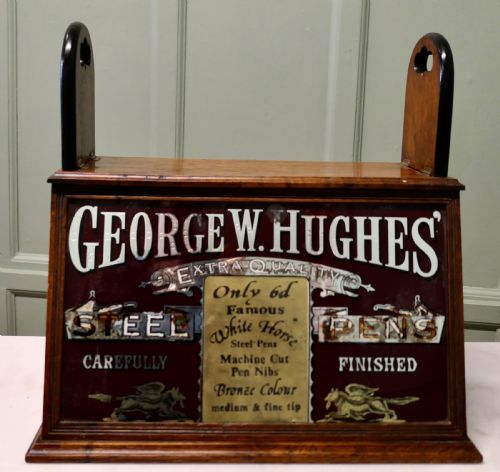
An antique advertising cabinet is a specialised commercial display unit built to showcase retail goods on shop counters and in tea rooms. These pieces emerged primarily during the Victorian and Edwardian eras, designed specifically to capture customer attention with painted brand lettering.
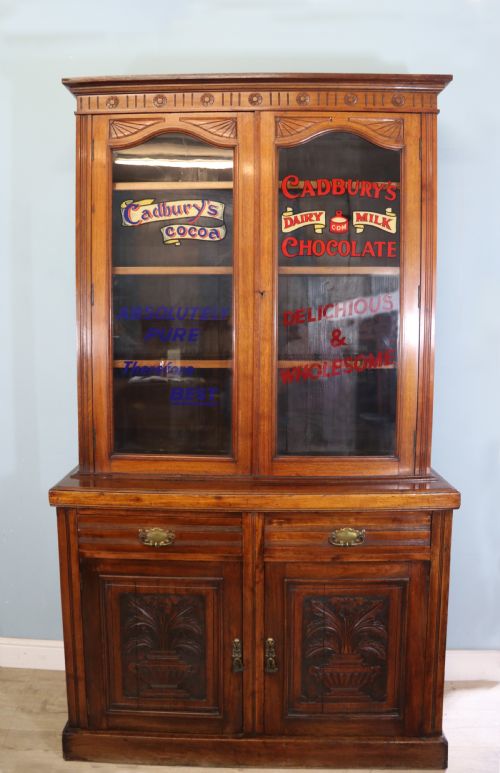
The versions most commonly met on this page take the form of glazed counter top shop display cabinets and wall-mounted units. They combine timber frames with glass viewing panels to protect merchandise while keeping it fully visible to buyers.
Makers constructed these cabinets using hardwoods such as mahogany, walnut, and various sturdy regional timbers to withstand heavy daily use in busy shops. Many pieces feature original hand sign-written advertising for renowned confectionery and tea brands like Fry's and Cadbury.
How they were made
Makers built these cabinets using solid hardwoods like mahogany and walnut, selected for their strength and fine grain under heavy commercial use. Frames often incorporated brass hardware, such as hinges and catches, alongside glass panels and occasionally mirrored backs to enhance interior light.
Surfaces received careful polishing to protect the timber, while branding relied on skilled hand sign-writing directly onto glass or wood components. Gold leaf accents sometimes highlighted lettering, ensuring the commercial message remained legible and striking in dim shop interiors.
Antique Advertising Cabinet Retail Price Guide 2026
Typical asking prices for advertising cabinet among the pieces listed under this phrase on Sellingantiques today, from the lower quarter to the upper quarter. They describe what is for sale here now, not the wider market.
This selection spans Victorian, Edwardian, and early twentieth-century periods, featuring American walnut, mahogany, and hardwood frames.
What varies in quality
The distinction between standard commercial cases and the finest examples rests largely on the preservation and artistry of the original branding. Cabinets retaining crisp, hand sign-written lettering for prominent brands command greater appreciation than plain or later repainted units.
Construction standards also set pieces apart, with superior examples utilising dense hardwoods like mahogany and walnut joined with precise cabinetry techniques. The integration of curved or bevelled glass panels and quality brass fittings further elevates a cabinet's architectural presence.
The Antique Advertising Cabinet Glossary
- Counter top
- A compact furniture form designed to sit directly upon a shop desk or sales counter. These units placed goods at eye level for waiting customers.
- Sign-written
- Lettering applied by hand using traditional sign-writing paintbrushes rather than printed paper labels. This technique ensured durability on busy retail surfaces.
- Glazed
- Fitted with glass panels to enclose the display area while maintaining visibility. It protected delicate stock from dust and handling.
- Hardwood
- Timber derived from broad-leaved trees such as mahogany and walnut. These dense woods provided the structural resilience required for commercial furniture.
Antique Advertising Cabinet: Frequently Asked Questions
What were antique advertising cabinets used for?
Shopkeepers utilised these glazed units on counters to display small consumer goods like chocolate, tea, and tobacco directly to customers. The prominent branding acted as an early form of point-of-sale marketing.
By keeping merchandise visible yet secure behind glass, retailers encouraged impulse purchases while protecting stock from handling and dust in busy commercial environments.
How do I date an advertising cabinet?
Dating relies on observing the timber types, construction methods, and the specific style of the lettering used on the cabinet. Victorian and Edwardian examples often display distinct hand sign-writing techniques and specific hardwood choices.
Examining the brass hardware, glass characteristics, and any remaining manufacturer details also helps place the piece within the nineteenth or early twentieth century.
Where can I place one at home?
These cabinets suit kitchen worktops, living room sideboards, or studies where their glazed doors can showcase small collections. Their compact counter top proportions make them versatile for styling in various rooms.
Placement should avoid direct sunlight to protect antique timber finishes and any original hand-painted lettering on the glass or wood.
Are the advertising signs original?
Many cabinets retain their original hand sign-written brand lettering applied during the Victorian or Edwardian periods for specific makers. This historic paintwork shows natural ageing consistent with commercial use over a century or more.
Careful inspection under natural light reveals the integration of the paint with the glass or timber substrate, confirming its period application.