


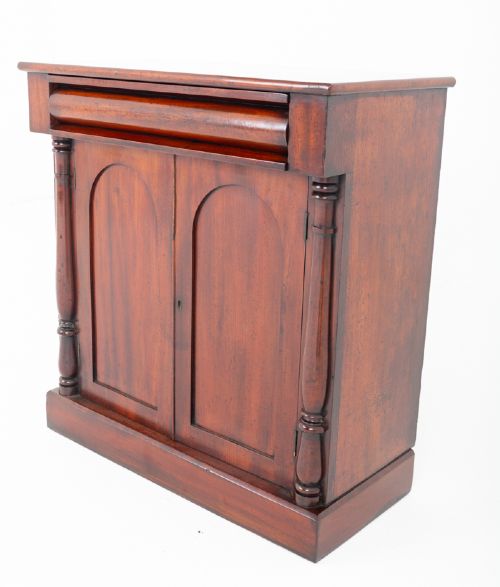
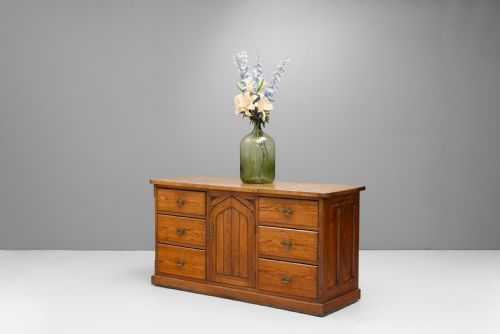
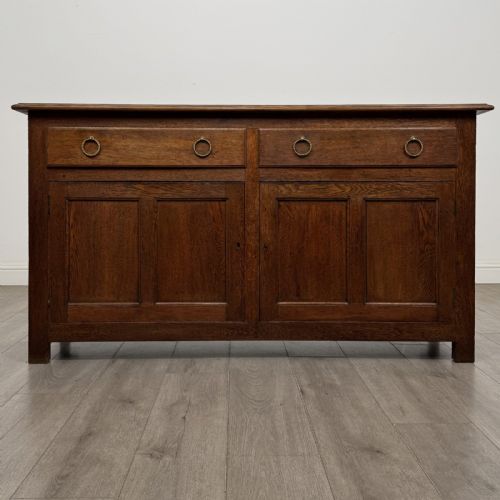
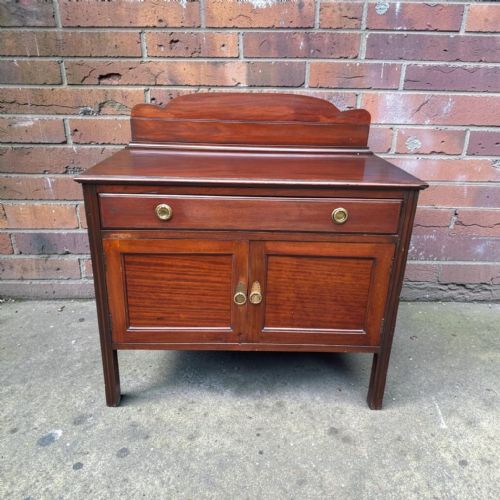
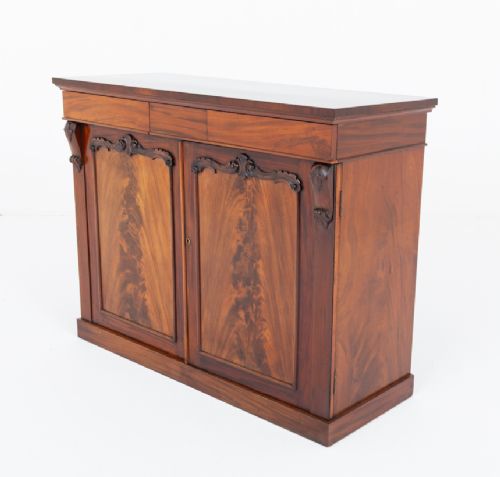
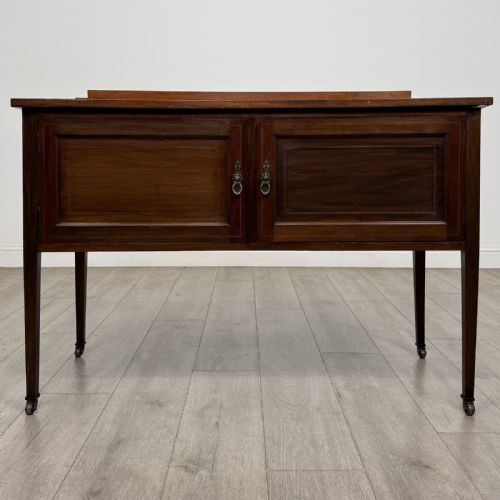
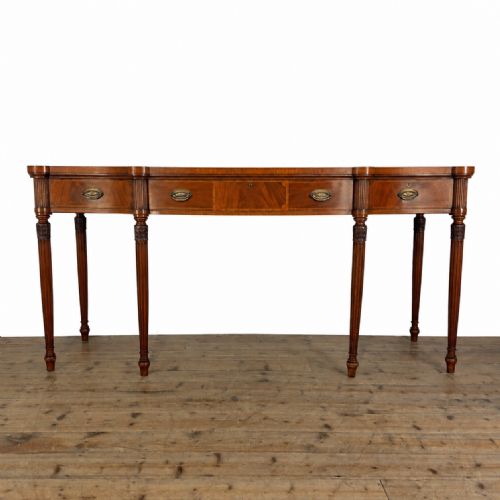
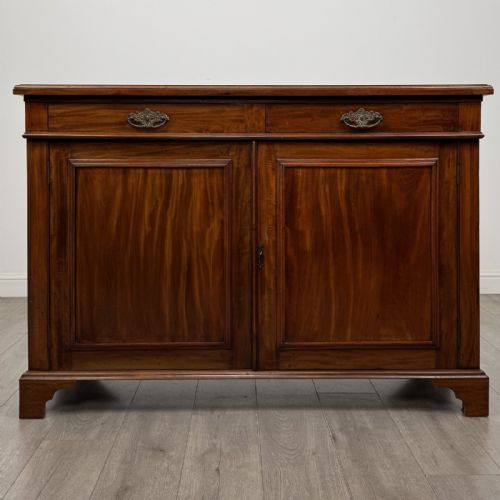
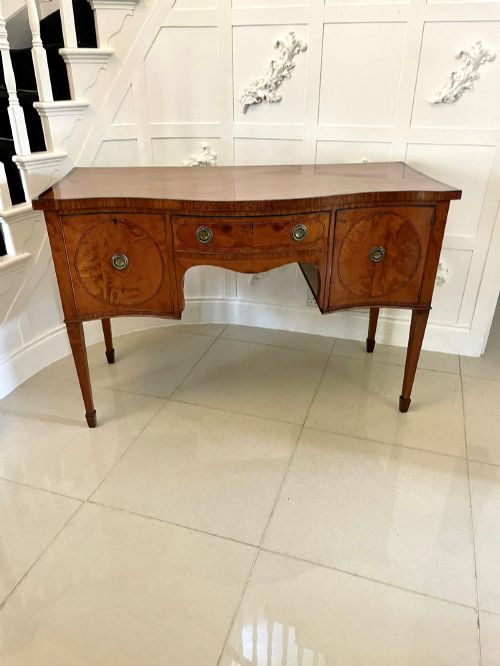
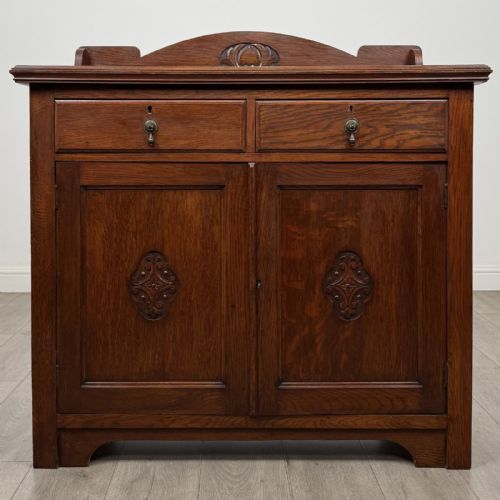
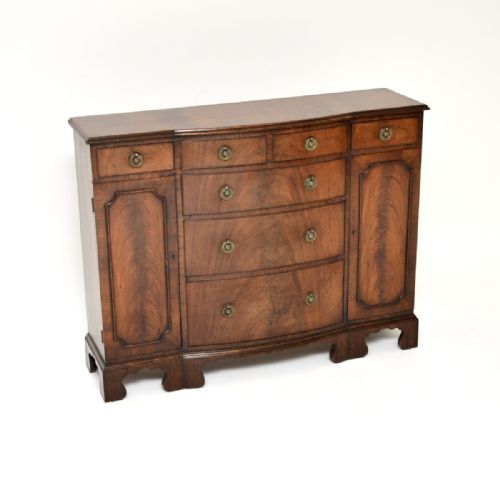
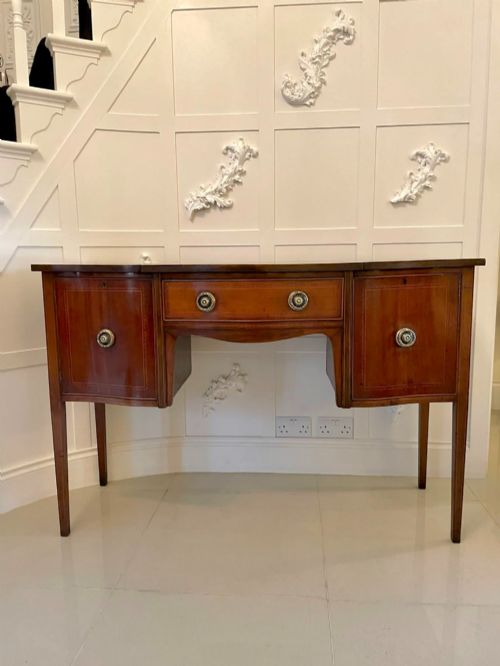
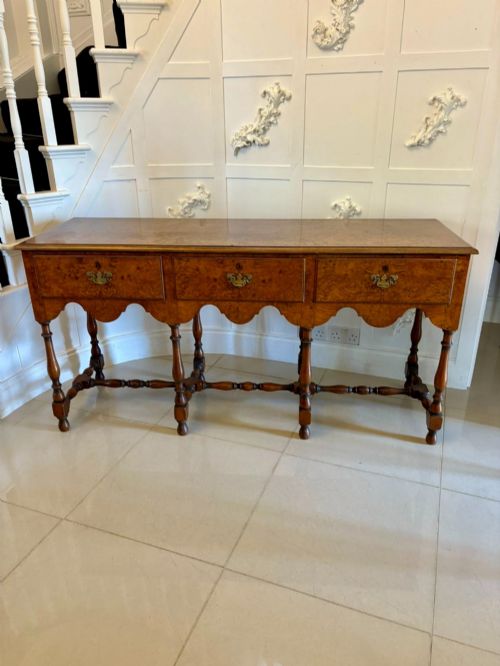
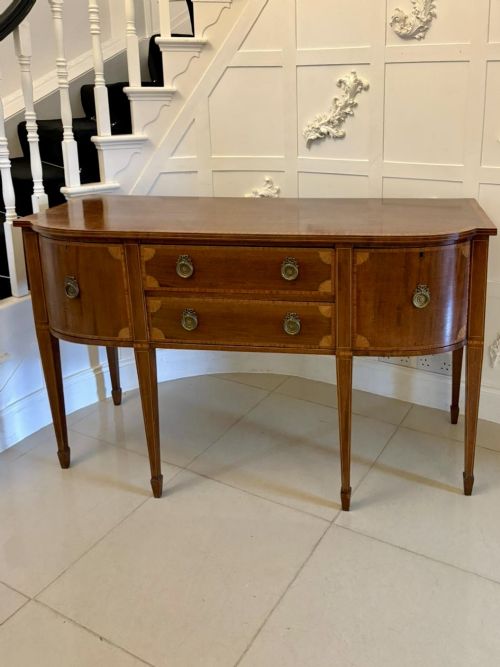
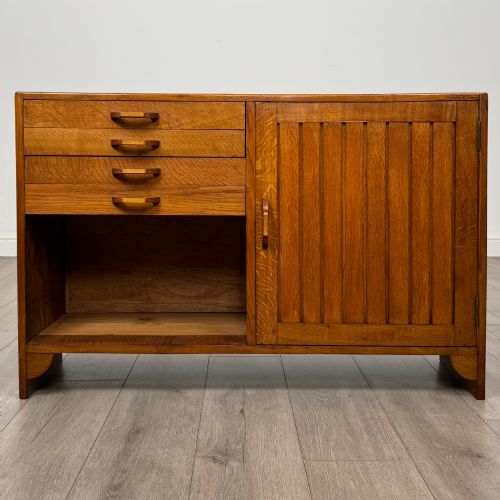
Antique Hallway Credenza
An antique hallway credenza anchors an entrance with substantial timber, period presence and useful surface space.
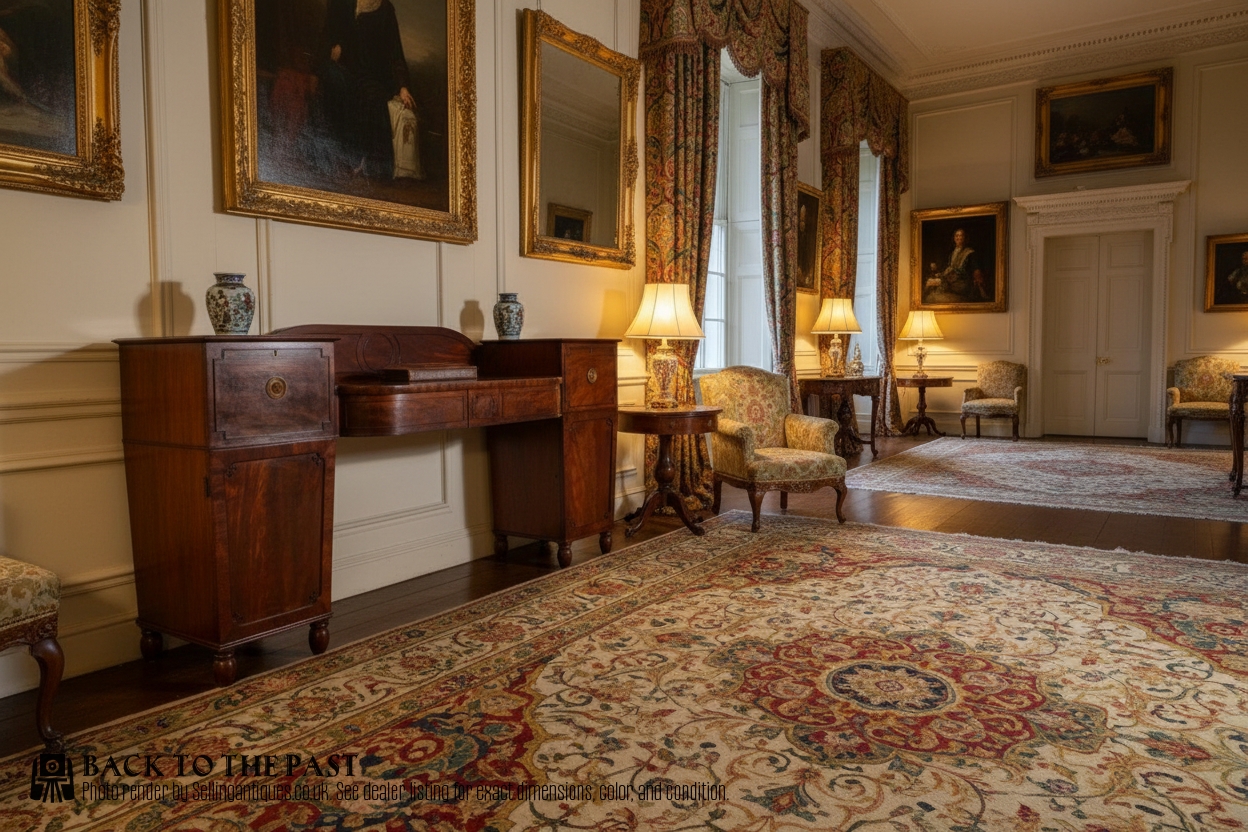
Antique Hallway Credenza
When searching for an antique hallway credenza, buyers encounter various low storage forms historically used for serving or display, predominantly represented here by sideboards, dresser bases, console tables and side cabinets.
The selection spans centuries of cabinetmaking, featuring pieces from the seventeenth, eighteenth, nineteenth and early twentieth centuries alongside specific revivals like Sheraton Revival and Georgian style.
Origin and timber vary widely, moving from English and Welsh oak country pieces to refined mahogany, satinwood and walnut town furniture, plus occasional French and Spanish imports.
How they were made
Construction relies heavily on solid and veneered timbers, with oak and mahogany forming the backbone of these low storage units, supplemented by walnut, satinwood, rosewood, elm and pine.
Decorative details employ traditional techniques including fine string inlay, crossbanding, carving such as barley twists or cabriole legs, and polished brass hardware like drop handles and escutcheons.
Antique Hallway Credenza Retail Price Guide 2026
Typical asking prices for hallway credenza among the pieces listed under this phrase on Sellingantiques today, from the lower quarter to the upper quarter. They describe what is for sale here now, not the wider market.
Listings feature woods spanning oak, mahogany, walnut, satinwood, rosewood, elm, pine, and brass hardware.
What varies in quality
Excellence in these items rests on the selection of timber grain, the crispness of hand-cut joints, and the integrity of secondary woods used in drawer linings and back panels.
Proportion and surface finish dictate value, where untouched patinated timber and balanced serpentine or bowfront shapes separate master cabinetwork from standard utilitarian joinery.
Hille·M. D. Miller and Sons·Gillows
The Antique Hallway Credenza Glossary
- Dresser base
- A low freestanding table or cabinet featuring drawers and sometimes a lower shelf known as a pot board, historically used in kitchens and halls.
- Chiffonier
- A compact sideboard developed in the nineteenth century, typically featuring enclosed shelves below and a raised gallery or superstructure above.
- Demi-lune
- A half-moon shape used for console tables and side cabinets designed to sit flush against a hallway wall.
- Breakfront
- A piece of furniture whose central section projects forward from the flanking outer sections, creating architectural depth.
- Serpentine
- A gently undulating front line curving outward in the centre and inward toward the ends, requiring advanced cabinetmaking skill.
Antique Hallway Credenza: Frequently Asked Questions
Will a shallow antique hallway credenza fit my narrow entrance?
Many periods offer compact footprints, particularly bowfront designs and shallow dresser bases built specifically for narrow passage spaces.
Checking the depth dimension alongside drawer clearance ensures the piece allows comfortable passage when placed against a hallway wall.
How do I care for polished mahogany or oak surfaces?
Maintenance requires regular dusting with a soft dry cloth and occasional application of traditional beeswax to nourish the historic timber.
Keeping such furniture away from direct heat sources and strong sunlight prevents the timber and polish from drying out over time.
What is the difference between a sideboard and a dresser base?
A dresser base typically originates from earlier country workshops, featuring deep drawers and planked timber tops designed for utilitarian service.
Sideboards developed later as formal dining room and hallway furniture, frequently incorporating refined veneers, pedestals or cellaret drawers.
How can I tell a Georgian piece from a later Edwardian revival?
Period pieces from the Georgian era display construction methods, timber maturity and tool marks consistent with eighteenth-century workshop practices.
Edwardian Sheraton Revival pieces often utilise machine-sawn internal timbers and lighter secondary woods while closely copying those earlier Georgian proportions.