

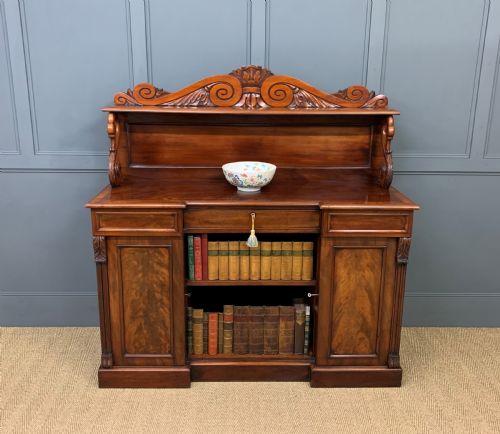
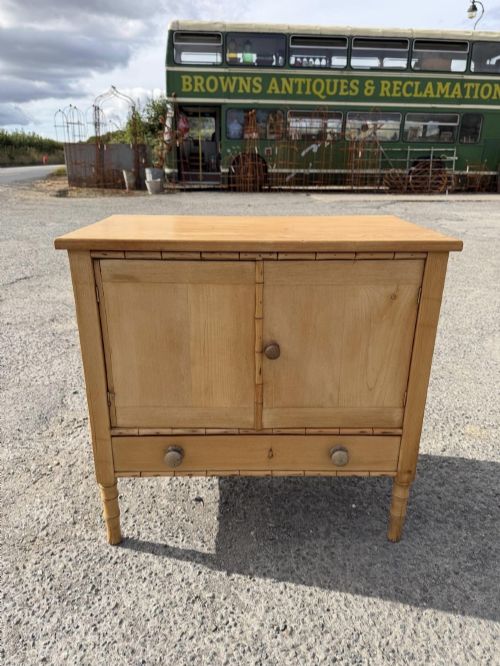
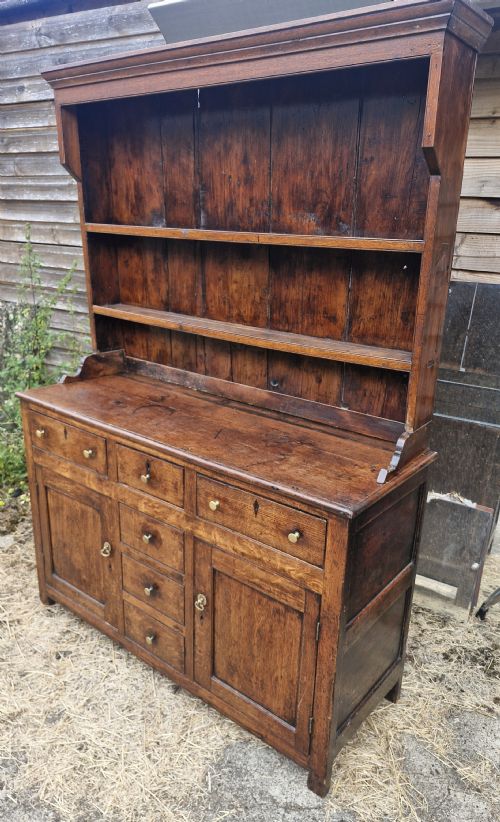
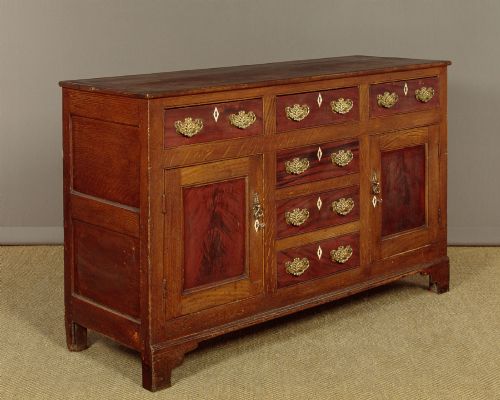
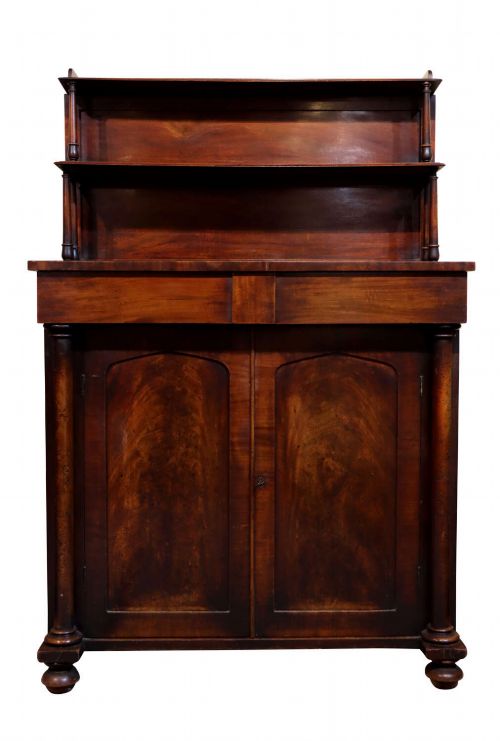
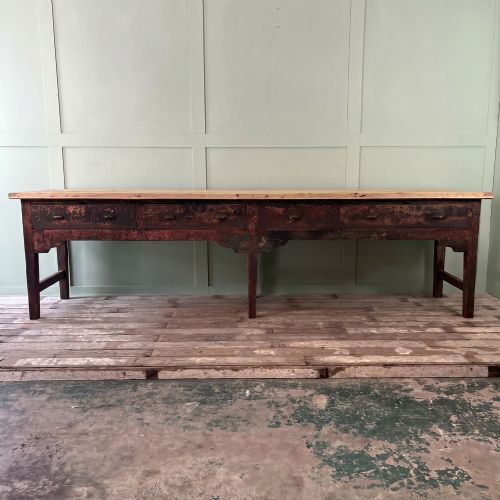
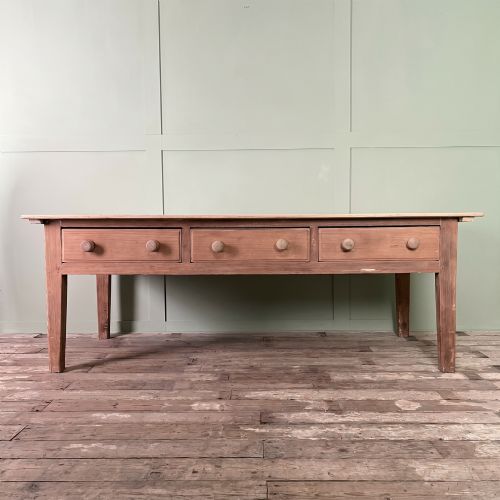
Early 19th Century Sideboard
An early 19th century sideboard brings serious presence and utility to a room, offering substantial timber storage built for formal dining.
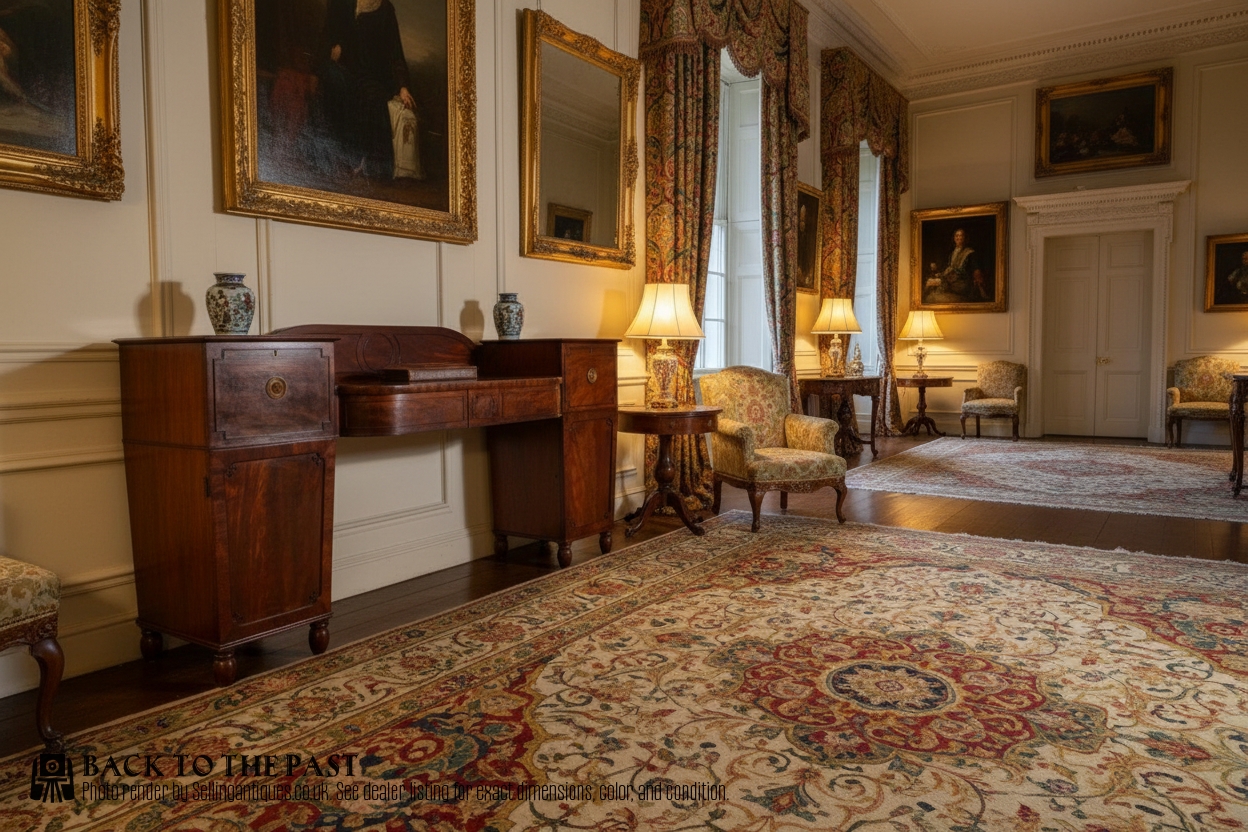
Understanding the early 19th century sideboard
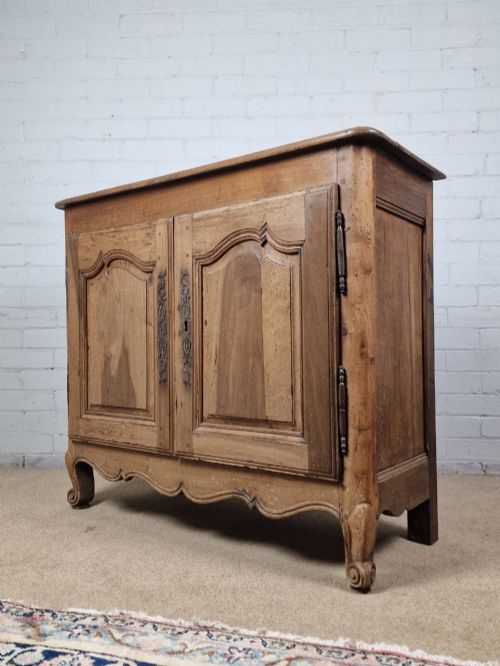
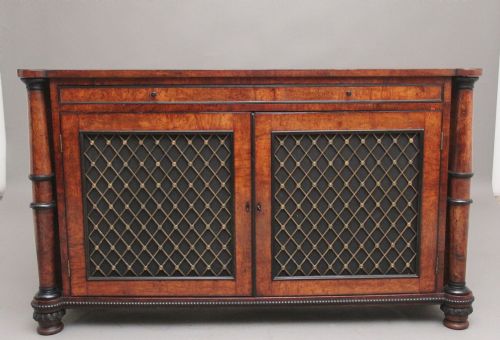
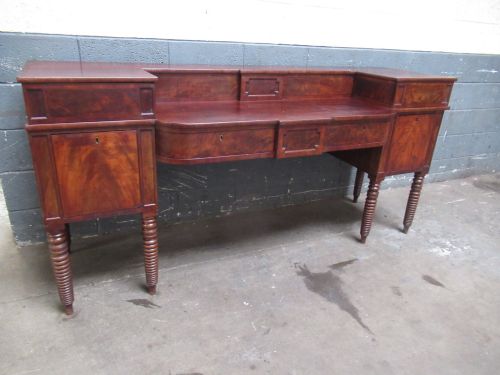
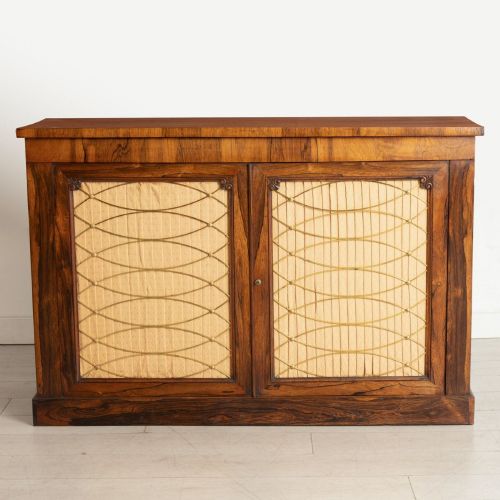
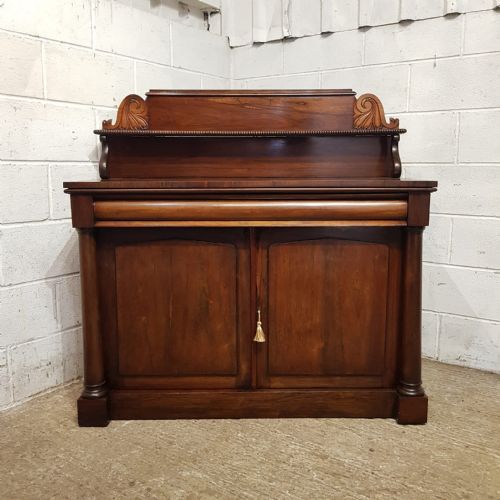
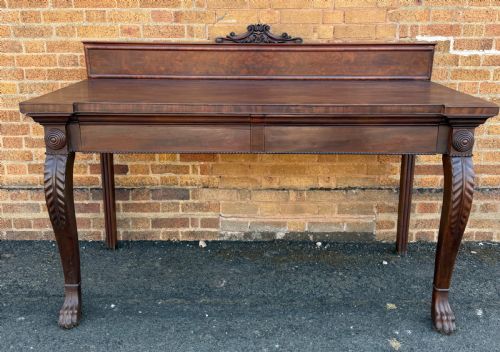
An early 19th century sideboard is a substantial dining room furnishing designed for serving food and storing plate, cutlery and linen. The pieces gathered here belong primarily to the Regency and Georgian eras, spanning standard sideboards, pedestal formats, chiffoniers and dresser bases.
You meet straight-front designs alongside curved bowfront and serpentine shapes, plus architectural breakfront forms. Timber choices lean heavily towards mahogany, flame mahogany and figured mahogany, often enriched with satinwood inlay and brass mounts.
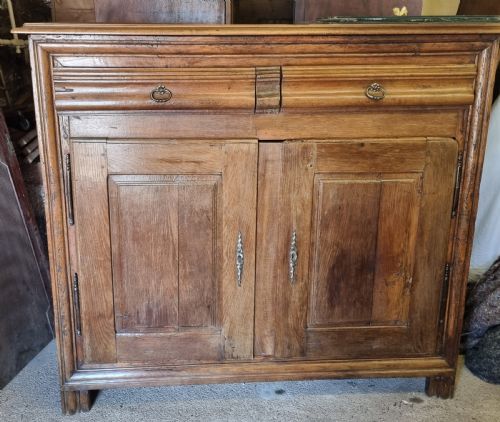
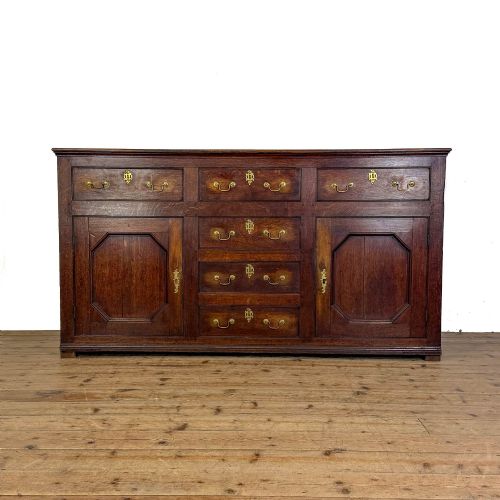
Oak and rosewood also appear among these listings, alongside occasional pine carcases and mirror glass elements. These forms reflect the changing domestic requirements of elite households during the early 1800s.
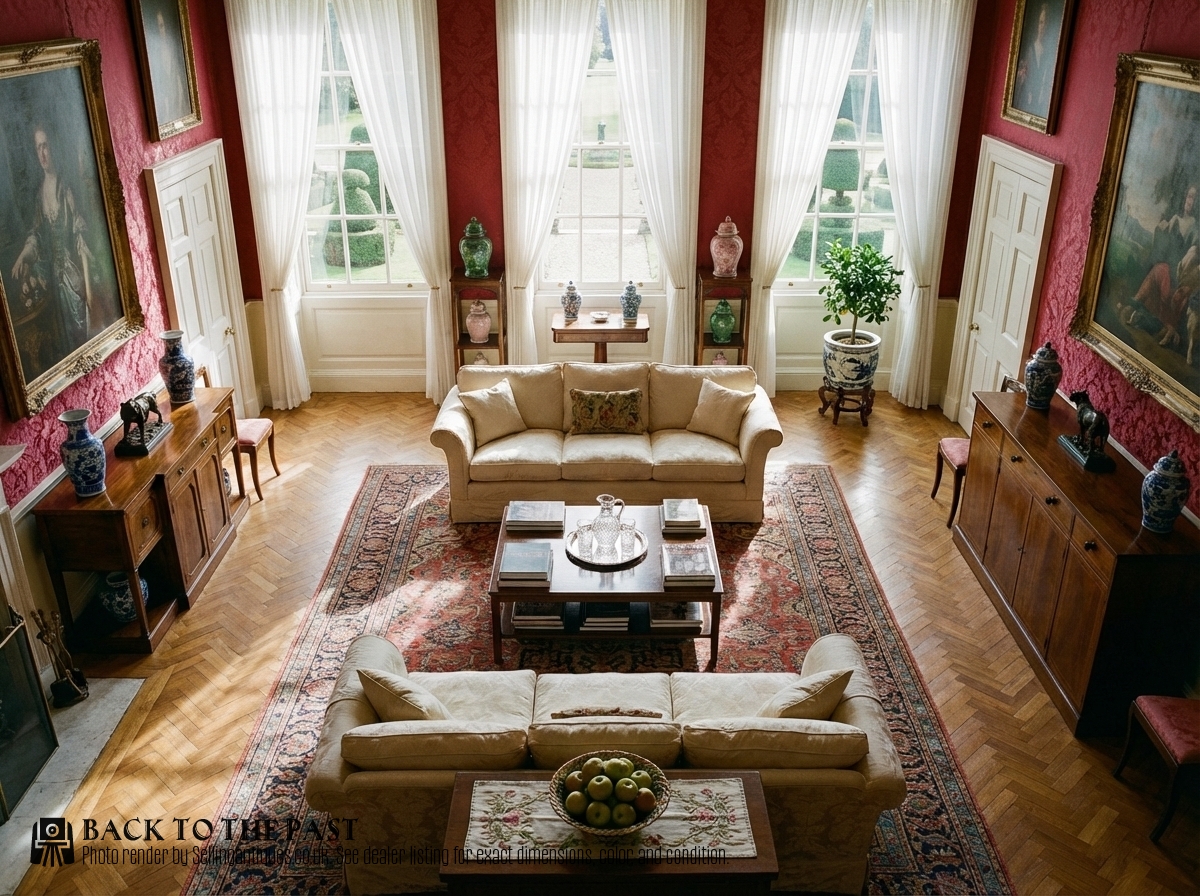
Materials and construction
Cabinet makers built these pieces using solid timber frames faced with carefully chosen veneers, particularly figured and flame mahogany. Satinwood inlay added crisp geometric contrast to dark tropical hardwoods, while oak and pine served as secondary woods for drawer linings and internal framing.
Brass featured extensively for drawer pulls, gallery rails and feet, often cast and chased with classical motifs. Surface finishing relied on hand-applied polish that brought out the natural depth and grain pattern of the timber without obscuring its texture.
Retail Price Guide 2026
Typical UK retail prices for early 19th century sideboard, calculated from the Sellingantiques database of over a million retail prices indexed since 2003. This retail price guide relies exclusively on Sellingantiques data; no external sources or auction records are used, so the figures do not describe the wider market.
Many of these sideboards retain deep cellaret drawers once lined with lead to chill wine bottles for Georgian dinner parties.
Evaluating quality and execution
Quality rests in the selection of timber veneers and the precision of the cabinet work, particularly around curved bowfronts and serpentine outlines. Superior pieces display continuous grain matching across drawer fronts and doors, showing careful planning by the maker.
The sophistication of internal construction, such as hand-cut dovetails on oak drawer boxes and original brass hardware, separates utilitarian examples from high-status workshop production. Proportions remain harmonious regardless of scale, whether dealing with a compact sideboard or a massive breakfront design.
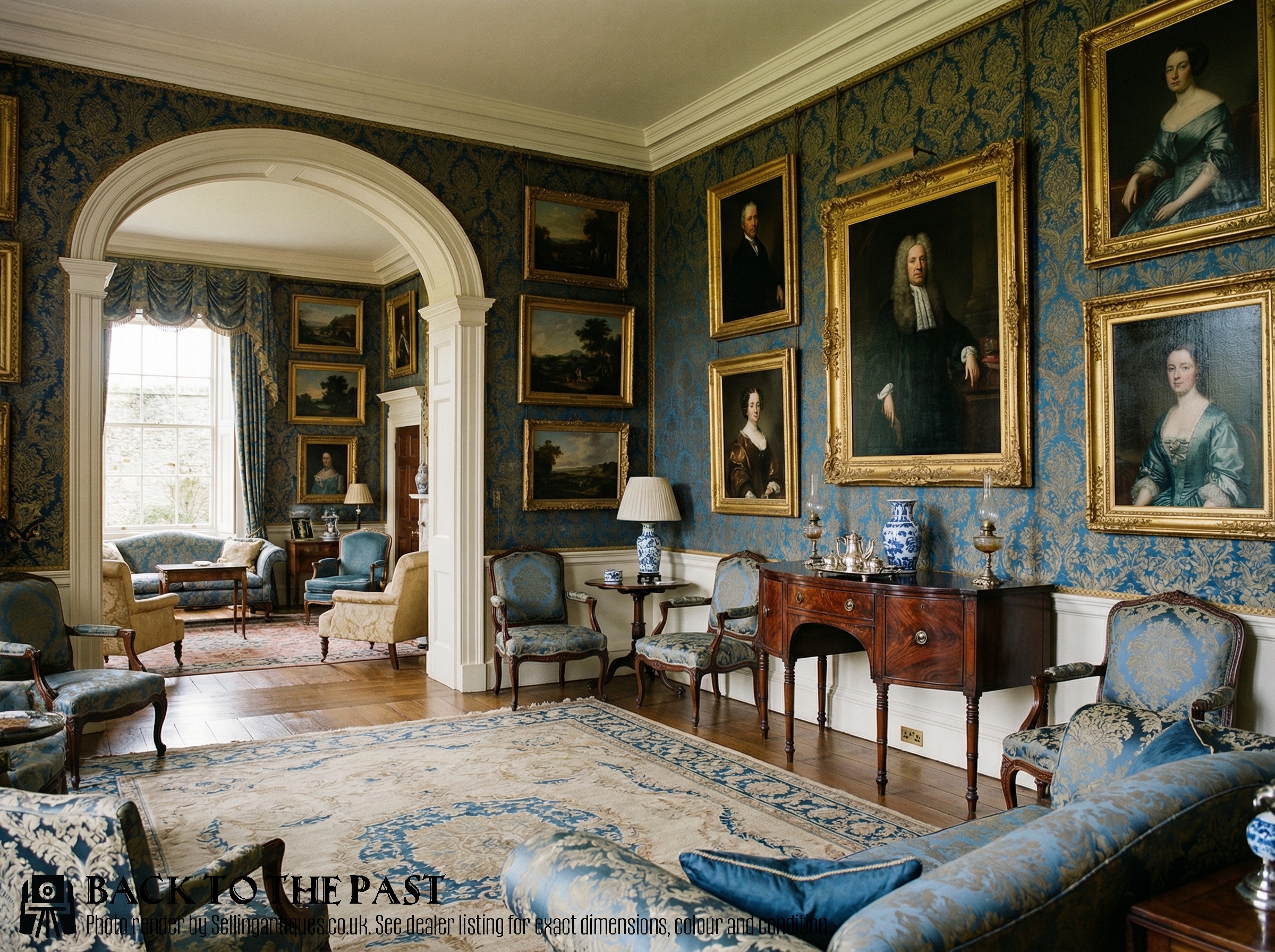
Gillows
The Early 19th Century Sideboard Glossary
- Bowfront
- A convex, outwardly curved front profile that softens the rigid geometry of a dining room.
- Serpentine
- A concave central section flanked by convex ends, creating a gentle undulating line across the front of the piece.
- Breakfront
- A cabinet form where the central section projects forward from the flanking wings, adding architectural depth.
- Chiffonier
- A compact low sideboard or cabinet featuring shelves or a panelled back, popular during the Regency period.
- Flame mahogany
- Timber veneer cut from branches or fork joints that produces a distinctive flickering, flame-like grain pattern.
Frequently Asked Questions
How do I style an early 19th century sideboard?
Pair the piece with traditional dining furniture or use it as a standalone console in a hallway or drawing room. Its dark mahogany tones anchor neutral walls effectively.
Keep the top surface uncluttered with a few curated objects, such as heavy silver candlesticks or ceramic bowls, to let the timber grain remain the focal point.
What is the difference between a sideboard and a chiffonier?
A standard sideboard is typically longer and designed specifically for dining room service, featuring multiple drawers and cupboards. A chiffonier is generally smaller and often includes a superstructure with shelves.
Both types date to the same broad period but served different functional demands within the nineteenth century home.
How do I identify a Regency sideboard?
Regency pieces often incorporate classical architectural motifs, such as brass lion paw feet, reeded columns, and inlaid brass stringing. The use of rosewood alongside mahogany becomes more prominent in this era.
Proportions tend to be crisp and disciplined, drawing inspiration from Greek and Roman design revival movements.
Will a bowfront sideboard fit in a modern dining room?
Bowfront designs project further into the room at their centre, so you need to measure the available floor space carefully before placement. Their curved profiles can actually make tight spaces easier to navigate than sharp rectangular corners.
Ensure there is sufficient clearance for dining chairs to pull out around the piece.