
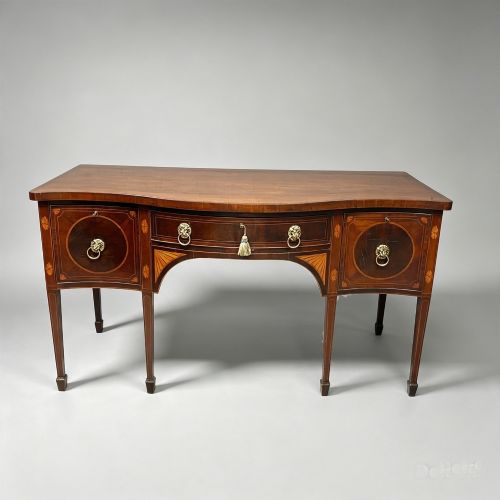
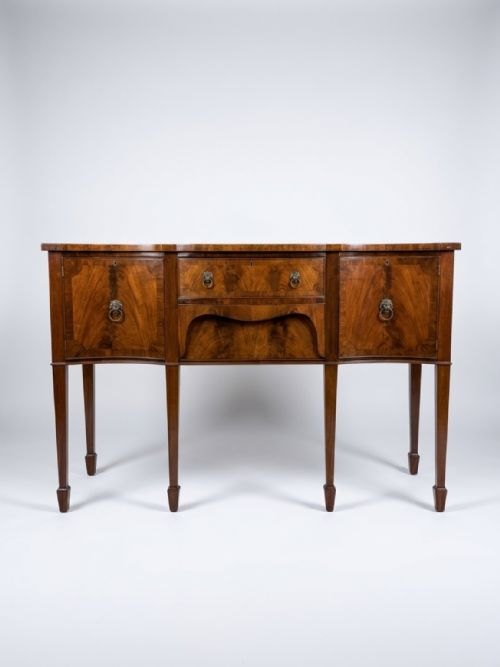
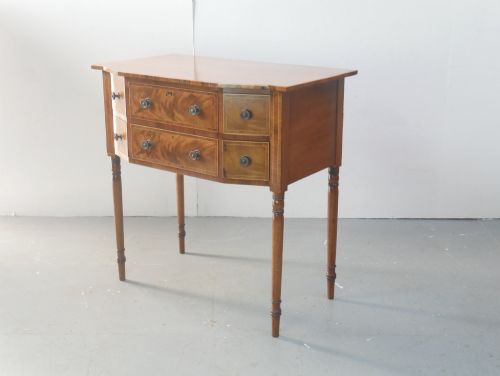
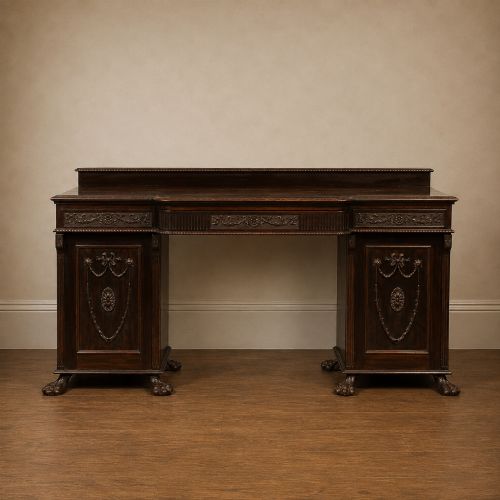
Mahogany Sideboard Table
A mahogany sideboard table provides practical dining room storage while bringing rich timber grain into an interior.
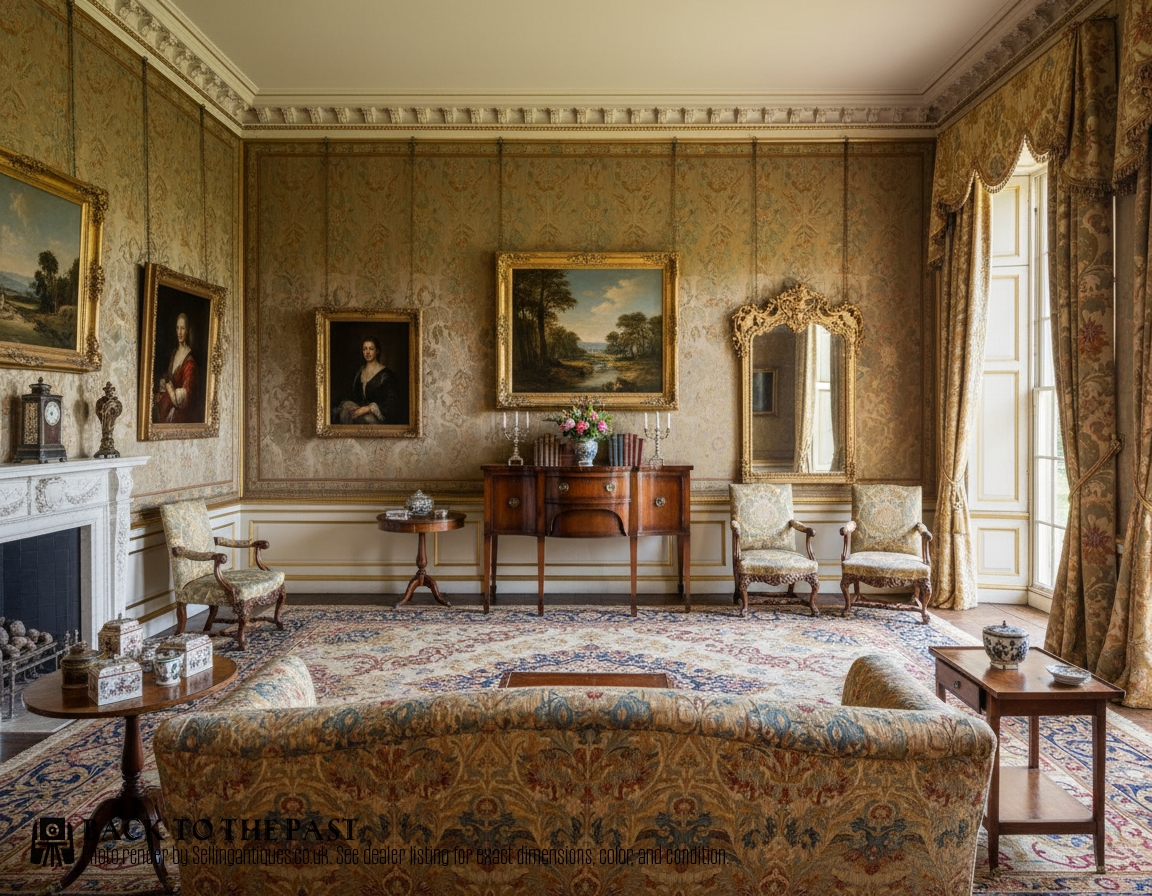
What They Are
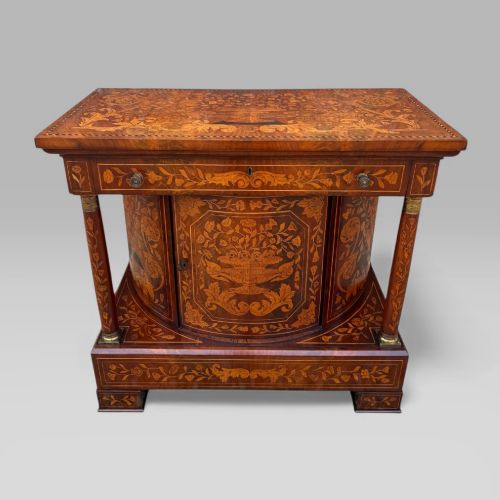
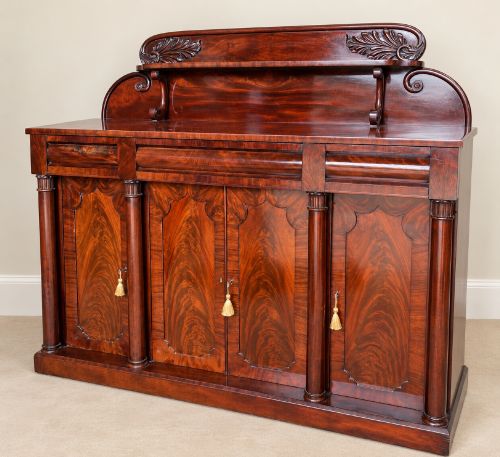
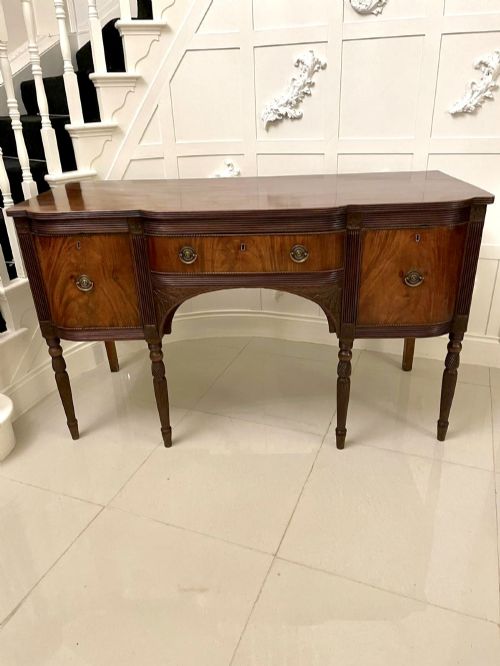
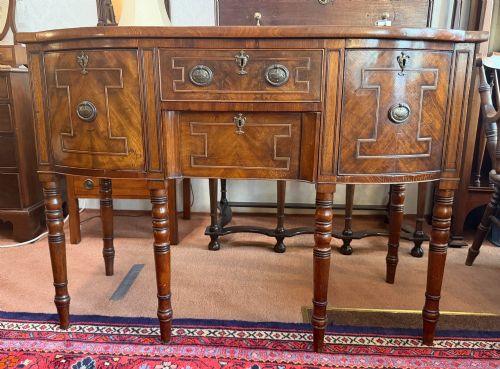
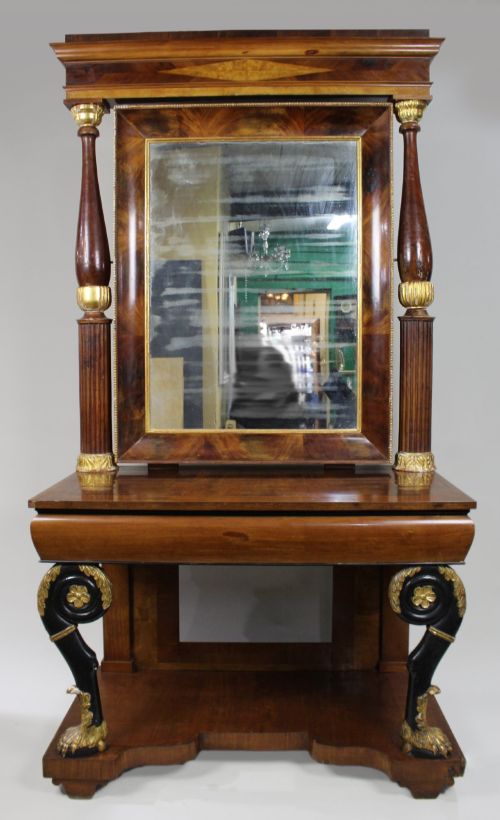
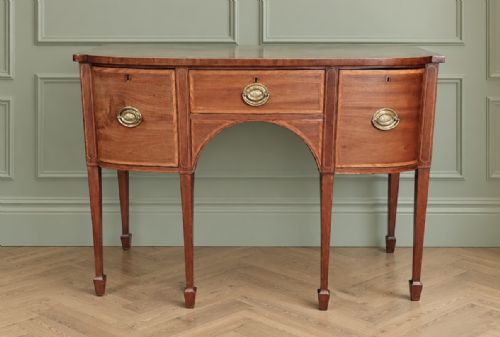
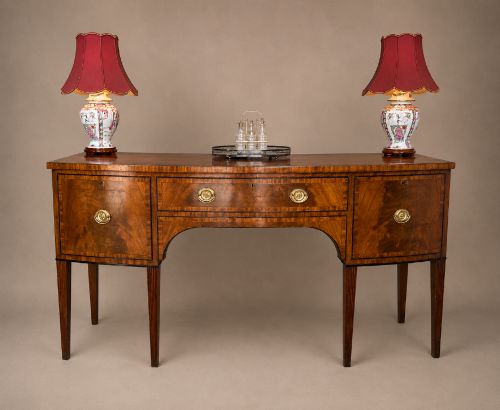
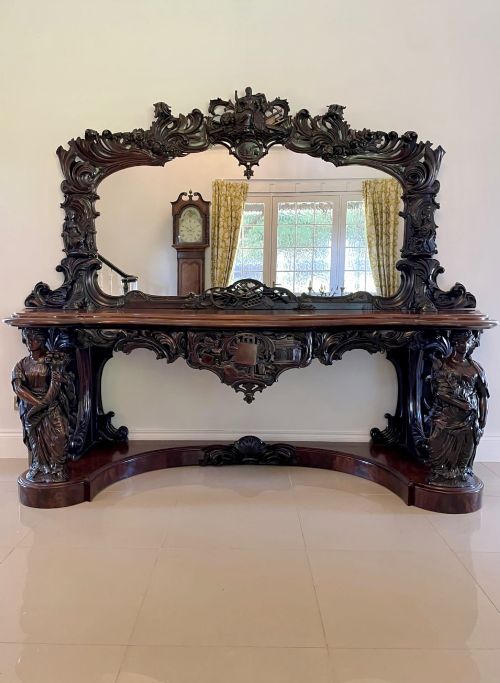
A mahogany sideboard table is a functional dining room or hall furnishing designed for serving food, displaying silver, or storing linens. When exploring this selection, buyers frequently encounter serving tables and sideboards dating from the eighteenth century, the Georgian era, and the Regency period, alongside later Edwardian interpretations.
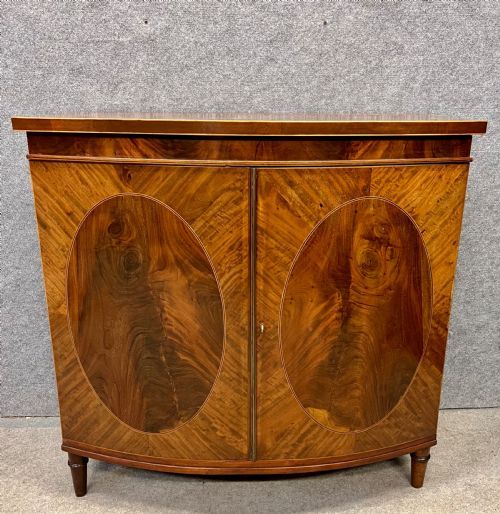
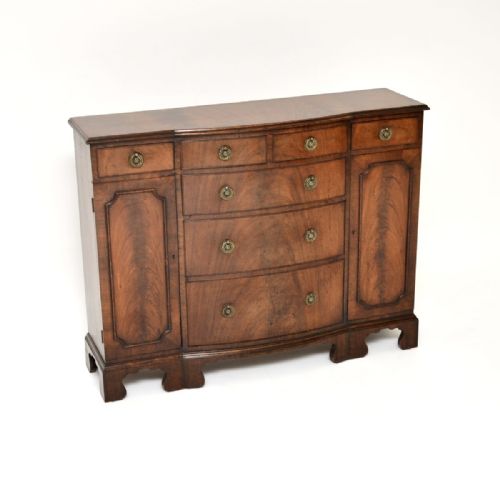
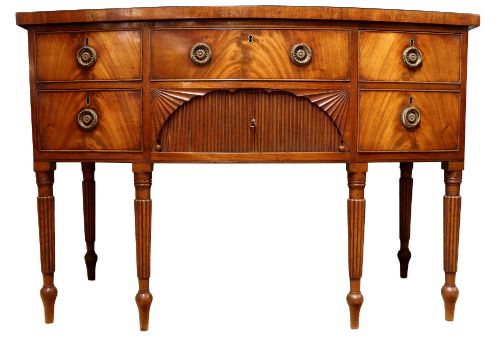
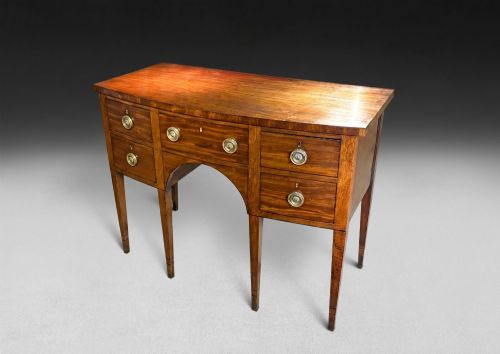
The objects span formal serving tables with slender legs to deep bow-front and breakfront cabinets equipped with cupboards and drawers. Examples range from generous proportions built for large dining halls down to small proportions suited for narrower hallways and compact rooms.
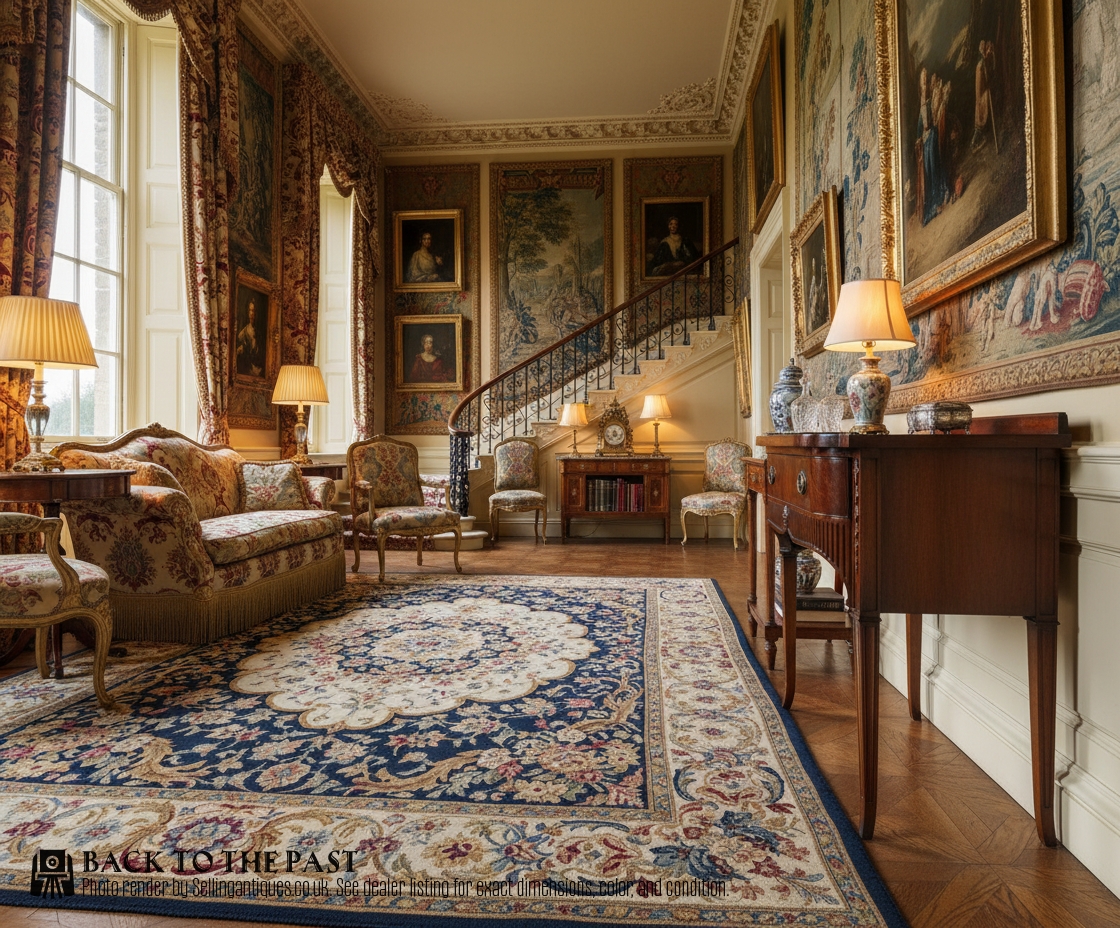
How They Were Made
Cabinet makers constructed these surfaces primarily using solid mahogany and figured mahogany veneers over secondary timbers, selecting cuts to highlight deep natural grain patterns. Structural details frequently incorporate brass handles and mounts, alongside delicate boxwood and satinwood inlay.
Joinery techniques varied from straightforward rectangular framing to curved serpentine and bow fronts requiring steam bending or segmented construction. Surface finishes were hand-polished to accentuate the warm reddish-brown tones inherent to the timber.
Retail Price Guide 2026
Typical UK retail prices for mahogany sideboard table, calculated from the Sellingantiques database of over a million retail prices indexed since 2003. This retail price guide relies exclusively on Sellingantiques data; no external sources or auction records are used, so the figures do not describe the wider market.
The inventory bridges multiple eras, containing pieces from the 18th Century, Georgian period, Regency era, Edwardian period, and the early 20th century.
What Varies in Quality
The distinction between standard examples and the finest pieces rests on the choice of timber and the precision of decorative embellishment. Superior specimens display highly figured flame mahogany veneers matched symmetrically across drawers and doors, coupled with crisp, intricate inlay work in contrasting woods.
Proportion and structural integrity define the upper tier of craftsmanship, where drawers glide smoothly and secondary woods show careful selection. Pieces demonstrating refined neoclassical design details or attribution to known workshops command greater appreciation for their balanced form.
Wilkinson London·George Smith·George Oakley
The Mahogany Sideboard Table Glossary
- Bow front
- A convex curved cabinet front that projects outward in a smooth arc. This shape gained popularity during the Georgian and Regency periods to soften rigid room angles.
- Breakfront
- A cabinet facade where the central section projects forward from the flanking outer sections. This architectural arrangement creates depth and visual interest on larger serving tables.
- Flame mahogany
- Timber cut from the fork of the mahogany tree where branches meet the trunk, producing a distinctive flickering flame pattern. Cabinet makers utilised these prized veneers on prominent drawer fronts and cabinet doors.
- Satinwood inlay
- Contrasting pale yellow timber inserted into recesses within the darker mahogany surface to form decorative borders or motifs. This technique defined much of the Sheraton revival and neoclassical work.
- Serpentine
- A front design featuring a concave centre flanked by convex curves, or the reverse, resembling the undulations of a snake. Crafting this silhouette required advanced woodworking skill.
Frequently Asked Questions
What is a mahogany sideboard table used for?
These tables function primarily as serving surfaces during meals or as decorative console tables in hallways and dining rooms. They provide practical storage through integrated drawers and cupboards.
Historically, they held silver platters, glassware, and serving dishes within easy reach of the dining table. Today, they serve equally well as display surfaces for lamps, books, and decorative objects.
How do I tell a Georgian piece from an Edwardian copy?
Examination of the secondary timbers inside drawers and at the back of the piece reveals much about the date of manufacture. Georgian pieces utilise native or colonial timbers appropriate to the eighteenth century with hand-cut dovetail joints.
Edwardian revival pieces often display machine-sawn elements and lighter internal woods behind the mahogany exterior. Stylistic markers also help, as Edwardian makers frequently added marquetry inlay to earlier Georgian silhouettes.
Will a narrow sideboard fit in a hallway?
Several examples are specifically described as narrow or of small proportions, making them suitable for restricted spaces. Measuring the available depth against the footprint of the specific table ensures adequate clearance for passing traffic.
Because many designs feature bow fronts or shallow rectangular tops, they occupy minimal floor space while offering useful surface area.
How do I care for antique mahogany furniture?
Maintenance requires keeping the timber away from direct heat sources and strong sunlight to prevent the polish from drying and the wood from fading. Regular dusting with a soft, dry cloth preserves the finish.
Application of traditional beeswax can nourish the timber periodically, avoiding modern silicone sprays that build up residue over time.