
Georgian Bow Front Server
A georgian bow front server brings graceful curved lines and generous storage to a dining room, combining practical utility with refined period design.
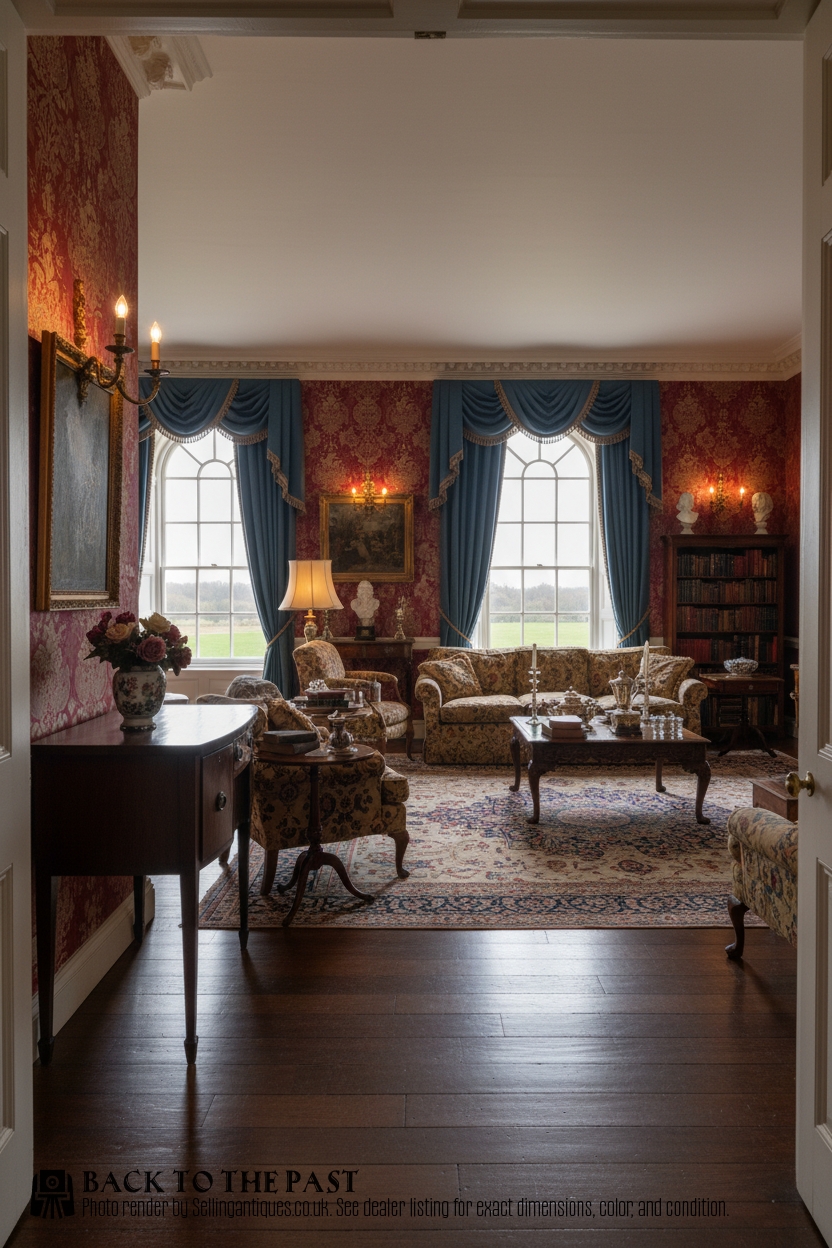
Georgian Bow Front Server
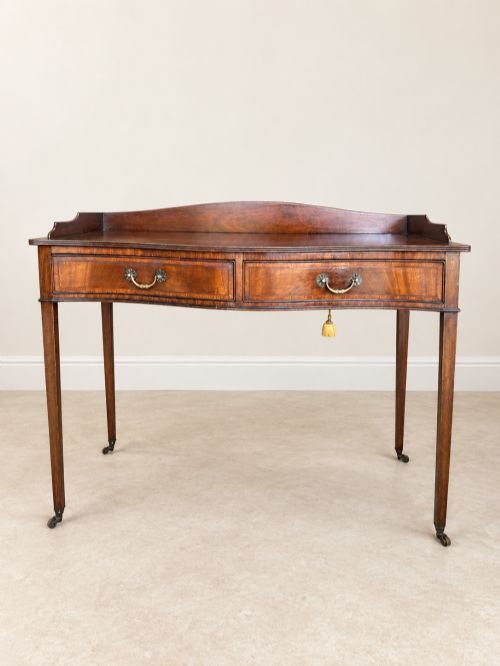
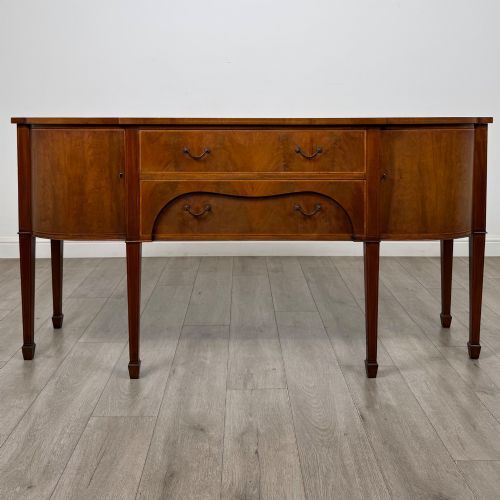
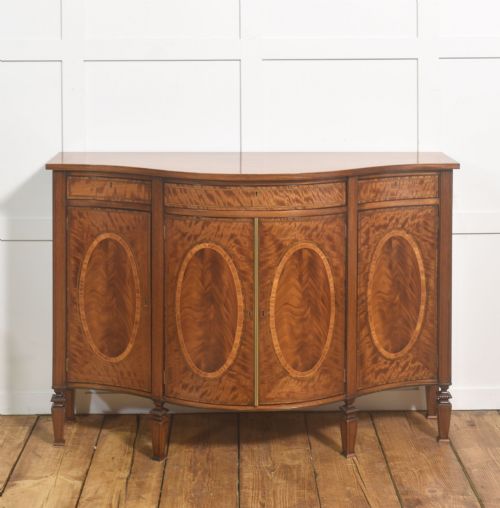
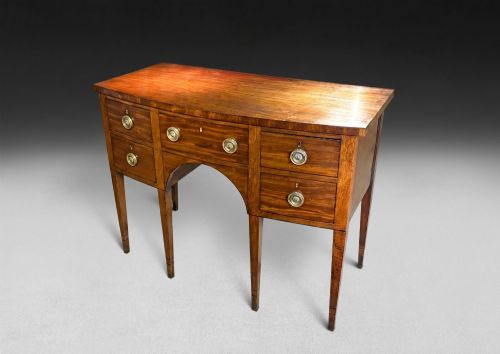
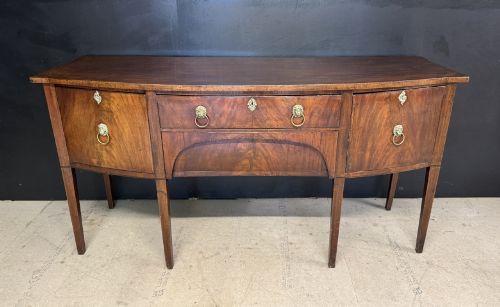
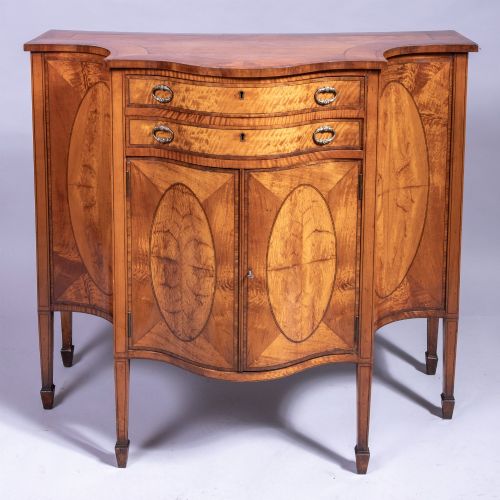
When you search for a georgian bow front server, you are looking at formal dining room furniture designed to hold serving dishes, cutlery, and glassware during the eighteenth and nineteenth centuries. These pieces feature a distinctive convex curved front that softens the linear geometry of a traditional dining space.
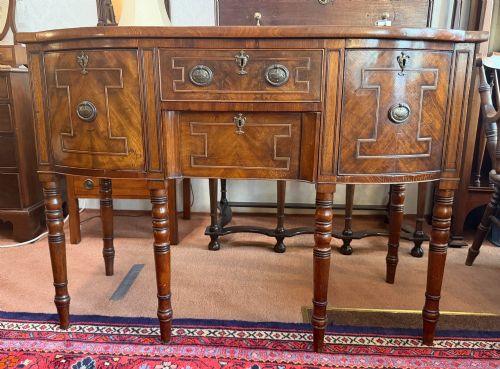
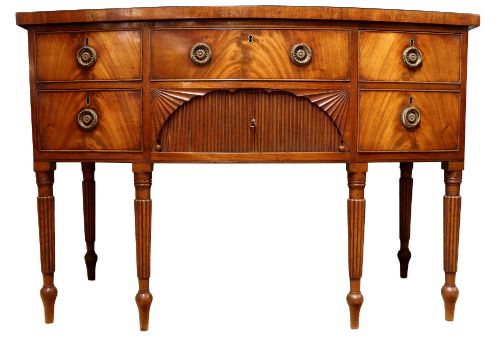
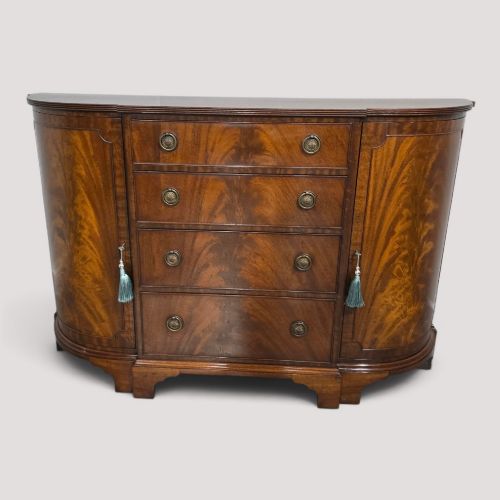
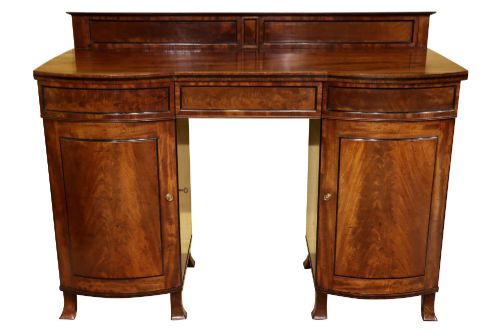
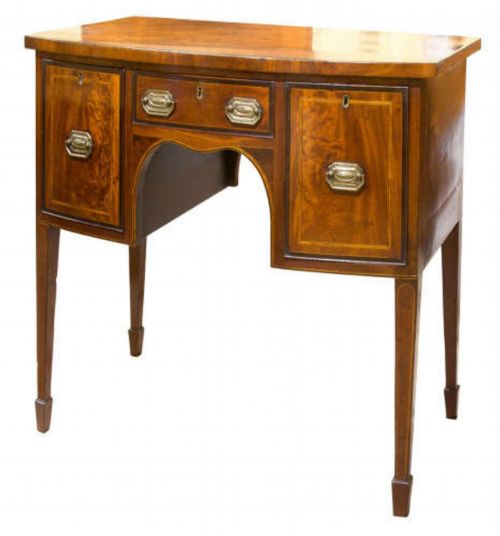
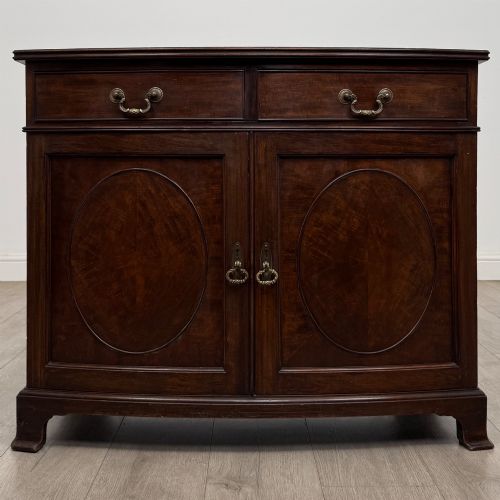
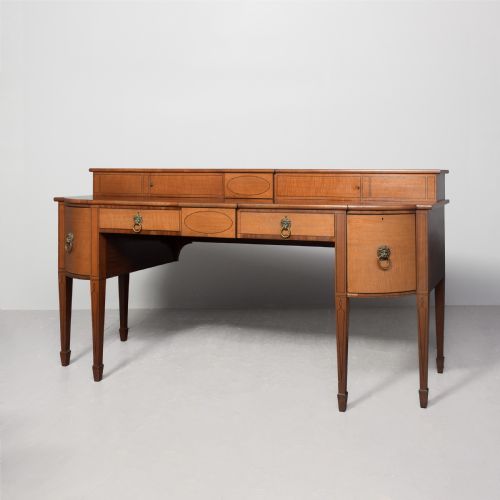
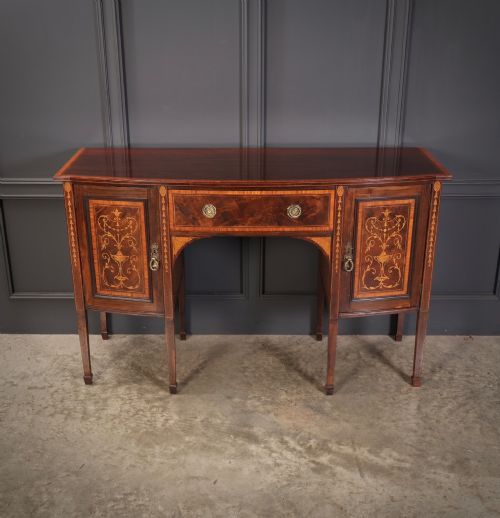
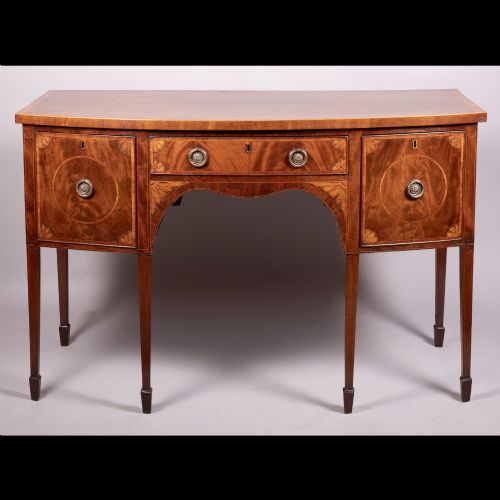
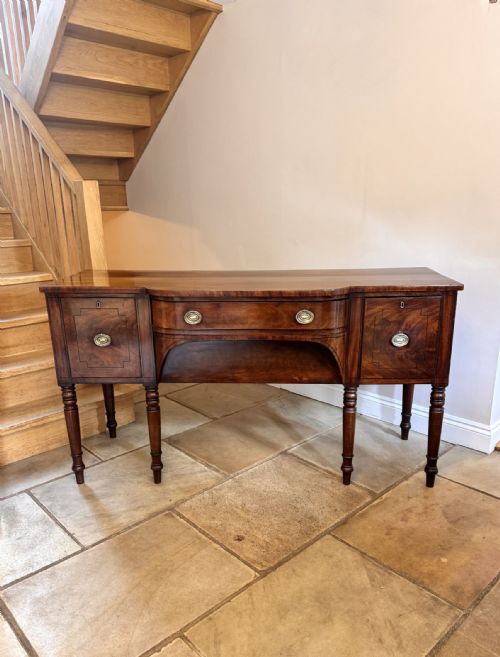
The version you are most likely to meet on this page is constructed from mahogany, often dating from the Georgian, Regency, or Victorian periods, alongside later revival interpretations from the Edwardian era. Sideboards, side tables, and servers appear frequently in forms ranging from compact three-drawer tables to large pedestal designs and stage-back variants.
Materials and construction methods
Cabinet makers relied heavily on solid mahogany and flame mahogany veneers, utilising the rich natural grain patterns of the wood to create striking visual depth across the curved drawer fronts and doors. Frame construction involved sturdy secondary timbers such as oak, ensuring structural stability for heavy serving use.
Decorative detailing was achieved through precision joinery and contrasting timber elements. Boxwood stringing, satinwood inlay, and delicate marquetry motifs were frequently applied to border the drawers and top surfaces, while brass handles and escutcheons provided functional and aesthetic accents.
The selection includes regional variations such as Scottish stage-back sideboards alongside standard side tables and cupboards.
Elements of quality and craftsmanship
The distinction between standard examples and the finest pieces rests in the selection of timbers and the precision of the curved drawer construction. Superior items display carefully matched flame mahogany veneers that flow seamlessly across the bow front, alongside finely executed boxwood stringing and inlay work.
Structural integrity and original hardware also dictate the standing of a server. Pieces retaining their original brass handles, well-fitted drawers with hand-cut dovetails, and untouched period surfaces command greater appreciation among collectors than heavily restored or altered examples.
The Georgian Bow Front Server Glossary
- Bow front
- A convex curved furniture front that projects outward in a smooth arc. This shape gained popularity during the late eighteenth century to soften room layouts.
- Stringing
- Thin inlaid lines of contrasting wood, such as boxwood, used to outline drawers and panels. It creates a crisp linear border against darker timbers like mahogany.
- Flame mahogany
- A highly figured veneer cut from the fork of a mahogany tree where branches join the trunk. It exhibits a distinctive, fiery grain pattern.
- Stage-back
- An elevated rear superstructure on a sideboard or server providing extra display space or shelving. Scottish examples frequently incorporate this feature.
- Marquetry
- Decorative patterns formed by fitting together small pieces of veneer into wooden panels. Artisans used various coloured woods to depict floral or geometric designs.
Georgian Bow Front Server: Frequently Asked Questions
What is a bow front server?
A bow front server is a dining room storage piece featuring a curved, outward-projecting front. It was designed to hold china, silver, and food during formal meals.
These items range from compact side tables to large pedestal sideboards. They provide practical surface area while introducing elegant curves to a room.
How do I date a sideboard?
Dating a sideboard involves examining the timber species, construction techniques, and decorative styles present. Eighteenth-century pieces often display hand-cut dovetails and subtle boxwood stringing.
Later Victorian and Edwardian revival items frequently incorporate machine-cut elements and distinct stylistic revivals like Sheraton or Chippendale influences. Comparing the hardware and secondary woods helps confirm the era.
Where should I place a server?
A server typically sits against a dining room wall to serve food or display silverware and glassware. Its shallow depth makes it suitable for hallways and drawing rooms as well.
Ensure the curved front has adequate clearance from dining chairs and foot traffic to showcase the piece properly.
What wood was used?
Mahogany served as the primary timber for these pieces, often utilised in both solid form and as figured veneer. Cabinet makers also incorporated oak for drawer linings and internal framing.
Decorative accents frequently featured lighter contrasting woods including boxwood and satinwood for inlay and stringing details.