
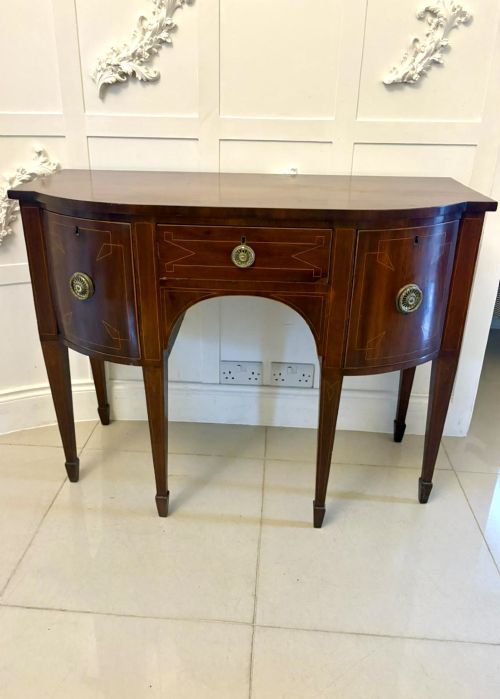
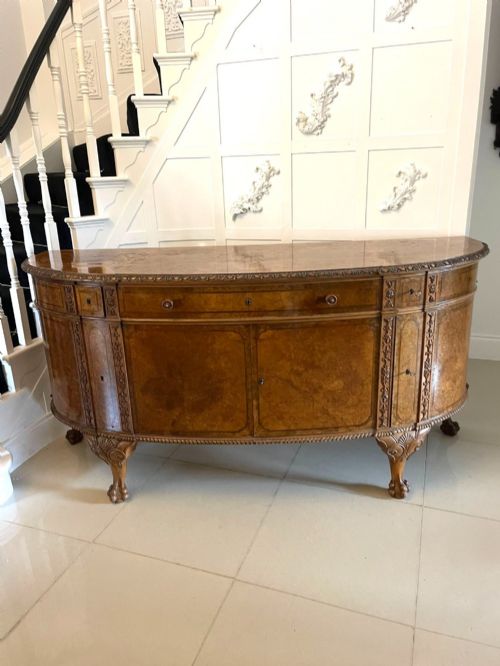
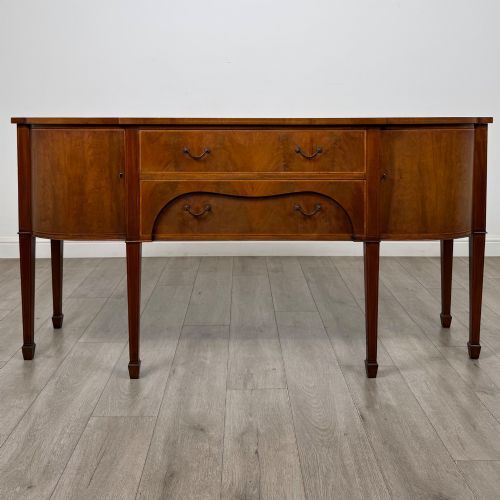
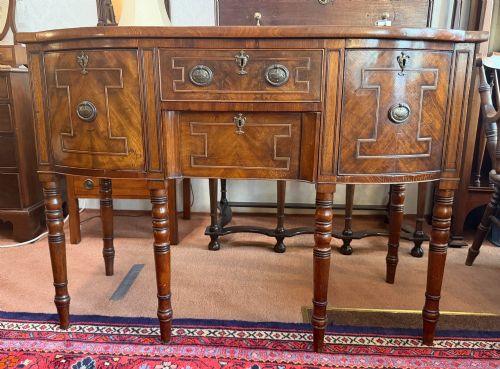
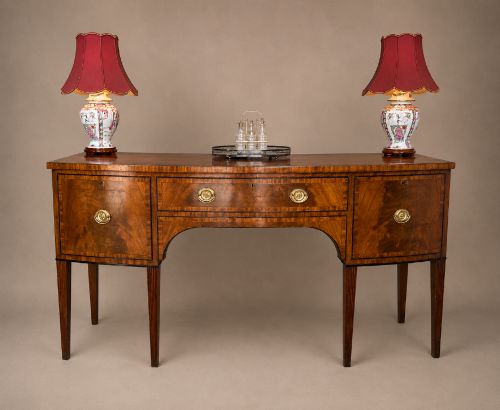
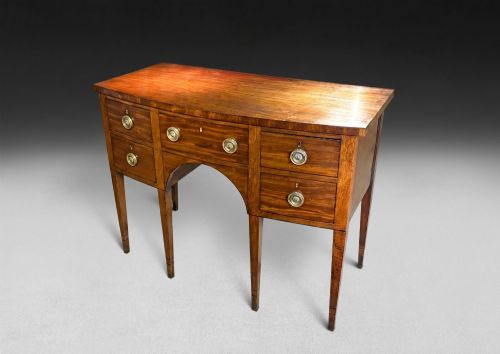
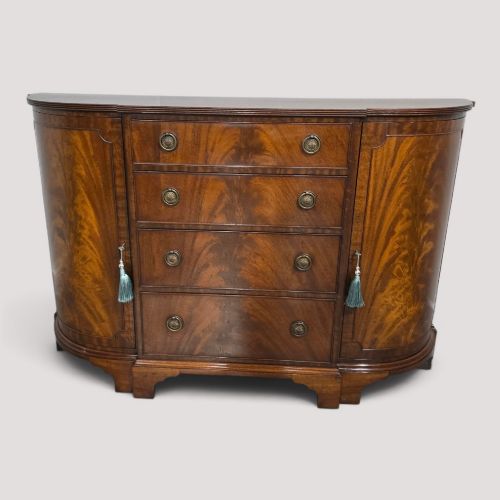
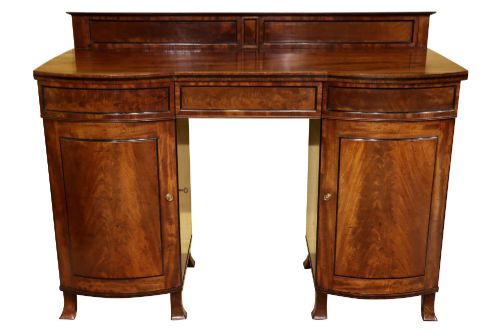
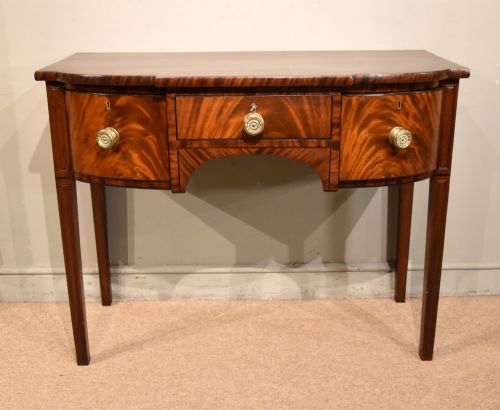
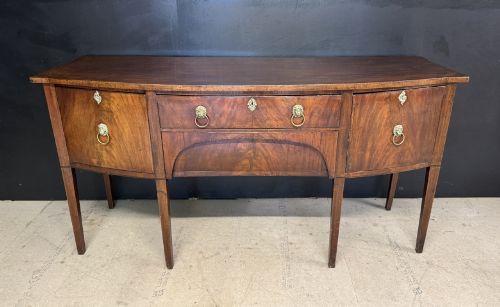
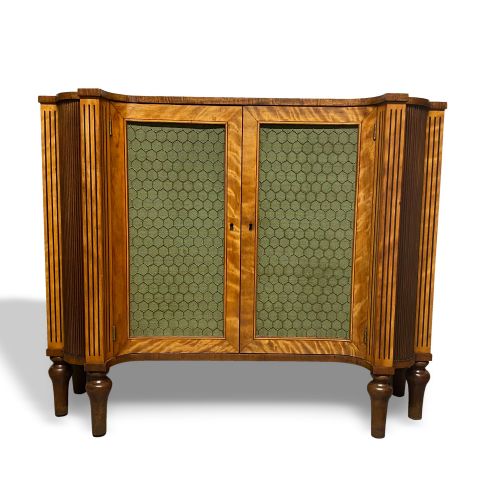
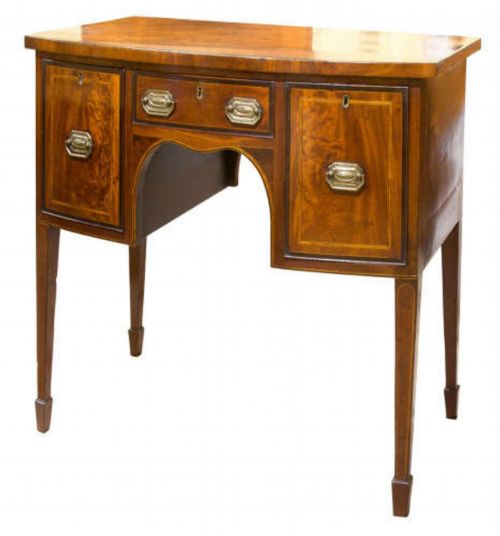
Antique Bowfront Credenza
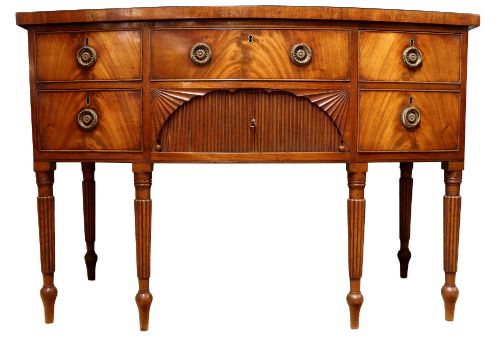
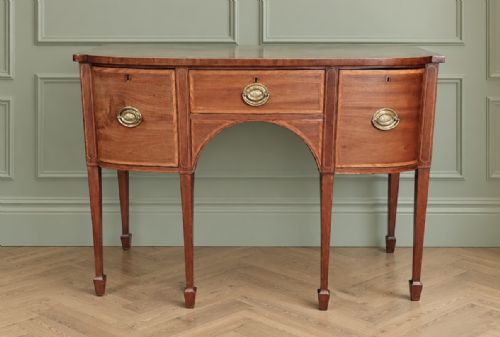
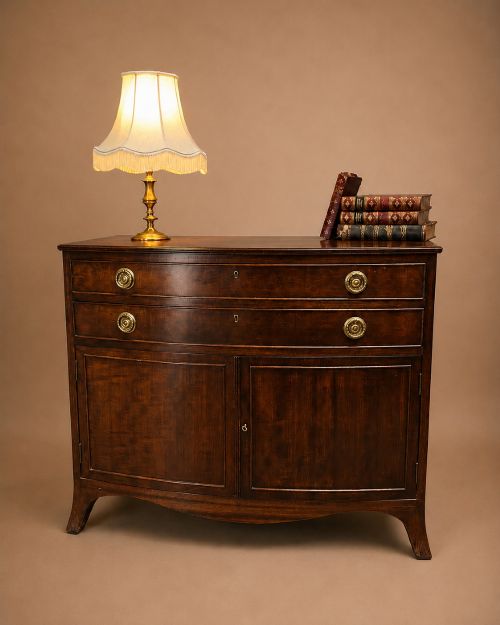
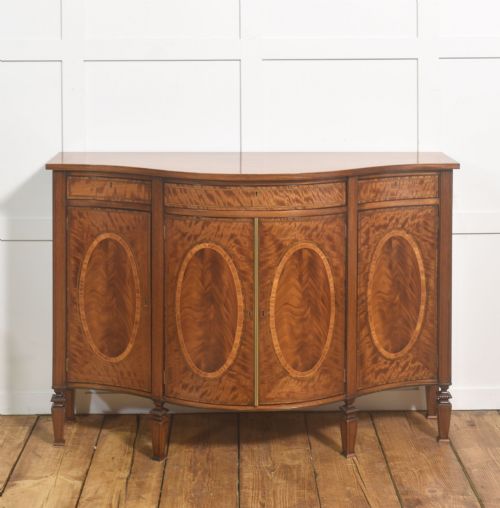
These antique bowfront credenza selections bring together mahogany sideboards and walnut credenzas spanning the Georgian and Victorian eras.
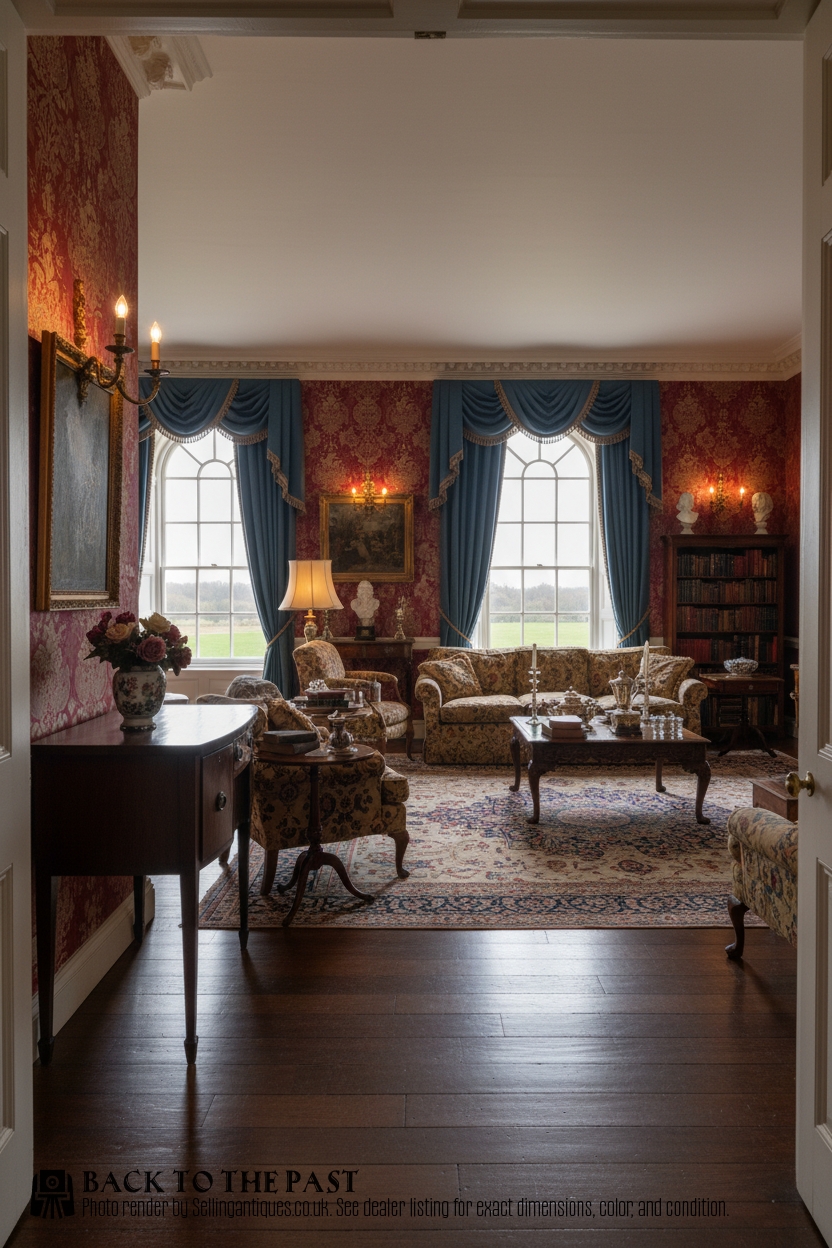
What these pieces are
The search for an antique bowfront credenza opens up a distinct group of large dining room and parlour furniture, dominated here by Georgian mahogany sideboards and Victorian walnut credenzas. These forms serve as impressive storage solutions while offering a significant decorative presence within a room.
Buyers frequently encounter the Georgian mahogany bow fronted sideboard alongside Victorian marquetry inlaid credenzas and exhibition pieces. The selection bridges the curved lines of the eighteenth century and the intricate inlay work of the later nineteenth century.
How they were made
Cabinet makers utilised solid timbers and veneers, combining mahogany, burr walnut, satinwood, and oak across different parts of the carcase and drawer linings. Brass hardware and ormolu mounts provide structural and decorative accents.
Surface decoration relies on marquetry inlay work and glass panels, particularly visible on Victorian examples. Frameworks range from six legged supports on Georgian sideboards to enclosed cabinet bodies on Victorian credenzas.
Retail Price Guide 2026
Typical UK retail prices for bowfront credenza, calculated from the Sellingantiques database of over a million retail prices indexed since 2003. This retail price guide relies exclusively on Sellingantiques data; no external sources or auction records are used, so the figures do not describe the wider market.
Listings span from the 18th Century through to the Victorian era, utilising mahogany, burr walnut, satinwood, and ormolu.
What varies in quality
Quality rests upon the selection of timber figures, such as burr walnut and figured mahogany, matched with the precision of marquetry inlay. Exhibition pieces display finer detailing in brass and ormolu mounts alongside superior joinery.
The sophistication of the silhouette defines the upper tier, where curved bowfronts and multi-legged bases require advanced carpentry. Lesser examples rely on simpler timber choices and minimal decorative embellishment.
The Antique Bowfront Credenza Glossary
- Bowfront
- A convex curved cabinet front that projects outwards towards the centre. This shape softens the room's geometry while adding interior depth.
- Marquetry
- Decorative patterns formed by fitting together thin slices of various woods and other materials onto a structural surface. It defines the ornate appearance of Victorian pieces.
- Ormolu
- Gilded bronze ornamentation applied to furniture mounts and details. It brings a metallic highlight to dark woods.
- Credenza
- An enclosed cabinet typically featuring glass doors and shelving, developed for display and storage in Victorian interiors.
Frequently Asked Questions
What is an antique bowfront credenza?
These items encompass curved Georgian mahogany sideboards and Victorian walnut display cabinets. They function primarily as substantial storage and display furniture.
Cabinet makers constructed them using dense hardwoods and decorative veneers. Their forms range from multi-legged sideboards to enclosed glass-fronted credenzas.
How do I date an antique credenza?
Dating relies on observing the prevailing style, timber choices, and decorative techniques of the period. Georgian pieces typically feature mahogany and straightforward silhouettes.
Victorian items often incorporate burr walnut, marquetry inlay, and ormolu mounts. The presence of glass doors and exhibition quality details also points to the later nineteenth century.
Where should I place a credenza?
These large pieces suit principal reception rooms, dining rooms, or wide hallways where their length can be appreciated. Their curved fronts and polished surfaces catch natural light.
Ensure adequate floor space so the doors or drawers can open fully. Pairing them with complementary period tables enhances the room layout.
What is the difference between a sideboard and a credenza?
Sideboards generally feature a combination of drawers and cupboards designed for dining room service. They date heavily from the Georgian era in this selection.
Credenzas lean towards display, frequently utilising glass doors and intricate marquetry. Victorian makers favoured this enclosed format for parlours.