

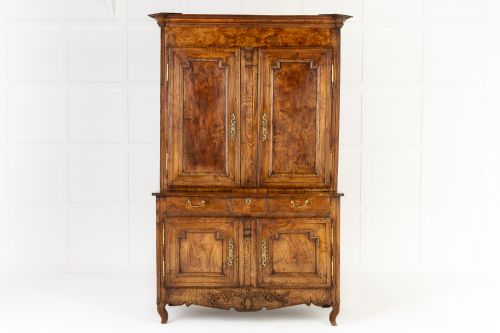


Brown Timber Sideboard
A brown timber sideboard brings honest utility and enduring grain to a dining room, combining deep storage with a commanding surface.
Brown Timber Sideboard
A brown timber sideboard serves as a substantial storage piece primarily found in dining spaces, halls, and morning rooms. When searching for this form, buyers encounter items ranging from Georgian and Victorian periods through to the early twentieth century.
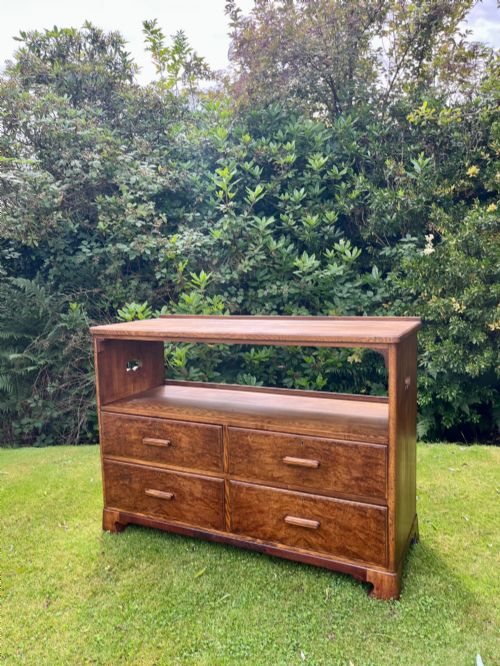
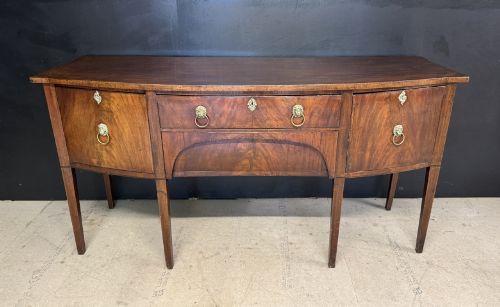
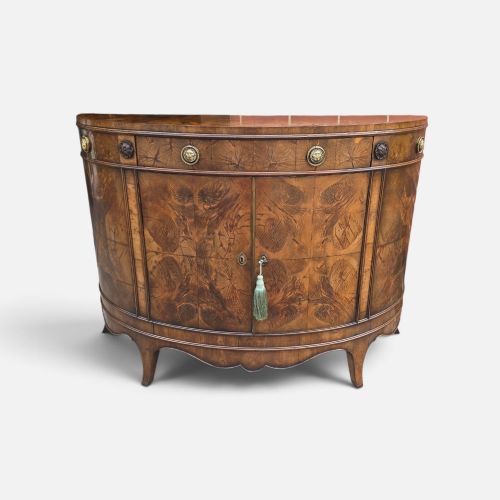
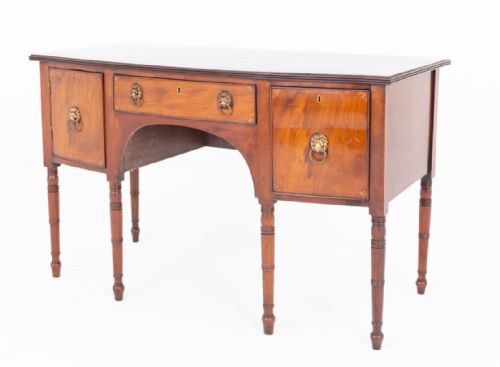
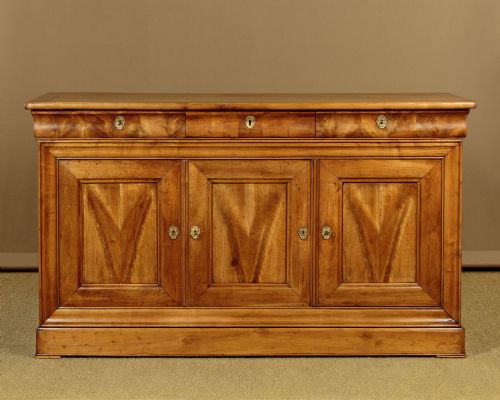
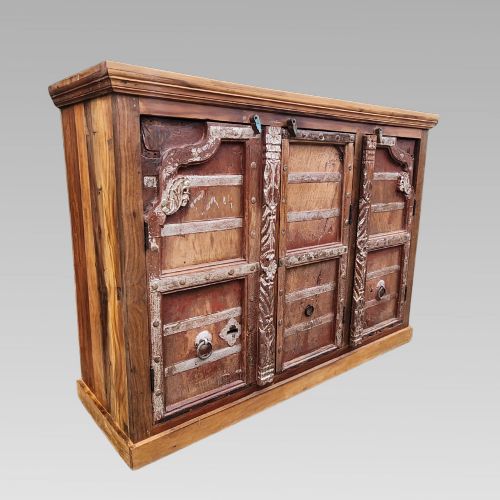
The pieces appearing on this page span diverse regional traditions and stylistic influences. Examples include formal Georgian serpentine designs in mahogany alongside country house oak pieces, French cherrywood enfilades, and Indian reclaimed teak cupboards.
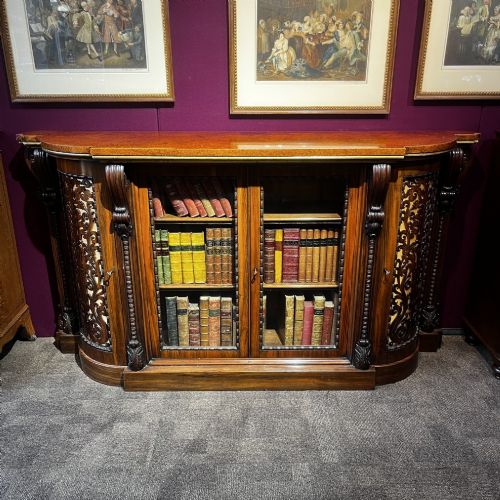
Beyond standard dining sideboards, the selection encompasses related storage forms such as side cabinets, chiffoniers, buffets, and court cupboards. These variants share a practical focus on housing tableware, linens, and provisions while displaying timber surfaces.
Judging the range of quality
Quality in these storage pieces rests upon the selection of timber and the precision of the cabinet work. Superior examples demonstrate thoughtful grain matching, particularly in figured veneers like burr elm or mahogany, and crisp carving along mouldings and edges.
The integrity of the original construction, including the fit of the doors and the smooth movement of drawers, distinguishes finer workshops. Pieces bearing documented maker attributions or exhibiting refined regional proportions stand apart from utilitarian storage.
Brown Timber Sideboard Retail Price Guide 2026
Typical asking prices for brown timber sideboard among the pieces listed under this phrase on Sellingantiques today, from the lower quarter to the upper quarter. They describe what is for sale here now, not the wider market.
Listings feature woods including mahogany, oak, walnut, teak, and cherrywood across periods spanning the eighteenth to the twentieth century.
Whytock and Reid·Gillows
The Brown Timber Sideboard Glossary
- Serpentine
- A front profile curving outward in the centre and inward at the sides. This fluid shape demands advanced carpentry to execute smoothly.
- Bowfront
- A convex, outwardly curved front shape popular on nineteenth-century storage furniture. It softens the linear appearance of a room.
- Enfilade
- A suite of rooms aligned in a row, or a long French sideboard designed to serve them. These low storage units provide expansive top surfaces.
- Court cupboard
- An antique enclosed storage piece, often dating to earlier centuries. It traditionally stores plate and dry goods behind panelled doors.
Brown Timber Sideboard: Frequently Asked Questions
What is the difference between a sideboard and a buffet?
A sideboard generally incorporates a combination of drawers and cupboards specifically designed for holding dining room silver and linen. Buffets often serve a similar function but can feature different proportions or tiered shelving surfaces.
Both forms belong to the broader category of brown timber storage furniture found in traditional dining spaces.
How do I date a timber sideboard?
Dating relies on examining the timber species, construction methods, and stylistic cues such as inlay patterns and leg designs. Georgian pieces often display straight tapering legs or sharp serpentine fronts, while Victorian items lean towards heavier proportions and darker walnut or mahogany.
Hardware fixings and drawer linings also offer reliable clues to the era of manufacture.
Where should I place a large sideboard?
These storage pieces anchor a dining room or spacious hallway against a main wall. Ensure adequate clearance for doors to swing open and drawers to extend fully without obstruction.
The surface provides an ideal area for displaying lamps, ceramics, or serving trays during gatherings.
How do I care for antique timber surfaces?
Maintain the wood by applying quality beeswax periodically to nourish the grain and protect against drying. Avoid placing furniture in direct sunlight or near heat sources to prevent timber splitting.
Dust regularly with a soft, dry cloth rather than using silicone-based sprays.