




Georgian Bowfront Buffet Table
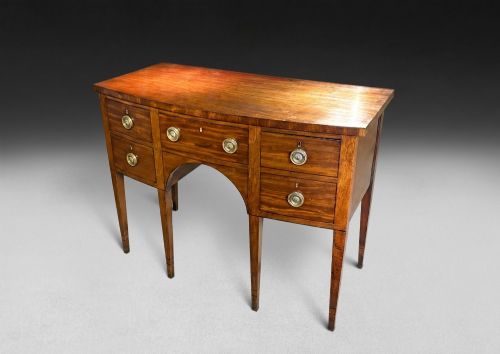
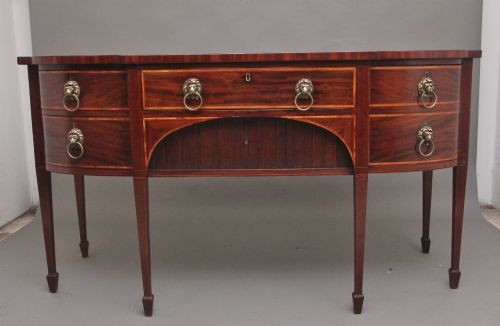
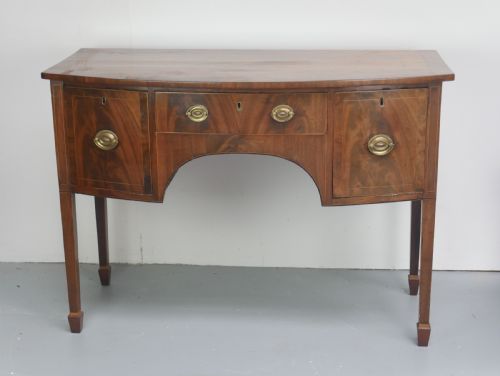
A georgian bowfront buffet table brings sweeping lines and substantial storage to a dining room, uniting practical function with refined cabinetwork.
Georgian Bowfront Buffet Table
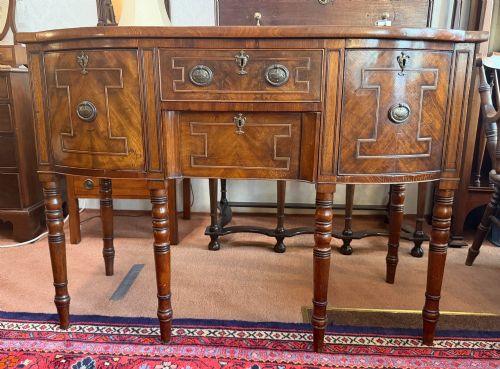
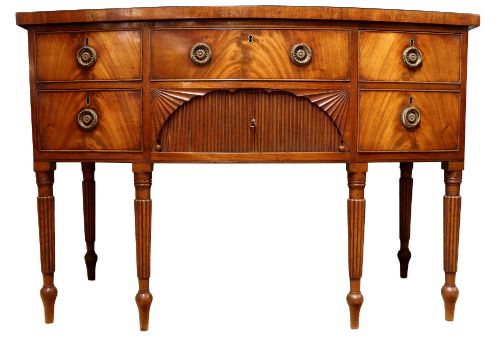
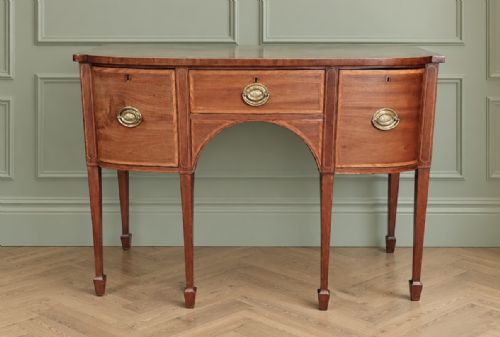
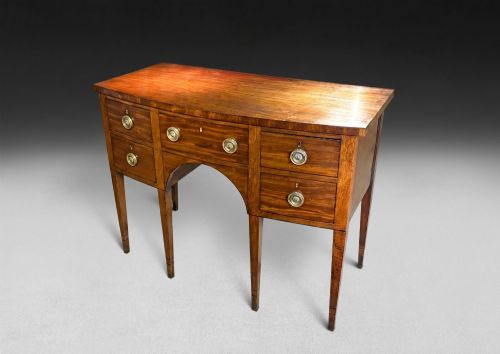
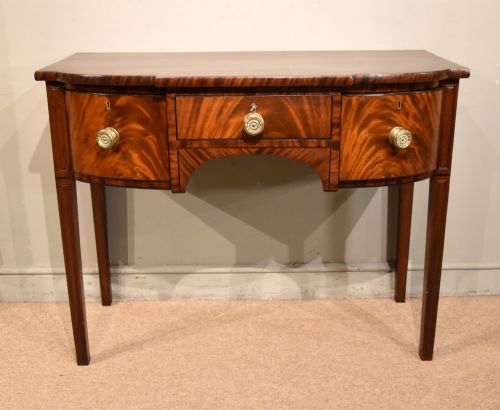
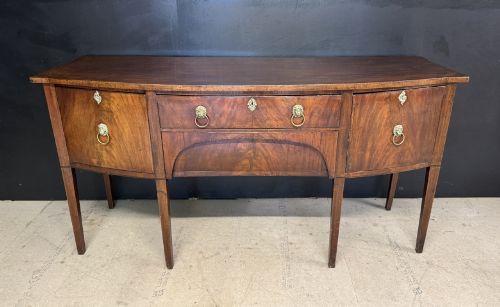
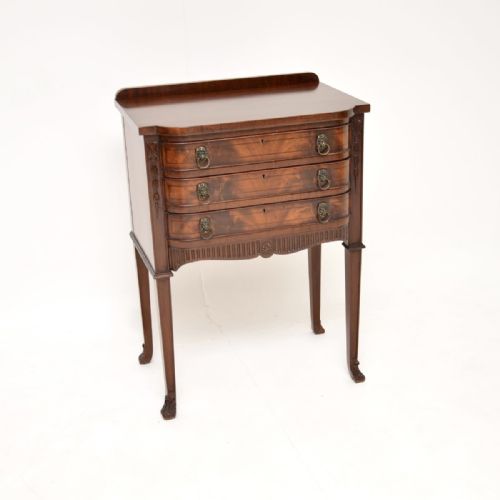
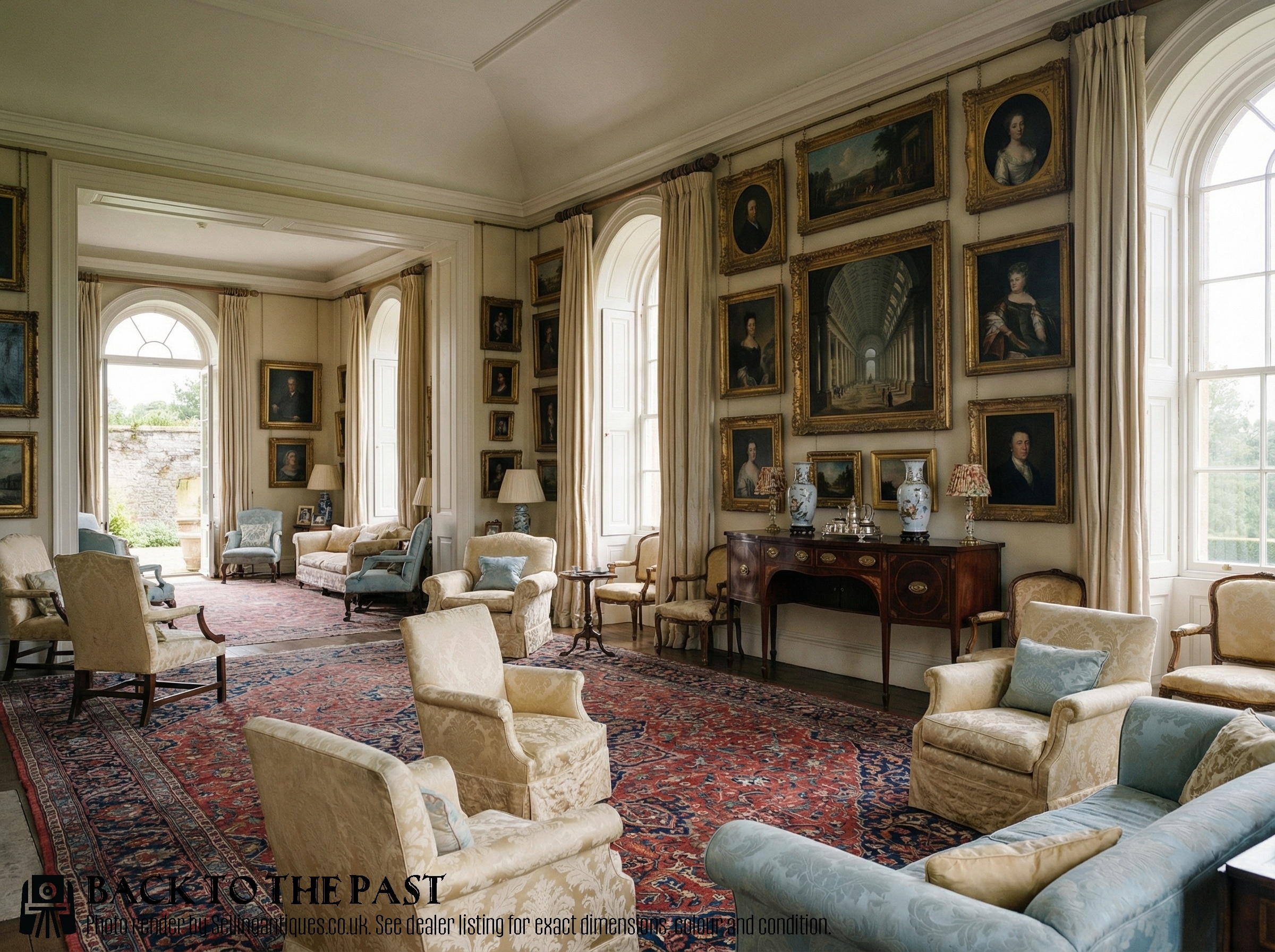
A georgian bowfront buffet table appears across this selection primarily as a mahogany sideboard featuring a curved, projecting front. These pieces emerge predominantly from the eighteenth century, the Regency period, and later revivals spanning the nineteenth and early twentieth centuries.
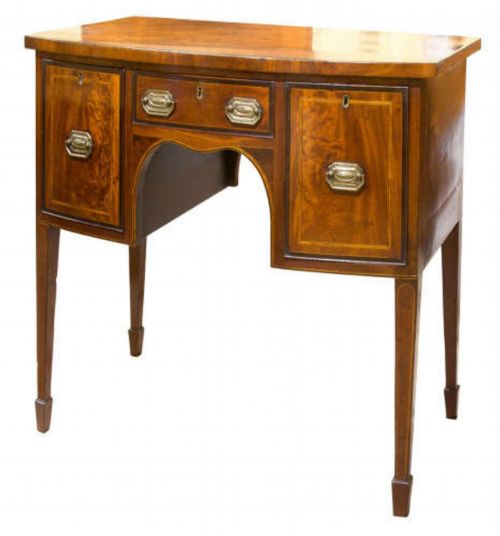
The form typically combines multiple drawers and cupboards designed for dining room service, resting upon four, six, or tapered legs. Most examples adhere to Sheraton or Hepplewhite design principles, balancing utility with graceful proportions.
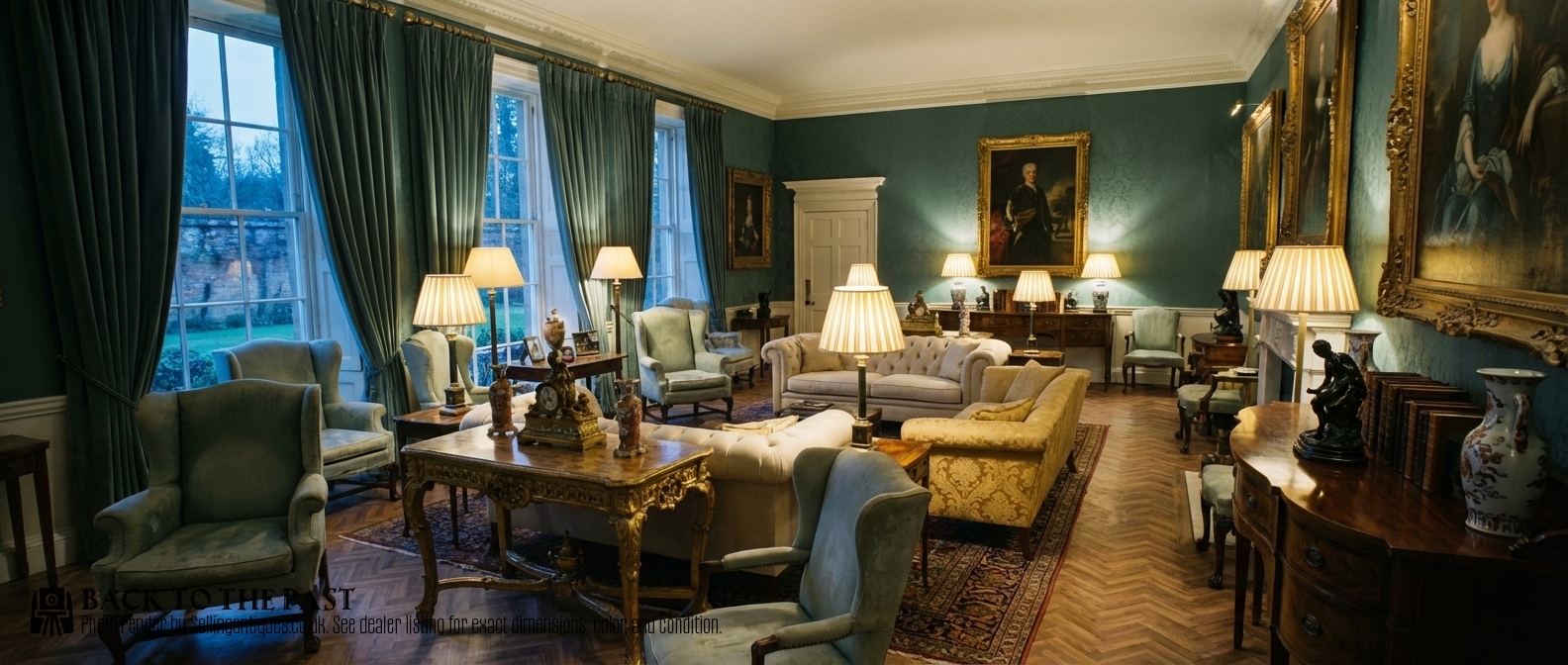
Materials and construction methods
Cabinetmakers constructed these pieces primarily from solid mahogany and flame mahogany veneer, selecting dense timbers capable of taking a deep, polished finish. Frame and drawer structures frequently incorporate secondary hardwoods suited to interior framing.
Detailing relies on precise woodworking techniques including boxwood inlay, satinwood banding, ebony stringing, and purpleheart accents. Brass hardware, such as original ring pulls and backplates, secures the drawer fronts.
Georgian Bowfront Buffet Table Retail Price Guide 2026
Typical asking prices for georgian bowfront buffet table among the pieces listed under this phrase on Sellingantiques today, from the lower quarter to the upper quarter. They describe what is for sale here now, not the wider market.
Some ingenious six-legged sideboards were built simply to ensure heavy timber sideboards stayed steady on uneven Georgian dining room floors.
Distinctions in craftsmanship and materials
Quality separates pieces by the selection of timber figures, where highly figured flame mahogany veneer and intricate boxwood or satinwood stringing elevate the visual impact. The crispness of hand-cut inlay and the retention of original brass handles indicate superior original manufacture.
Proportion and scale dictate the desirability of a piece, with smaller proportions and balanced six-legged or tapered support structures representing higher standards of period design.
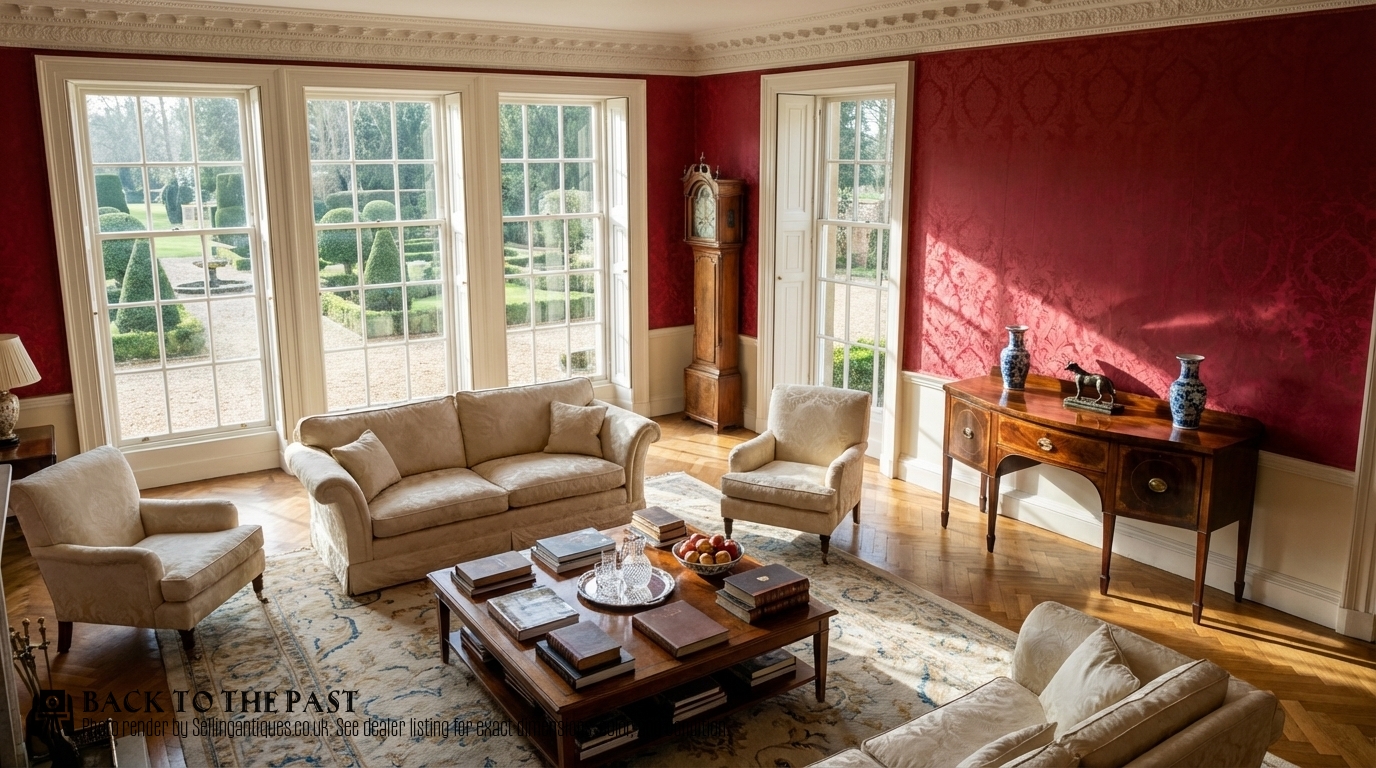
George Hepplewhite
The Georgian Bowfront Buffet Table Glossary
- Bowfront
- A convex curved front cabinet shape that projects outward in the centre, softening the linear geometry of a dining room.
- Flame mahogany
- A veneer cut from the fork of a mahogany tree that produces a distinctive flickering flame pattern across the wood grain.
- Inlay
- A technique where contrasting woods such as boxwood or satinwood are fitted into recessed channels within the primary surface to form decorative borders.
- Stringing
- Thin, narrow lines of contrasting wood or dark ebony inlaid into the surface of the furniture to outline drawers and borders.
- Sheraton
- A late eighteenth-century neoclassical furniture style characterised by straight tapered legs, geometric inlay, and classical restraint.
Georgian Bowfront Buffet Table: Frequently Asked Questions
What is a georgian bowfront buffet table used for?
These pieces served historically in dining rooms for storing silverware, linens, and serving dishes, while the broad top surface held food and drink during meals.
Today, they function similarly in modern dining spaces or act as prominent side tables in hallways and living rooms, offering significant concealed storage.
How do I identify a George III sideboard?
George III pieces generally date from the second half of the eighteenth century up to eighteen hundred, displaying refined proportions and neoclassical design influences.
Look for hand-cut dovetail joints, solid timber construction, and characteristic details such as boxwood stringing or tapered spade feet.
What is the difference between Sheraton and Regency styles?
Sheraton designs from the late eighteenth century emphasise light, elegant proportions, straight tapered legs, and delicate satinwood or boxwood inlay.
Regency pieces, spanning the early nineteenth century, tend to draw upon bolder classical motifs, occasionally incorporating heavier brass mounts and darker ebony stringing.
How do I care for antique mahogany furniture?
Maintain the wood by keeping it away from direct sunlight and sudden temperature changes, which can dry out the timber and veneer.
Apply natural beeswax periodically to nourish the mahogany surface and preserve the polished finish without building up heavy chemical layers.