
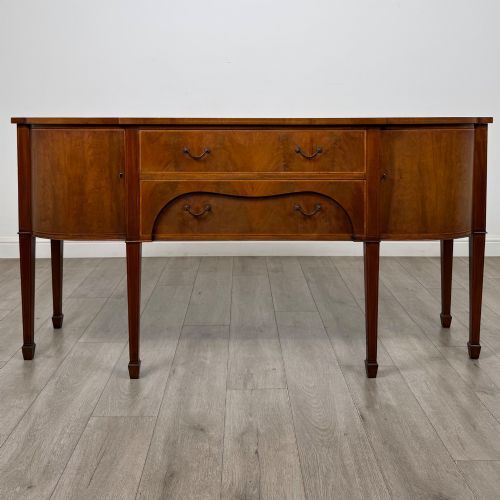
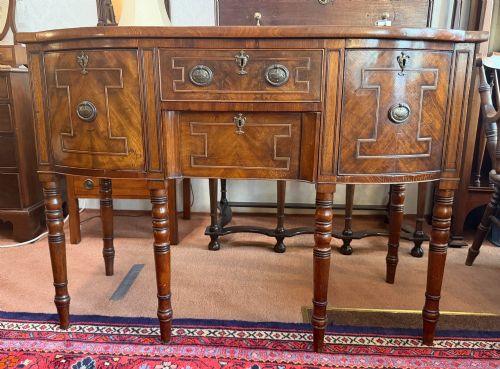
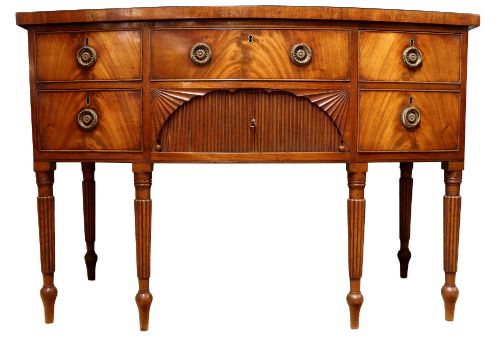
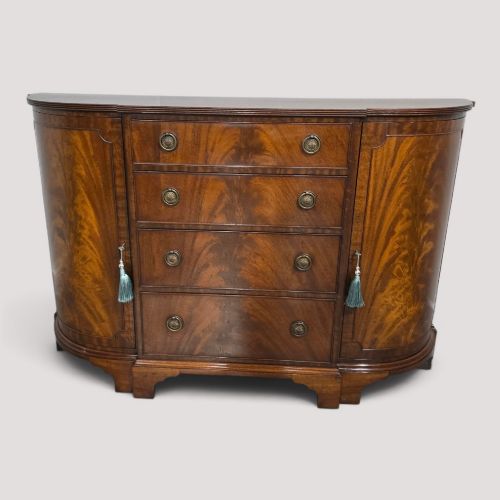
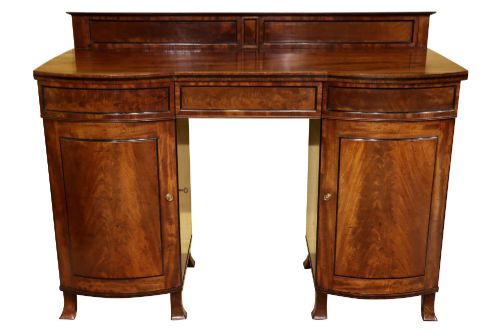
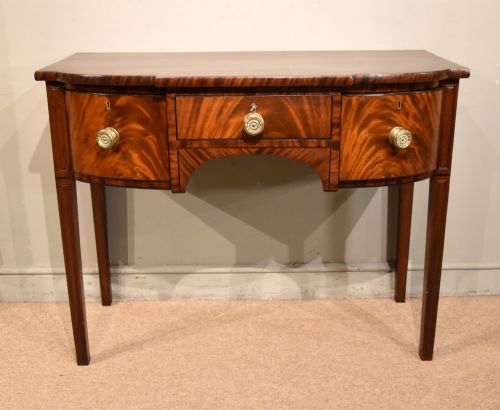
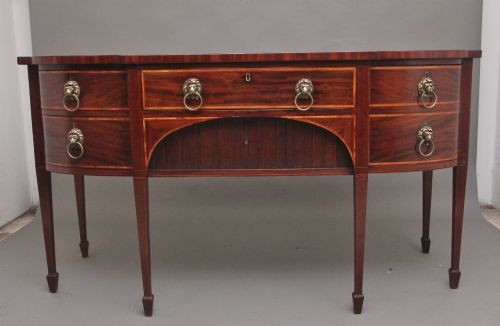


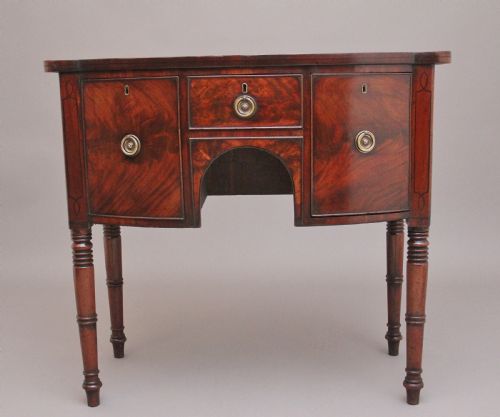
Regency Bowfront Buffet
A regency bowfront buffet brings architectural curve and fine timber to a dining room, uniting formal presence with deep storage.
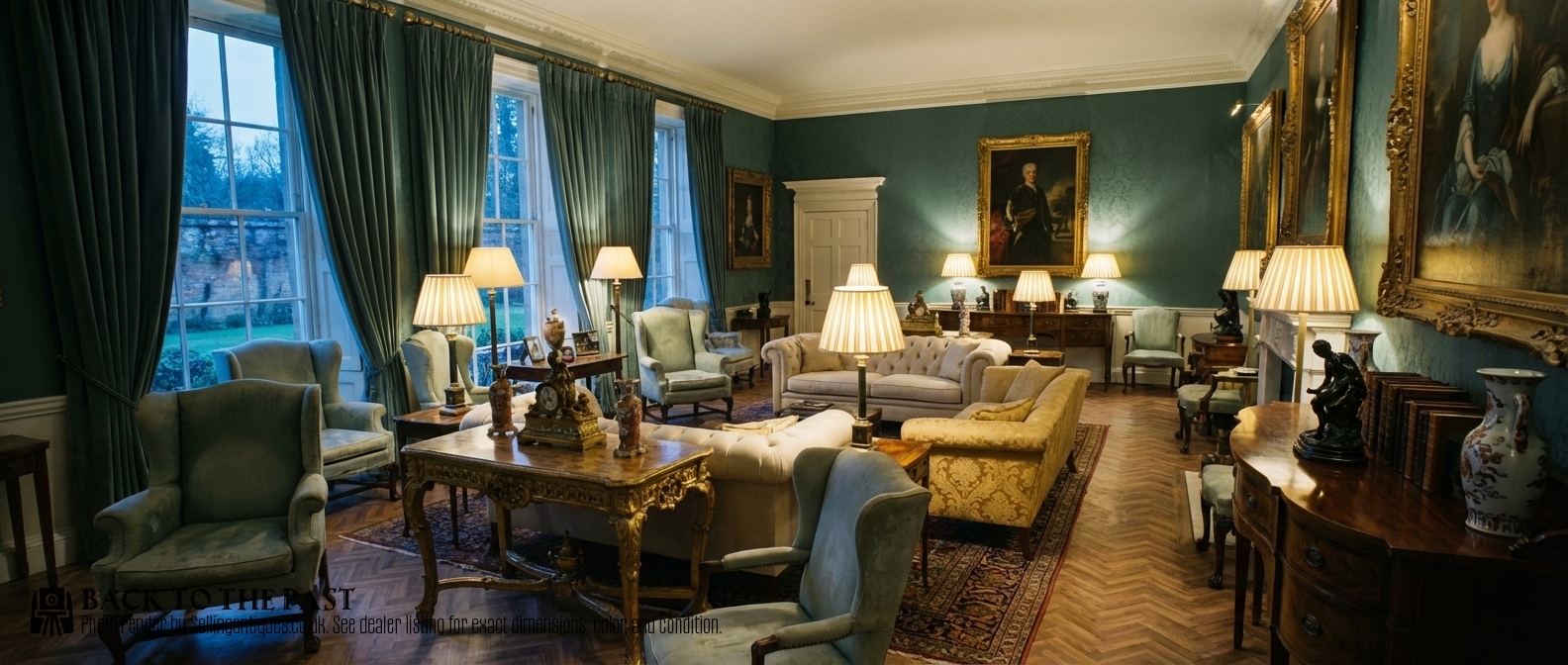
Regency Bowfront Buffet
A regency bowfront buffet combines the sweeping forward curve of the cabinet front with substantial storage capacity designed for dining rooms. Most examples you encounter belong to the nineteenth century, drawing on Georgian and Regency design idioms.
The form spans standard sideboards, dressers, and pedestals, often constructed in substantial proportions or occasionally rendered in smaller scales suitable for compact interiors.
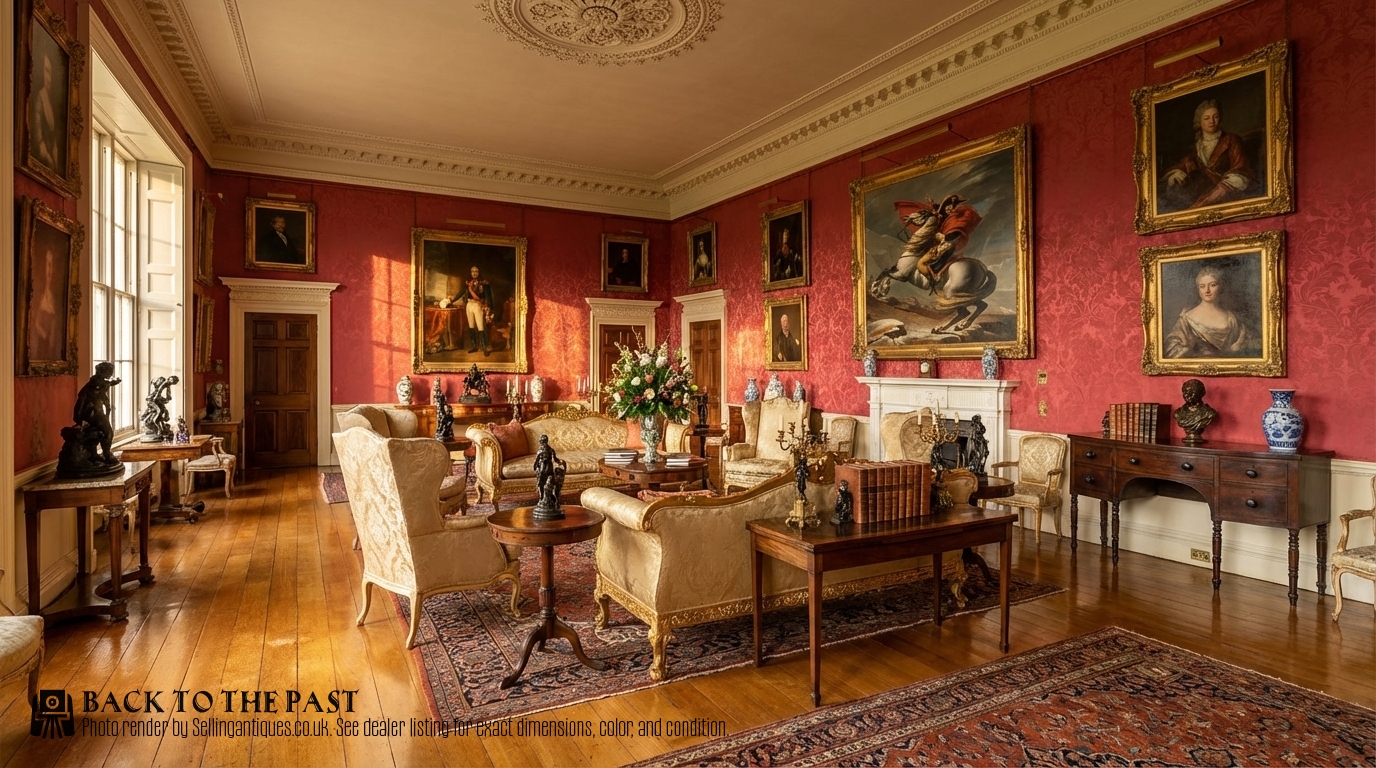
Materials and construction
Mahogany forms the primary body of these pieces, frequently enhanced by figured flame mahogany veneer across the drawer fronts and doors. Cabinetmakers applied contrasting timbers such as boxwood and satinwood inlay, alongside delicate ebony stringing, to outline the curved profiles.
Brass hardware, including ring pulls and escutcheons, complements the deep reddish-brown tones of the polished wood. Joinery relies on traditional cabinet techniques to stabilise the sweeping convex curves of the front facade.
The listings span the eighteenth, nineteenth, and twentieth centuries, uniting Georgian, Regency, and William IV styles.
Distinctions in craftsmanship
The selection of timber grain largely dictates the visual impact, with richly figured flame veneers marking the finest examples. Precision in the inlaid borders and stringing reveals the hand of a more accomplished workshop.
Proportion and scale also separate standard production from superior pieces, particularly where the curved bowfront integrates seamlessly with the surrounding frame and original brass fittings.
The Regency Bowfront Buffet Glossary
- Bowfront
- A convex, outwardly curving cabinet front that softens the linear geometry of a dining room. This curved facade is characteristic of the form.
- Flame mahogany
- A veneer cut from timber where the grain resembles flickering flames. It provides dynamic visual movement across drawer fronts.
- Stringing
- Thin inlay lines of contrasting wood used to edge panels and drawers. It adds delicate definition to the mahogany structure.
- Pedestal sideboard
- A form featuring distinct cabinet pedestals flanking a central section. Some variations incorporate this grander architectural layout.
Regency Bowfront Buffet: Frequently Asked Questions
How do I spot a genuine period piece?
Examine the timber selection and construction methods underneath and behind the cabinet. Period pieces utilise old growth mahogany and traditional hand-cut joinery.
Look closely at the secondary woods used for drawer linings and backboards, as these often reveal the expected age of the piece.
Where should I place a bowfront sideboard?
These pieces suit dining rooms, grand hallways, or spacious living areas where their curved frontage can be appreciated without obstruction. Ensure adequate clearance for drawers and cabinet doors to open fully.
Keep the surface clear of direct heat sources to protect the polished wood finish and delicate veneer.
What is the difference between Georgian and Regency styles?
Georgian furniture often emphasises classical architectural proportions and heavier carved detailing. Regency design tends to introduce cleaner lines influenced by classical antiquity.
Both styles overlap significantly in the nineteenth century, particularly in provincial cabinetmaking.
How do I maintain the mahogany surface?
Apply natural beeswax periodically to nourish the wood and maintain a soft lustre. Avoid silicone polishes that build up residue over time.
Protect the top from moisture by using coasters and mats under serving dishes.