


Small Regency Server
These small regency server pieces offer compact dining room utility and architectural presence for smaller spaces.
Small Regency Server
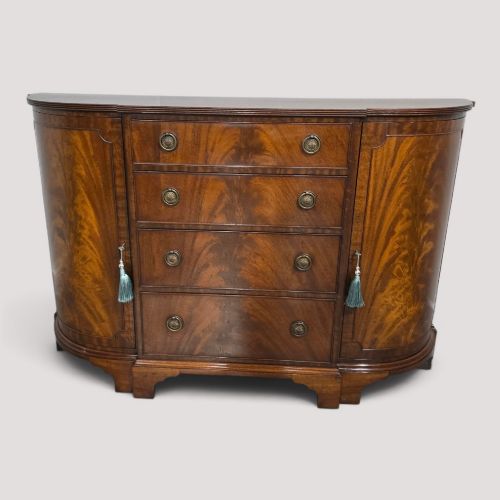
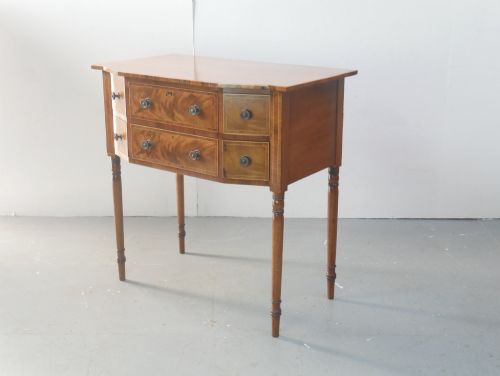
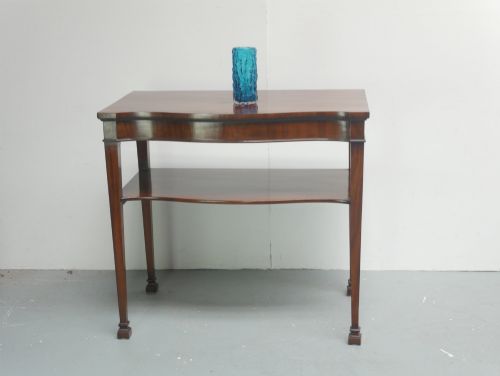
When you search for a small regency server, you are looking at compact sideboards, chiffoniers, side cabinets, and console tables from the nineteenth century and later revival periods. These pieces are chosen for their modest proportions, which allow them to fit into hallways and dining rooms without dominating the floor space.
You are most likely to meet mahogany examples on this page, often featuring bow fronts, ebony stringing, or flame mahogany veneers. They combine storage and surface space in forms that range from strict Regency design to later Georgian style revivals.
How they were made
Cabinet makers utilised solid mahogany and oak for structural integrity, applying figured flame mahogany veneers to visible drawer fronts and door panels to create rich grain patterns. Drawer linings in secondary timbers such as oak demonstrate traditional joinery methods appropriate to the period.
Decorative detailing relied on fine contrasting inlays, including ebony stringing and satinwood highlights, alongside cast brass hardware. These elements were applied by hand to enhance the architectural lines of the bow fronts and side cabinets.
The listings span from the early nineteenth century through to twentieth-century revivals, constructed primarily in mahogany, oak, and satinwood.
What varies in quality
The standard of a small regency server depends significantly on the choice of timber and the restraint of its decorative details. Pieces featuring intensely figured flame mahogany veneers and crisp inlay demonstrate superior workshop selection.
Proportion and execution define the higher tier of these serving pieces. Subtle handling of bow fronts and neat dimensions separate master cabinet work from simpler utilitarian production.
The Small Regency Server Glossary
- Bow front
- A convex curved cabinet front that swells outward in the centre. This shape softens the corners of dining room furniture and was popular during the Regency period.
- Chiffonier
- A low cabinet with doors enclosing shelves, often surmounted by a small shelf or tier supported on pillars. It serves as a compact sideboard or serving surface.
- Flame mahogany
- A veneer cut from the fork of the mahogany tree where branches meet the trunk. This produces a distinctive flickering flame pattern highly prized in cabinet work.
- Stringing
- A thin strip of contrasting wood inlaid into the surface of a piece in straight lines. It creates delicate geometric borders around drawer fronts and tabletops.
- Satinwood
- A durable hardwood with a lustrous yellowish grain used for contrasting inlays and decorative banding. It provides a bright accent against darker mahogany bodies.
Small Regency Server: Frequently Asked Questions
Where were small regency servers used?
These servers were primarily placed in dining rooms and grand hallways to assist with serving food and storing tableware. Their compact depth allowed them to sit flush against walls in restricted spaces.
Today, they function well in modern hallways, living rooms, and bedrooms as display surfaces and storage units.
How do I identify a genuine period piece?
Look closely at the secondary timbers, such as oak drawer linings, and the hand-cut dovetails joining the drawer boxes. Period pieces display natural wear and construction methods consistent with nineteenth-century workshop practices.
Compare the proportions and veneer selection against documented examples from the Regency and Georgian eras to confirm authenticity.
How do I care for mahogany surfaces?
Keep mahogany furniture away from direct sunlight and heat sources to prevent the wood and veneers from drying out or fading. Regular dusting with a soft, dry cloth preserves the finish.
Apply a traditional beeswax polish occasionally to nourish the timber and maintain its natural lustre without building up heavy residues.