
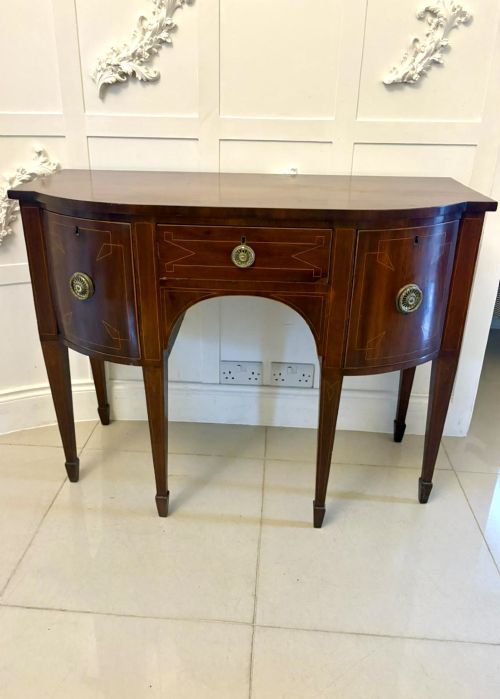
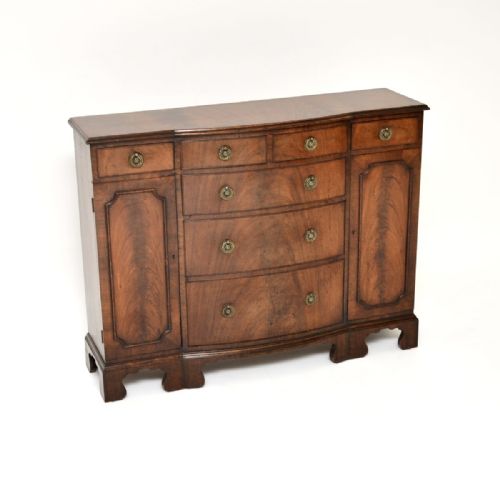
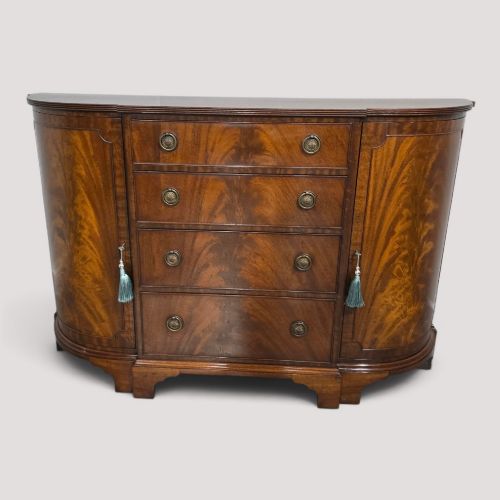
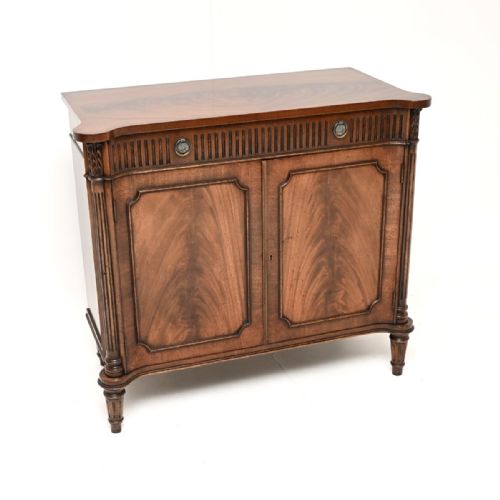
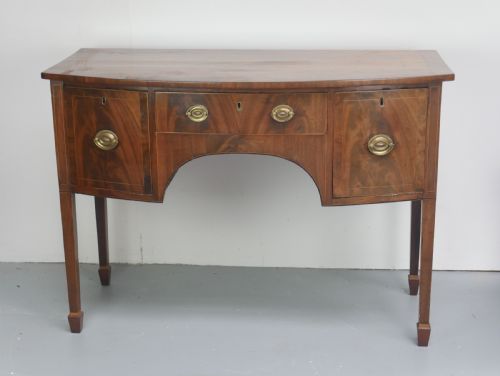


Small Mahogany Buffet
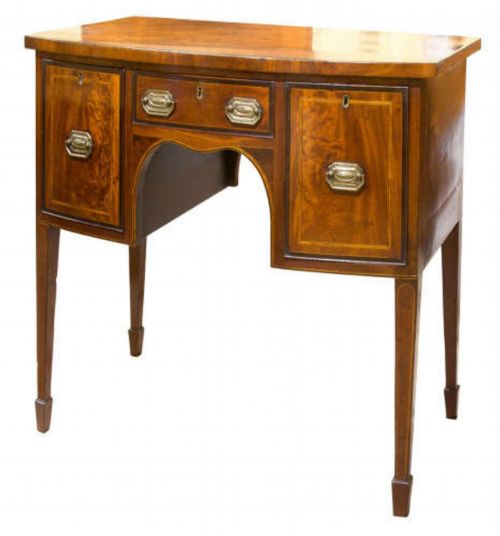
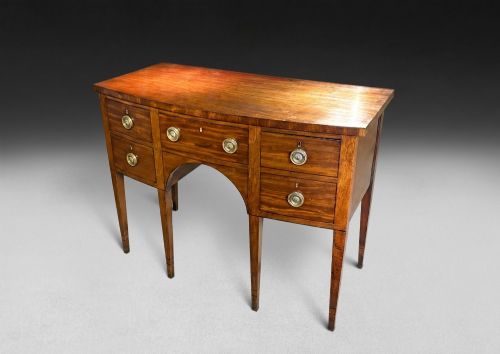
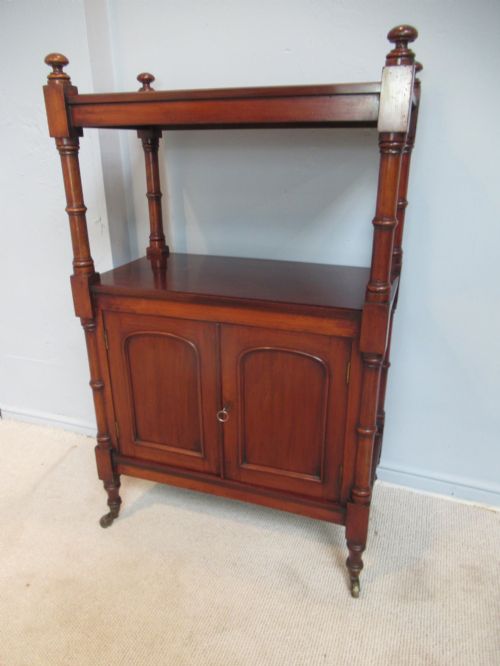
A small mahogany buffet brings compact dining-room storage in rich timber, uniting compact proportions with eighteenth- and nineteenth-century cabinet-making skill.
Small Mahogany Buffet
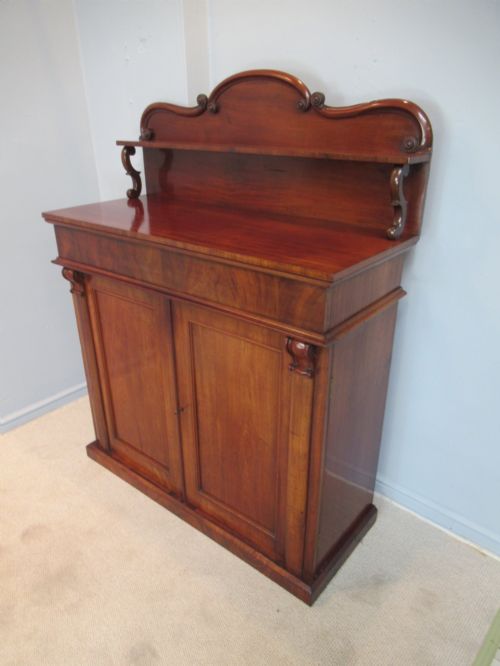
A small mahogany buffet comprises low sideboards, chiffoniers, and compact cabinets designed to hold dining ware while occupying minimal floor space in domestic interiors. When searching for a small mahogany buffet, a buyer encounters Georgian, Regency, and Victorian pieces built in bow-front, serpentine, and breakfront shapes.
The evidence shows forms ranging from George III bow-front servers to later Victorian chiffoniers equipped with doors and raised backs. These items originate predominantly from the eighteenth and nineteenth centuries, spanning Georgian elegance through to later revival periods.
How they were made
Cabinet-makers built these pieces using solid mahogany and flame mahogany veneer laid over secondary timbers, often accentuating the facades with contrasting stringing in boxwood or satinwood. Selected examples integrate purpleheart banding or brass fittings to outline drawers and doors.
Joinery techniques relied on traditional frame-and-panel construction for stability, while curved bows and serpentine fronts required specialised steaming and hand-shaping of timber.
Listings feature pieces spanning the Georgian, Regency, and Victorian periods, constructed from solid mahogany, flame mahogany veneer, and purpleheart.
What varies in quality
Quality rests in the choice of timber figurations, such as highly figured flame mahogany veneer, matched against the crispness of inlaid borders and edge banding. Finer examples display meticulous grain continuity across drawer fronts and doors.
Proportion and scale dictate the desirability of these pieces, with genuinely small dimensions and sophisticated serpentine or bow fronts achieving a more refined architectural balance than standard utility cupboards.
Gillows
The Small Mahogany Buffet Glossary
- Bow-front
- A cabinet or sideboard design featuring a convex, outward-curving central facade. This curved profile softens the rectangular lines of dining-room furniture.
- Chiffonier
- A low, compact sideboard or cabinet equipped with shelving or a raised back. Victorians utilised these pieces extensively for storing glassware and serving dishes.
- Serpentine
- A front profile shaped in a continuous undulating line, curving outward in the centre and inward at the sides. This complex contour requires advanced woodworking skill.
- Stringing
- Thin inlay lines of contrasting timber set flush into the surface of the primary wood. Cabinet-makers used boxwood or satinwood to frame drawer edges and panels.
Small Mahogany Buffet: Frequently Asked Questions
Where should I place a small mahogany buffet?
These compact pieces fit well in dining rooms, hallways, or living spaces where floor area is restricted. Their shallow depth allows them to sit against walls without obstructing walkways.
They function effectively as serving surfaces during meals or as everyday storage cabinets for tableware and linens.
How do I identify a Georgian sideboard?
Georgian pieces typically exhibit classical proportions, hand-cut dovetail joints in the drawer construction, and restrained inlay work. The timber often displays a deep, warm patina developed over centuries.
Look for architectural mouldings and tapered legs characteristic of eighteenth-century design.
What is the difference between a sideboard and a chiffonier?
A sideboard is primarily a long serving table with drawers and cupboards designed for dining rooms. A chiffonier is generally smaller and frequently incorporates a raised shelf or mirror back.
Chiffoniers emerged more prominently during the nineteenth century as versatile living-room storage units.
How do I care for antique mahogany furniture?
Maintain the timber by keeping it away from direct sunlight and sudden temperature changes that cause wood to split. Dust regularly with a soft, dry cloth.
Apply occasional applications of traditional beeswax to nourish the grain and preserve the surface sheen.