
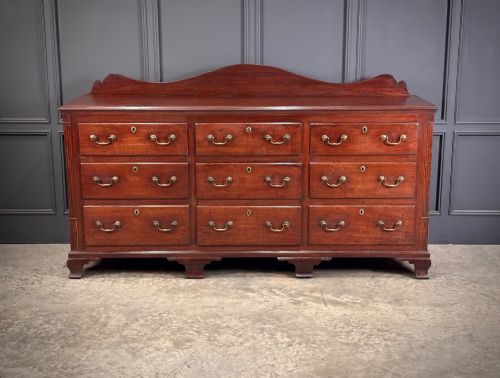
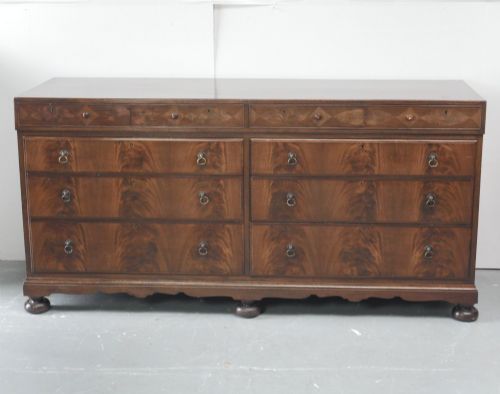
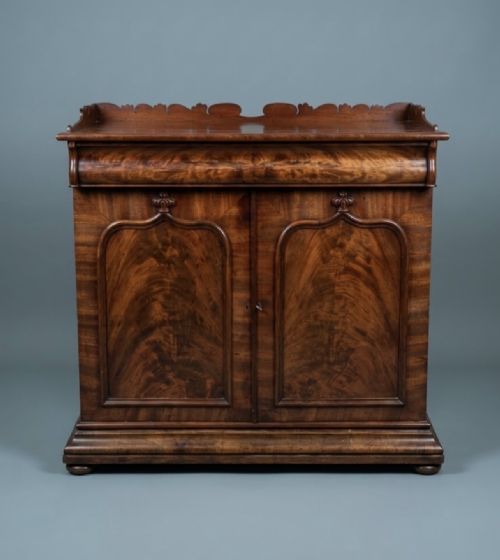
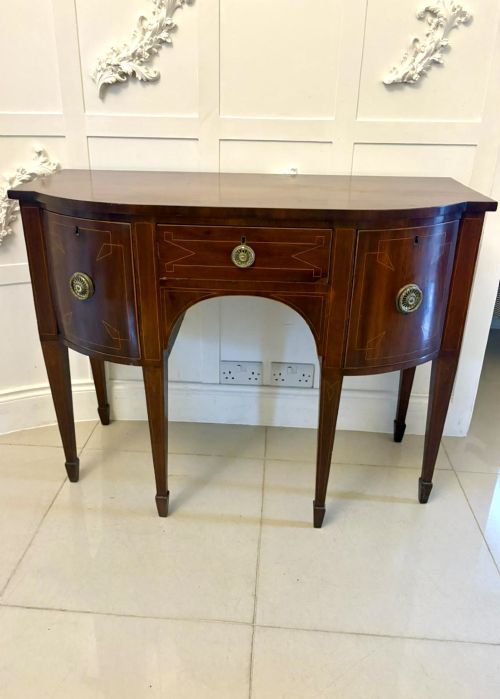
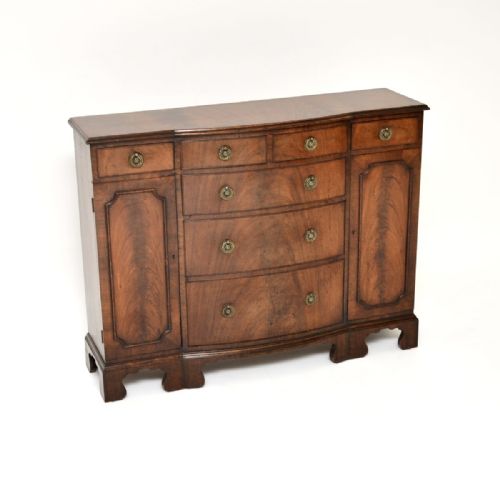
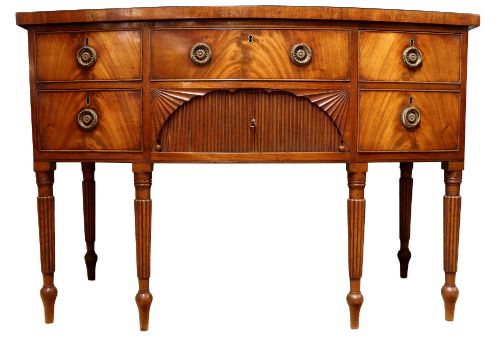
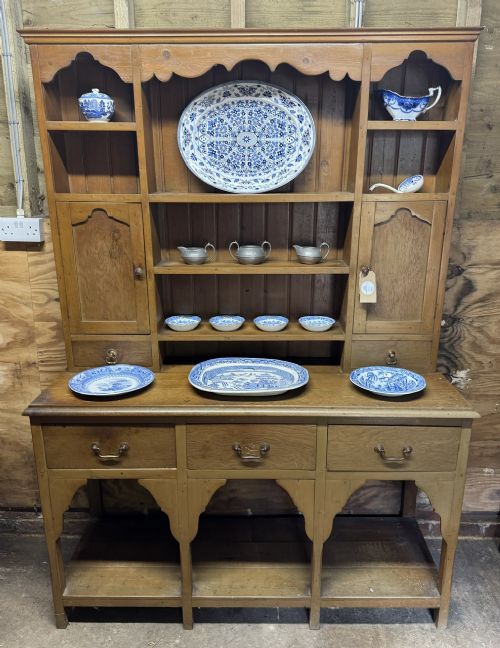
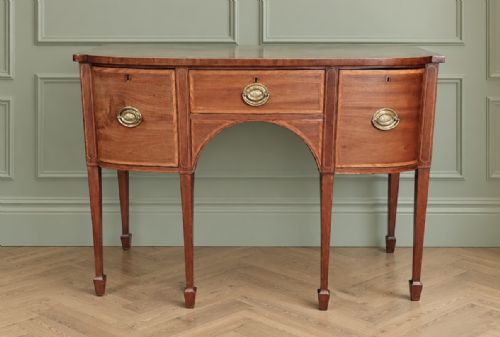
Georgian Wooden Sideboard
A georgian wooden sideboard brings substantial presence to a room, offering deep timbers and practical storage developed across the eighteenth and nineteenth centuries.
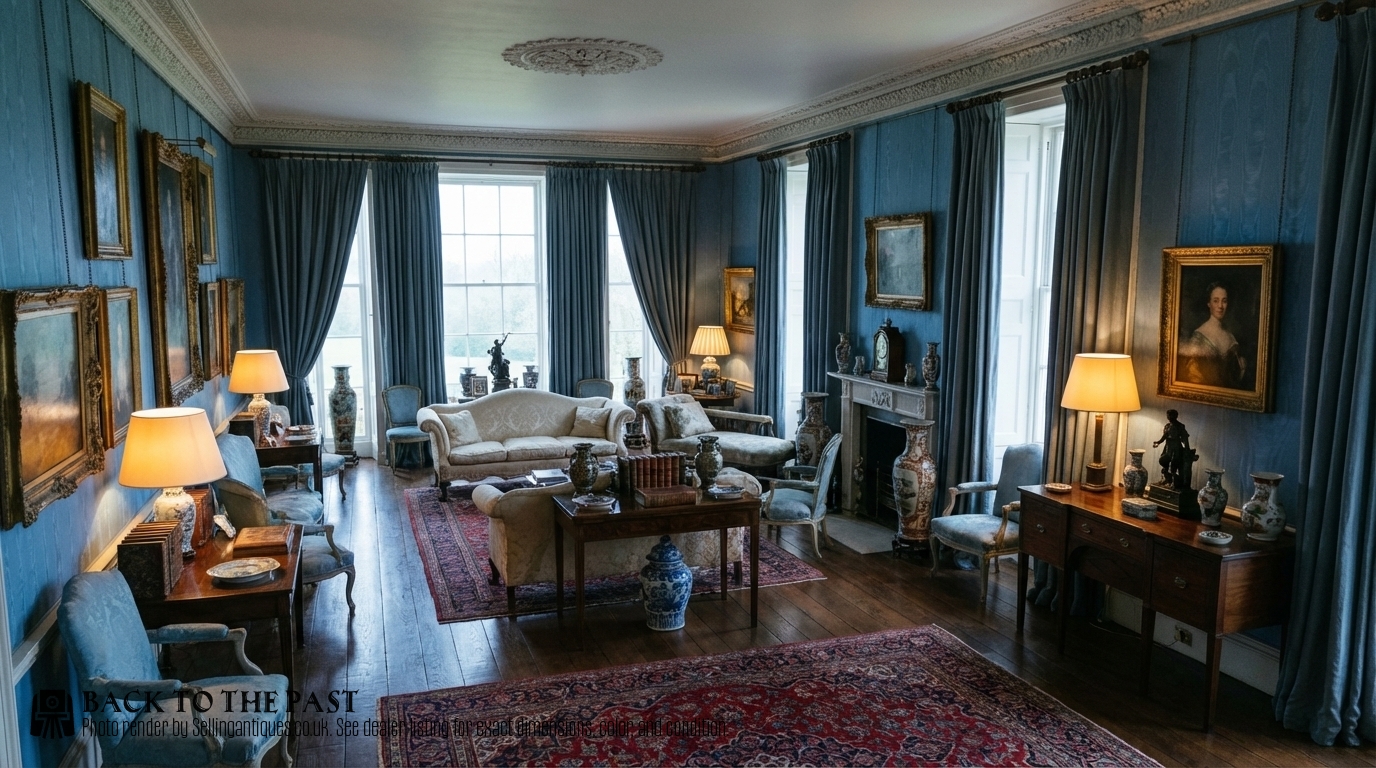
Georgian Wooden Sideboard
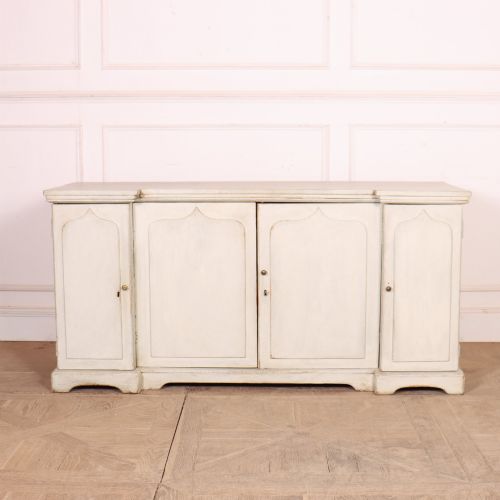
When searching for a georgian wooden sideboard, buyers encounter a robust category that spans formal dining room storage and vernacular country pieces. The selection includes formal George III and Regency designs alongside provincial oak dresser bases and later revival interpretations.
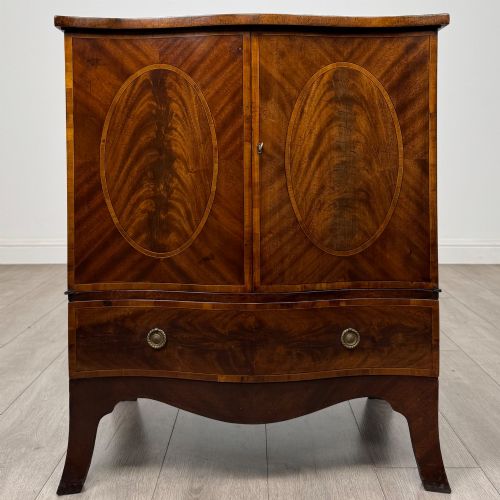
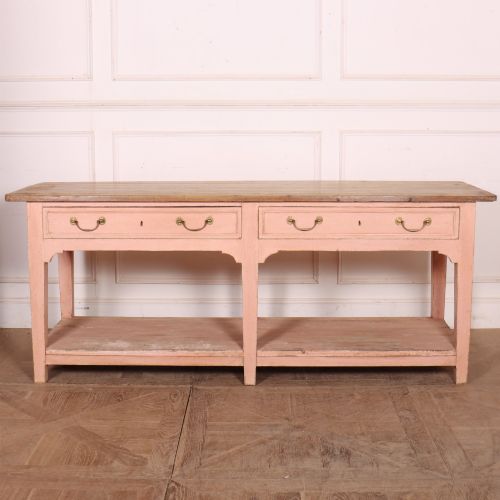
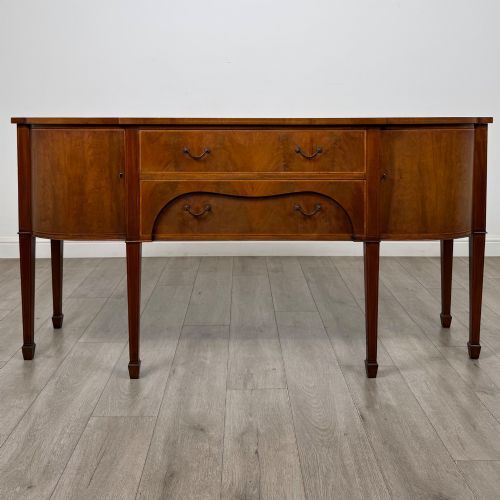
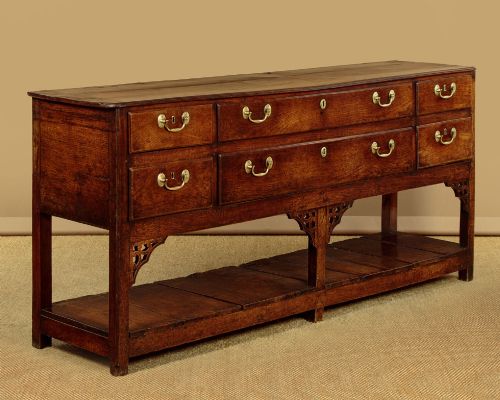
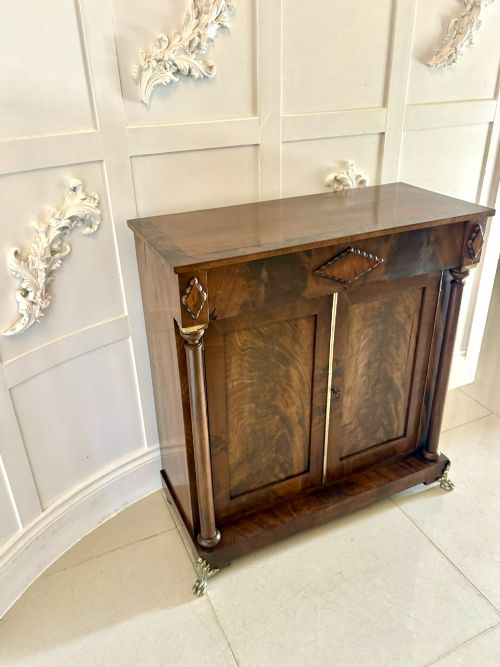
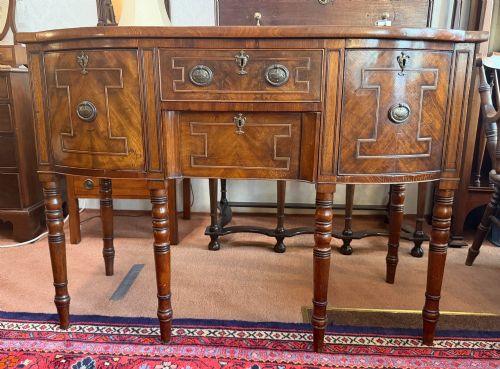
Most examples found in this inventory utilise mahogany or oak, taking forms such as bow-fronted servers, serpentine cabinets, and potboard dresser bases. These items served traditional domestic functions for dining and food preparation, evolving from simple open storage to enclosed cupboards and drawers.
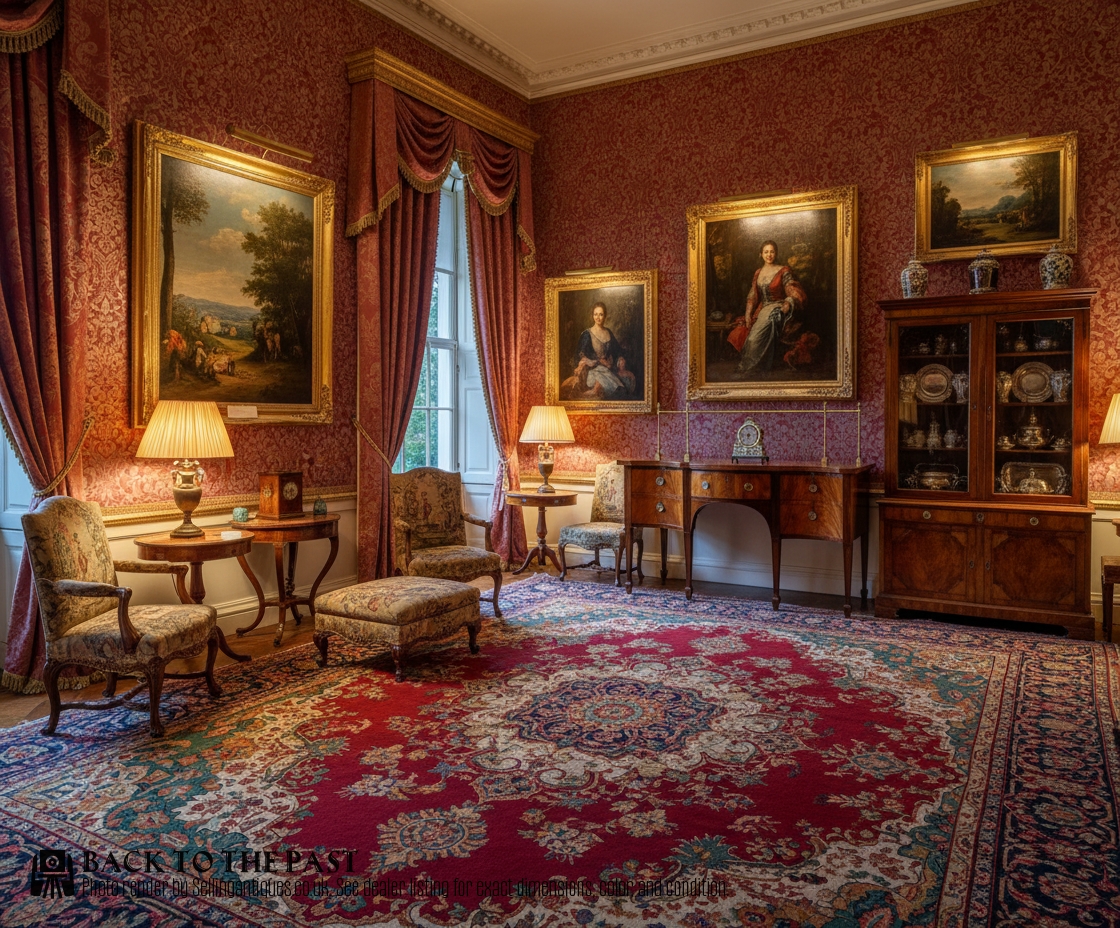
How they were made
Cabinet makers constructed these pieces primarily using solid mahogany, oak, and pine, frequently applying flame mahogany veneers to primary surfaces. Structural elements often incorporated secondary timbers like pine and oak for drawer linings and internal framing.
Decorative detailing relied on natural contrasts through boxwood and satinwood inlay, alongside brass handles and escutcheons. Joinery techniques combined dovetailed drawer construction with pegged framing, ensuring durability across centuries of domestic use.
Georgian Wooden Sideboard Retail Price Guide 2026
Typical asking prices for georgian wooden sideboard among the pieces listed under this phrase on Sellingantiques today, from the lower quarter to the upper quarter. They describe what is for sale here now, not the wider market.
Several items retain their original cottage patina, recording centuries of family meals and quiet farmhouse routines in the grain.
What varies in quality
The degree of refinement separates standard utility furniture from pieces produced by master cabinet makers. Selection of timber grain, particularly figured and flame mahogany matched across drawer fronts, distinguishes superior workshops from basic production.
Proportion and the handling of complex shapes like serpentine and bow fronts dictate the visual success of a piece. Original brass hardware, crisp inlay work, and untouched patination further elevate the standing of an individual item.
Whytock and Reid
The Georgian Wooden Sideboard Glossary
- Bow front
- A convex curved front on a cabinet or sideboard. This shape gained popularity during the late eighteenth century to soften room angles.
- Serpentine
- A gently undulating front curve featuring a convex centre flanked by concave wings. It demands advanced cabinet making skill to execute properly.
- Potboard
- An open lower shelf on a dresser base designed for storing pots and heavy kitchen utensils. It forms a defining characteristic of country vernacular furniture.
- Chiffonier
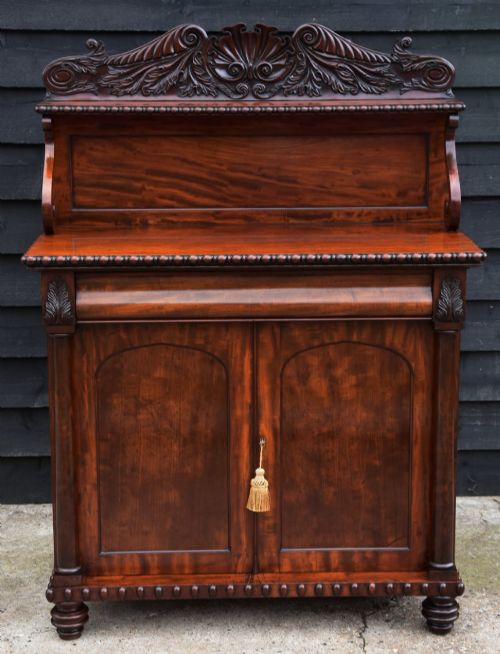
- A compact sideboard or cabinet equipped with drawers and enclosed lower shelves. It emerged during the Regency period for smaller dining spaces.
- Flame mahogany
- Timber cut from the fork of the mahogany tree to reveal a distinctive flickering grain pattern. Cabinet makers reserved this veneer for primary focal surfaces.
Georgian Wooden Sideboard: Frequently Asked Questions
How do I spot a true period piece?
Examine the construction methods visible within the drawer linings and internal framing. Hand-cut dovetails and timber shrinkage patterns provide reliable indicators of age.
Compare the secondary woods used for backing and interior panels against known regional practices of the eighteenth and nineteenth centuries.
Where were sideboards used in the home?
These items stood primarily in dining rooms to hold serving dishes, cutlery, and glassware during meals. Larger examples functioned as central staging points for heavy platters.
Country variations often served utility roles in farmhouses and kitchens for food preparation and general storage.
How do I care for antique timber?
Maintain stable humidity levels in the room to prevent the solid woods and veneers from splitting or warping. Keep furniture away from direct heat sources and strong sunlight.
Apply traditional beeswax occasionally to nourish the surface and preserve the historic patination accumulated over generations.
What is the difference between a sideboard and a dresser base?
Sideboards generally feature enclosed cabinetry and drawers tailored for formal dining rooms during the Georgian and Regency eras. Dresser bases often originate from rural workshops and frequently incorporate open potboards or plate racks.
Both forms utilise heavy timbers like oak and mahogany, yet their regional origins dictate their distinct structural proportions.