



Ebony Inlay Sideboard
An ebony inlay sideboard brings deep contrasting dark wood details and fine proportions into a room.
Ebony Inlay Sideboard
When you search for an ebony inlay sideboard, you are looking at substantial timber serving and display furniture built to anchor a dining room or parlour. These pieces combine robust structural carcases with dark linear detailing that defines the edges, panels, and doors.
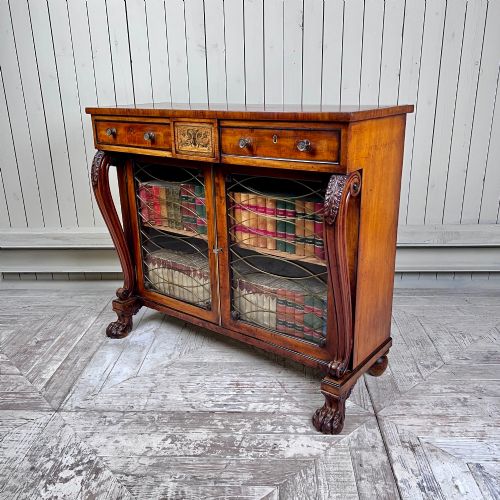
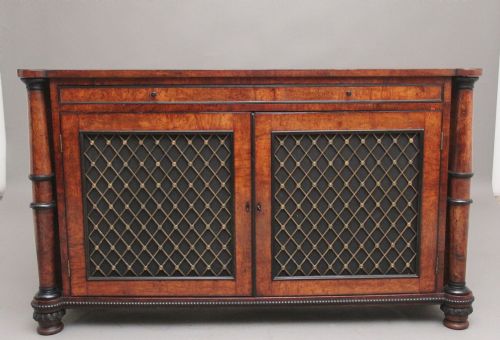
The versions you are most likely to meet on this page date primarily from the Regency and Victorian periods, taking forms such as breakfront sideboards, credenzas, and glazed pier cabinets. They appear in mahogany, pollard oak, burr walnut, and rosewood, enriched with contrasting dark bands.
Makers of these items utilised distinct stylistic periods including George IV, French Napoleon III, and Grand Regency designs. Each configuration offers practical surface space alongside enclosed storage for dining silver, linens, or books.
How they were made
Cabinet makers constructed the primary carcases using dense native and exotic hardwoods such as mahogany, rosewood, and pollard oak, often selecting burr walnut for highly figured primary surfaces. They then prepared precise channelled recesses into the timber to receive contrasting dark wood elements.
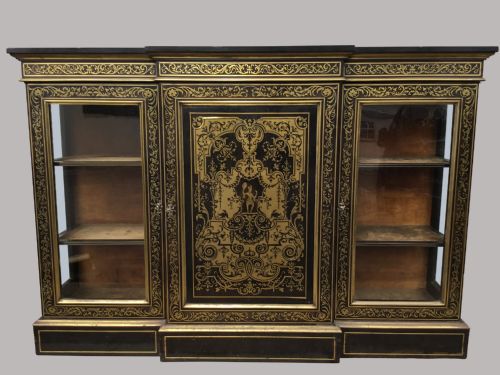
Workers inserted strips of solid ebony along with fine brass stringing and ormolu mounts to create sharp geometric borders and linear patterns. Glass panels and Boulle marquetry work additionally feature on specific French and English side cabinets from the mid nineteenth century.
Listings feature pieces spanning from the Regency period through the Victorian era, including French Napoleon III examples.
What varies in quality
The standard of a piece rests heavily on the precision of the timber selection and the sharpness of the contrasting inlay work. Superior examples display tightly figured grain patterns where the dark ebony stringing sits completely flush with the surrounding polished surface.
Construction methods also dictate grade, distinguishing between straightforward mahogany carcases and elaborate breakfront credenzas featuring ormolu mounts, brass details, and glazed doors. The crispness of the joinery and the integrity of the secondary timbers reveal the original maker's skill.
The Ebony Inlay Sideboard Glossary
- Ebony
- A dense, heavy dark wood used for contrasting inlay and stringing lines. It provides a sharp, deep black accent against lighter timbers like mahogany and walnut.
- Breakfront
- A cabinet design where the central section projects forward from the flanking outer sections. This architectural arrangement creates depth and shadow across the front elevation.
- Credenza
- A low dining room sideboard or display cabinet often fitted with glass doors and decorative mounts. Victorian and French examples frequently combine multiple exotic woods.
- Pier Cabinet
- A narrow upright display cabinet designed to fit the wall space between windows. These pieces usually feature glass doors and elaborate marquetry.
- Ormolu
- Gilt bronze mounts applied to furniture for decorative effect. It appears alongside dark wood stringing on mid nineteenth century pieces.
Ebony Inlay Sideboard: Frequently Asked Questions
What is an ebony inlay sideboard?
An ebony inlay sideboard is a wooden storage piece featuring dark contrasting wood stringing or banding. These items function as formal serving surfaces and display units.
They originate mainly from the Regency and Victorian eras, utilising timbers like mahogany, rosewood, and walnut.
How do I date a sideboard?
Dating relies on observing the combination of timber choices, decorative hardware, and overall architectural style. Regency pieces often show clean mahogany lines with brass stringing, while Victorian examples tend to use burr walnut and heavier proportions.
Looking at the secondary timbers inside drawers and backboards helps confirm the period of construction.
Where were these cabinets used?
These pieces were placed in dining rooms, drawing rooms, and formal parlours of grand houses. They served to store dining silver, glassware, and household linens.
Display variations with glass doors also acted as furniture for showing porcelain and decorative objects.
How do I care for polished wood?
Maintain polished hardwood surfaces by keeping them away from direct sunlight and sudden temperature changes. Regular dusting with a soft, dry cloth preserves the finish.
Avoid using silicone-based polishes that can build up a film over the delicate ebony inlay.