



Ebony Display Cabinet
An ebony display cabinet brings deep, dark timber and glazed panels together to frame curated collections with architectural presence.
Ebony Display Cabinet
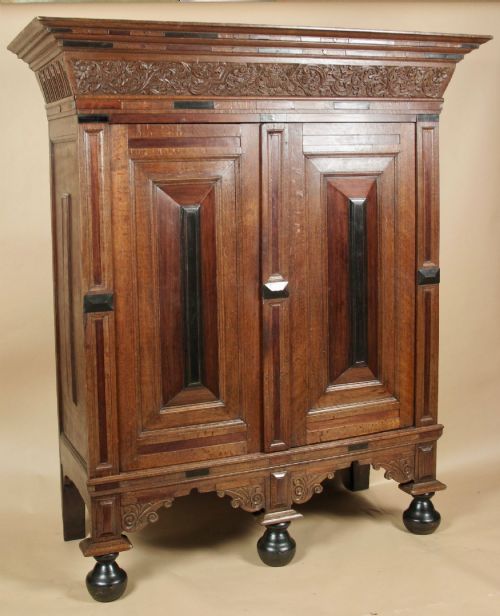
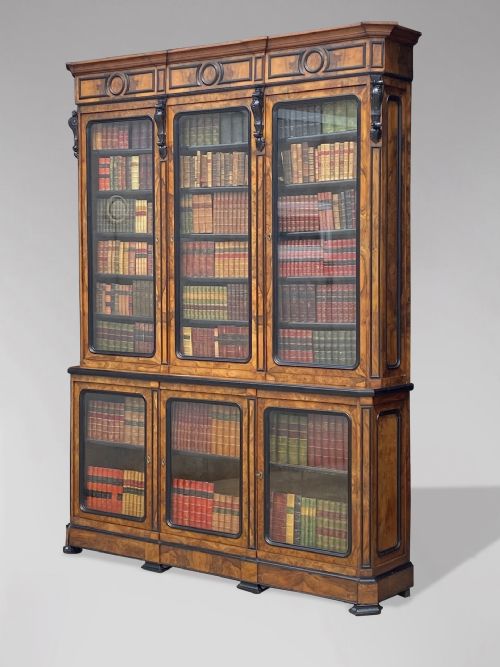
An ebony display cabinet is a storage piece designed to showcase objects behind glass, appearing most frequently in Victorian, Regency, and seventeenth-century forms. These pieces range from compact pier cabinets and side cabinets to larger credenzas, bookcases, and Dutch kussenkast armoires.
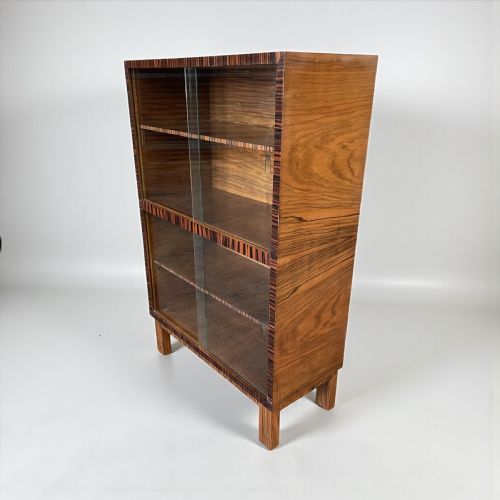
The materials span solid exotic timbers alongside ebonised wood, often enhanced by contrasting veneers such as burr walnut, rosewood, and amboyna. Glazed doors and open shelves dominate the construction, tailored for holding collections of books, porcelain, and curiosities.
Originating across English, French, and Dutch workshops, these cabinets showcase regional cabinet-making traditions from Dutch Baroque and French Second Empire to the Victorian Aesthetic Movement and Art Deco periods.
How they were made
Makers utilised dense timbers like solid ebony or applied ebonisation to secondary woods, pairing the dark surfaces with contrasting veneers of burr walnut, rosewood, and thuya wood. Brass mountings, ormolu details, and intricate penwork provide metallic highlights against the dark grain.
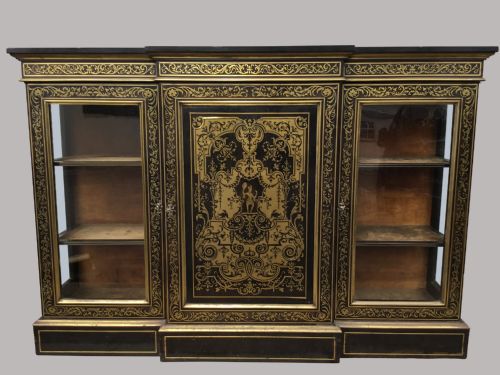
Construction techniques relied on precise cabinetry frames to support heavy glass panels in doors and vitrines. Marquetry inlay and Boulle brass-and-tortoiseshell work decorate the fascias, requiring steady hand-cutting and careful veneering.
Listings span multiple eras from the 17th Century through Regency, Victorian, and Art Deco periods, utilising brass, glass, and ormolu.
What varies in quality
The calibre of an ebony display cabinet rests on the depth of the timber selection and the precision of its contrasting inlays. Pieces featuring genuine solid exotic woods or fine burr walnut and amboyna veneers demonstrate superior workshop standards compared to simpler ebonised alternatives.
Decorative hardware and mounts dictate the upper tiers of craftsmanship. Hand-chased ormolu, detailed brass inlay, and sophisticated marquetry distinguish exhibition-grade items from standard domestic furniture.
The Ebony Display Cabinet Glossary
- Ebonised
- Wood treated to imitate the dark, heavy appearance of natural ebony. This technique was widely utilised on Victorian and nineteenth-century furniture.
- Pier Cabinet
- A narrow cabinet built to fit the wall space between windows. These tall, glazed pieces frequently incorporate ebony framing and marquetry.
- Boulle
- A form of marquetry employing brass and tortoiseshell inlaid into a dark ground. It appears on nineteenth-century French credenzas and cabinets.
- Credenza
- A low dining or drawing-room cabinet used for display and storage. They often feature central glazed doors flanked by cupboards.
- Vitrine
- A glass-fronted cabinet or display case designed for showing ceramics and curiosities. Many examples include adjustable bookshelves.
Ebony Display Cabinet: Frequently Asked Questions
What is an ebony display cabinet used for?
These cabinets serve to protect and display collections of ceramics, glass, books, and small curiosities behind glass panels. The enclosed shelving keeps dust away from delicate items while presenting them clearly.
Historically, they anchored formal drawing rooms and libraries, providing both surface utility and architectural decoration. Today, they function similarly in domestic interiors to highlight curated groupings.
How do I date a Victorian ebony cabinet?
Dating relies on combining stylistic clues with the secondary woods and construction methods visible inside the piece. Victorian examples often blend ebony framing with burr walnut or rosewood veneers and brass mounts.
Consulting the specific period markers, such as Aesthetic Movement geometric inlays or mid-century revival styles, helps narrow the decade of manufacture.
Are these cabinets made of solid ebony?
True solid ebony furniture is uncommon due to the weight and scarcity of the timber. Most pieces combine a structural carcass of pine or oak with fine ebony veneers, or utilise ebonised wood.
Exhibition-grade pieces occasionally incorporate heavier sections of solid ebony or dense exotic hardwoods alongside contrasting amboyna and rosewood.
How do I clean an ebonised surface?
Ebonised and ebony surfaces require gentle dusting with a soft, dry cloth to prevent scratching the dark finish. Avoid using abrasive household cleaners or silicone polishes that build up residue.
Applying a specialist microcrystalline wax periodically helps nourish the timber and protect the polished sheen without darkening the grain further.