

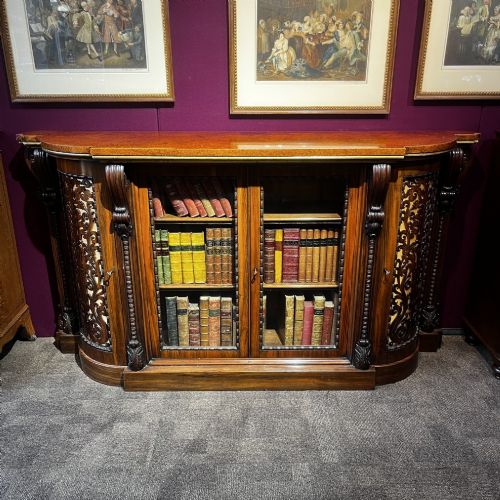


Amboyna Wood Cabinet
An amboyna wood cabinet brings rich, mottled exotic grain and warmth into a room, spanning periods from Regency to Art Deco.
Amboyna Wood Cabinet
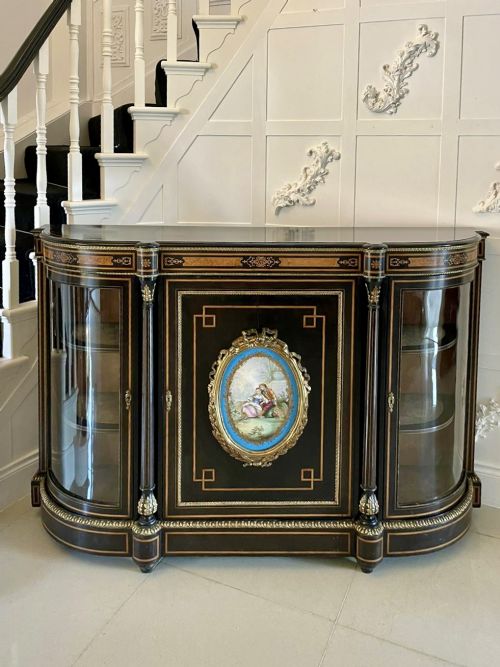
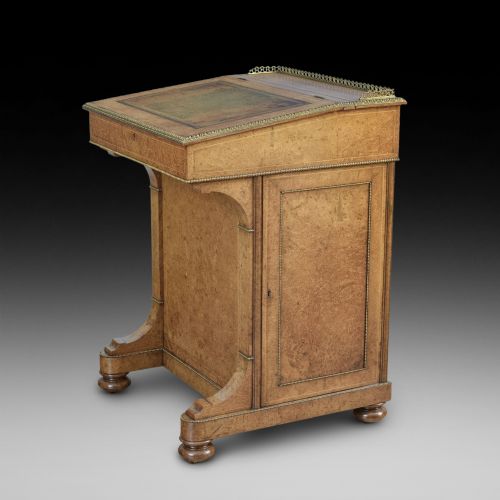
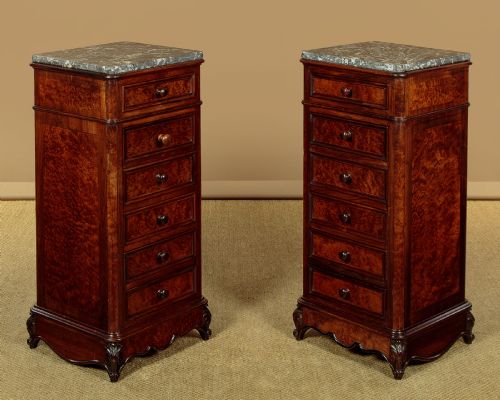
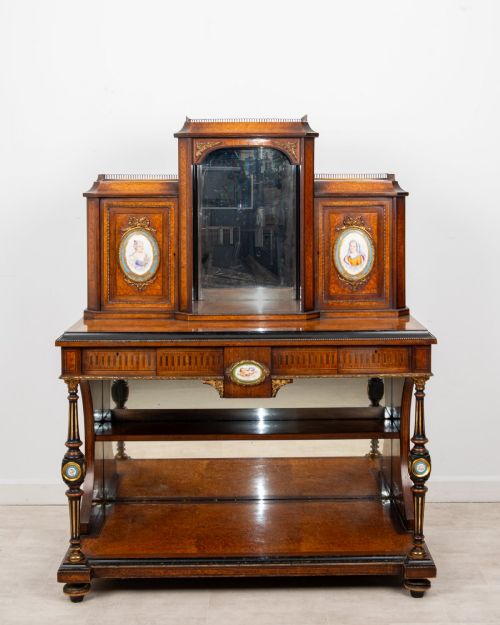
When you search for an amboyna wood cabinet, you encounter versatile storage and display furniture scaled for various rooms. The pieces range from large credenzas and sideboards to compact bedside tables, writing desks, and bar carts.
Victorian and nineteenth-century examples dominate the selection, often pairing amboyna with ebonised wood or brass mounts. Earlier Regency and William and Mary pieces also appear alongside later Art Deco creations.
Construction and Materials
Cabinet makers utilised amboyna veneer to showcase the dense, circular burr patterns of the wood across flat panel surfaces. This timber is frequently combined with contrasting ebonised wood, mahogany, or rosewood.
Metal and ceramic detailing often completes the construction, incorporating cast brass mounts, ormolu, and porcelain plaques set directly into the cabinet doors or writing surfaces.
Makers loved putting amboyna on everything from grand reception credenzas down to tiny bedside pot cupboards.
Evaluating the Pieces
Quality rests primarily on the selection and matching of the amboyna veneer across the facade. Pieces with balanced, highly figured burr grain command greater attention than those with plain timber.
The sophistication of secondary materials and structural joinery dictates the overall grade. Superior items incorporate crisp brass mounts, intricate porcelain plaques, and robust internal carcases.
The Amboyna Wood Cabinet Glossary
- Amboyna
- A fragrant, highly figured tropical wood derived from Pterocarpus indicus trees, prized for its mottled golden-brown burr. It is almost exclusively used as a fine veneer on high-status furniture.
- Credenza
- A grand display cabinet or sideboard featuring glazed central doors flanked by curved cupboards. These pieces typically sit low to the ground and often incorporate gilt mounts.
- Ebonised
- Wood treated with a chemical stain, dye, or black paint to imitate expensive ebony. This dark finish frequently frames lighter amboyna panels to create sharp visual contrast.
- Ormolu
- Cast bronze finished with a fine gold amalgam, utilised for decorative mounts and feet. The technique demands precise metalworking skills.
Amboyna Wood Cabinet: Frequently Asked Questions
How do I care for amboyna wood?
Keep the cabinet away from direct sunlight and radiators to prevent the delicate veneer from drying out and lifting. Dust gently with a dry, soft cloth and avoid chemical polishes.
Applying a microcrystalline wax occasionally helps protect the polished surface. Maintain stable room humidity to preserve the underlying timber carcase.
Are these cabinets purely decorative?
While prized for their striking grain, these pieces offered practical storage for books, porcelain, and writing materials. Credenzas and side cabinets were designed to display collections behind glass doors.
Smaller tables and desks combined enclosed cupboards with functional surfaces for daily correspondence. They suit modern living spaces as focal points that still provide enclosed storage.
How do I identify the period?
Examine the overall silhouette, secondary timbers, and mounting styles to determine the era. Regency pieces display classical restraint, whereas Victorian examples favour heavier proportions and contrasting ebonised details.
Art Deco items introduce streamlined geometry and unadorned burr veneers. Construction marks inside drawers and backboards also help establish the date of manufacture.
Is amboyna a solid wood?
Amboyna is almost exclusively found as a veneer rather than solid timber due to its scarcity and the irregular shape of the burrs. Makers laid thin slices of the figured wood over a stable secondary wood carcase.
This technique allowed craftsmen to cover large surfaces with symmetrical grain patterns without risking the wood splitting. The underlying structure typically consists of mahogany, oak, or pine.