
Nineteenth Century Mahogany Dresser
A nineteenth century mahogany dresser brings solid timber, deep grain and honest storage to a room.
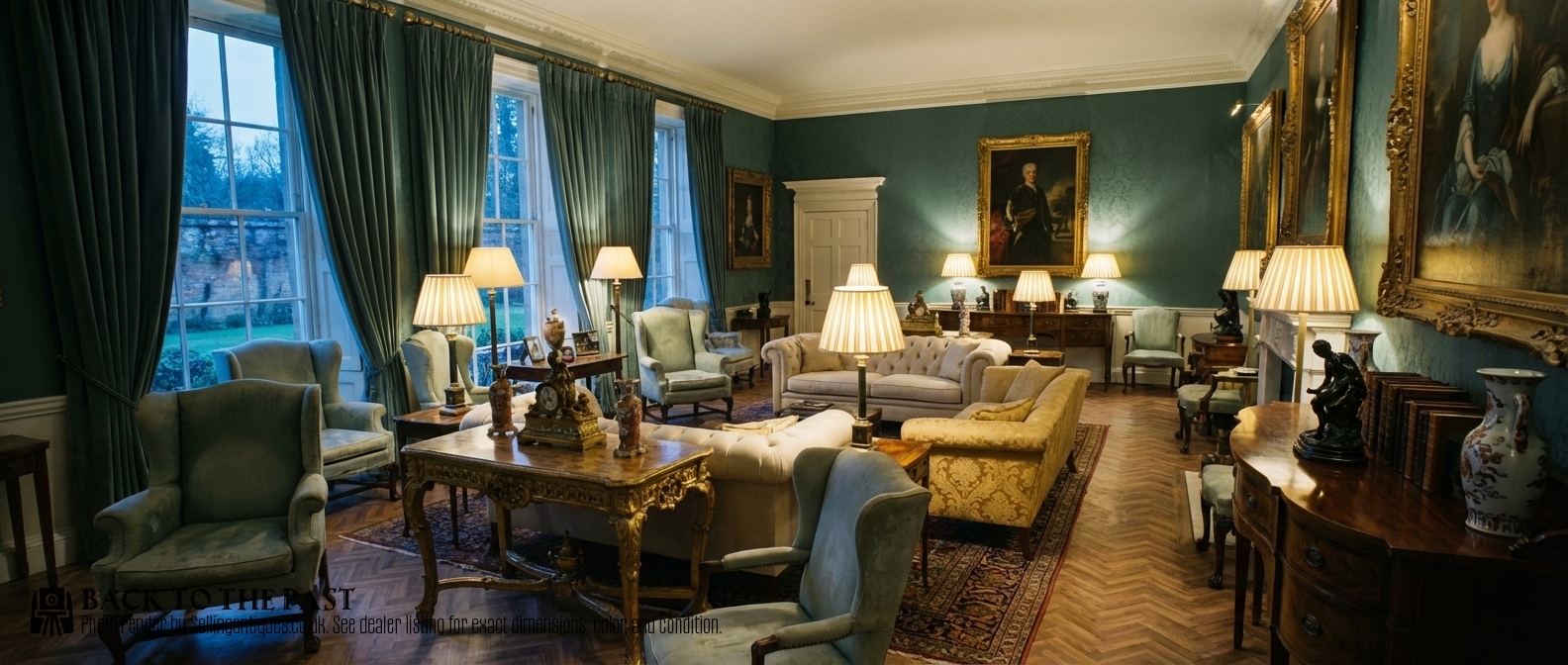
Nineteenth Century Mahogany Dresser
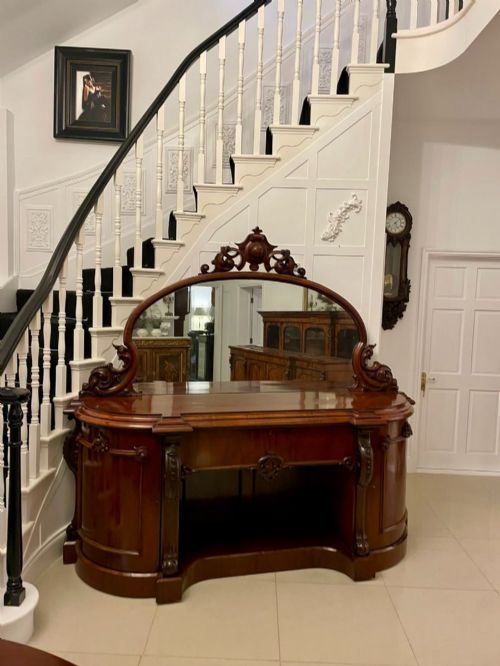
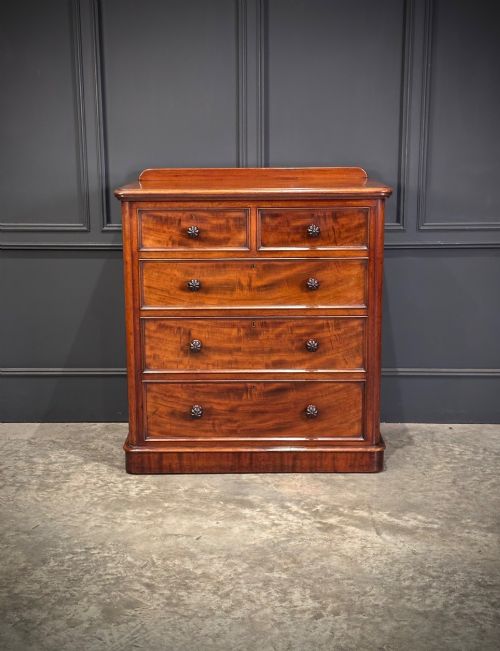
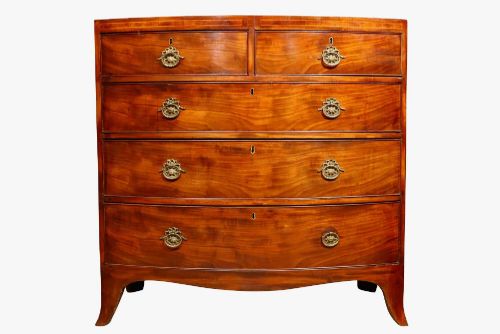
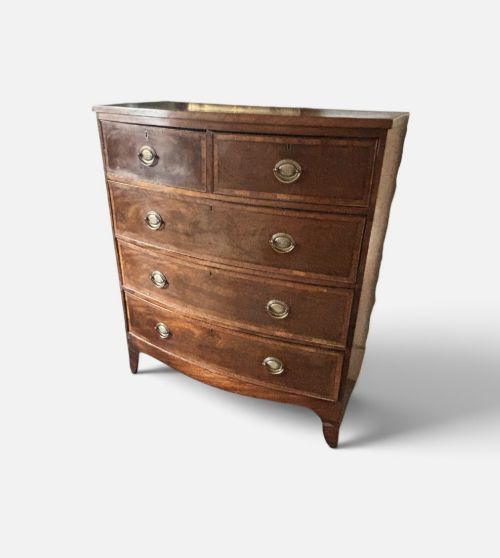
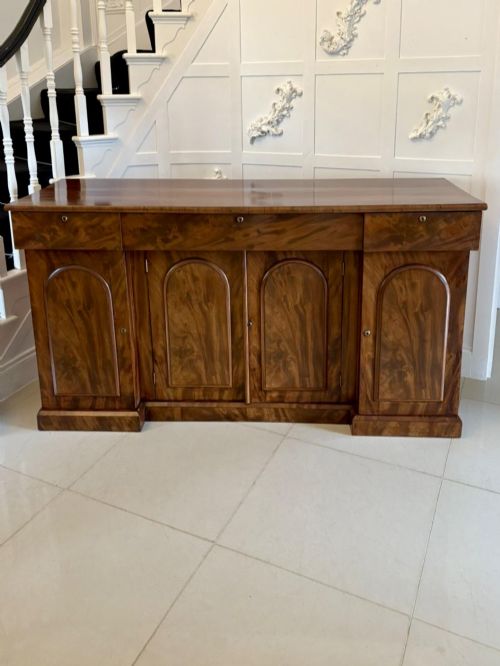
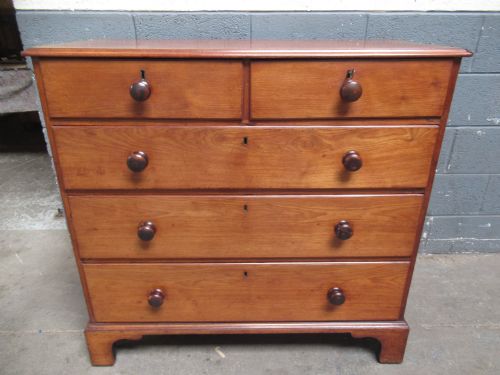
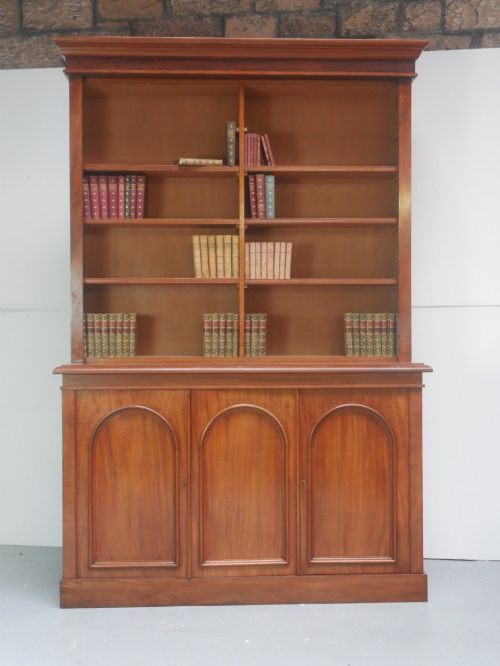
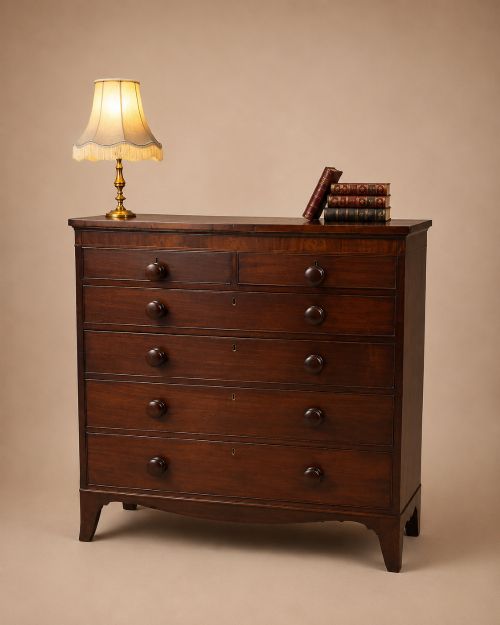
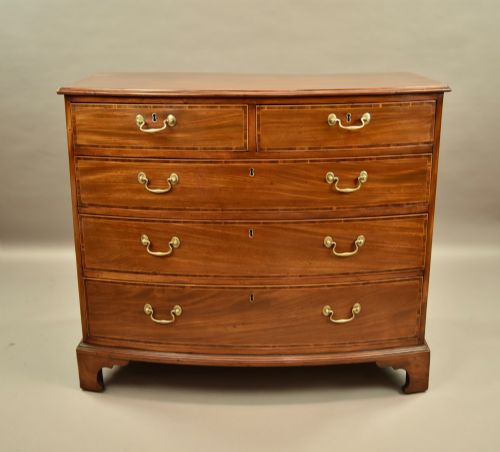
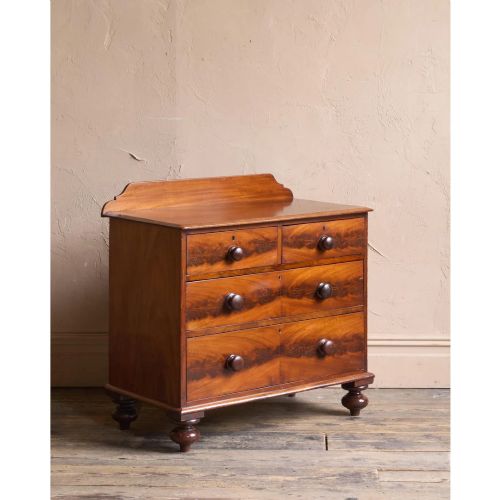
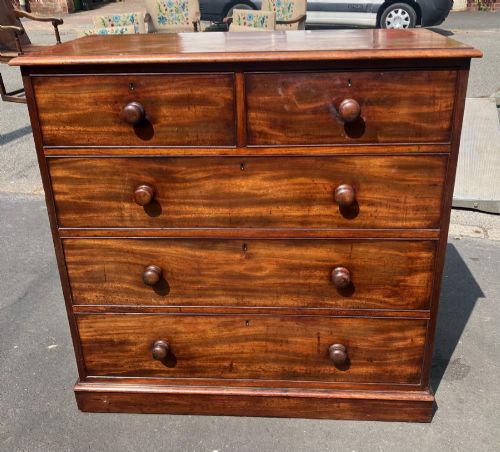
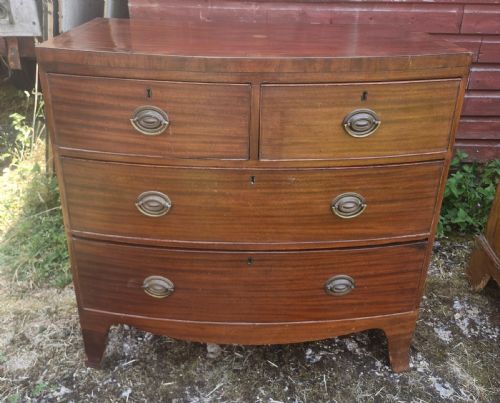
A nineteenth century mahogany dresser covers a range of robust chests of drawers and practical sideboards that served homes throughout the period. You will frequently encounter bow front chests and tall storage units spanning the Georgian, Regency and Victorian eras.
The pieces encompass straightforward utility designs alongside grander mirror-backed sideboards and specialised forms like Scottish chests and campaign furniture. Makers utilised the substantial timber available to construct heavy, durable storage that anchors a room.
Materials and construction
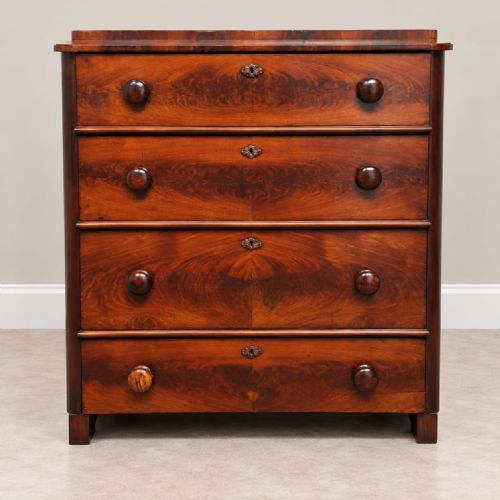
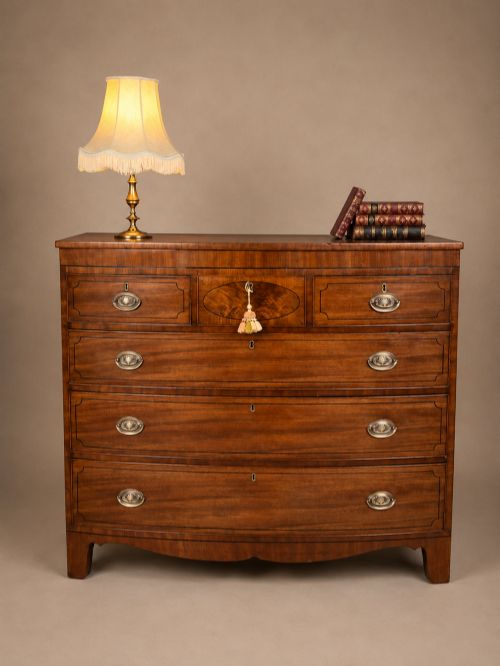
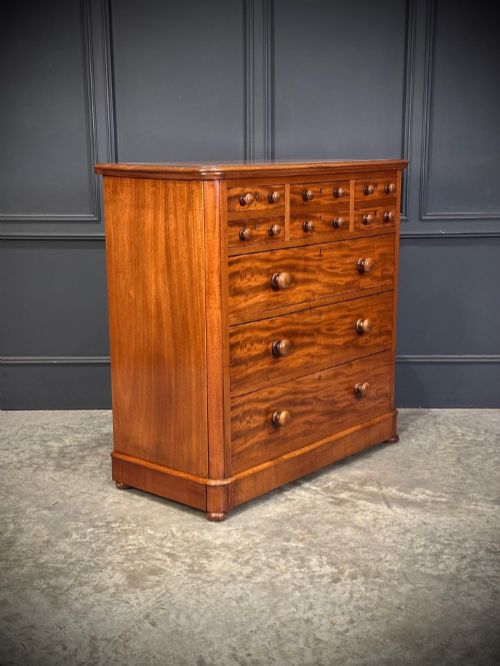
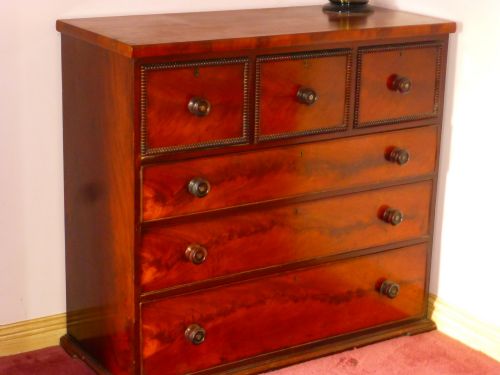
Craftsmen built these pieces primarily from solid mahogany and pine, frequently applying flame mahogany veneer to drawer fronts to highlight striking grain patterns. Secondary timbers such as oak lined the interior compartments of better examples.
Details often included boxwood stringing, satinwood crossbanding and cast brass hardware to finish the exterior surfaces. Joinery relied on tight dovetail construction for the drawers, ensuring longevity through decades of daily opening and closing.
Campaign chests travelled the globe with British officers, hiding flush brass handles so nothing snagged on the tent ropes.
Judging the standard
Quality rests upon the selection of the timber, particularly how matched the flame mahogany veneers are across the drawer fronts. Superior execution shows in crisp cabinetwork, smooth drawer runners and intact secondary woods like oak within the linings.
The harmony of proportion dictates the visual success of the piece, from the sweep of a bow front down to the turning of the feet. Original brasses and minimal restoration preserve the integrity that separates standard utility items from finer examples.
Ross and Co
The Nineteenth Century Mahogany Dresser Glossary
- Bow front
- A convex curved cabinet front popular during the Regency and Victorian periods. This shape softens the profile of a heavy wooden chest.
- Flame mahogany
- A veneer cut from the fork of the mahogany tree to produce a dramatic, flickering grain pattern. Cabinetmakers reserved this timber for principal visual surfaces.
- Crossbanding
- A narrow strip of veneer laid perpendicularly to the surrounding grain to form a decorative border. It frames drawer fronts on finer pieces.
- Campaign chest
- A modular chest of drawers built in sections with recessed brass handles for military transport. Officers used these durable units on active service.
- Dovetail
- An interlocking joint formed by interlocking wedge-shaped fingers. This traditional method secures drawer corners without reliance on modern adhesives.
Nineteenth Century Mahogany Dresser: Frequently Asked Questions
What is a nineteenth century mahogany dresser?
These pieces primarily comprise chests of drawers, sideboards and tall storage units built in Britain during the eighteen hundreds. They provided essential household storage using dense tropical hardwoods.
Craftsmen shaped these items through successive stylistic eras including Regency, William IV and Victorian design movements. Each form prioritised functional utility combined with rich wood grain.
How do I identify a Regency chest?
Regency pieces often display clean classical proportions, contrasting satinwood crossbanding and subtle brass hardware. The silhouette tends to be crisp and restrained compared to later Victorian ornamentation.
Many examples feature bow fronts supported by swept bracket feet or turned legs. The overall construction focuses on the natural beauty of the mahogany timber without excessive carving.
Where were these pieces used?
Original owners placed these items in bedrooms, dining rooms and hallways to store clothing, linens and tableware. Their robust construction suited heavy domestic use.
Sideboards functioned in dining spaces for serving food and storing cutlery, whilst chests served private chambers. Today they adapt easily to modern living rooms and hallways for everyday storage.
How do I care for mahogany furniture?
Keep wooden furniture away from direct heat sources and strong sunlight to prevent the timber and veneer from drying out. Consistent indoor humidity protects the structure.
Apply natural beeswax periodically to nourish the surface and maintain a soft sheen. Avoid harsh chemical polishes that can degrade historical finishes over time.