

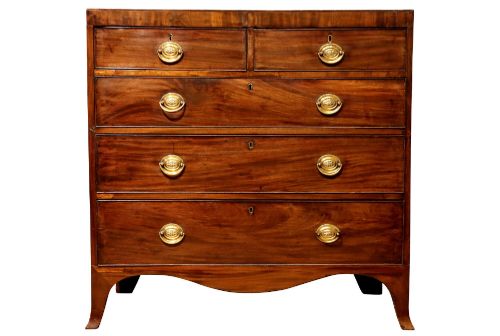
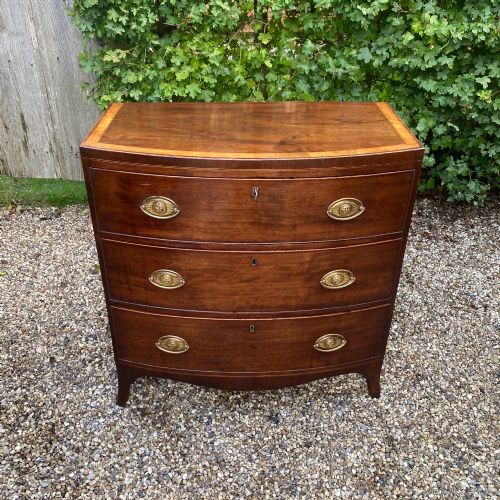
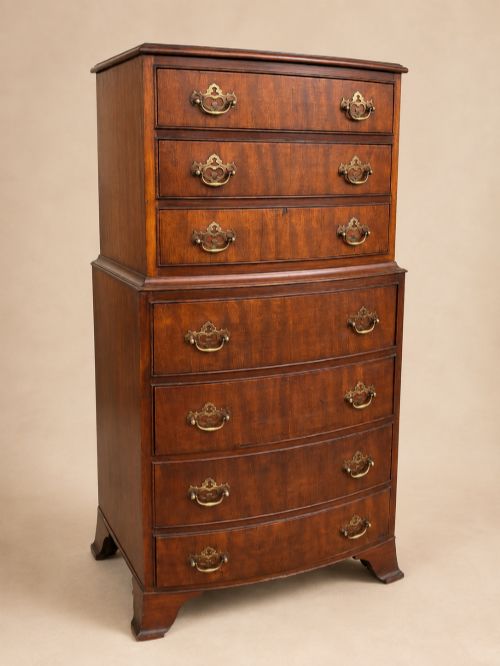
Regency Mahogany Chest Drawers
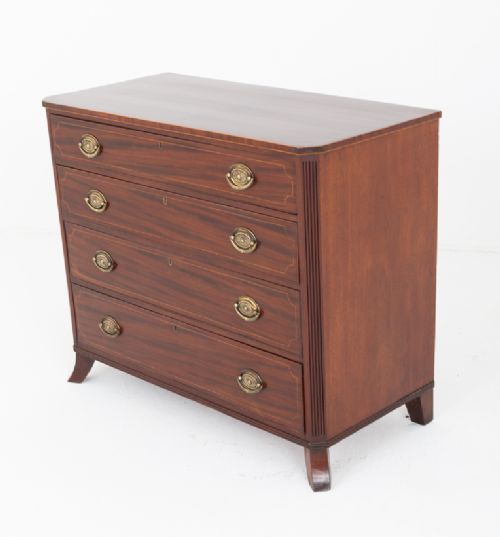
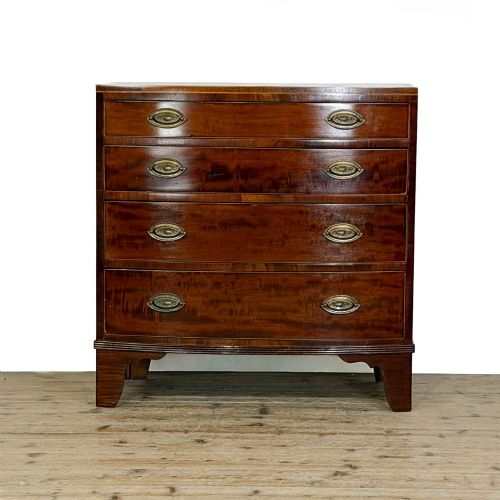
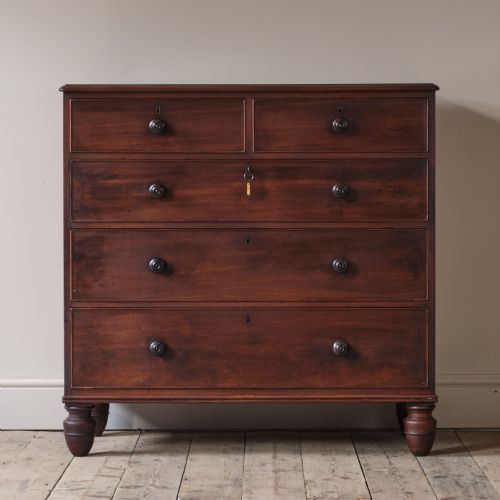
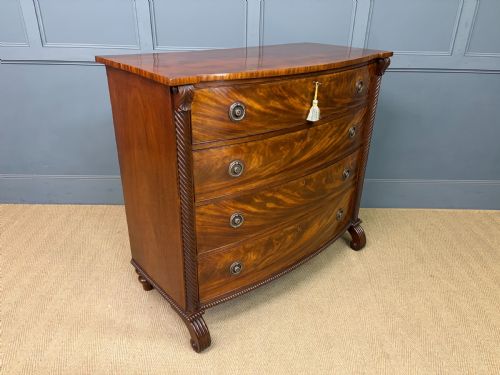
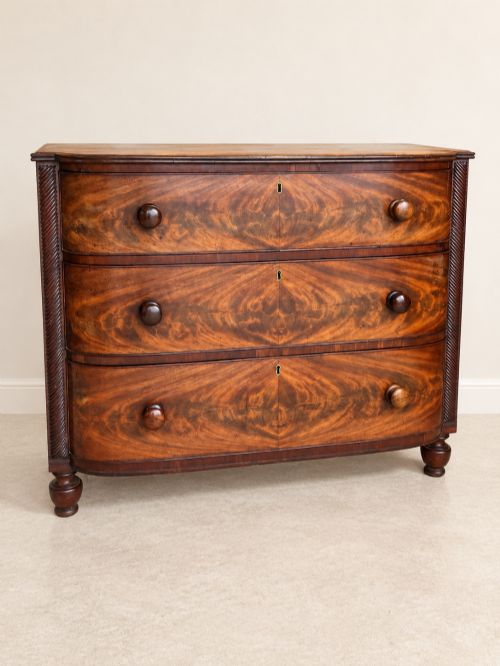
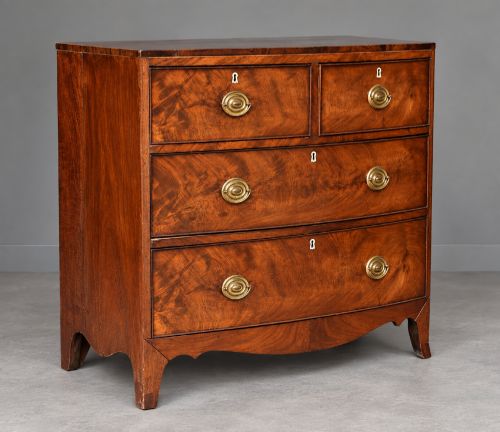
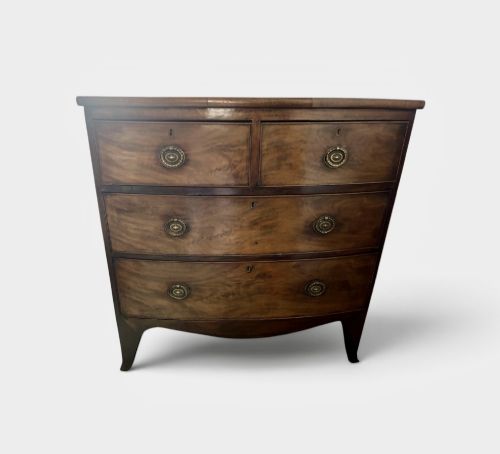
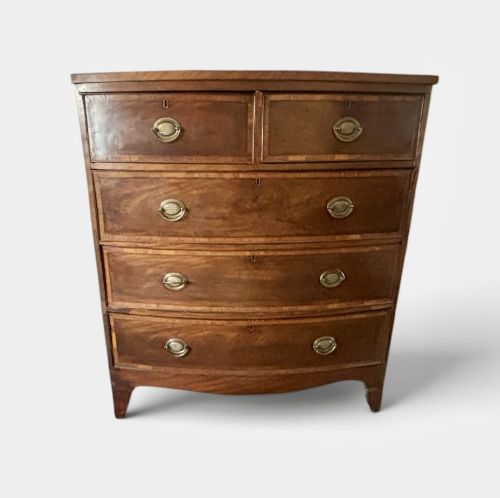
A regency mahogany chest drawers provides disciplined proportions and rich timber grain, serving as a storage staple for traditional interiors.
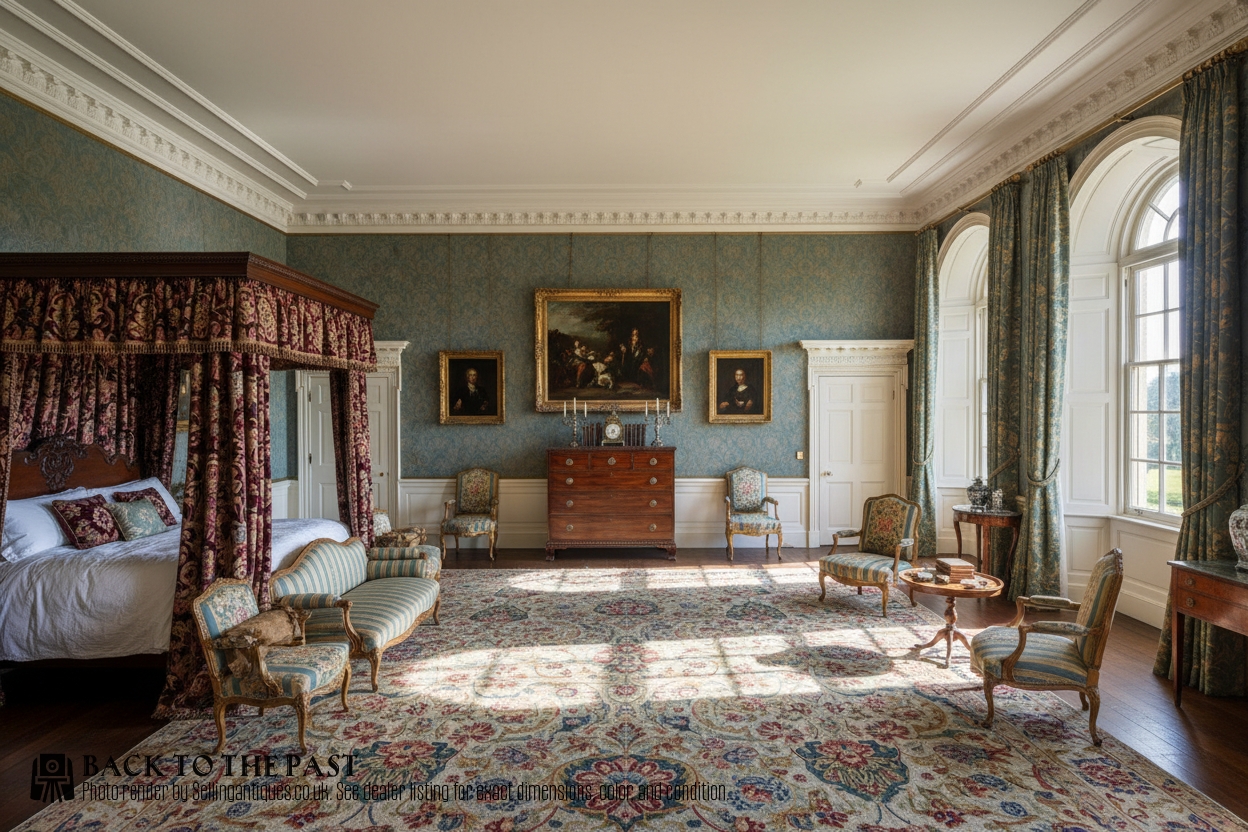
Regency Mahogany Chest Drawers
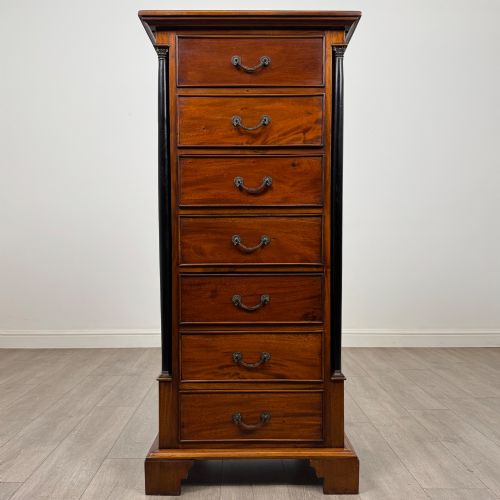
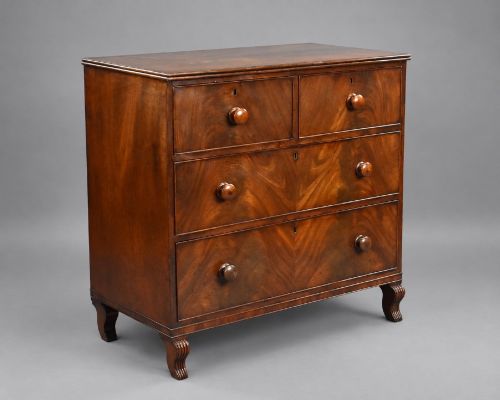
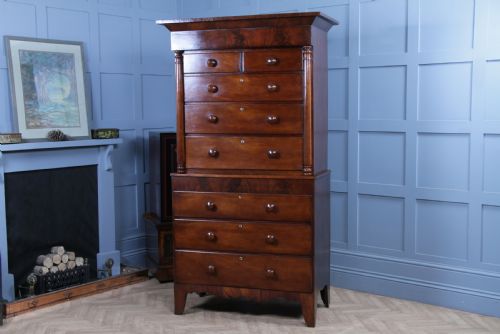
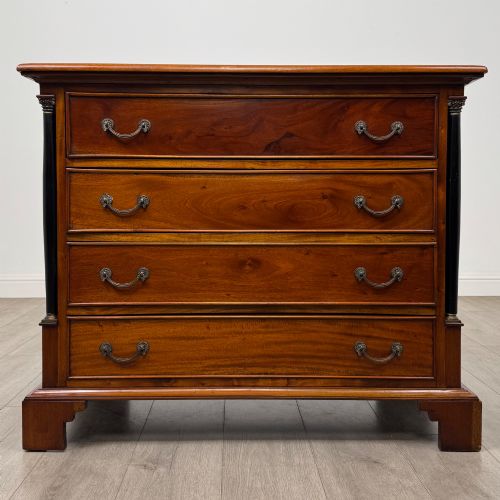
A regency mahogany chest drawers brings together architectural restraint and rich timber figures, forming the core of traditional bedroom and hallway storage. The pieces meeting this search phrase span the Regency, Georgian, and wider 19th Century periods, alongside later revival examples.
Most entries follow standard geometric proportions, frequently adopting bow fronts, graduated drawer tiers, and occasionally specialist forms such as secretaire desks or dressing chests. Their origins reflect English, Scottish, and Irish workshops working within classical design vocabularies.
Materials and Construction Techniques
Makers relied primarily upon solid mahogany and applied flame mahogany veneers, frequently contrasting the primary timber with satinwood banding, ebony stringing, or boxwood details. Secondary woods such as oak appear in drawer linings and internal structural framing.
Hardware consists mainly of brass ring pulls, turned knobs, or decorative backplates, complemented in certain examples by bone escutcheons and working iron locks.
Regency Mahogany Chest Drawers Retail Price Guide 2026
Typical asking prices for regency mahogany chest drawers among the pieces listed under this phrase on Sellingantiques today, from the lower quarter to the upper quarter. They describe what is for sale here now, not the wider market.
Listings feature mahogany, satinwood, oak, brass, and bone across Regency, Georgian, and Victorian periods.
Assessing Quality and Execution
Quality separates along the selection of timber figures, where highly figured flame mahogany veneers or intricate satinwood crossbanding elevate a carcass above plain stock. The crispness of edge mouldings and the precision of inlaid stringing also indicate workshop competency.
Internal construction, including hand-cut dovetailing on drawer sides and the use of substantial oak linings rather than softer secondary woods, marks the distinction between standard utilitarian production and superior cabinet work.
T & G Seddon
The Regency Mahogany Chest Drawers Glossary
- Bow front
- A convex curved front profile popular on case furniture during the late 18th and early 19th centuries. This shape softens the rectangular geometry of a room.
- Flame mahogany
- A veneer cut from the fork of the mahogany tree where branches meet the trunk. It creates a distinctive, feather-like flame pattern across drawer fronts.
- Crossbanding
- A border of veneer laid with the wood grain running perpendicular to the surrounding surface. It provides a neat visual frame to top boards and drawer edges.
- Secretaire chest
- A chest of drawers featuring a fitted top drawer that pulls down to reveal a writing surface and small pigeonholes. It combines storage with a compact desk.
- Tallboy
- A tall chest of drawers, often constructed as a chest on chest or utilising multiple stacked tiers. This form maximises vertical storage capacity within a compact floor footprint.
Regency Mahogany Chest Drawers: Frequently Asked Questions
How do I identify a genuine period piece?
Examine the timber shrinkage, secondary woods inside the drawers, and hand-cut dovetail joints. Period pieces show natural ageing and hand-tool marks rather than modern mechanical fastenings.
Check for consistent timber movement and appropriate brass hardware matching the Regency or Georgian eras.
Where should I place this in my home?
These chests fit well in bedrooms, hallways, or living rooms as practical storage units. Their moderate depths allow them to sit comfortably in narrow passageways without obstructing movement.
Keep them away from direct heat sources and strong sunlight to protect the mahogany veneer from drying out.
How do I care for mahogany veneer?
Dust regularly with a soft, dry cloth and apply occasional high-quality beeswax to nourish the wood. Avoid silicone polishes, which can sink into the pores of the timber.
Maintain stable room humidity to prevent the thin mahogany veneers from lifting or cracking over time.