


Victorian Mahogany Chest Drawers
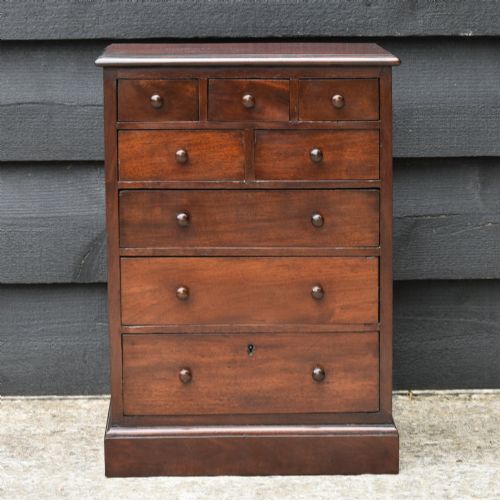
These Victorian mahogany chest drawers are sturdy storage pieces built from durable wood to anchor a bedroom.
Understanding Victorian mahogany chest drawers
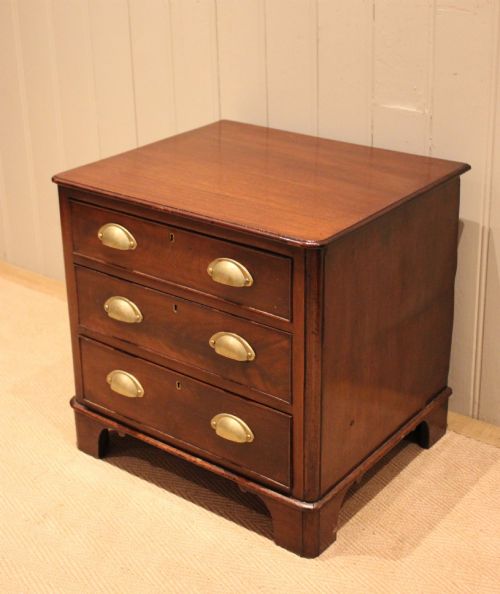
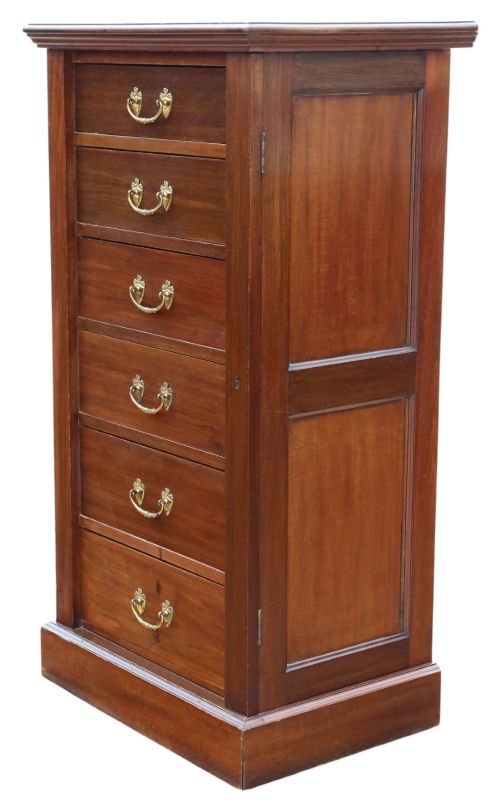
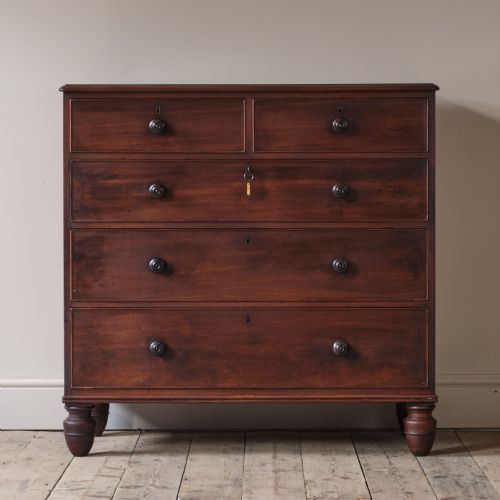
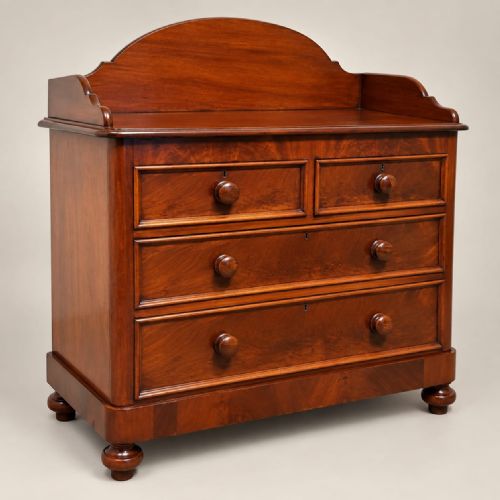
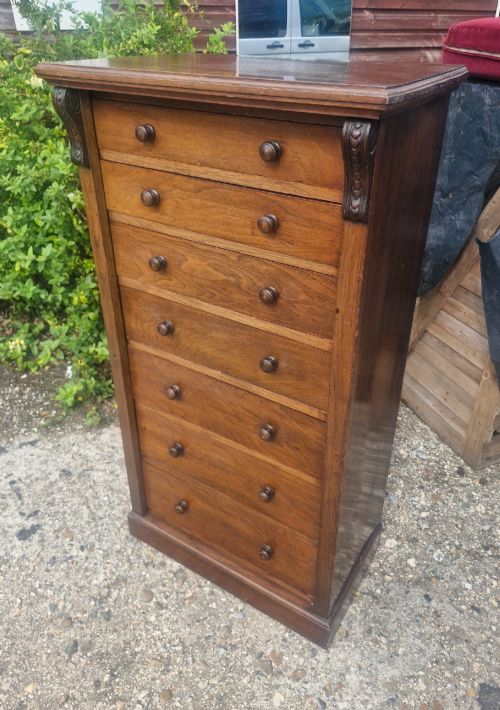
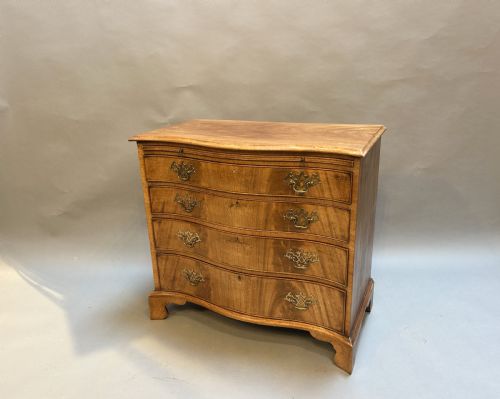
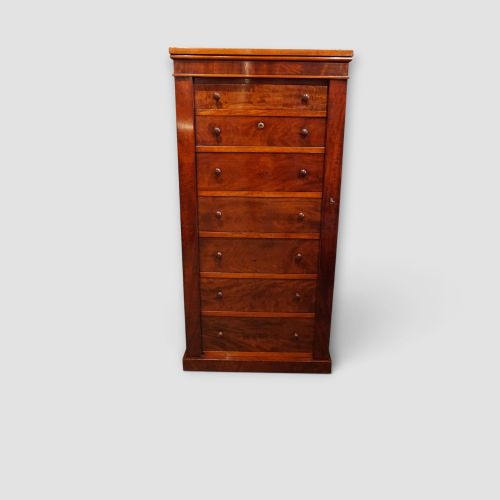
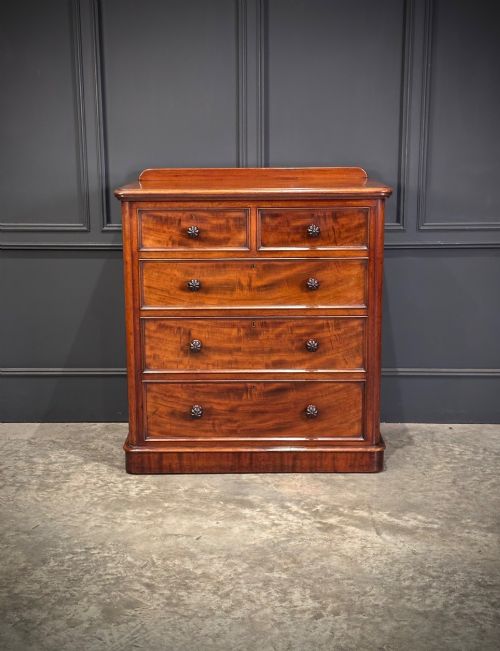
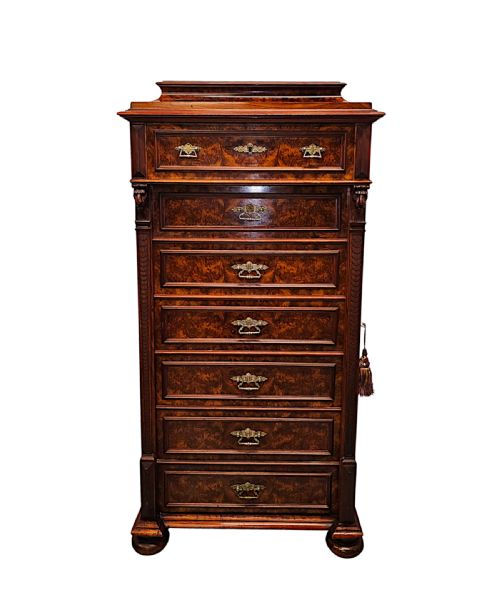
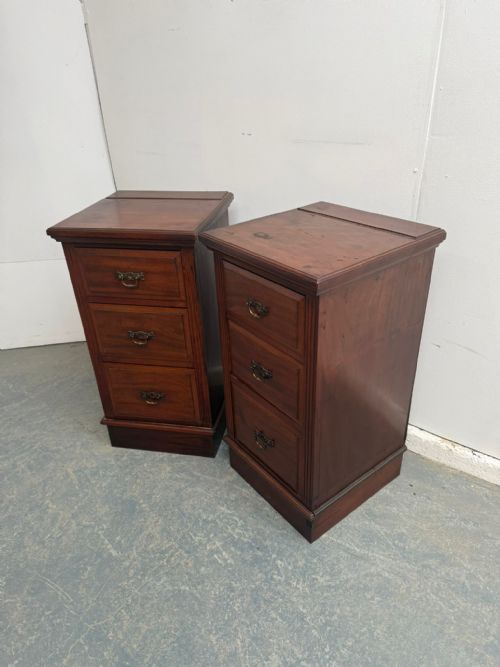
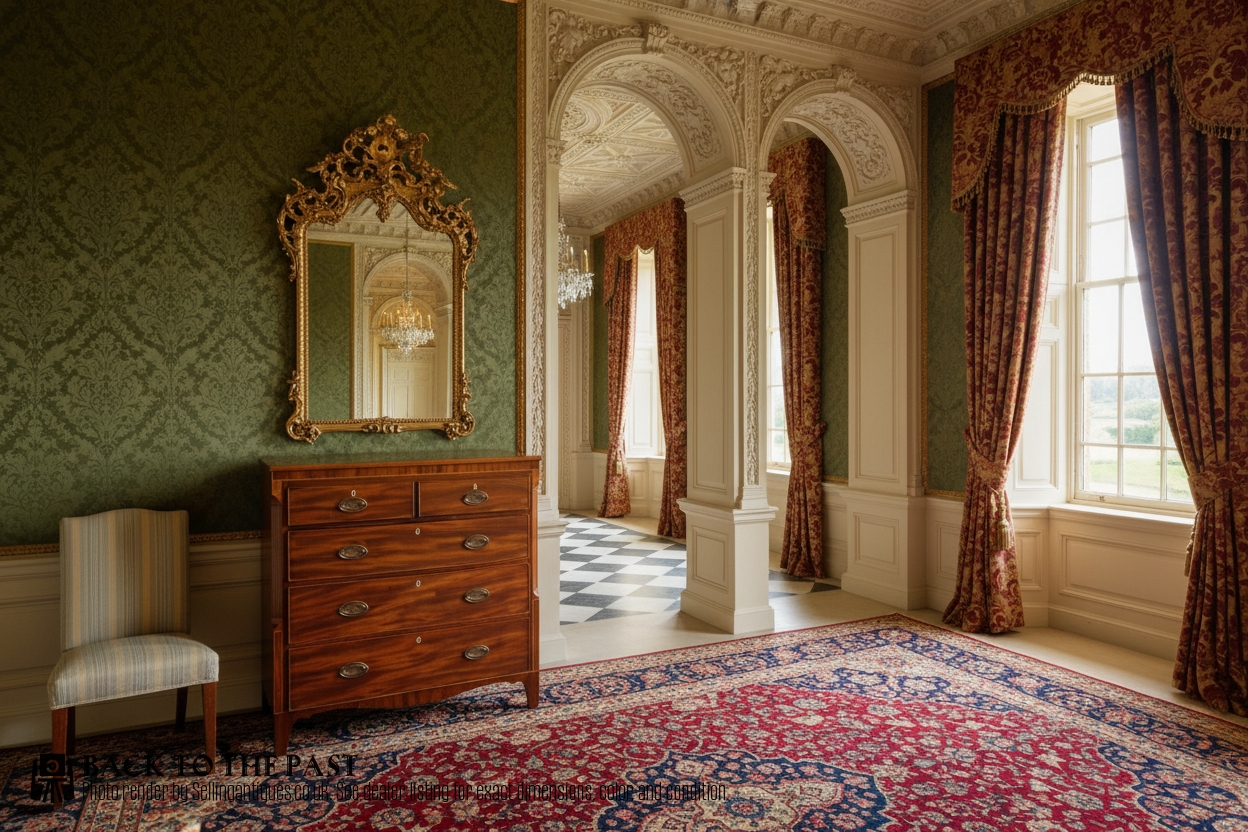
A victorian mahogany chest drawers is a heavy storage item typically dating from the nineteenth century, including pieces marked as early or late Victorian and specific years like eighteen sixty. Most examples take the form of standard chests of drawers, bow front designs, or taller Wellington chests, alongside related variants such as washstands.
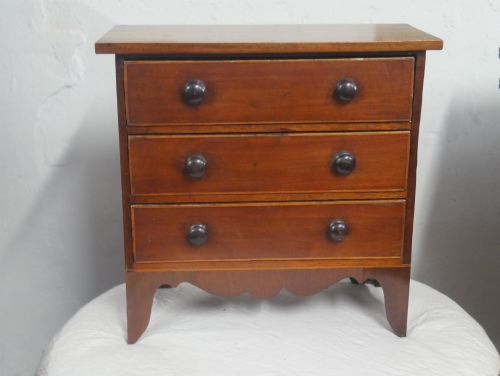
The archive shows formats ranging from compact diminutive chests to large proportions, including two-plus-three drawer arrangements and four height configurations. Scottish Regency influences and Biedermeier styles also appear among the traditional English forms.
Materials and construction
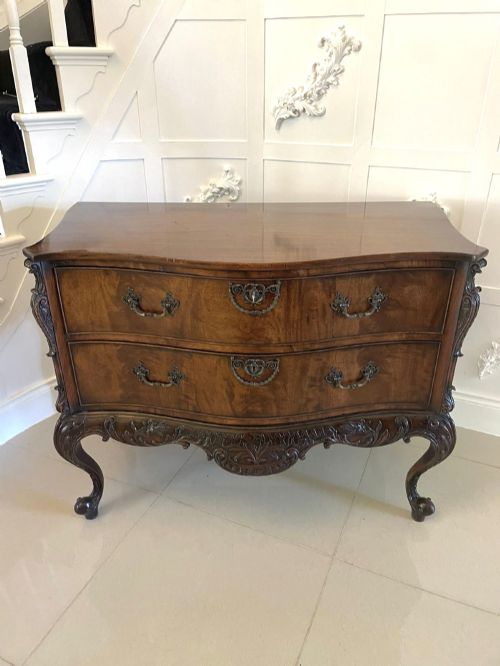
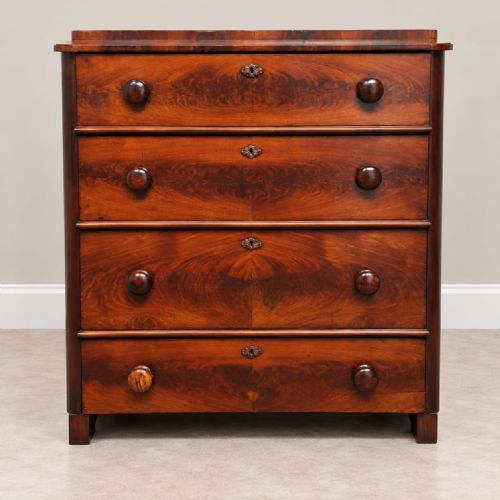
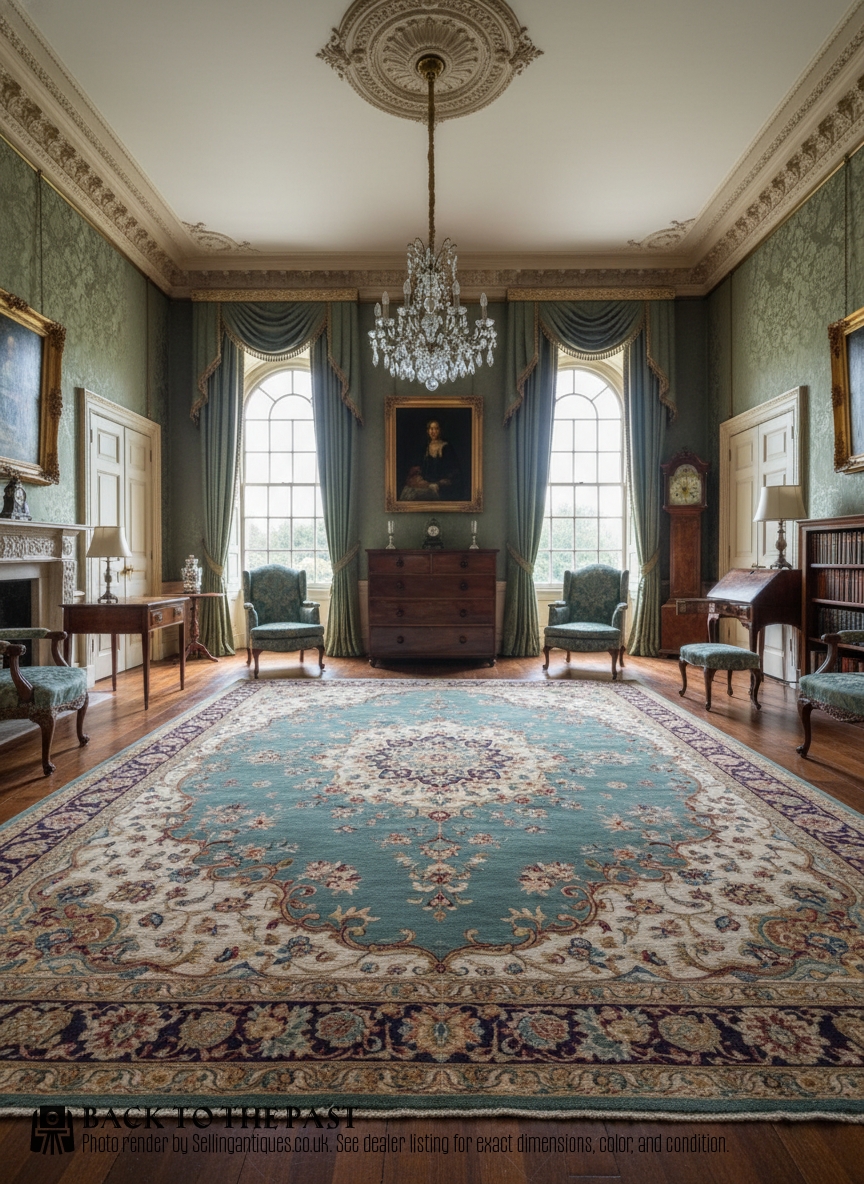
Cabinet makers built these pieces using solid mahogany and figured flame mahogany veneers over secondary timbers such as pine. Artisans incorporated boxwood for decorative inlay work, while structural elements and secondary linings relied on standard wood construction.
Hardware details included brass for handles, escutcheons, and drawer pulls. Surface treatments incorporated rouge marble on specific washstand tops to provide durable, water-resistant counters.
Retail Price Guide 2026
Typical UK retail prices for victorian mahogany chest drawers, calculated from the Sellingantiques database of over a million retail prices indexed since 2003. This retail price guide relies exclusively on Sellingantiques data; no external sources or auction records are used, so the figures do not describe the wider market.
Listings feature nineteenth-century items utilising mahogany, pine, brass, boxwood, and rouge marble across standard chests, Wellington chests, and washstands.
Judging quality in nineteenth-century storage
The standard of a piece depends on the choice of timber, distinguishing plain mahogany boards from highly figured flame mahogany veneers. Drawer configurations, such as neat bow fronts or disciplined four-height proportions, demonstrate the maker's command of form.
Refinement appears in secondary details, from precise boxwood stringing and inlay work to the inclusion of fitted marble slabs on washstands. The presence of well-cast brass hardware and balanced proportions separate standard utilitarian items from exceptional examples.
The Victorian Mahogany Chest Drawers Glossary
- Mahogany
- A durable tropical hardwood prized for its rich reddish-brown tone and stable grain. It serves as the primary exterior timber across nineteenth-century case furniture.
- Bow front
- A convex curved front profile that swells outward from the corners. This shape demands precise woodworking to curve drawers and frames smoothly.
- Wellington chest
- A tall, narrow chest of drawers secured by a hinged vertical locking sidebar on one side. This design allowed secure storage for personal papers and valuables.
- Flame mahogany
- A veneer cut from timber where the grain branches, creating a distinctive flickering flame pattern. Cabinet makers reserved this premium figuring for drawer fronts.
- Escutcheon
- A protective brass plate fitted around a keyhole. It prevents the surrounding wood from wearing down through repeated use of the key.
Frequently Asked Questions
How do I date a Victorian chest?
Dating relies on stylistic shifts, construction methods, and recorded dates within individual listings. Early Victorian pieces often display simpler lines, while later nineteenth-century examples incorporate distinct veneers or marble tops.
Cabinet construction and secondary woods like pine provide further clues to the decade of manufacture. Comparing proportions and drawer arrangements against documented periods helps narrow the timeframe.
Where were these chests used?
These pieces served primarily as domestic bedroom furniture for storing clothing and linens. Their robust construction suited daily use in nineteenth-century homes.
Variants like washstands accommodated basin setups for morning ablutions. Bedside chests provided smaller surface areas and storage next to sleeping quarters.
How do I care for mahogany?
Maintain mahogany surfaces by keeping them away from direct sunlight and steady heat sources to prevent wood splitting. Regular dusting with a soft, dry cloth preserves the polished finish.
Avoid chemical polishes that build up residue over time. Periodic application of appropriate wax feeds the timber and maintains its natural lustre.