



Scottish Flame Mahogany Dresser
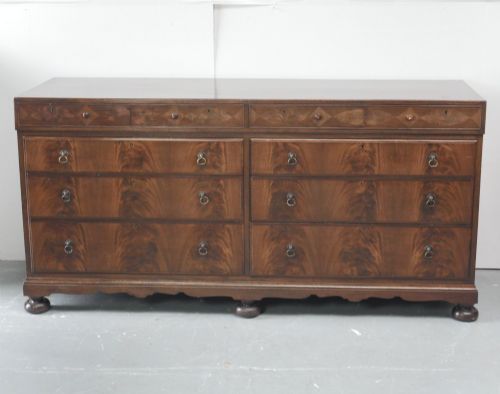
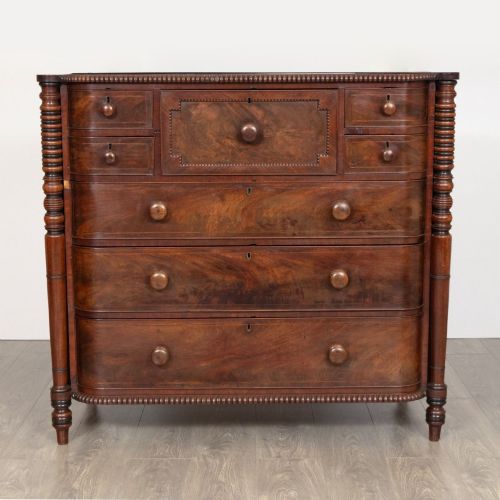
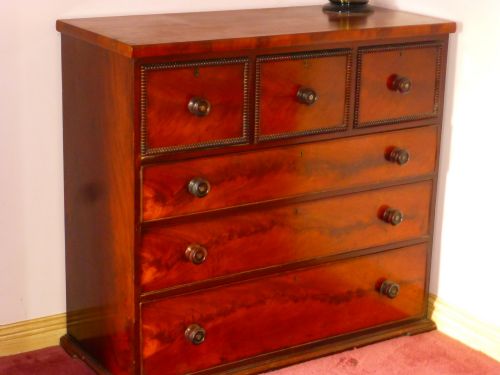
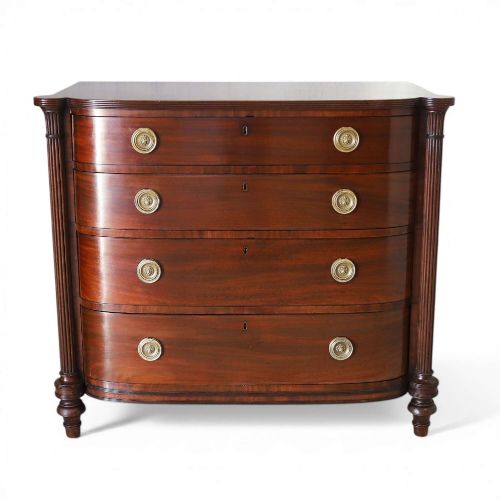
A Scottish flame mahogany dresser brings extraordinary timber movement and deep vernacular cabinet-making traditions straight into a room.
Scottish Flame Mahogany Dresser
A Scottish flame mahogany dresser encompasses substantial chests of drawers and architectural sideboards originating from Scotland across the eighteenth and nineteenth centuries. These pieces present commanding proportions, often featuring bold stage-backs, bow fronts, or serpentine lines that define regional Scottish furniture design.
The examples gathered here span periods from the Georgian era through the Victorian period, alongside twentieth-century revival interpretations by makers such as Whytock & Reid. Buyers encountering this selection will most frequently find tall chests of drawers and robust sideboards built with heavy timber framing.
Makers utilised native oak and pine as secondary woods within these structures, anchoring the softer decorative veneers to heavy carcases. Every item reflects the distinct regional preference for monumental scale and deeply figured grain patterns.
How they were made
Cabinet-makers selected richly figured flame mahogany veneers, laying them carefully over solid primary woods like mahogany and secondary timbers such as oak and pine. This technique created striking grain patterns across large drawer fronts and top surfaces, enhanced by hand-polished finishes.
Drawers were constructed with durable linings in oak and pine, frequently built with fine dovetail joints and graduated depths. Brass hardware, including traditional handles and escutcheons, was fitted to secure the heavy timber doors and drawers.
Scottish Flame Mahogany Dresser Retail Price Guide 2026
Typical asking prices for scottish flame mahogany dresser among the pieces listed under this phrase on Sellingantiques today, from the lower quarter to the upper quarter. They describe what is for sale here now, not the wider market.
Listings feature items spanning the 18th Century, Georgian era, Victorian period, and 1920s revival, constructed from mahogany, flame mahogany veneer, oak, pine, and turned wood.
What varies in quality
The choice of veneer figures creates a distinct hierarchy among these pieces, separating standard drawer fronts from truly mesmerising flame mahogany displays. Master cabinet-makers matched grain patterns symmetrically across multiple drawers to achieve a harmonious visual rhythm.
Structural integrity and the retention of original secondary timbers, such as uncompromised oak drawer linings, separate well-preserved antiques from heavily restored examples. The crispness of carved stage-backs and the precision of the dovetail joinery reveal the original maker's hand.
Whytock & Reid·R H & J Simpson
The Scottish Flame Mahogany Dresser Glossary
- Flame mahogany
- A veneer cut from the branch junction of the mahogany tree, displaying a distinctive feather-like or flickering grain pattern. This timber was prized for high-status furniture fronts.
- Stage-back
- A raised architectural superstructure attached to the rear of a sideboard, providing display tiers or compartments. This feature is particularly characteristic of large Georgian dining room pieces.
- Bow front
- A convex, outwardly curved furniture front that softens rigid room angles. Cabinet-makers used this curving form extensively on nineteenth-century chests of drawers.
- Serpentine
- A horizontally undulating front edge featuring a central convex curve flanked by concave sweeps. This complex contour requires exceptional skill from the woodworker.
- Graduated drawers
- A vertical sequence of drawers decreasing in depth from bottom to top. This arrangement lends visual balance and stability to tall chests.
Scottish Flame Mahogany Dresser: Frequently Asked Questions
What is a Scottish flame mahogany dresser?
A Scottish flame mahogany dresser refers to substantial chests of drawers and architectural sideboards built in Scotland using highly figured timber. These items are distinguished by their heavy proportions and regional Scottish design characteristics.
They serve as practical storage furniture while functioning as focal points within traditional and contemporary interiors due to their striking grain patterns.
How do I date a Scottish chest of drawers?
Dating involves examining the secondary woods, construction methods, and overall stylistic period, such as Georgian or Victorian. Eighteenth-century pieces often display hand-cut dovetails and simpler carcase lines.
Later nineteenth-century examples frequently incorporate bolder proportions, specific veneer thicknesses, and distinct regional hardware styles that correspond to their era of manufacture.
Where were these pieces used originally?
These large pieces were built for grand dining rooms, parlours, and principal bedrooms in Scottish houses. Sideboards managed dining silver and linens, while chests of drawers stored apparel.
Their substantial scale suited high-ceilinged rooms where heavy timber furniture provided both utility and a display of household status.
How do I care for flame mahogany furniture?
Maintain these surfaces by keeping them away from direct sunlight and steady heat sources to prevent the veneers from drying out. Regular dusting with a dry, soft cloth preserves the polished finish.
Applying occasional appropriate wax feeds the timber and enhances the natural depth of the flame mahogany grain without building up heavy residues.