

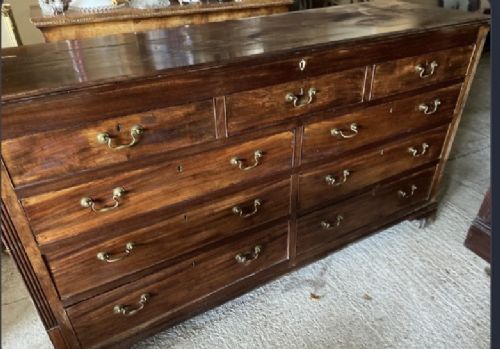
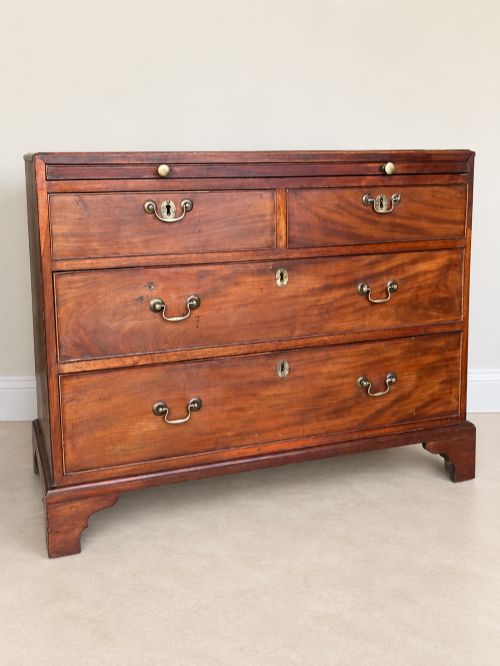
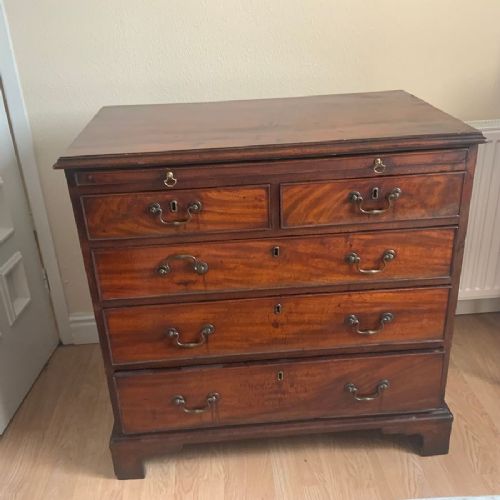


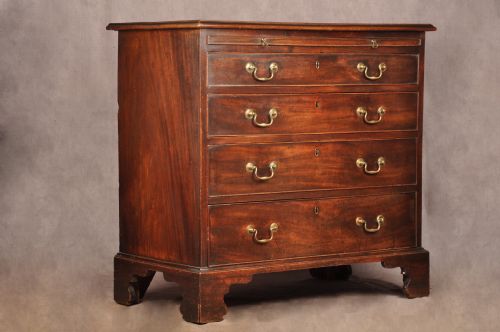


Rich Brown Wooden Dresser
A rich brown wooden dresser brings warmth and practical storage to a room, ranging from Georgian mahogany chests to Victorian sideboards.
Rich Brown Wooden Dresser
When you search for a rich brown wooden dresser, you are looking at substantial storage furniture built from timber such as mahogany, oak, and burr walnut. These pieces span periods from the mid-eighteenth century through the Victorian era and into the Edwardian period, encompassing chests of drawers, sideboards, and dresser bases.
The version you are most likely to meet on this page is a mahogany chest of drawers from the Georgian or Victorian eras. They range from compact bowfront designs to large serpentine pieces and Scottish regional examples, often featuring useful additions like pull-out brush slides.
Sideboards and kitchen dressers also appear among these listings, offering broader surfaces and cabinet storage alongside traditional drawer arrangements. Each piece displays the deep, rich brown tones characteristic of polished cabinet timbers developed over centuries.
How they were made
Cabinetmakers constructed these pieces primarily from solid timber and wood veneers, utilising rich hardwoods like mahogany, oak, and burr walnut. Surfaces were carefully finished to highlight the natural grain patterns of the wood.
Hardware such as brass handles and escutcheons were fitted to drawers constructed with traditional joinery techniques. Structural forms include serpentine fronts, bowfronts, and straight silhouettes shaped by skilled hands.
Rich Brown Wooden Dresser Retail Price Guide 2026
Typical asking prices for rich brown wooden dresser among the pieces listed under this phrase on Sellingantiques today, from the lower quarter to the upper quarter. They describe what is for sale here now, not the wider market.
Several chests hide clever pull-out brush slides, proving that eighteenth-century mornings required just as much convenience as our own.
What varies in quality
Quality in these brown wooden pieces rests in the selection of the timber, particularly figured veneers and choice mahogany boards. The crispness of the cabinetmaking and the harmony of the proportions separate standard examples from finer works.
Subtle details such as the shaping of a serpentine front or the integration of a brush slide indicate the level of craftsmanship involved. The preservation of the original polished surface also influences the character of each piece.
The Rich Brown Wooden Dresser Glossary
- Bowfront
- A cabinet front that curves outward in a convex sweep. This design softens the profile of a chest of drawers.
- Serpentine
- A front shape featuring a central convex curve flanked by two concave curves. It requires advanced woodworking skill to execute properly.
- Brush slide
- A pull-out board integrated above the top drawer of a chest. It provided a clean surface for grooming or writing.
- Veneer
- A thin layer of finely figured wood applied over a secondary timber base. Burr walnut and mahogany were frequently utilised in this manner.
- Dresser base
- The lower cabinet portion of a traditional kitchen or dining room dresser. These units provide deep surface space and enclosed storage.
Rich Brown Wooden Dresser: Frequently Asked Questions
How do I date a wooden chest?
Dating relies on observing stylistic markers, construction methods, and the choice of secondary timbers. Georgian pieces often display different proportions and foot styles compared to Victorian examples.
Cabinet hardware and dovetail construction also provide clear indicators of the era in which the piece was constructed.
What timber was used most?
Mahogany is the dominant timber seen across these listings, prized for its deep brown colour and strong grain. Oak and burr walnut also appear in specific regional and decorative pieces.
These hardwoods were selected for their durability and ability to take a high polish.
Where were these pieces used?
They served primarily in bedrooms, dining rooms, and kitchens for storing clothing, linens, and tableware. Large sideboards and dresser bases were central to domestic organisation.
Today, they adapt easily to modern interiors as statement storage units in hallways and living spaces.