





Regency Turned Leg Sideboard
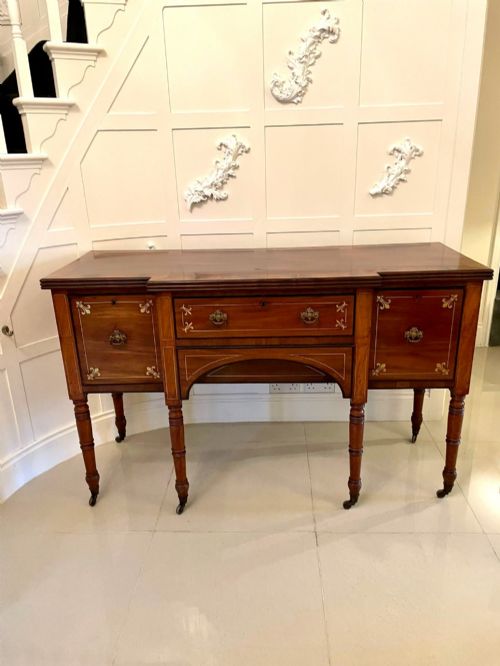
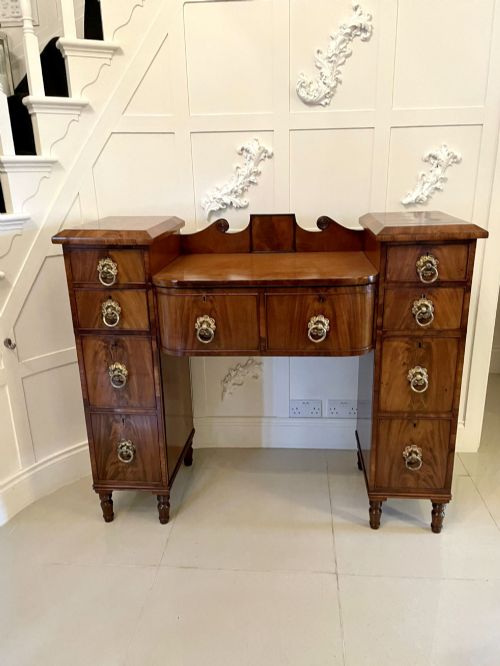
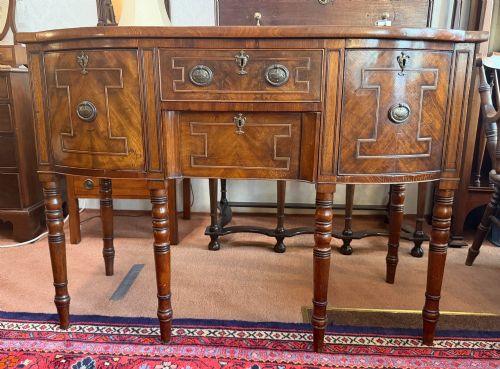
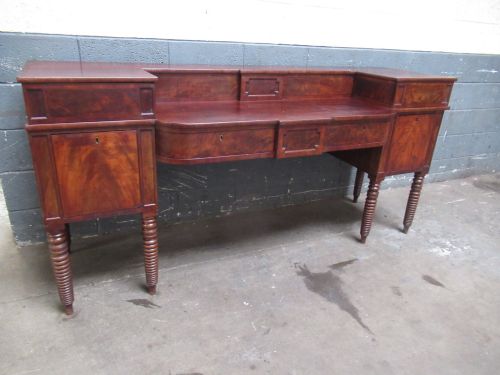
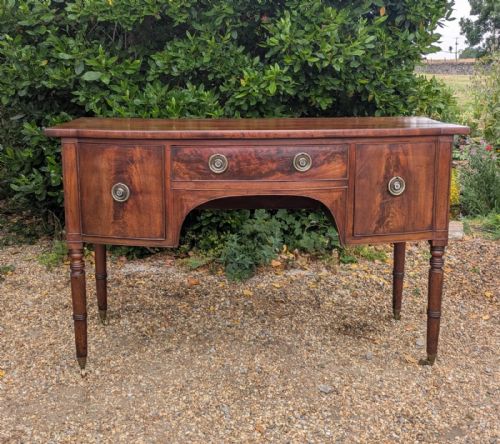
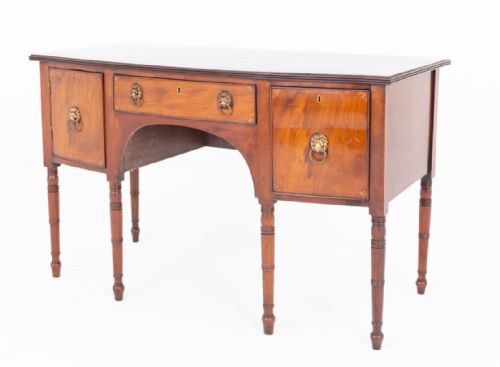
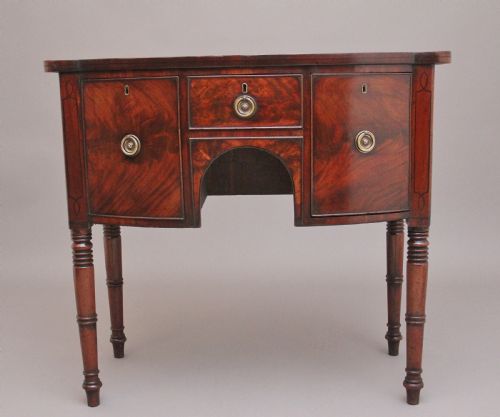
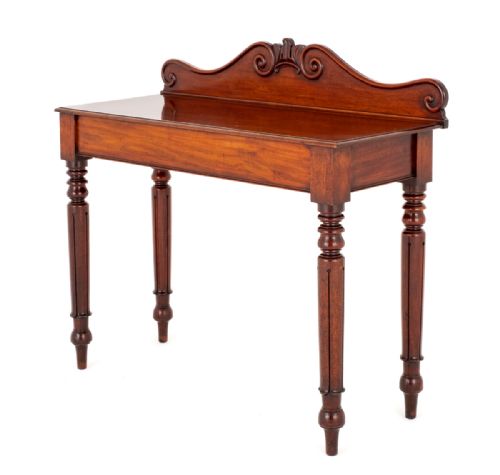
These regency turned leg sideboard examples combine fine mahogany construction with the characteristic elegance of the period.
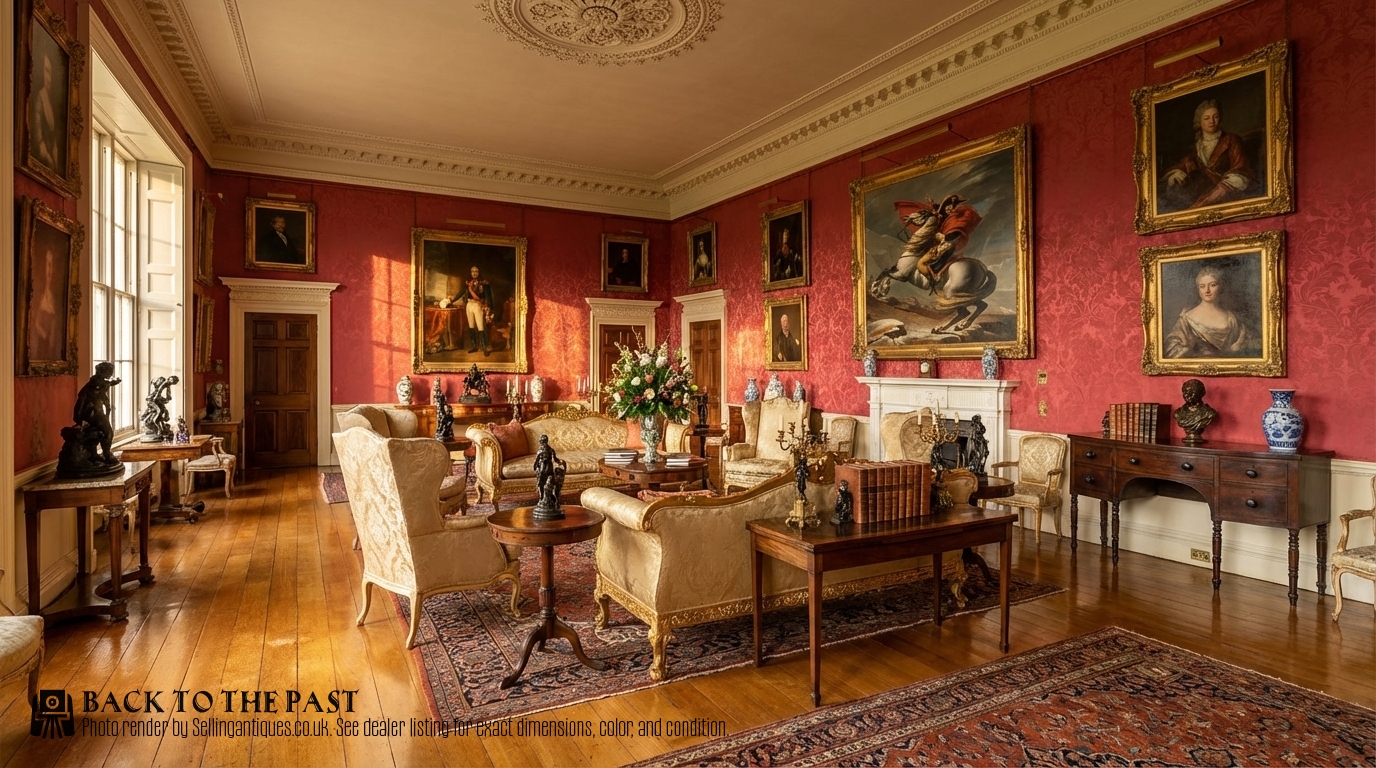
Regency Turned Leg Sideboard
A regency turned leg sideboard represents the formal dining room furniture of the early nineteenth century. These pieces combine utility with the refined aesthetic of the Regency, Georgian, and William IV eras.
Most examples found on this page adopt a bow-front or breakfront configuration in solid mahogany or flame mahogany veneer. Makers incorporated oak linings, brass inlays, and ebony stringing to elevate the visual appeal of these serving furniture items.
Buyers will encounter forms ranging from large Scottish proportions to small, neat proportions suitable for hallways or dressing areas. Console tables and serving tables also appear within this category alongside standard sideboards.
How they were made
Cabinet makers utilised solid mahogany and flame mahogany veneer applied to sturdy carcases of oak. These timber choices provided both the rich dark grain and the decorative figured surfaces prized in fashionable interiors.
Detailing often included fine brass inlay and ebony stringing embedded into the primary mahogany facades. Interior construction relied on traditional joinery techniques, visible in the oak linings of drawers and the precise fitting of bowed fronts.
Periods represented span the Georgian, Regency, George III, George IV, William IV, and early nineteenth century.
What varies in quality
The sophistication of the timber selection marks the primary difference across these pieces, with figured flame mahogany veneer representing a higher standard than plain mahogany boards. Figured grain patterns require greater skill in cutting and matching across curved surfaces.
The subtlety of decorative embellishments also distinguishes finer examples. Delicately executed brass inlay and precise ebony stringing indicate workshop standards superior to plain or unadorned surfaces.
The Regency Turned Leg Sideboard Glossary
- Flame mahogany
- A veneer cut from the fork of the mahogany tree to create a distinctive flickering, flame-like grain pattern. This decorative treatment was favoured for high-status cabinet work.
- Bow-front
- A cabinet front that curves outward in a convex shape across its width. This form softens the rectangular geometry typical of earlier dining room furniture.
- Stringing
- A thin inlay of contrasting timber, such as ebony, used to outline drawers, legs, or table edges. It provides a sharp linear boundary against the primary mahogany surface.
- Breakfront
- A piece of furniture where the central section projects forward from the flanking outer sections. This architectural arrangement creates depth and shadow on large sideboards.
- Oak lined
- The use of oak timber for internal drawer boxes and secondary framing. This denotes robust interior construction hidden behind the primary mahogany facade.
Regency Turned Leg Sideboard: Frequently Asked Questions
How do I date a sideboard?
Dating relies upon stylistic markers such as brass inlay, ebony stringing, and the presence of bow-front or breakfront configurations typical of the Georgian and Regency eras. Cabinet makers during these decades adjusted proportions and decorative motifs according to changing classical tastes.
Secondary woods, such as oak linings inside drawers, further help confirm the period of manufacture. Examining the construction methods inside the carcase provides a reliable guide to the age of the piece.
Where were sideboards placed?
These pieces functioned primarily in dining rooms as serving tables for food, silver, and glassware before or after meals. Their long surfaces and drawer arrangements accommodated dining room paraphernalia.
Smaller examples found their way into entrance halls and dressing rooms as side tables or console furniture. Their shallow depth allowed them to fit into narrow circulation spaces without obstructing movement.
Are these pieces made of solid mahogany?
Construction typically combines solid mahogany structural elements with decorative flame mahogany veneer applied to secondary timbers. Cabinet makers used veneers to display dramatic grain patterns that solid boards could not match uniformly.
Internal components like drawer linings and backboards frequently utilise oak or other secondary timbers. This combination ensured structural stability while presenting a refined exterior finish.
How do I care for mahogany furniture?
Maintenance requires keeping wooden surfaces away from direct sunlight and heat sources to prevent the timber and veneer from drying out. Regular dusting with a soft, dry cloth preserves the polish without building up excess residue.
Applying occasional natural wax helps nourish the antique finish and maintains the lustre of the mahogany grain. Avoid placing damp items directly onto the polished top to prevent water marking.