



Georgian Mahogany Bowfront Desk
A georgian mahogany bowfront desk brings curved elegance and practical writing space into a room, combining rich timber with a distinctive outward-sweeping profile.
Georgian Mahogany Bowfront Desk
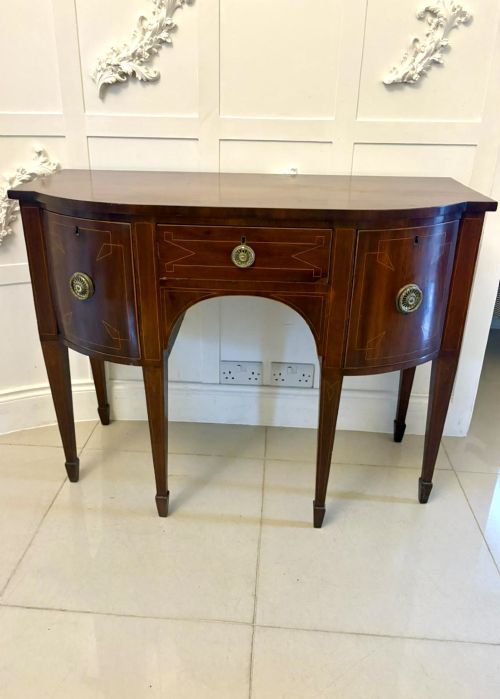
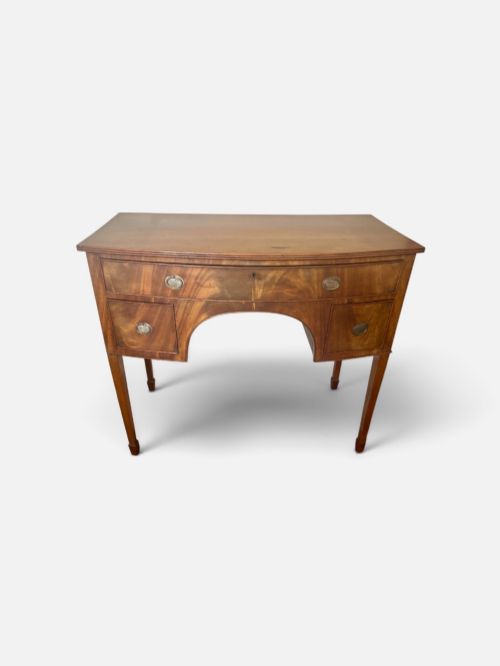
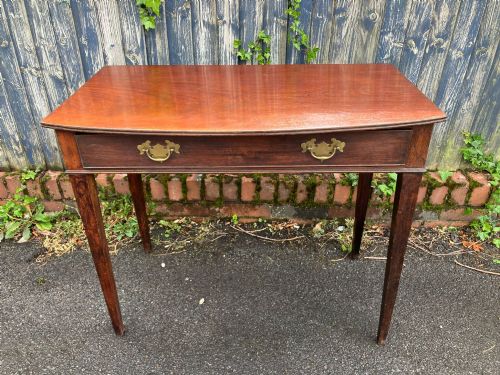
When you search for a georgian mahogany bowfront desk, you are looking at items that often bridge the categories of side tables, writing tables, and dressing chests with curved fronts. The pieces seen in these listings span the Georgian, Regency, and George III periods, alongside later twentieth-century interpretations.
Many examples combine writing surfaces with drawers or pull-out slides, reflecting the multi-purpose furniture design of the period. These items originate from the broader Georgian era as well as subsequent nineteenth and twentieth-century revivals.
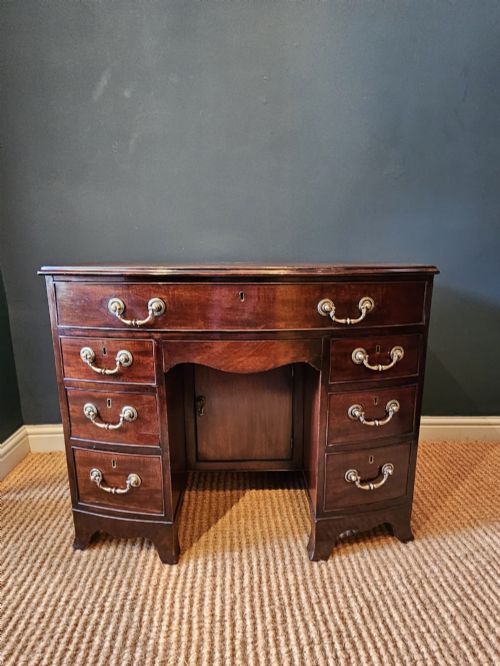
The characteristic curved front defines the silhouette, whether the piece functions as a kneehole side table, a dressing table, or a secretaire. Buyers will encounter both authentic period pieces and later designs that replicate the classic proportions.
Materials and construction methods
Makers utilised solid mahogany and flame mahogany veneer over secondary timbers such as oak, building robust carcases designed to withstand daily use. The curved front required careful timber selection and specialist bending or shaping techniques to achieve the smooth, unbroken sweep.
Surface decoration frequently incorporates boxwood inlay and boxwood stringing to accent the drawer edges and borders. Brass handles and fittings provide functional contrast, while integrated leather tops appear on specific writing table variants.
The listings show materials including solid mahogany, flame mahogany veneer, brass fittings, leather writing surfaces, oak, and boxwood inlay.
Judging the quality of the work
Superior pieces display careful figure matching in the mahogany veneers across the curved drawer fronts, ensuring the grain flows naturally along the sweep. The crispness of the boxwood inlay and the precision of the joinery distinguish higher-tier examples from simpler utilitarian items.
Subtle details such as secondary timber selection, dovetail construction within the drawers, and original brass hardware elevate a piece. The integrity of the curved structure and the absence of distortion in the bowfront indicate careful historical construction and ongoing stability.
The Georgian Mahogany Bowfront Desk Glossary
- Bowfront
- A convex, outward-curving front profile popular in furniture design from the late eighteenth century onwards. This shape softens the corners of a room and creates a dynamic visual rhythm.
- Flame mahogany
- A veneer cut from timber where the branches join the trunk, producing a fiery, repeating pattern resembling flickering flames. Cabinet makers prized this wood for its decorative impact on drawer fronts.
- Boxwood stringing
- Thin inlay lines of pale boxwood set flush into dark mahogany surfaces to create geometric borders and contrast. It highlights the structural outlines of tabletops and drawer margins.
- Secretaire
- A cabinet or chest incorporating a dedicated writing drawer that drops down to reveal a fitted interior of small compartments and pigeonholes. It merges storage with a functional writing surface.
- Kneehole
- A recessed central space beneath a desk or dressing table designed to accommodate the user's legs while seated. Flanking banks of drawers typically support the writing surface above.
Georgian Mahogany Bowfront Desk: Frequently Asked Questions
What is a bowfront desk?
A bowfront desk is a writing surface featuring a convex, outward-curving front facade. This design style gained prominence during the Georgian and Regency periods to soften room angles.
Such pieces often incorporate drawers or writing slides behind the curved exterior, blending decorative elegance with everyday utility.
How do I date a mahogany desk?
Dating relies on examining construction methods, timber types, and decorative motifs like boxwood inlay or brass hardware. Earlier pieces from the George III period exhibit hand-cut dovetails and specific secondary woods.
Later nineteenth and twentieth-century pieces often reflect earlier styles, showing distinct manufacturing marks and veneer techniques characteristic of their true production era.
Where should I place a bowfront desk?
These pieces suit placement against flat walls where the curved front can project into the room as a focal point. Their finished backs and compact proportions also allow them to sit effectively within home offices or living spaces.
Ensure the piece has adequate clearance for drawers to open fully and for seating to fit comfortably within any kneehole space.
How do I care for mahogany surfaces?
Maintain mahogany by dusting regularly with a soft, dry cloth and avoiding direct sunlight that can fade the rich timber tones. Occasional applications of appropriate furniture wax help nourish the wood and preserve the finish.
Keep leather writing inserts away from excessive moisture and sharp implements to prevent surface marking.