
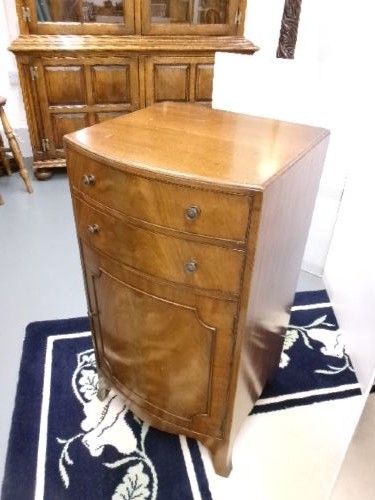
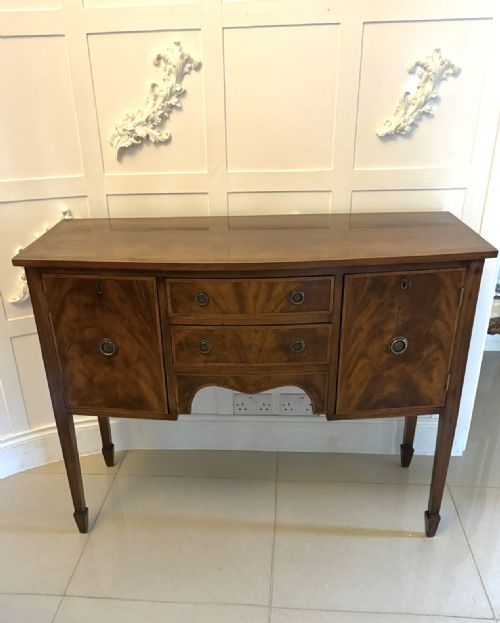


Antique Bowfront Storage Table
An antique bowfront storage table brings curved elegance and discreet utility to a room, offering generous interior space behind a distinctive sweeping facade.
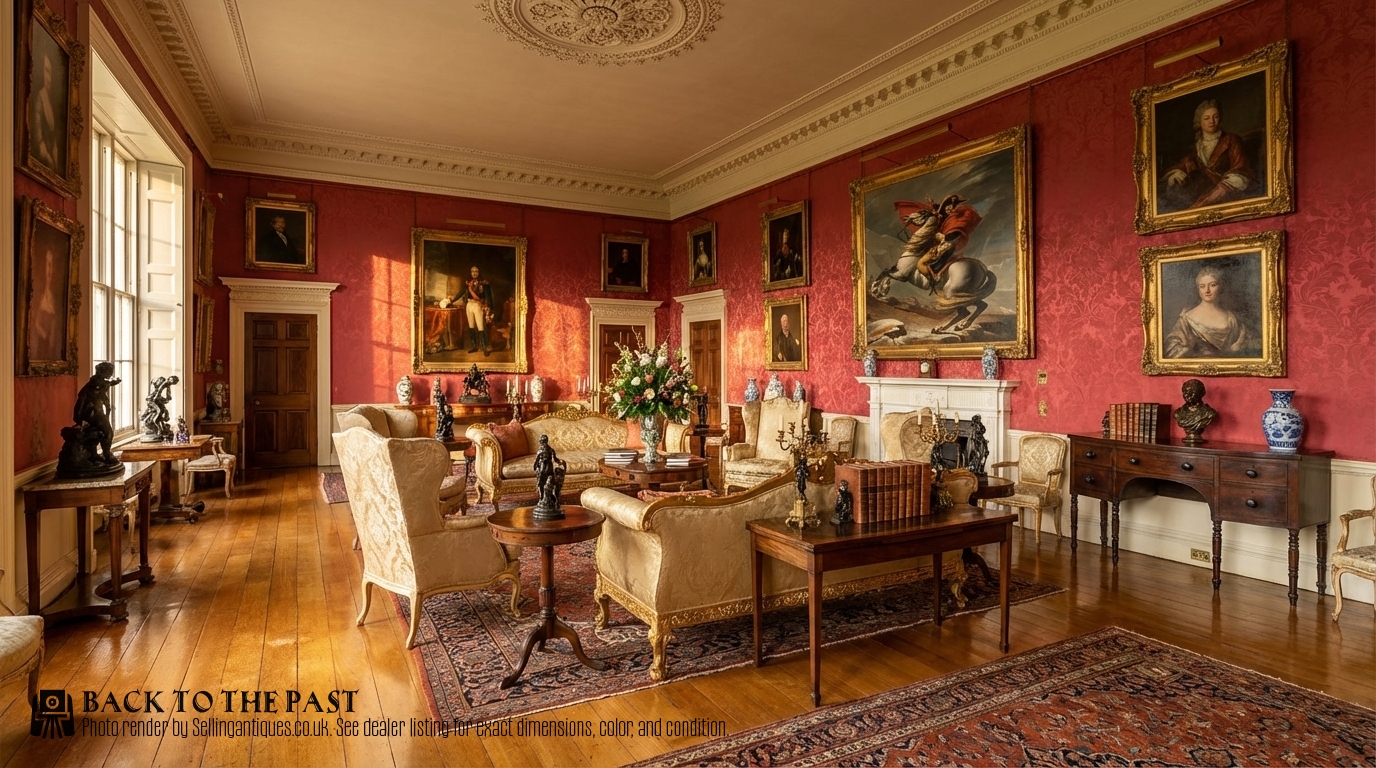
Antique Bowfront Storage Table
When you search for an antique bowfront storage table, you encounter a selection of case furniture centred primarily on sideboards, side cabinets, and bedside cabinets. These pieces span from the Georgian and Regency eras through the Victorian period into Edwardian and later revivals, displaying the curved outline that defines the type.
The most common forms on this page are sideboards and smaller bedside or side cabinets. They range from grand dining room servers down to compact bedroom and occasional pieces, all sharing the characteristic convex front.
Origins vary across British cabinet-making traditions, incorporating Georgian design principles alongside Edwardian interpretations and revival styles such as Queen Anne, Hepplewhite, and Chippendale.
How they were made
Cabinet-makers relied heavily on solid mahogany and flame mahogany veneer to construct these carcasses, laying the figured veneers across the curved drawer fronts to create striking grain patterns.
Many examples incorporate decorative details such as boxwood stringing and boxwood inlay to frame the drawers and top edges, while brass hardware provides the functional handles and pulls.
The curved framework demands precise carpentry to ensure the doors and drawers operate smoothly within the convex structure without binding.
Materials appearing across the inventory include mahogany, walnut, brass, and boxwood.
What varies in quality
Quality rests upon the choice of timber and the dexterity required to veneer a convex surface cleanly. Finely figured flame mahogany and crisp boxwood inlay distinguish the superior items from plainer builds.
Proportion and cabinet-making restraint set the better examples apart, where the curve of the bowfront integrates harmoniously with the legs and top rather than appearing heavy or cumbersome.
The Antique Bowfront Storage Table Glossary
- Bowfront
- A convex, outward-curving front facade typical of certain cabinets and sideboards. This shape softens the room's angles while increasing internal volume.
- Flame mahogany
- A highly figured cut of mahogany grain resembling flickering flames. Cabinet-makers reserved this timber for prominent drawer fronts and cupboard doors.
- Boxwood stringing
- Thin inlaid lines of contrasting light yellowish wood used to border panels and drawer edges. It adds linear definition to dark mahogany surfaces.
- Demi-lune
- Half-moon or semicircular in shape, often describing console tables and side cabinets designed to sit flat against a wall.
- Sideboard
- A long dining room storage piece fitted with cupboards and drawers. It functions as a serving station and tableware repository.
Antique Bowfront Storage Table: Frequently Asked Questions
What is a bowfront storage table?
A bowfront storage table refers to case furniture featuring a convex, outward-curving front designed to hold items within cupboards and drawers. These pieces include sideboards and side cabinets.
The curved design softens the rigid lines typical of rectangular furniture while providing practical storage space for dining or living areas.
Where were these pieces used?
Larger versions like sideboards traditionally served dining rooms for storing linens, cutlery, and serving dishes. Smaller cabinets functioned in bedrooms or parlours.
Today, they adapt readily to hallways, living rooms, and dining spaces where both surface display and concealed storage are required.
How do I date a bowfront cabinet?
Dating relies on examining the construction methods, timber species, hardware, and stylistic traits such as Georgian proportions or Edwardian revival details. Secondary woods inside drawers often provide clues.
Cabinet-making techniques evolved from eighteenth-century hand joinery towards later industrial methods, helping to establish the period of origin.
Are these pieces made of solid wood?
Many items combine solid timber frameworks with decorative wood veneers applied to the primary surfaces. Flame mahogany veneer is frequently laid over a stable secondary wood core.
This technique allowed craftsmen to showcase striking grain patterns on the curved front without risking the wood warping over time.