
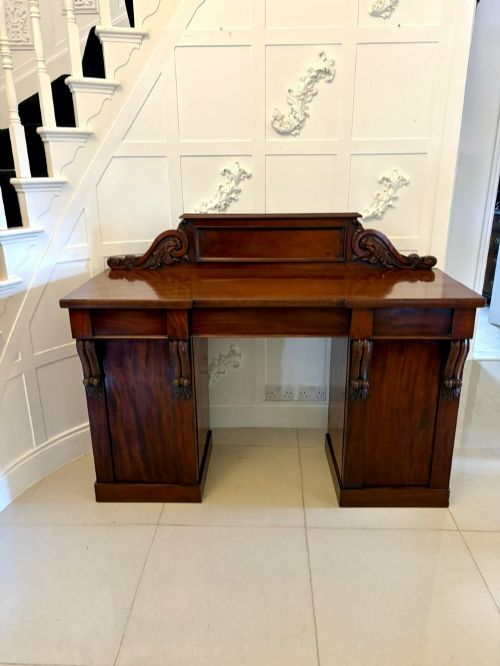
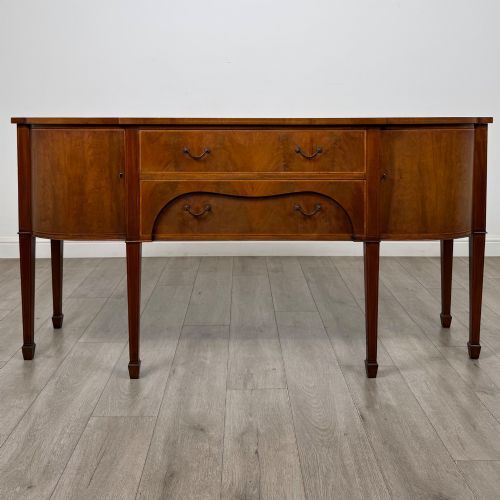
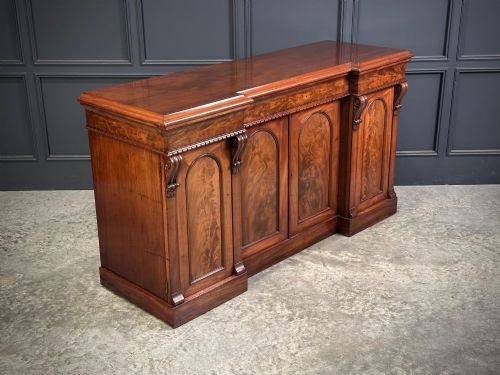
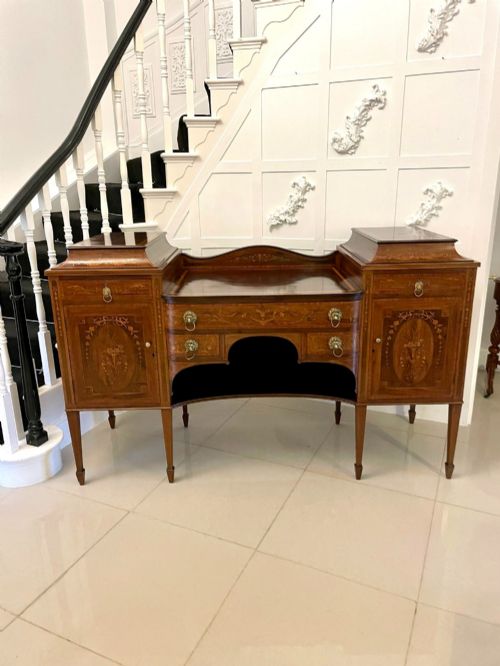
Antique Mahogany Dining Cabinet
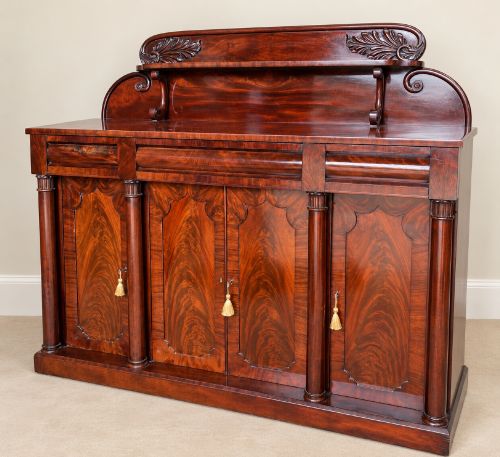
An antique mahogany dining cabinet anchors the room with dense grain and deep colour, offering generous storage for silver and linen.
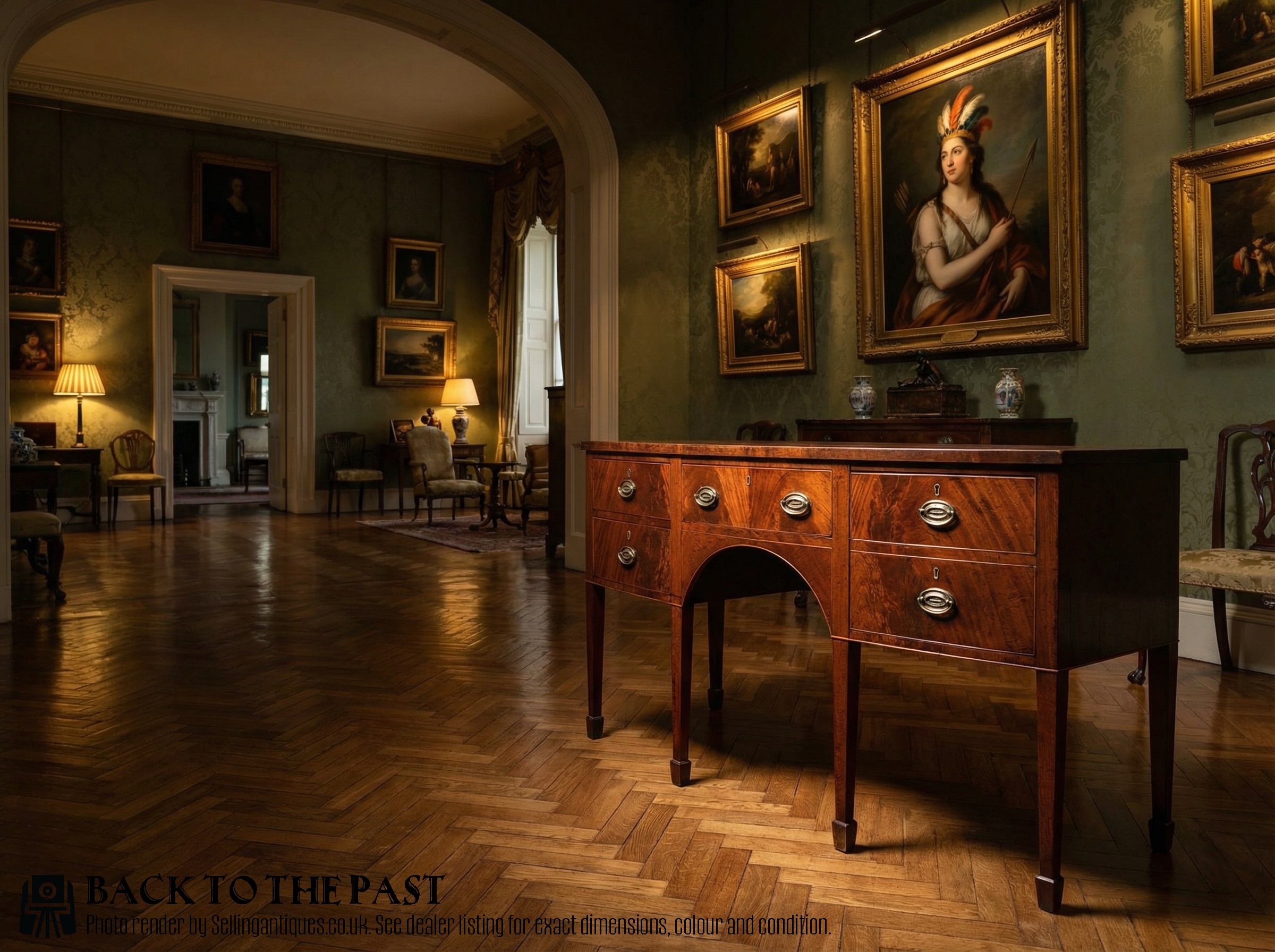
Antique Mahogany Dining Cabinet
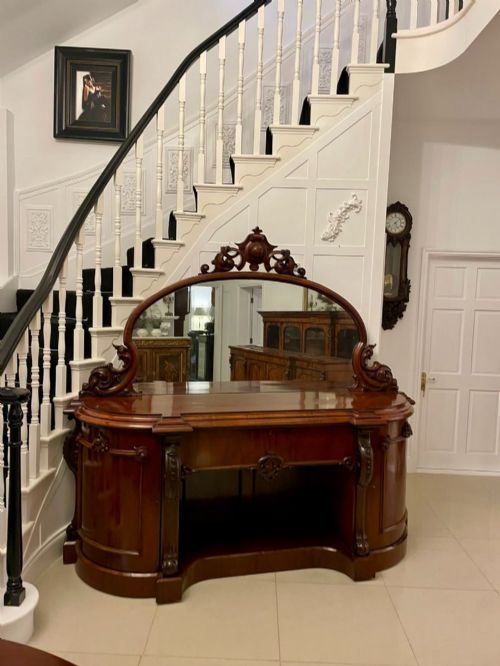
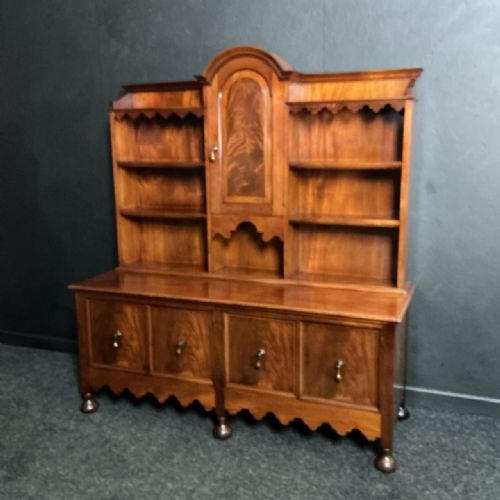
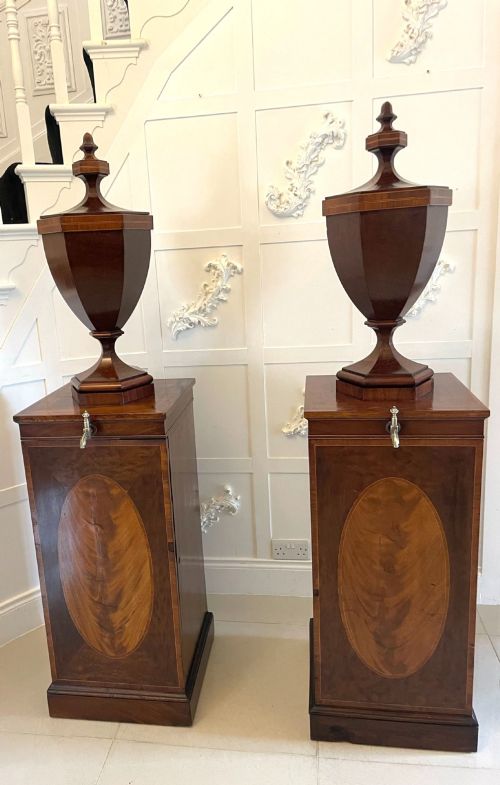
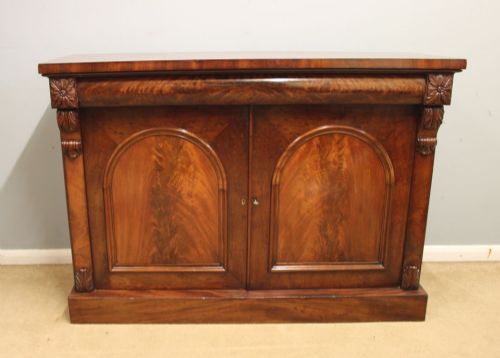
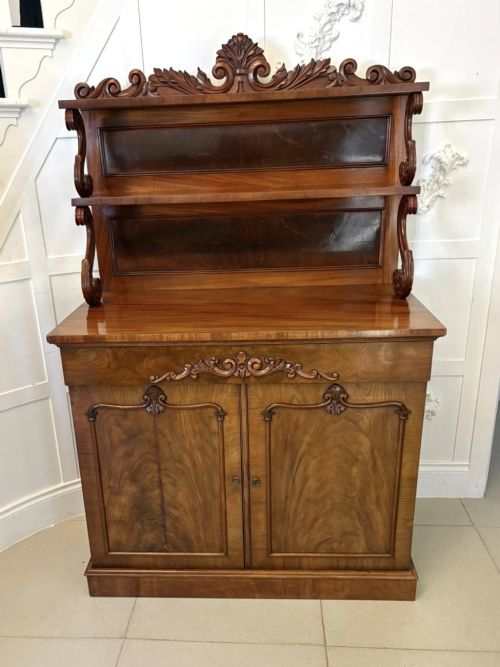
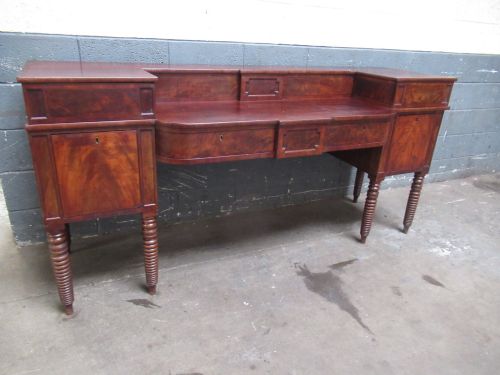
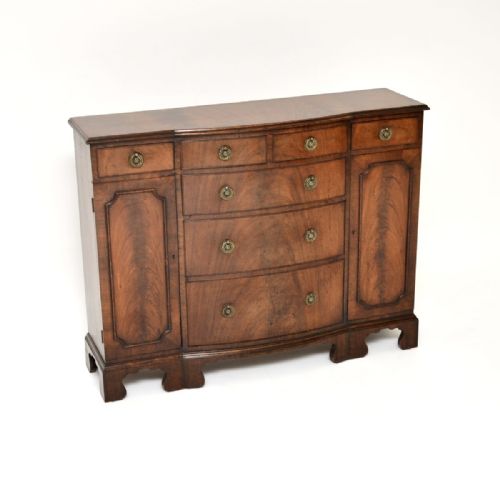
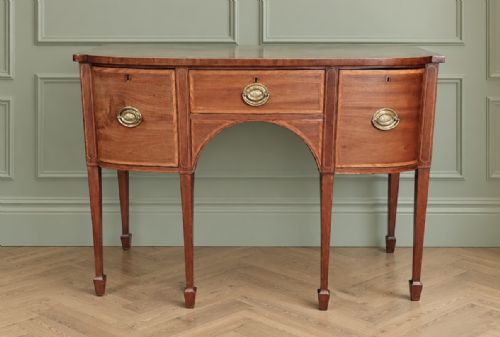
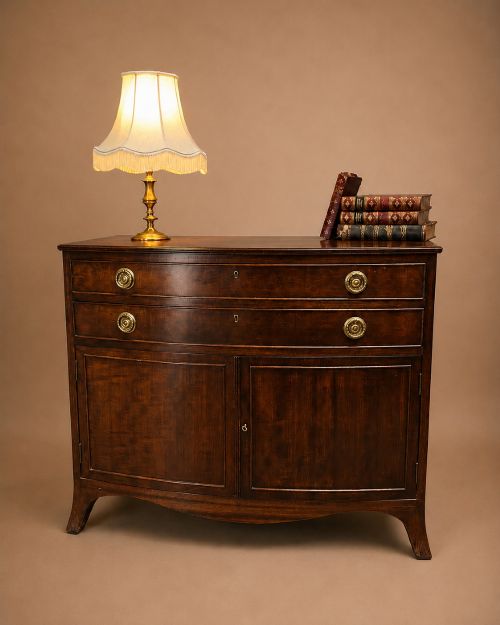
When buyers search for an antique mahogany dining cabinet, they encounter a range of formal storage pieces designed to serve the dining room from the eighteenth century through the Edwardian period. The forms vary from substantial bow-front sideboards and chiffoniers to breakfront cupboards, dressers, and wine urns on pedestals.
Victorian and nineteenth-century examples dominate the selection, often featuring carved mirror backs, figured mahogany panels, and multiple doors or tiers. Georgian and Regency pieces appear with simpler serpentine lines, brass mounts, and inlaid stringing.
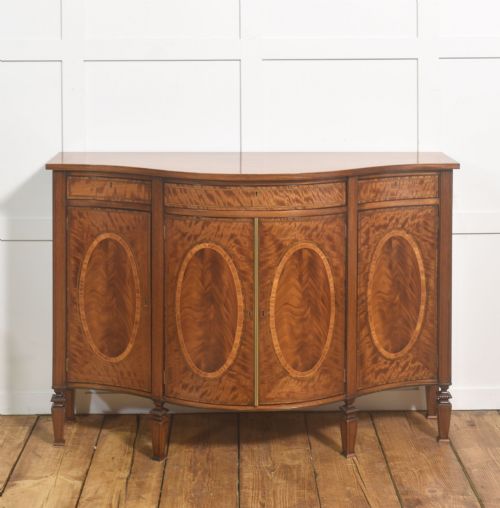
Edwardian and later twentieth-century iterations bring lighter proportions, sometimes incorporating satinwood crossbanding or marquetry work within traditional Sheraton Revival styles.
Materials and construction methods
Makers utilised solid mahogany and applied flame mahogany veneer over secondary timbers to create rich, figured surfaces that caught the light in candlelit dining rooms. Cabinetmakers selected timbers for their distinct grain patterns, occasionally adding satinwood and boxwood for contrasting inlay and marquetry details.
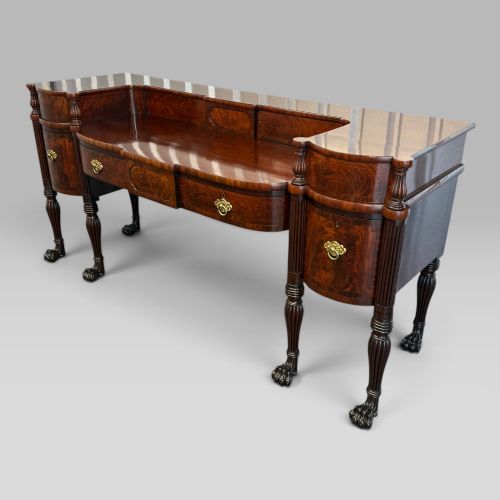
Brass fittings such as lion paw feet, handles, and gallery rails provided functional accents, while glass panels appeared in later cabinet doors. Construction relied on traditional joinery, ensuring substantial weight and stability across large sideboards and buffets.
Materials recur across the selection in solid mahogany, flame mahogany veneer, satinwood, boxwood, and cast brass hardware.
Assessing quality in mahogany dining furniture
The choice of timber sets the baseline for quality, distinguishing dense figured or flame mahogany veneers from plain stock. Superior pieces exhibit book-matched grain patterns across drawer fronts and doors, showing careful planning by the cabinetmaker.
Carved details and hardware elevate the work, from crisp acanthus leaf motifs to substantial brass handles and fitted interiors. The integration of secondary woods and the precision of inlaid satinwood or boxwood stringing further separate standard utility pieces from exhibition-grade commissions.
Hewetsons London·M. D. Miller and Sons Nottingham
The Antique Mahogany Dining Cabinet Glossary
- Sideboard
- A large dining room cabinet designed for serving food and storing tableware. They frequently incorporate drawers and cupboards arranged beneath a broad flat top.
- Chiffonier
- A compact low sideboard or cabinet, typically featuring enclosed shelving below and sometimes a raised tier or mirror superstructure above.
- Flame mahogany
- A veneer cut from the fork of the mahogany tree where the branch meets the trunk. This produces a dramatic, flamelike grain pattern prized for principal door and drawer surfaces.
- Serpentine
- A furniture front characterised by a gentle convex curve flanked by two concave curves. It requires advanced woodworking skill to shape accurately from solid timber or veneer.
- Crossbanding
- A decorative border technique where thin strips of veneer are laid perpendicular to the grain of the central panel. This frames the primary timber and adds visual depth to cabinet doors.
Antique Mahogany Dining Cabinet: Frequently Asked Questions
How do I care for mahogany?
Maintain a stable indoor humidity and avoid placing the cabinet near direct heat sources to prevent the timber and veneer from splitting.
Dust regularly with a soft, dry cloth and apply a traditional beeswax polish sparingly to nourish the grain without building up a sticky residue.
Were these cabinets used only for dining?
While primarily built to house silver, glassware, and linens in the dining room, their generous proportions made them useful in grand hallways and libraries.
Later Edwardian versions often served dual purposes as general display and storage furniture in domestic reception rooms.
How do I distinguish Georgian from Victorian pieces?
Georgian furniture generally favours restrained classical proportions, subtle inlay, and clean architectural lines. Pieces often display simpler bracket feet or tapered legs.
Victorian cabinets tend to be heavier, incorporating elaborate carvings, figured veneers, mirror backs, and occasionally bolder hardware like lion paw feet.
What is a chiffonier?
A chiffonier is a smaller, lower relative of the sideboard that gained popularity during the Regency and Victorian eras. It usually combines enclosed lower cupboards with an upper shelf or mirror.
These pieces were suited to smaller dining spaces where a full sideboard would overwhelm the room.