
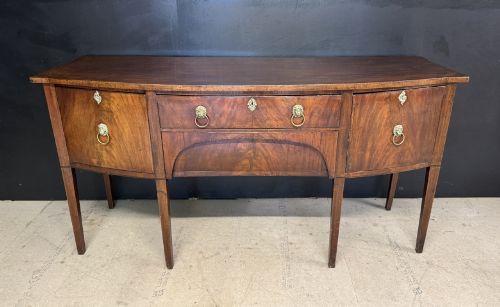
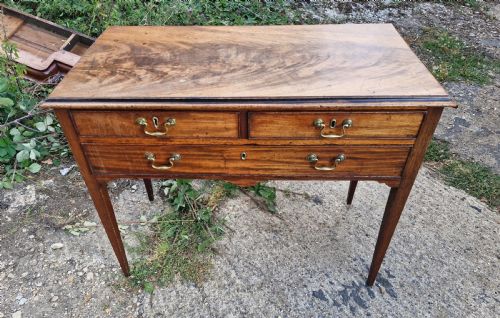
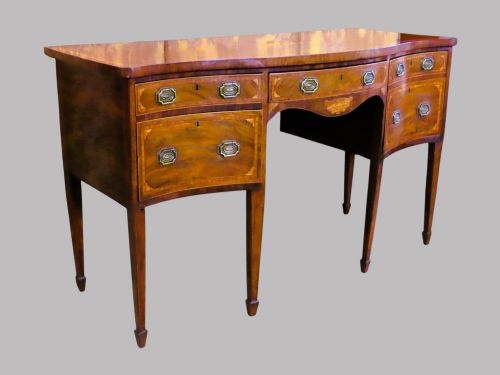
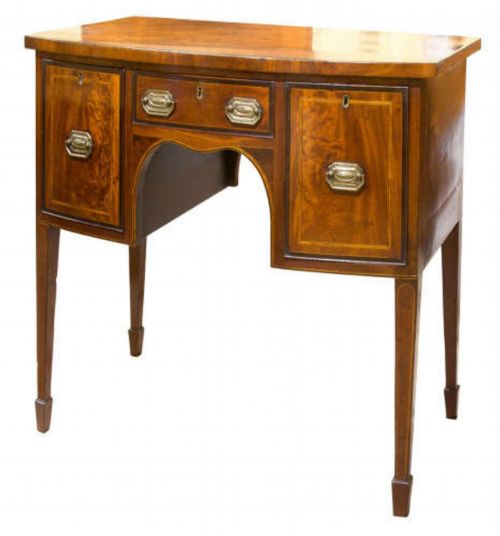


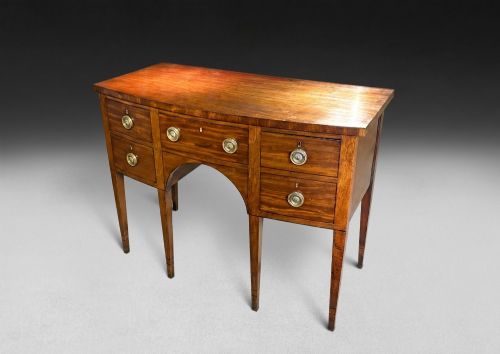
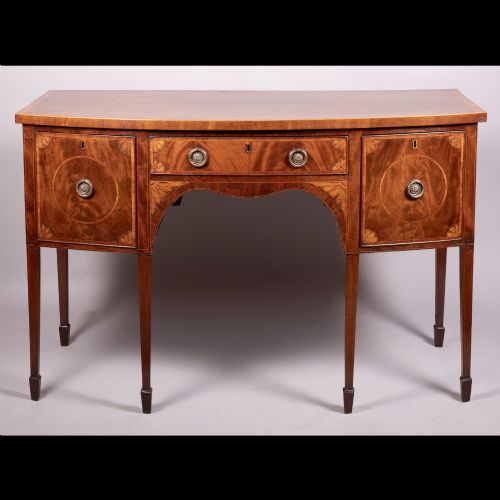
Tapered Leg Mahogany Server
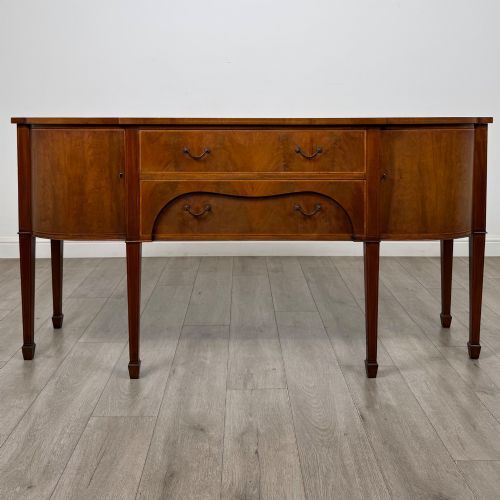
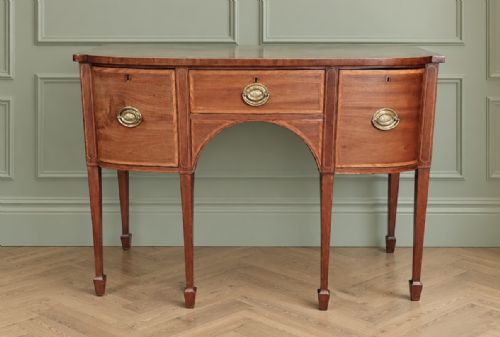
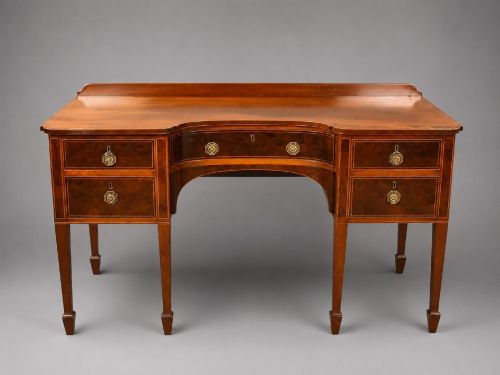
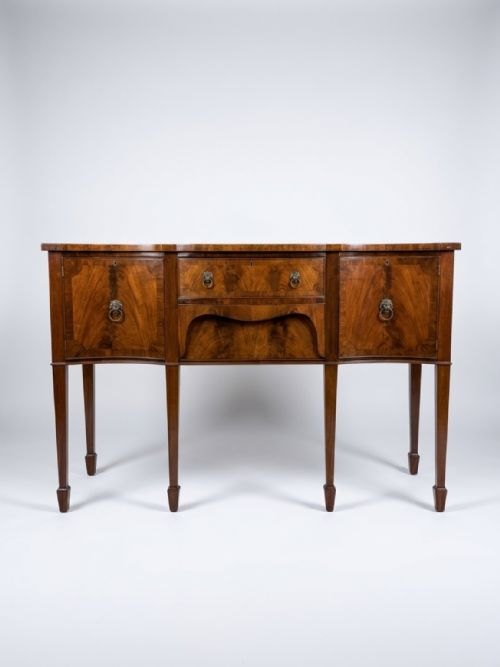
A tapered leg mahogany server brings clean geometry and figured timber into a dining room or hall.
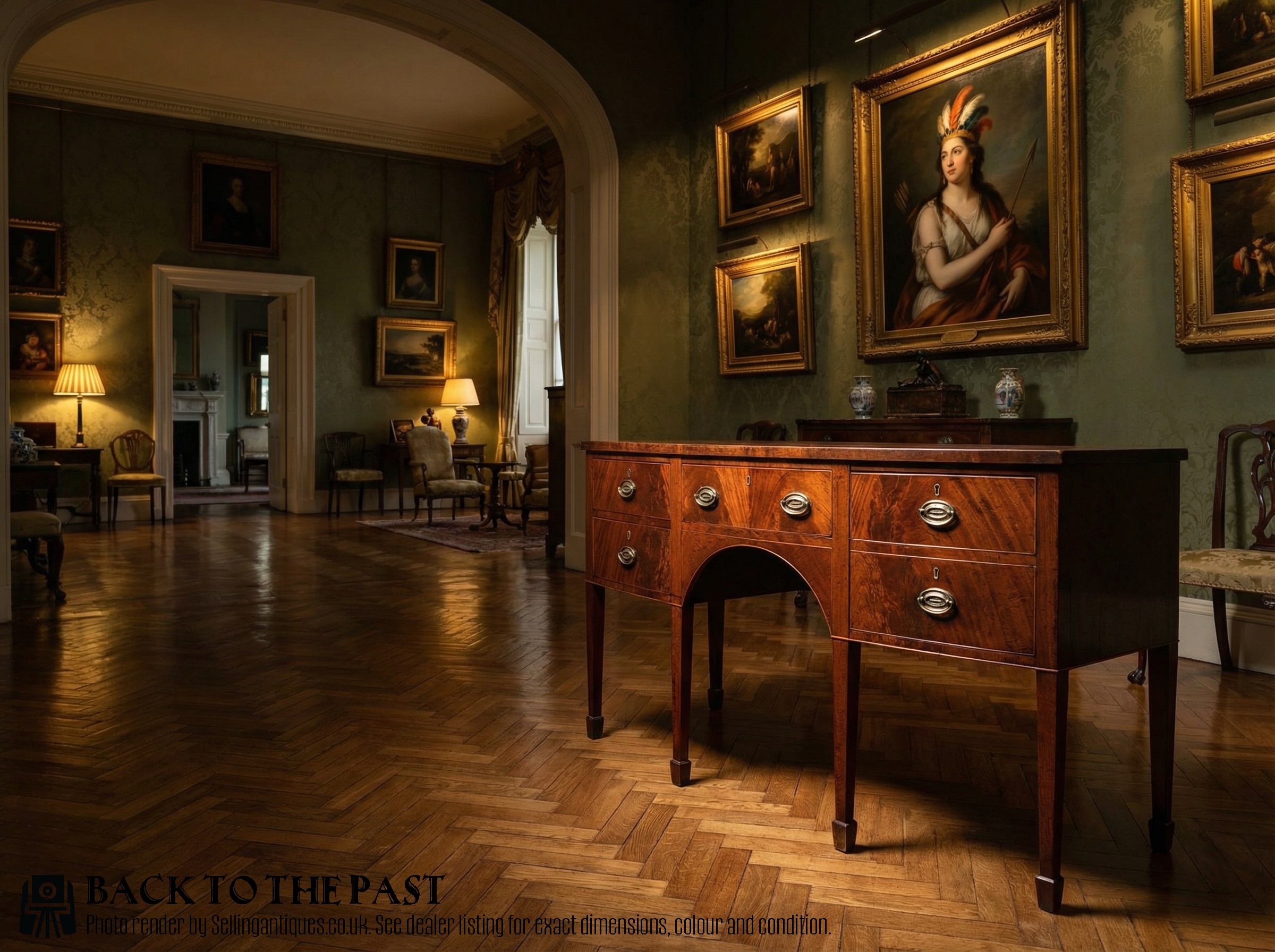
Tapered Leg Mahogany Server
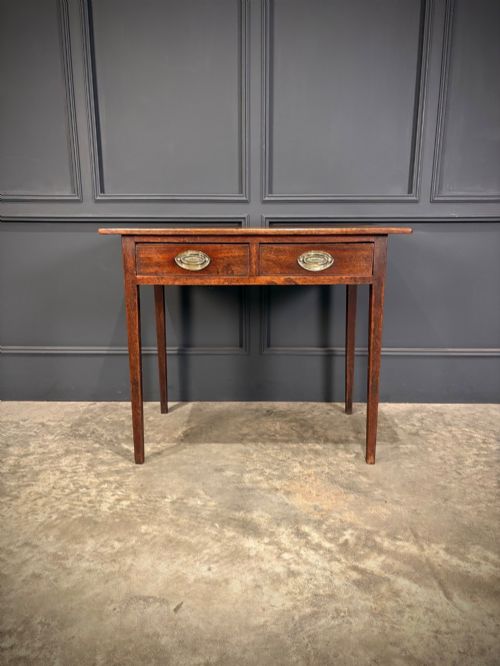
A tapered leg mahogany server sits within a broad group of dining room furniture that includes sideboards, side tables, and serving tables. When searching for a tapered leg mahogany server, buyers encounter forms spanning the eighteenth century through the Edwardian period, with Georgian and Regency examples appearing frequently alongside Sheraton Revival interpretations.
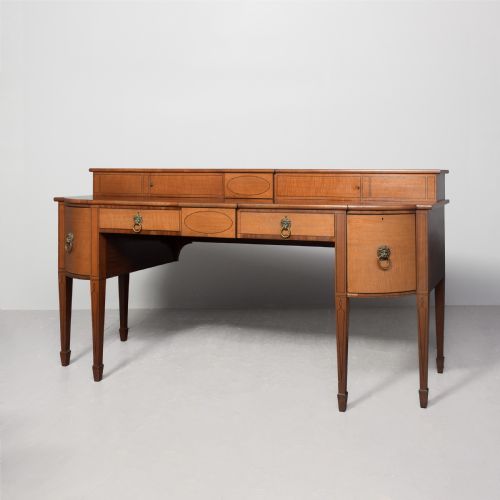
The profile of these serving pieces varies between straight fronts, bow-fronts, and serpentine shapes. Many incorporate drawers and cupboards designed for dining service, constructed in proportions ranging from compact small tables to large Scottish stage-back sideboards.
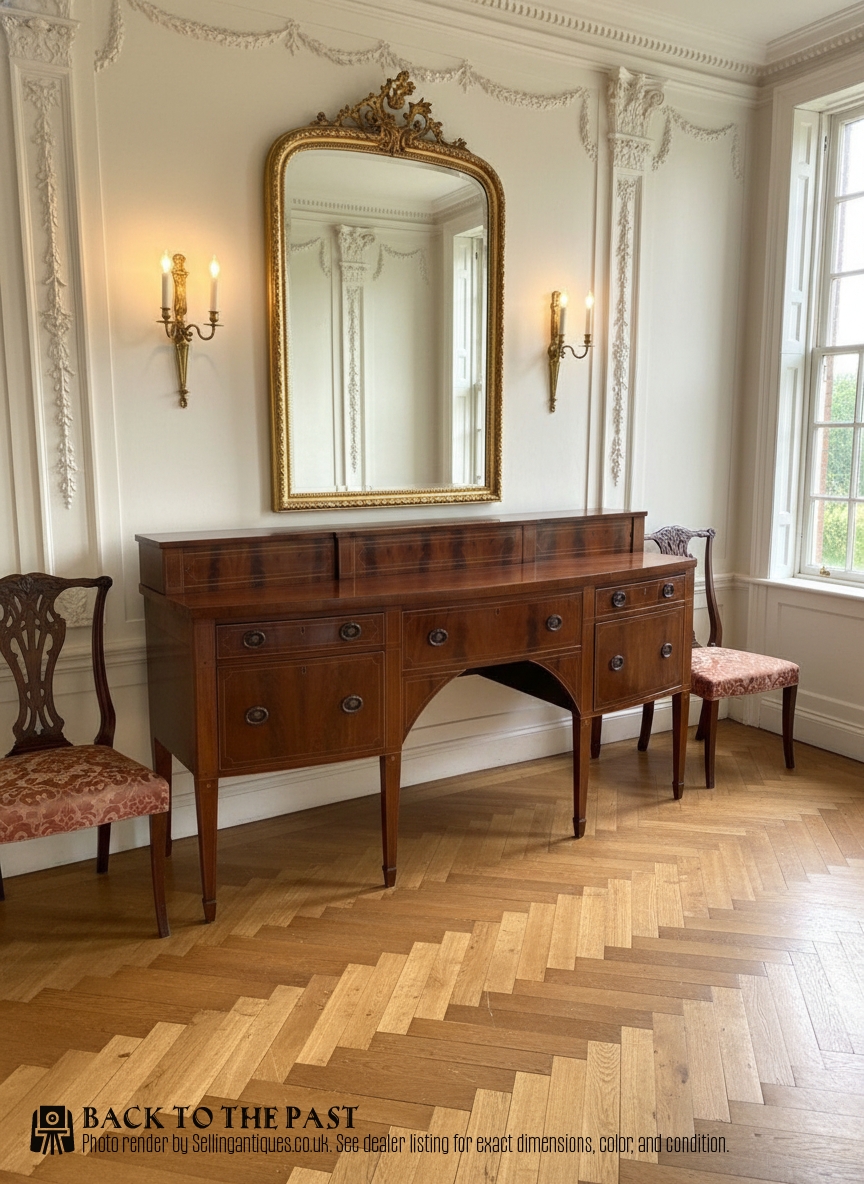
Judging the standard of execution
The quality of a server rests upon the selection of the timber and the precision of the cabinetwork. Finer examples display highly figured flame mahogany and carefully matched veneers across the entire front elevation, rather than plain boards.
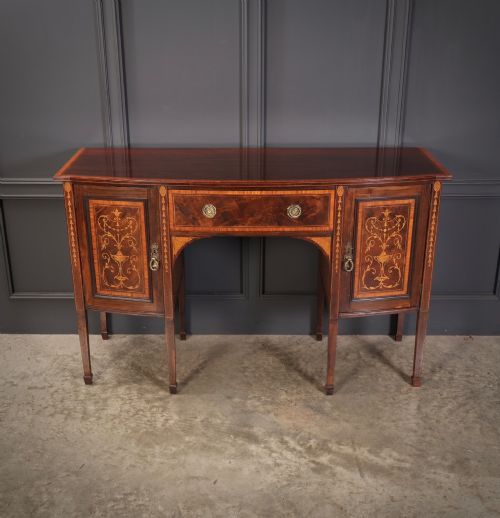
Execution shows in the delicacy and exactness of the inlay work, such as satinwood crossbanding and boxwood lines. Superior proportion, clean joinery at the leg junctions, and original brass hardware distinguish the most accomplished pieces from standard production.
The inventory records pieces spanning the eighteenth century through the Edwardian era, incorporating styles from George III to Sheraton Revival.
The Woodworkers Ltd Kilkenny
The Tapered Leg Mahogany Server Glossary
- Bow-front
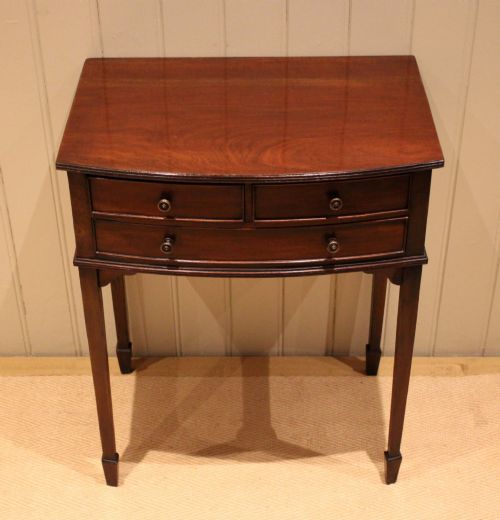
- A convex curving front elevation popular on Georgian and later serving pieces. This curved form softens the linear profile of a dining room.
- Serpentine
- A front contour that curves outward in the centre and inward toward the ends. It requires advanced carpentry to execute smoothly in solid mahogany and veneer.
- Crossbanding
- A strip of veneer applied across the grain of the primary surface to form a decorative border. Cabinetmakers often utilised satinwood for this contrasting detail.
- Lowboy
- A small dressing or side table with one or more rows of drawers supported on four legs. These compact forms frequently date from the Georgian period.
- Stage-back
- A raised rear superstructure on a sideboard designed to display serving silver or platters. This feature appears on larger Scottish examples from the Georgian era.
Tapered Leg Mahogany Server: Frequently Asked Questions
What is the difference between a server and a sideboard?
A server generally refers to a more compact serving table or sideboard variant designed for holding dishes during a meal. The listings include both terms alongside side tables and buffets.
Larger variations often incorporate extensive cupboard space and drawers, whereas simpler server formats focus on surface area and slender leg supports.
How do I distinguish a Georgian piece from a later revival?
Georgian pieces date from the eighteenth and early nineteenth centuries, displaying period construction methods and timber maturity. Craftsmen during this era relied on hand-cut joints and native mahogany stocks.
Revival pieces, such as those from the Sheraton Revival or Edwardian eras, often utilise machine-sawn elements and standardised decorative motifs while mimicking earlier eighteenth-century proportions.
Where were these serving tables placed in a home?
These pieces traditionally stood against dining room walls to hold food, silver, and ceramics during meals. Their narrow depth allowed them to fit into hallways and drawing rooms without obstructing movement.
Console tables and side tables served similar domestic functions in reception rooms, providing a stable surface for decorative objects or lighting.
What timber types should I look for?
Mahogany forms the primary structural and visual base for these items, frequently enhanced with flame mahogany veneer for figured grain patterns. Cabinetmakers also incorporated contrasting light woods for decorative effect.
Satinwood and boxwood appear as stringing and inlay, while purpleheart provides darker banding on select eighteenth-century bow-front examples.