
19th Century Buffet Table
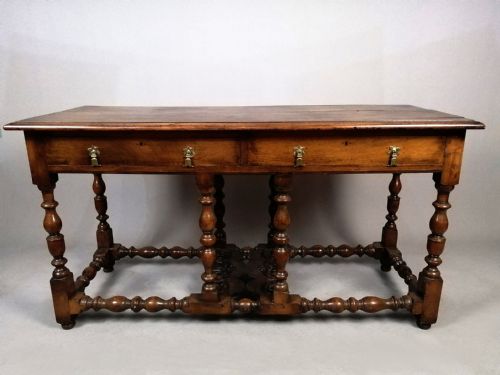
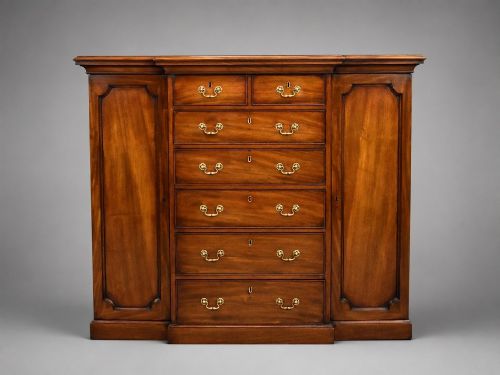
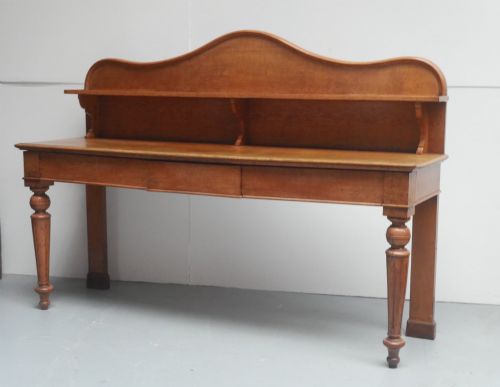
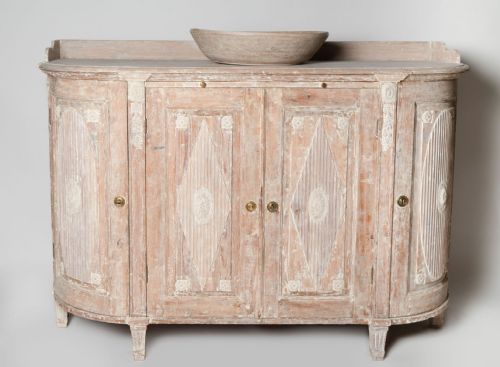
These nineteenth century buffet table examples are heavy timber server and storage pieces built to hold dining room service.
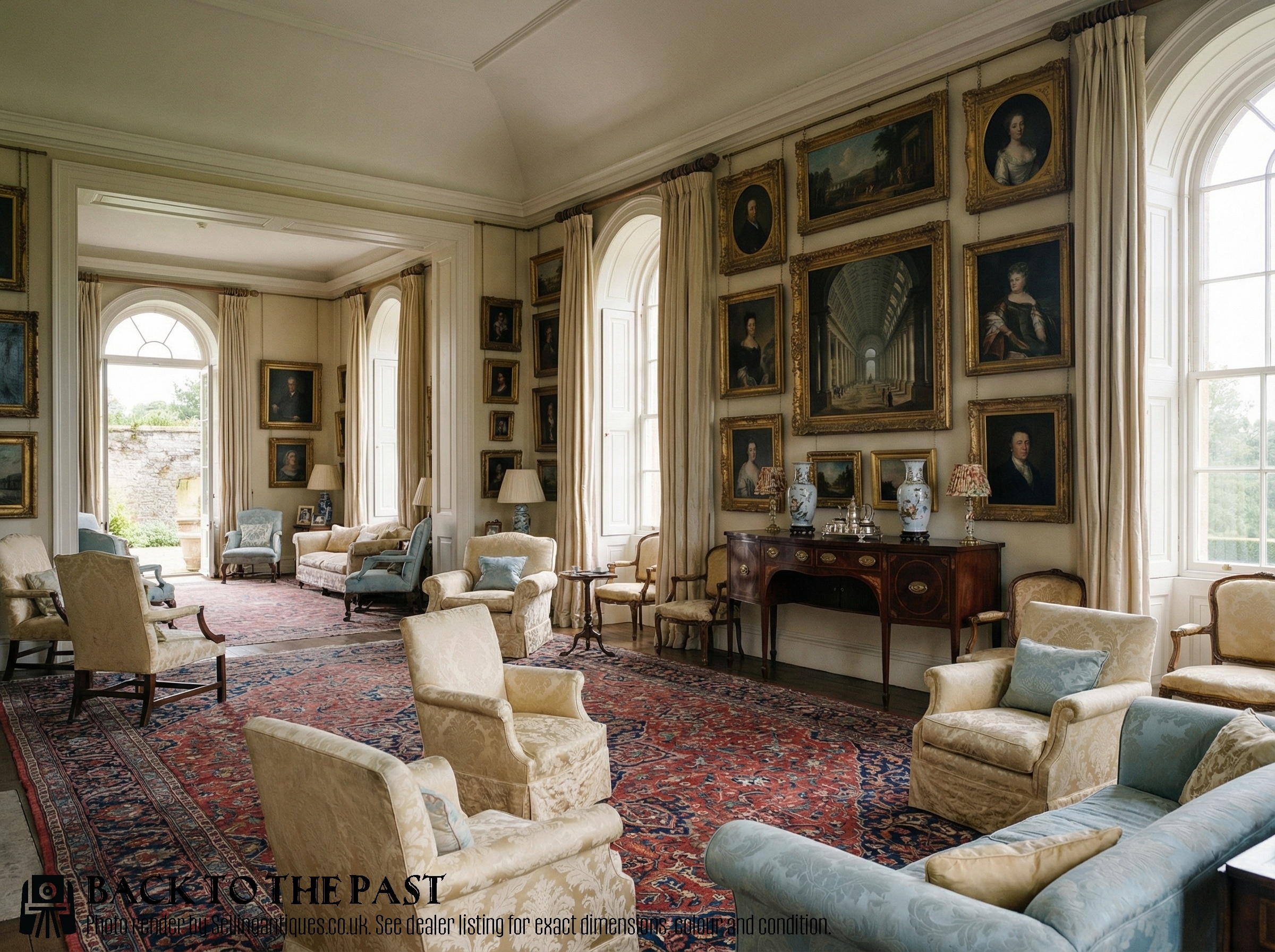
19th Century Buffet Table
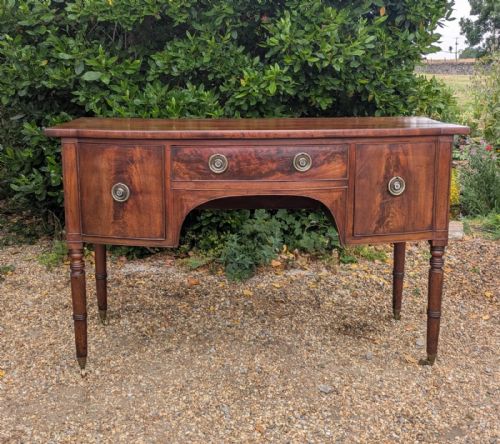
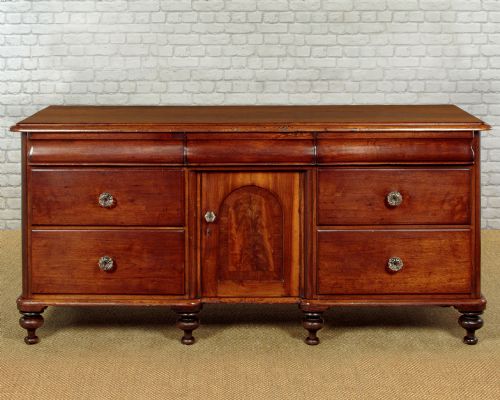
A nineteenth century buffet table encompasses a wide group of heavy timber dining room service furniture that includes sideboards, serving tables, and dresser bases. Buyers searching this phrase meet everything from formal Regency bow-front pieces to sturdy Victorian pine and oak servers.
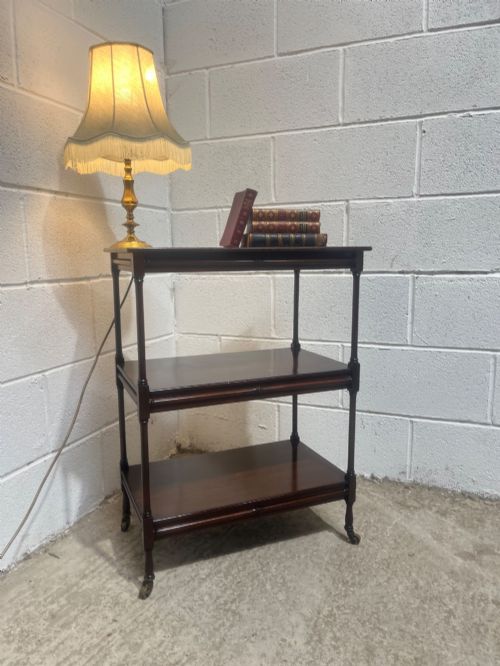
The material origins stretch across English, Scottish, Irish, French, and Swedish workshops, spanning the Georgian, Regency, and Victorian periods. Many examples utilise three tiers, cupboards, or drawers to manage dining china and silver.
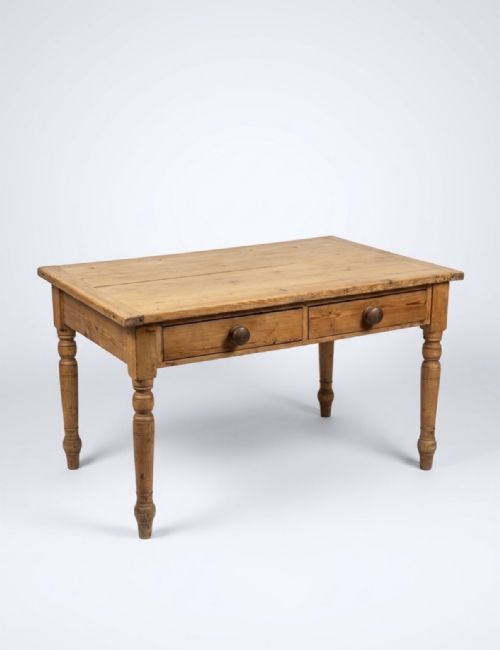
Sideboards and credenzas form the bulk of the formal dining room offerings, whilst kitchen dressers and dumb waiters represent the more utilitarian side of nineteenth century serving furniture.
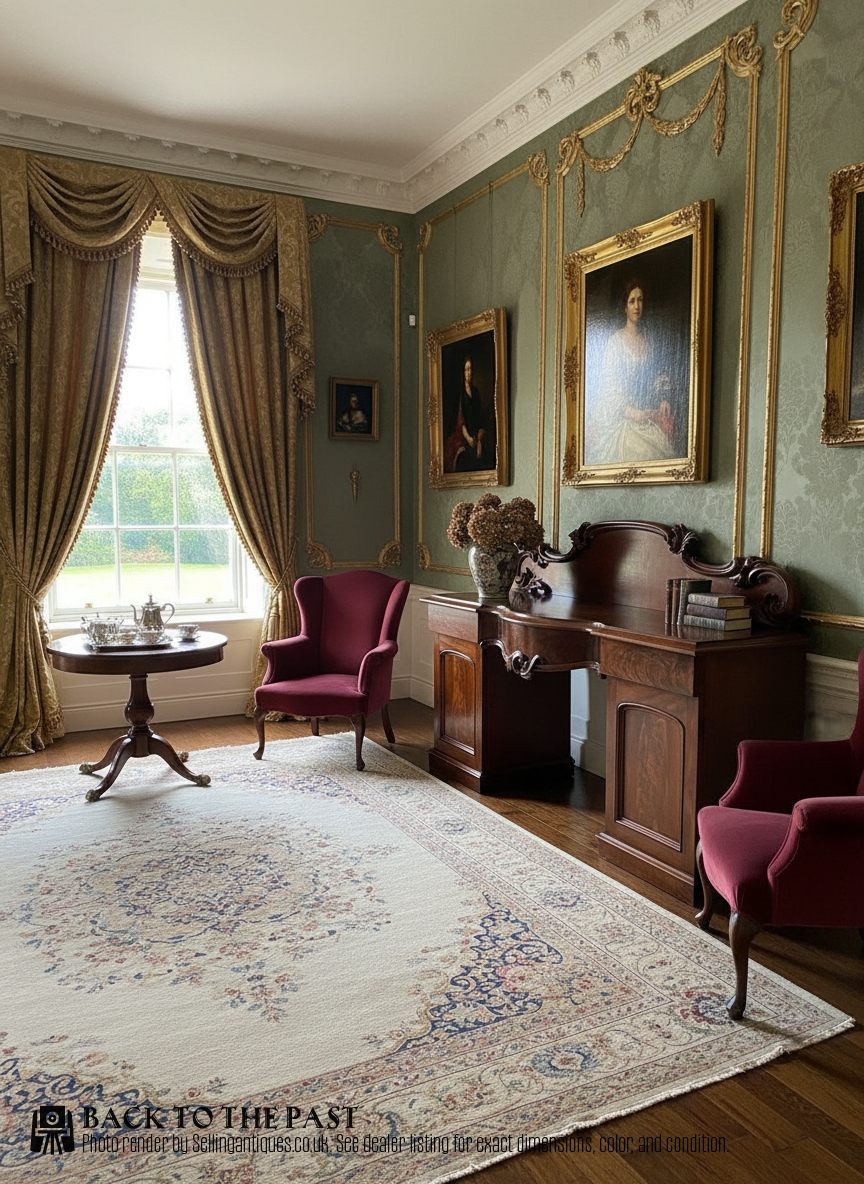
Materials and Construction
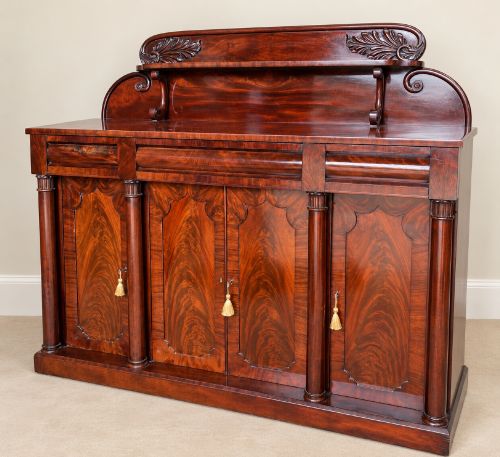
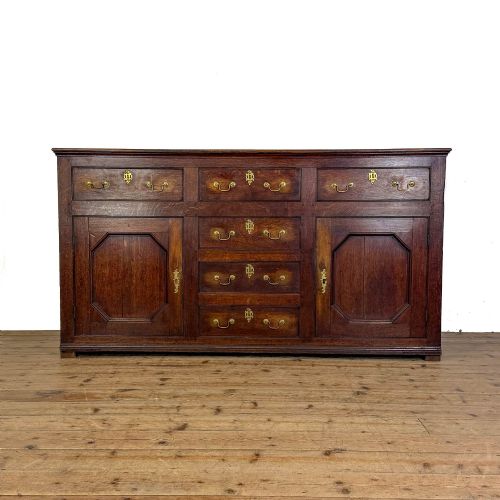
Makers relied heavily on solid mahogany, flame mahogany veneer, oak, walnut, and pine, often embellished with brass fittings, inlay, or carved details. Timber selection dictated whether a piece suited a grand dining room or a country kitchen.
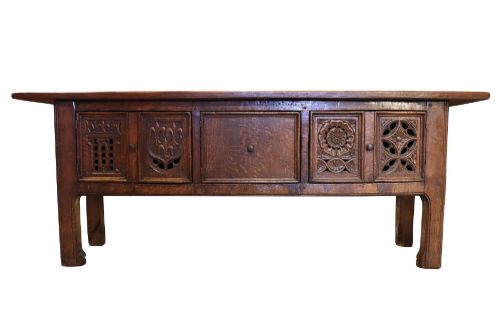
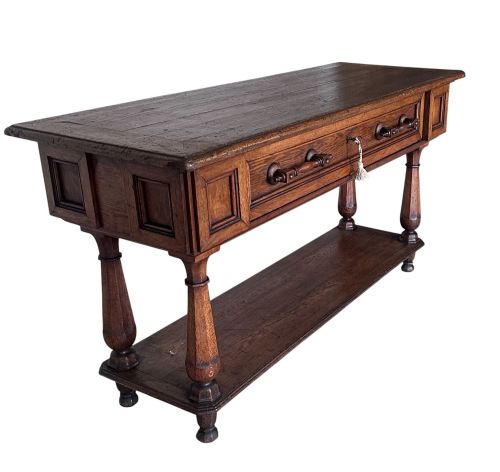
Construction techniques combined robust joinery with decorative surface treatments, such as the carved linenfold or Gothic Revival motifs seen on later nineteenth century pieces. Veneering demanded high skill to apply rich grain patterns over stable secondary woods.
The listings show a strong preference for mahogany and oak across both English and continental workshops.
Evaluating the Build
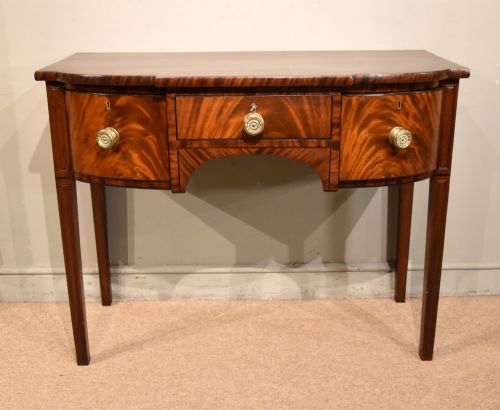
Quality rests upon timber selection and the integrity of the cabinetmaker's joinery rather than surface ornamentation alone. Superior pieces feature well-figured flame mahogany or dense native oak with tight, seamless joints.
Hardware, drawer linings, and the crispness of any hand-carved details reveal the original workshop standard. Pieces with intact original brasses and stable, unwarped tiers command higher regard among collectors.
Gillows·Robert Strahan & Co
The 19th Century Buffet Table Glossary
- Dresser base
- A low wooden sideboard or cabinet featuring drawers and sometimes a lower pot shelf, designed for storing and serving kitchen or dining ware.
- Dumb waiter
- A multi-tiered freestanding piece of furniture used to hold dishes and serving items near a dining table without requiring servant attendance.
- Flame mahogany
- A highly figured timber veneer prized for its dramatic, flickering grain pattern resembling flames, used extensively on high-end nineteenth century furniture.
- Credenza
- An enclosed sideboard or cabinet used for serving food and displaying dining items, often associated with Victorian interiors.
19th Century Buffet Table: Frequently Asked Questions
How do I identify a Regency buffet?
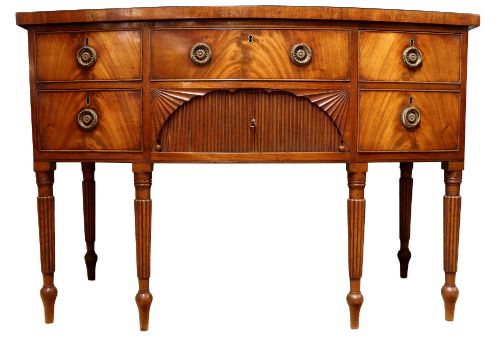
Regency buffets typically display clean classical lines, often utilising rich mahogany or flame mahogany veneers with subtle brass inlay. Look for balanced proportions and understated geometric forms characteristic of the early nineteenth century.
Many feature bow fronts or tapered legs, distinguishing them from the heavier, more heavily carved Victorian pieces that followed.
Where were these tables made?
These dining pieces originated in workshops across England, Scotland, Ireland, France, and Sweden. Regional preferences influenced the choice of timber, such as native pine and oak in country districts or exotic mahogany in urban centres.
Makers utilised local woods alongside imported materials to meet the demands of domestic and continental households.
How do I style a buffet in a modern home?
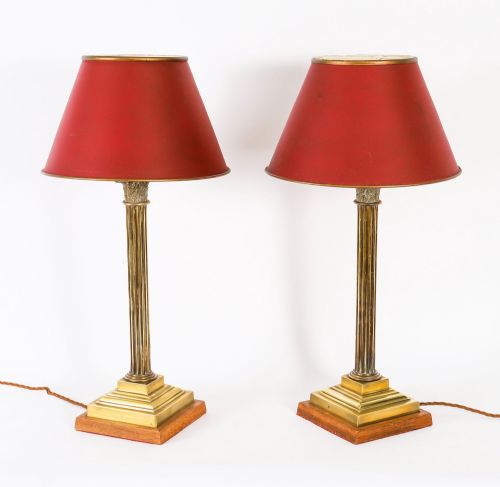
A nineteenth century buffet anchors a dining room or hallway by offering substantial surface area and enclosed storage. Pair the rich wood tones with simple ceramics or lamps to balance historical character with contemporary living.
The sturdy tiers and deep drawers accommodate modern tableware whilst adding distinct period presence to the room.