



Mahogany Dinner Wagon
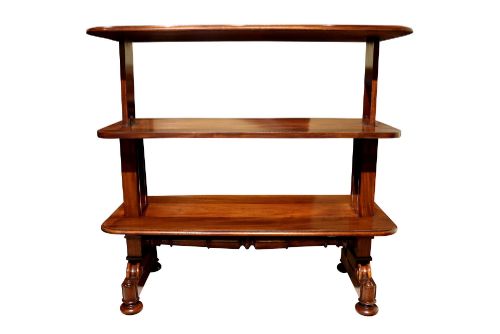
These mahogany dinner wagon pieces are practical serving tiers built from rich timber, offering timeless utility and classic dining room character.
Mahogany Dinner Wagon
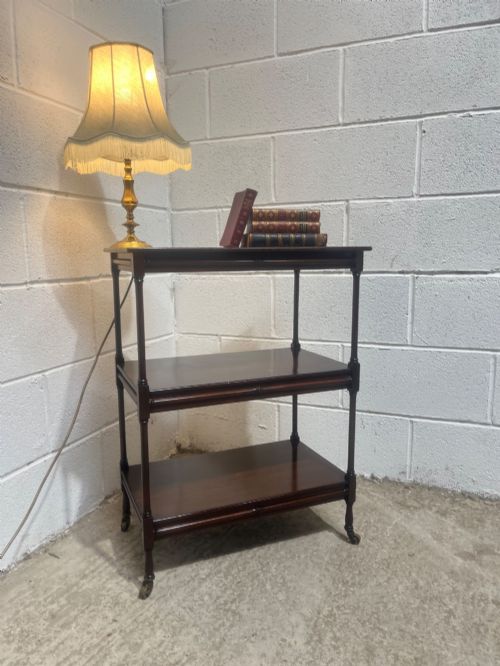
When you search for a mahogany dinner wagon, you are looking at substantial serving furniture designed for formal dining rooms during the nineteenth century. These sturdy pieces provide multiple open or enclosed tiers to hold dishes, glassware, and silver during meals.
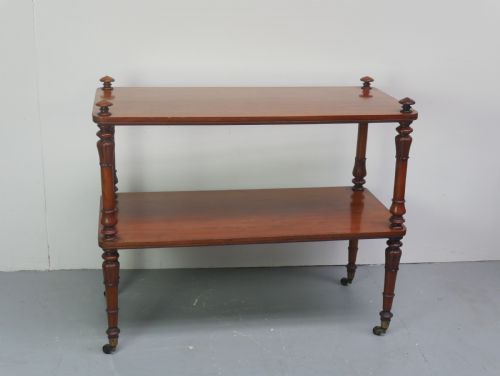
The versions you are most likely to meet on this page belong to the Victorian and William IV eras. They appear as tiered buffets, some featuring lower cabinets or carved details, constructed entirely from rich timber.
How they were made
Makers built these pieces using solid and veneered mahogany, a dense and durable wood prized for its deep reddish-brown grain. Carpenters shaped the timber into sturdy upright supports, curved brackets, and sweeping tiers.
Metal and ceramic elements completed the construction. Original brass castors allowed the heavy serving pieces to roll smoothly across carpets, while ceramic components sometimes appeared in the hardware.
Mahogany Dinner Wagon Retail Price Guide 2026
Typical asking prices for mahogany dinner wagon among the pieces listed under this phrase on Sellingantiques today, from the lower quarter to the upper quarter. They describe what is for sale here now, not the wider market.
What varies in quality
Quality rests in the depth of the timber grain, the crispness of any carved ornamentation, and the integrity of the structural joints. Superior examples display carefully selected mahogany figure work and robust, well-balanced tiers.
The presence of original hardware, such as brass castors and fitted cabinet doors, elevates a piece significantly. Finer execution shows in smooth mechanical movement and harmonious proportions across every tier.
The Mahogany Dinner Wagon Glossary
- Mahogany
- A durable tropical hardwood known for its reddish-brown colour and fine grain, widely utilised in nineteenth-century formal furniture.
- Castor
- A small wheel fitted to the base of a piece to aid mobility, often made of brass on better dining furniture.
- Tier
- A horizontal shelf or level forming part of a multi-layered serving structure.
- Buffet
- A sideboard or serving table designed for displaying and holding food and tableware.
- William IV
- A British design period spanning the 1830s, characterised by robust classical revival forms and bold scrolling supports.
Mahogany Dinner Wagon: Frequently Asked Questions
What is a mahogany dinner wagon used for?
These pieces served as auxiliary sideboards in nineteenth-century dining rooms, holding extra dishes, wine bottles, and silverware during large meals.
Today, they function as versatile display units or serving stations in traditional and contemporary living spaces alike.
How do I tell Victorian pieces apart?
Victorian examples often display heavier proportions, darker timber tones, and occasional decorative carvings along the edges of the tiers.
Earlier William IV items tend to feature bolder architectural lines and distinctive scrolling woodwork beneath the shelves.
Are original castors important?
Original brass castors ensure the piece sits at its intended height and maintain historical accuracy for collectors.
They also reveal whether the serving wagon was built to move smoothly about a grand dining hall.
Where should I place a buffet?
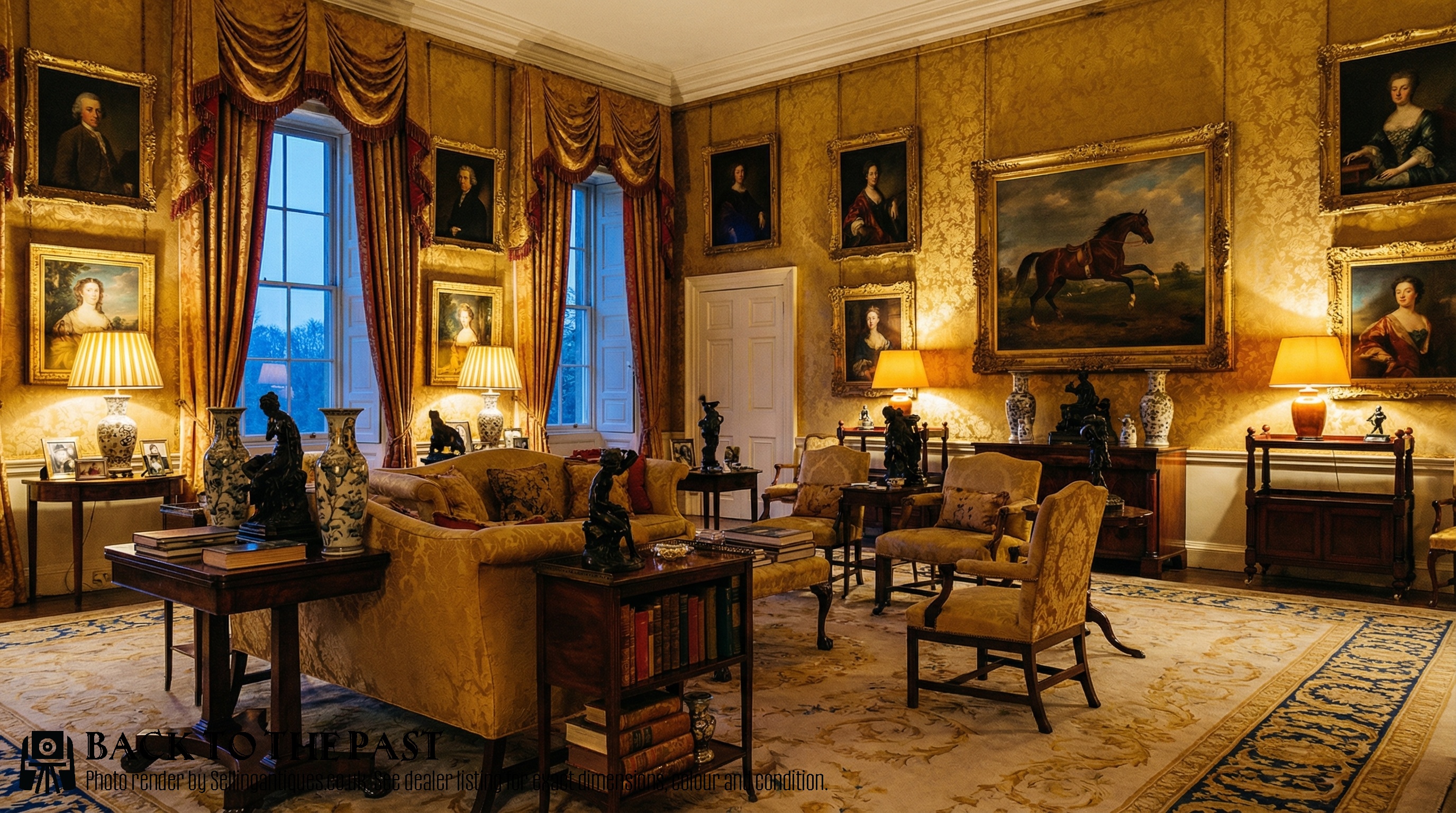
These substantial serving pieces fit well against dining room walls, offering deep shelves for plates, bowls, and glassware.
Their tiered structure also makes them suitable as hallway consoles or living room display surfaces.