
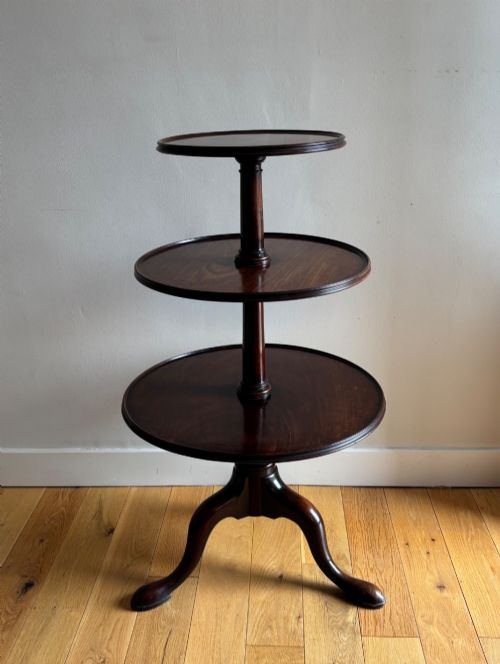
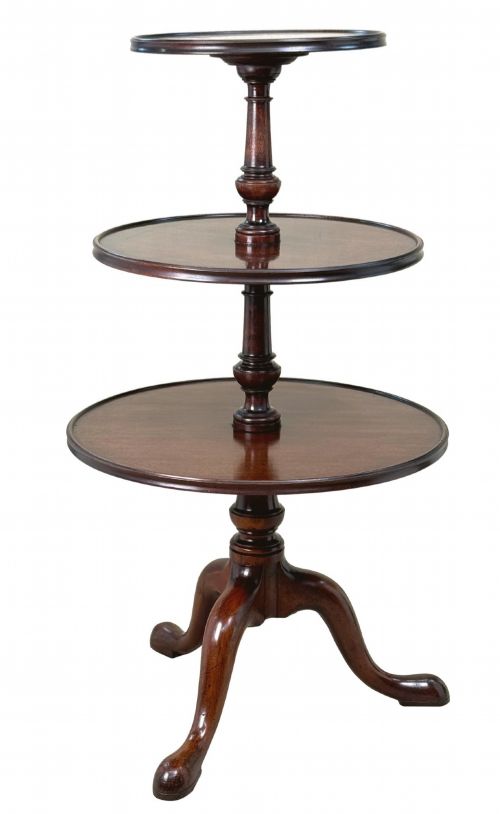
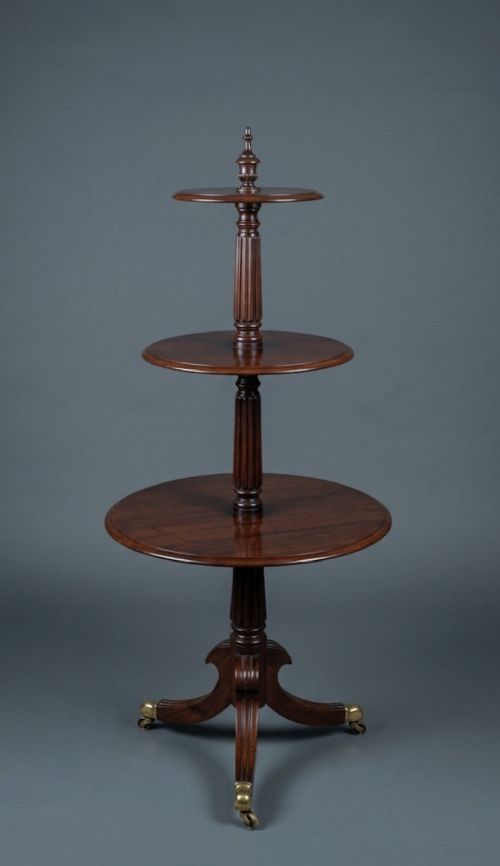
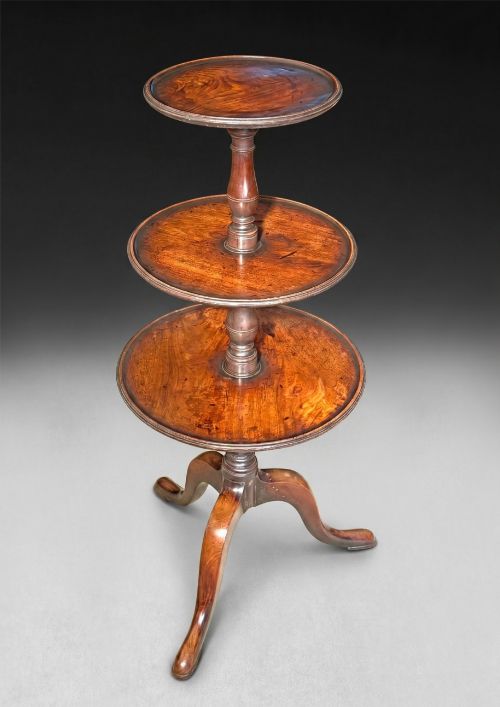



Mahogany Three Tier Buffet
A mahogany three tier buffet brings tiered tiered shelving in rich timber to a dining room, offering layered surfaces for service and display.
Mahogany Three Tier Buffet
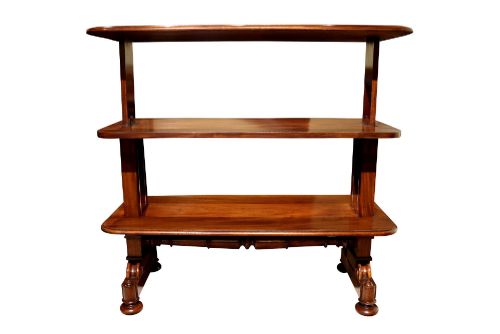
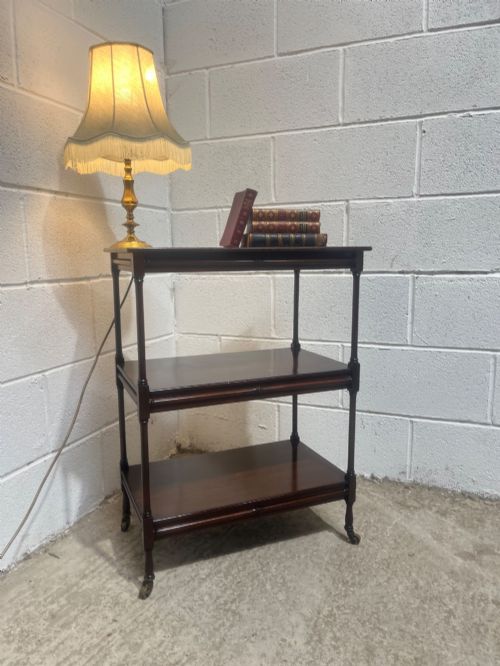
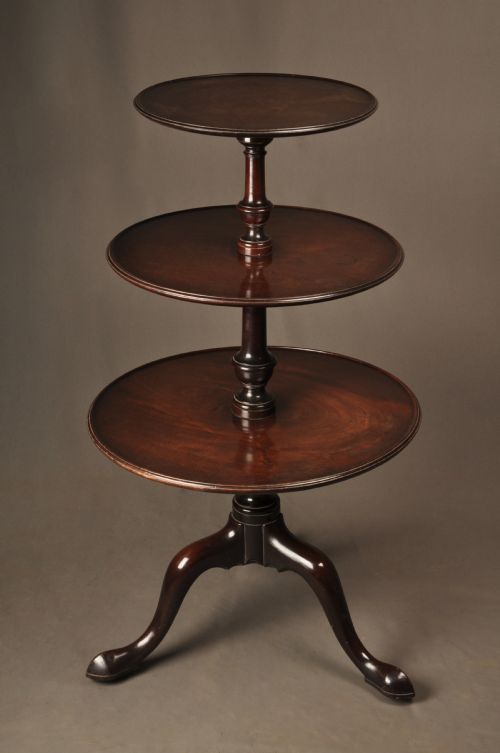
A mahogany three tier buffet presents three graduated or equal shelves supported by turned columns, blocks, or brass elements, functioning as a serving station or display stand. These pieces span the Georgian, Regency, and Victorian eras, alongside specific dates from the eighteenth and nineteenth centuries.
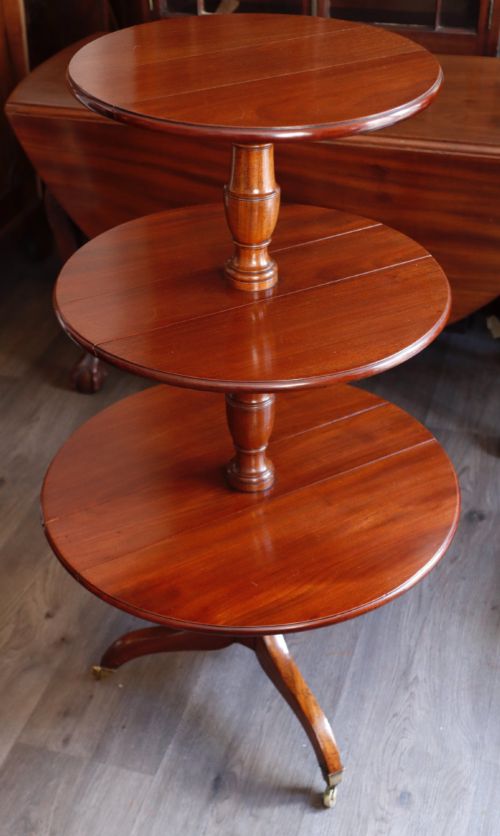
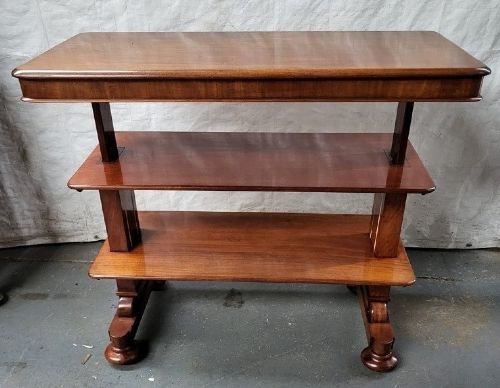
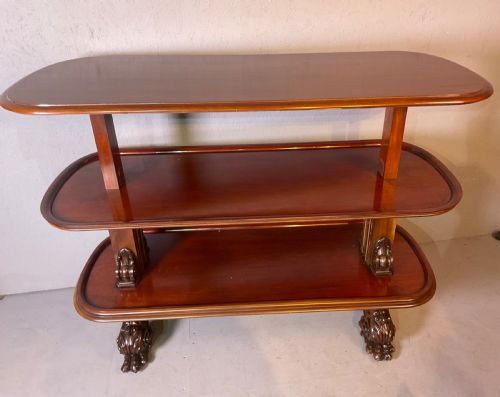
The versions most frequently encountered on this page include circular revolving dumb waiters from the Georgian and Regency periods, alongside rectangular and drop-leaf Victorian buffets and etageres. Pieces range from slim standalone stands to large metamorphic serving tables equipped with castors.
Distinctions in quality and execution
Quality rests in the selection of timber grain, such as fiddleback mahogany, and the crispness of turned wood supports and finials. Superior examples retain original brass castors and smoothly revolving tiers without wobble.
Refinement shows in proportion, delicate gallery trays, and structural integrity across the three tiers, distinguishing standard utility pieces from finely finished dining room furniture.
Listings feature mahogany three tier buffet examples spanning from the eighteenth-century Georgian period through the Regency and Victorian eras into the early twentieth century.
Gillows
The Mahogany Three Tier Buffet Glossary
- Buffet
- A movable piece of furniture with shelves used for holding food and tableware during a meal. It provides tiered space near the dining table.
- Dumb Waiter
- A tiered stand designed to hold dishes without the presence of servants. The tiers usually revolve or remain fixed.
- Etagere
- A piece of furniture consisting of a set of open shelves for displaying small objects. It shares similarities with tiered serving tables.
- Fiddleback Mahogany
- Mahogany timber displaying a wavy, undulating grain pattern resembling the back of a violin. It is prized for its decorative appearance.
- Castor
- A small wheel fixed to the base of a leg to allow easy movement. Original examples often feature brass caps.
Mahogany Three Tier Buffet: Frequently Asked Questions
What is a three tier buffet used for?
These pieces served as auxiliary serving tables in dining rooms, holding dishes, bottles, and glassware during meals. They kept food and accessories close to hand without requiring attendants.
Today, they function as display stands or side tables in living spaces, holding books, plants, and decorative objects across their multiple shelves.
How do I tell a Georgian buffet from a Victorian one?
Georgian examples often feature circular revolving tiers with tripod bases, reflecting eighteenth-century dining habits. They tend to have lighter proportions and simpler, elegant turning.
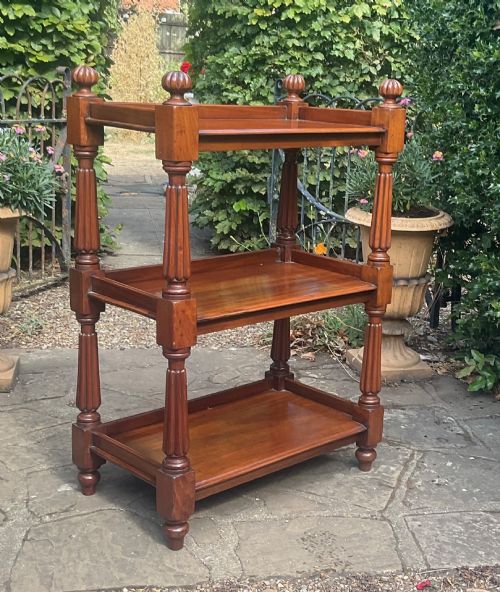
Victorian pieces frequently adopt rectangular formats, drop-leaf shelves, and heavier turned and block supports fitted with castors. They often include gallery rails and finials.
Do the shelves rotate on all models?
Revolving tiers appear on many eighteenth-century and Regency dumb waiters, allowing diners to reach items without moving around the table. The pivot mechanism sits centrally beneath the shelves.
Other variants, particularly nineteenth-century buffet tables and etageres, feature fixed tiers designed for stationary display and serving.
What timber is Cuban mahogany?
Cuban mahogany is a dense, heavy timber sourced from the Caribbean that became popular for fine furniture during the eighteenth century. It exhibits a deep colour and rich grain.
Its tight grain allowed carvers to execute crisp details on turned columns and moulded edges.