

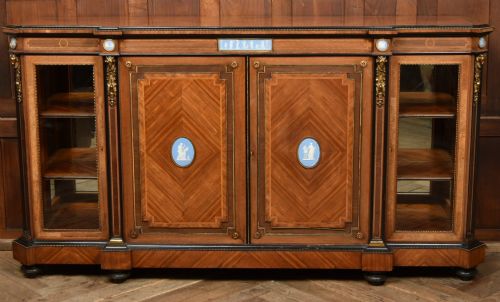
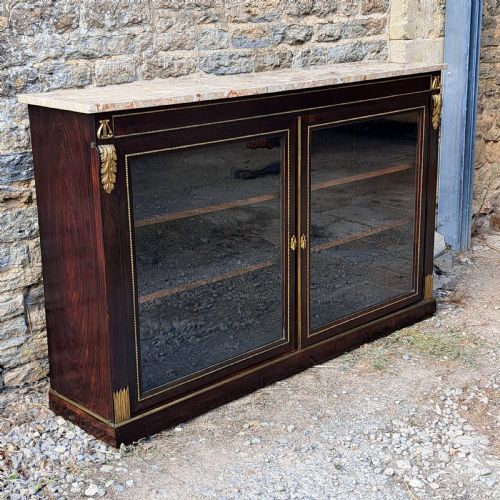


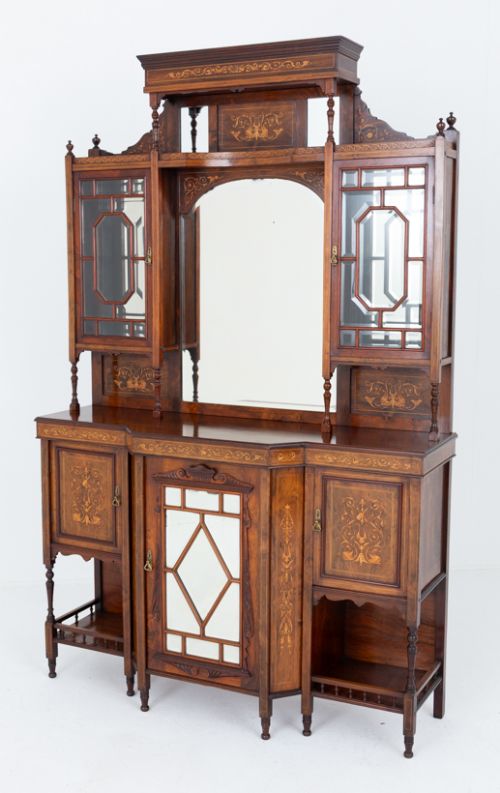
Inlaid Rosewood Credenza
An inlaid rosewood credenza is a statement storage piece defined by rich timber and intricate contrasting details, prized for grounding a grand room.
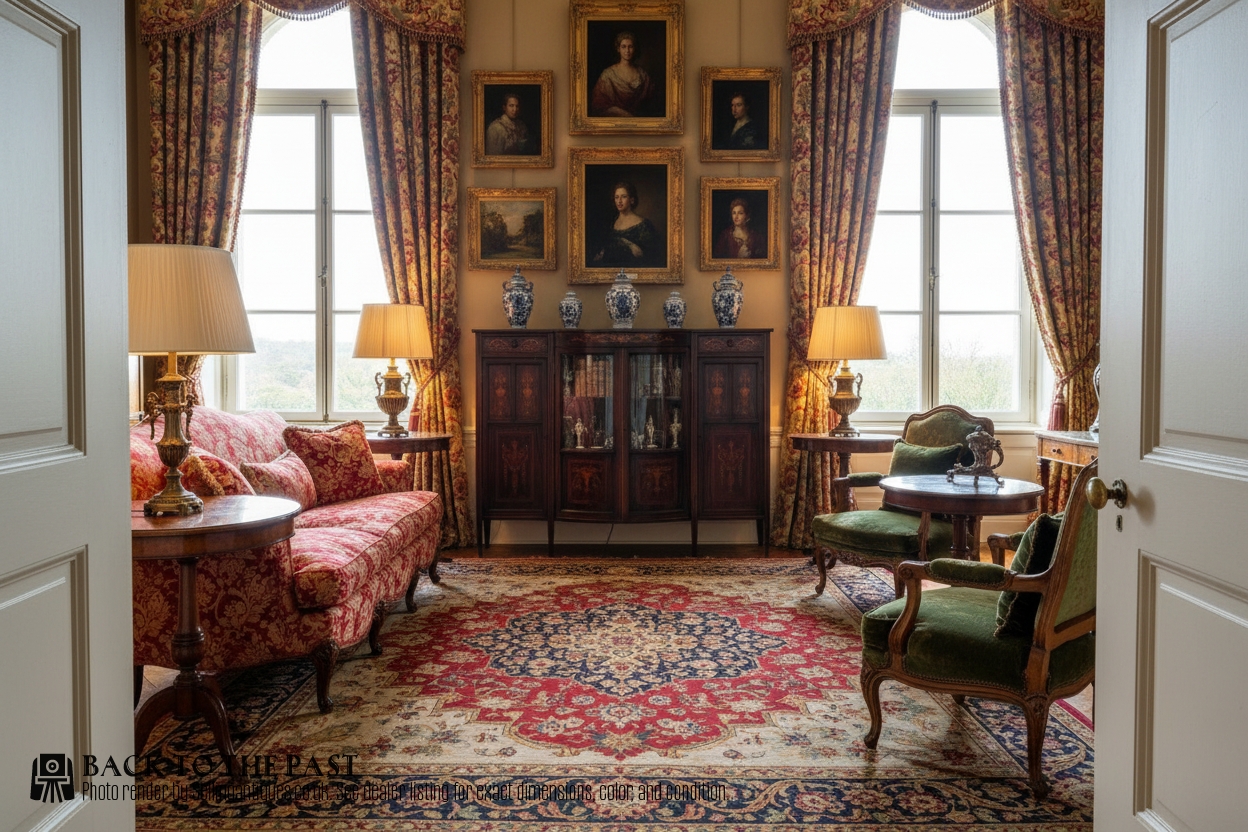
Inlaid Rosewood Credenza
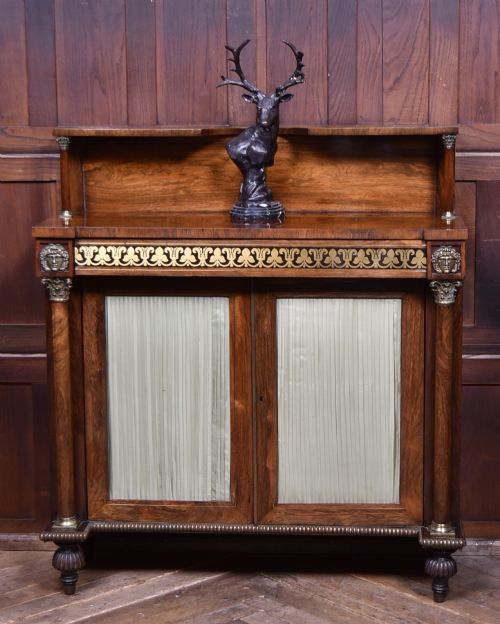
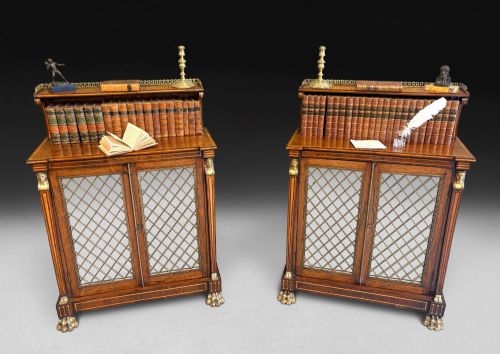
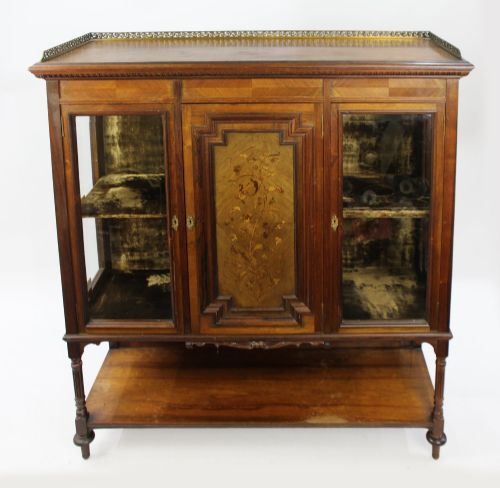
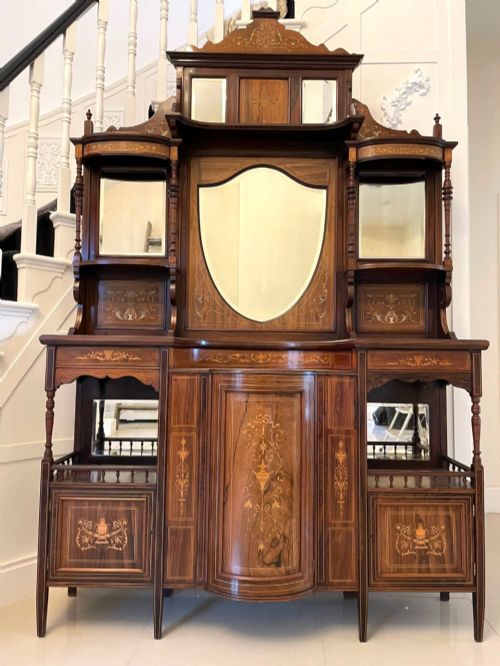
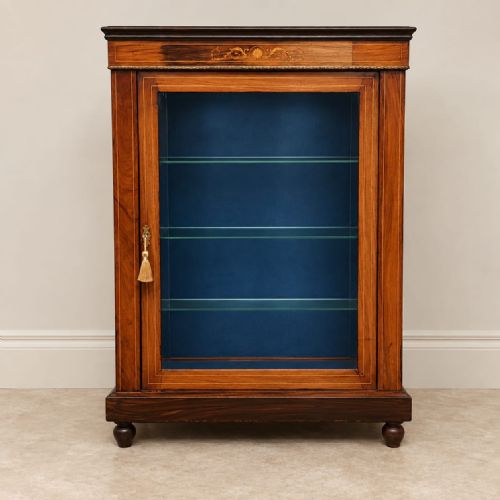
An inlaid rosewood credenza represents a refined class of nineteenth-century and early twentieth-century low cabinetry, designed for both display and discreet storage in principal rooms. These pieces encompass related forms such as chiffoniers, pier cabinets, and side cabinets, frequently sharing the same low horizontal profile and glazed or panelled doors.
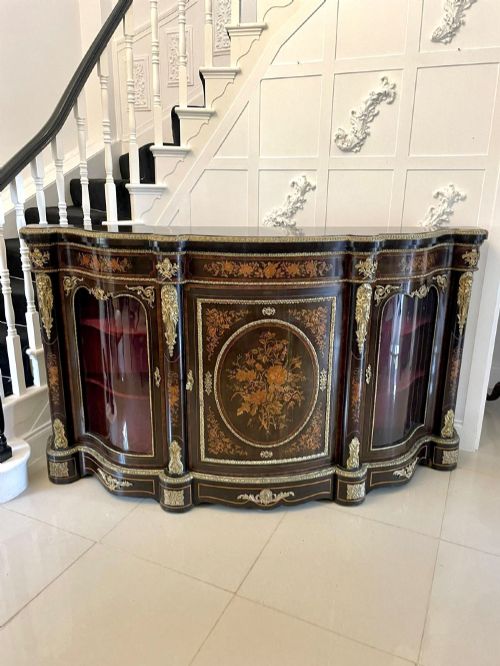
The versions most commonly met on this page span the Regency and Victorian periods, often displaying the characteristic dark grain of rosewood enhanced by contrasting floral marquetry or metallic stringing. Makers working within the Aesthetic Movement, French Louis XVI style, and George III Revival also produced notable examples during the later decades.
Originating as formal dining room or drawing room furniture, these cabinets demonstrate the evolving domestic requirements for elegant surface space and secure display areas for porcelain and books. Their varied outlines range from straight-fronted library pieces to serpentine shapes and breakfront configurations.
How they were made
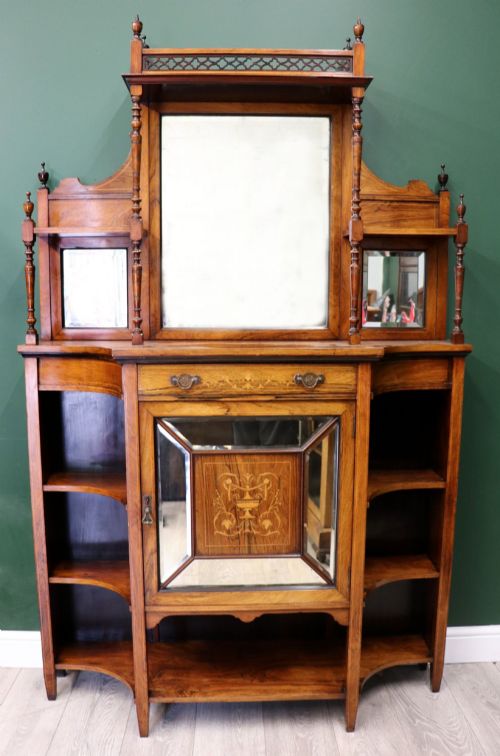
The primary ground of rosewood is frequently combined with satinwood, boxwood, and ebony to create precise floral marquetry and geometric stringing across doors and panels. Cabinet makers utilised contrasting timbers to form intricate foliage and banding, relying on the natural colour variation of the wood rather than surface stains.
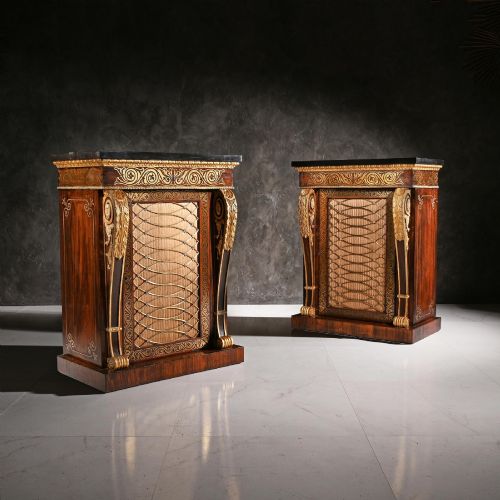
Metal and glass components played an integral structural and decorative role, with cast or chased ormolu mounts framing panels and polished brass inlaid into the timber surface. Many examples incorporate glazed doors or mirrored backs backed by fabric lining, requiring specialist cabinet making and glazing techniques.
Inlaid Rosewood Credenza Retail Price Guide 2026
Typical asking prices for inlaid rosewood credenza among the pieces listed under this phrase on Sellingantiques today, from the lower quarter to the upper quarter. They describe what is for sale here now, not the wider market.
Listings feature pieces spanning the Regency, Victorian, and Edwardian eras, executed in rosewood, satinwood, and mahogany.
What varies in quality
The distinction between standard production and the finest work rests upon the precision of the marquetry and the architectural harmony of the carcase. Master workshops invested significantly more labour into the execution of intricate brass and wood inlays, ensuring flush surfaces where multiple materials meet.
Hardware selection and mount chasing further separate ordinary examples from exceptional ones. Gilt bronze or ormolu mounts on superior pieces exhibit crisp chiselling and heavy gauge casting, whereas lesser examples rely on simpler brass stringing or unadorned timber borders.
Collinson and Lock·Louis Constantin Le Gaigneur·John McClean·Edwards and Roberts
The Inlaid Rosewood Credenza Glossary
- Credenza
- A low cabinet or sideboard designed for domestic display and storage, typically positioned against a principal drawing room wall.
- Marquetry
- A decorative technique where thin veneers of various coloured woods are assembled to form pictorial or floral patterns.
- Ormolu
- Gilded bronze mounts applied to furniture for decorative enrichment, common on finer nineteenth-century cabinet work.
- Chiffonier
- A compact sideboard or cabinet featuring shelves or a low superstructure above enclosed lower cupboards, popular in Regency interiors.
- Pier cabinet
- A narrow cabinet specifically built to stand against the wall space between windows, often featuring a glazed door.
- Boulle
- An elaborate form of marquetry utilising tortoiseshell and brass inlay, associated with French furniture styles.
Inlaid Rosewood Credenza: Frequently Asked Questions
Where should I place a credenza?
These low cabinets suit principal reception rooms and wide hallways where their decorative front panels and surface tops can be fully appreciated. They function well beneath large mirrors or artwork.
Ensure the room has adequate clearance for the doors to swing open fully, particularly on breakfront or serpentine models.
How do I care for rosewood?
Rosewood benefits from stable indoor humidity and protection from direct sunlight, which can alter the rich dark tones of the timber over time. Dust regularly with a dry cloth.
Avoid commercial silicone sprays and harsh cleaning agents, opting instead for occasional specialist furniture wax to nourish the grain.
What is the difference between a credenza and a chiffonier?
A credenza typically presents a long, low, symmetrical profile with three or more doors designed for formal display and storage. They are most commonly associated with Victorian interiors.
A chiffonier is generally more compact and often incorporates a raised shelf or back panel, with origins firmly rooted in the earlier Regency period.
How do I identify Regency pieces?
Regency cabinets often display classical restraint, featuring symmetrical brass inlay, rosewood veneers, and understated gilt mounts inspired by ancient Greek and Roman forms. The proportions tend to remain architectural and clean.
Later Victorian interpretations frequently introduce heavier carving, serpentine shaping, and profuse floral marquetry that departs from strict Regency geometry.