

Inlaid Display Credenza
An inlaid display credenza brings Victorian timber and brass together to anchor a room with low, architectural presence.
Inlaid Display Credenza
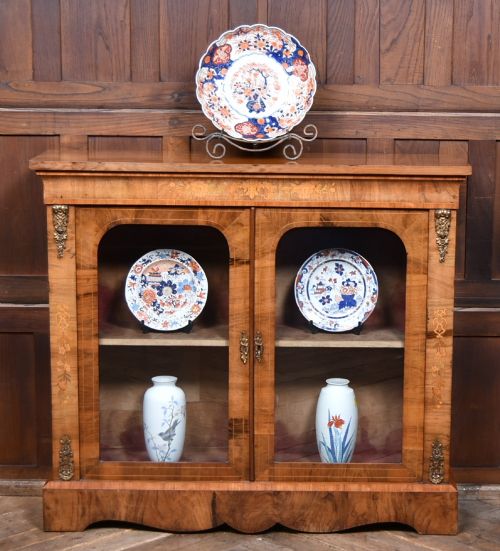
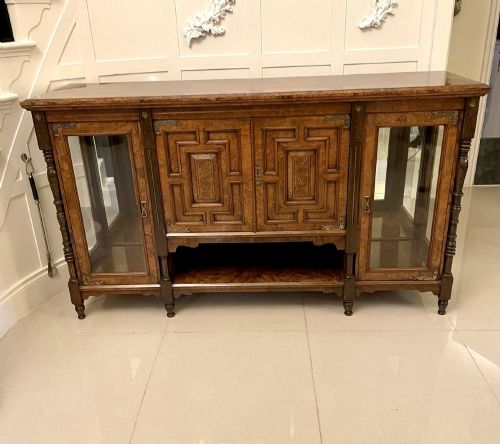
An inlaid display credenza is a low, polished cabinet designed to stand against a drawing room wall, combining central cupboards with glass-fronted side sections. Most examples date from the Victorian era and the middle decades of the nineteenth century.
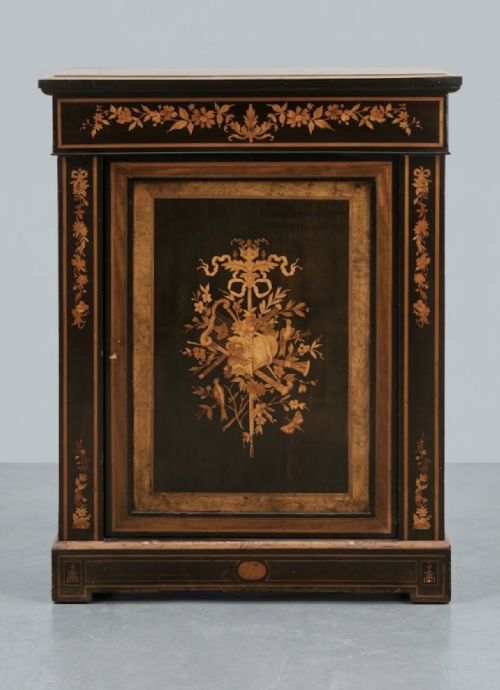
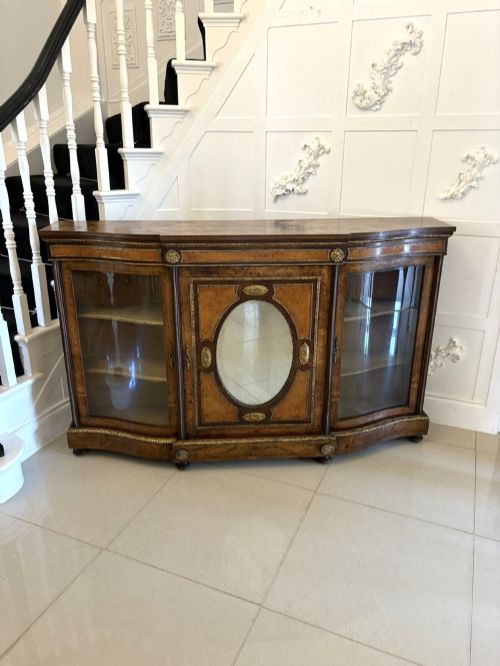
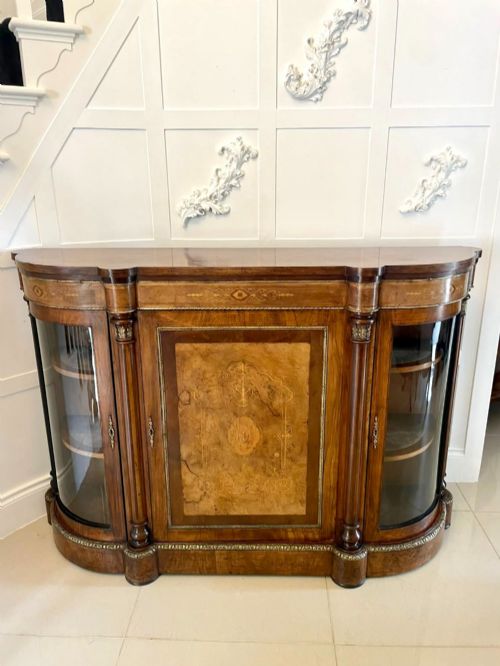
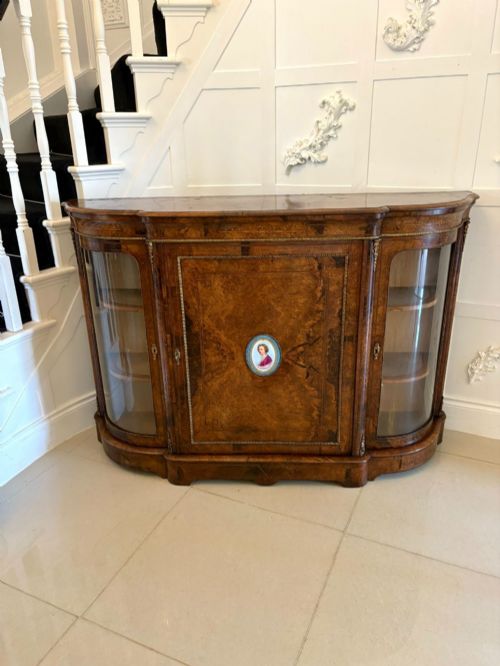
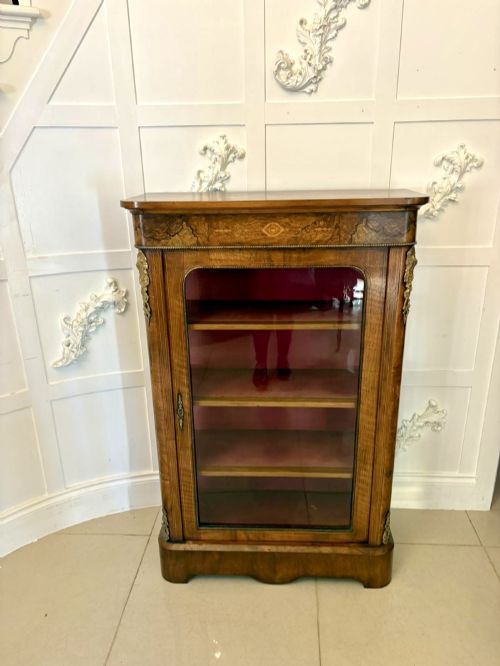
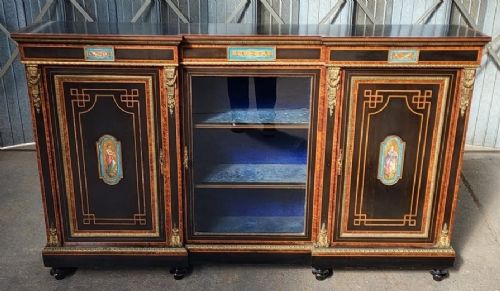
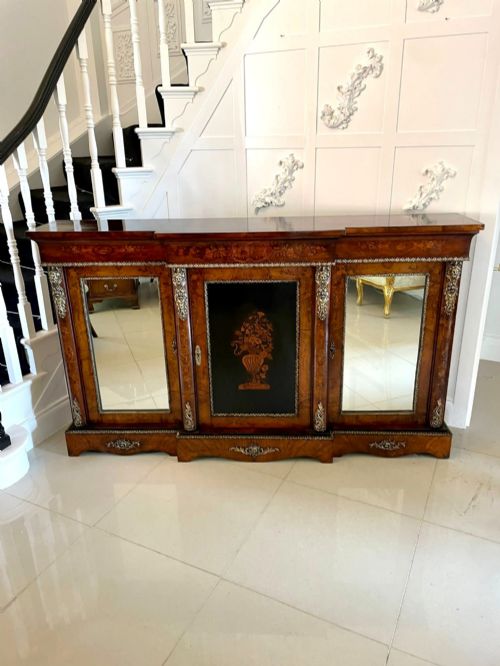
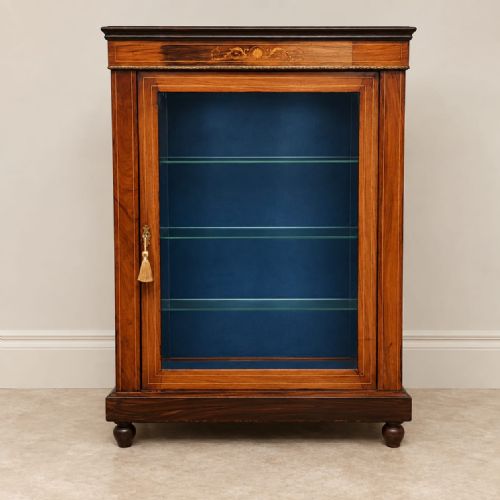
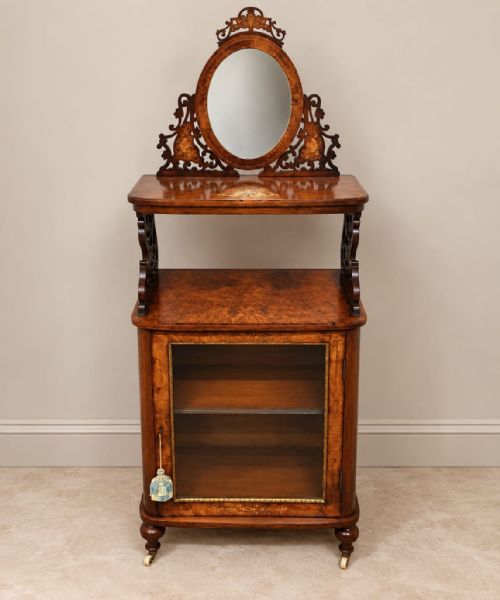
The form developed from earlier sideboards and chiffoniers into a grand piece intended for showing porcelain and decorative objects. Pieces encountered here range from compact pier cabinets to serpentine-fronted credenzas flanked by curved glass doors.
Materials and construction
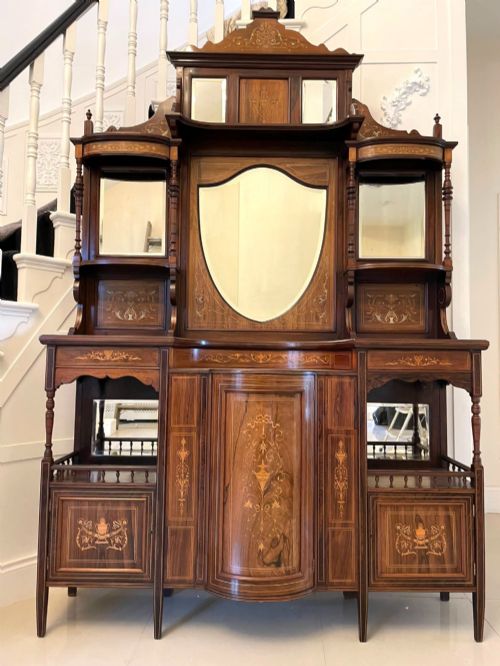
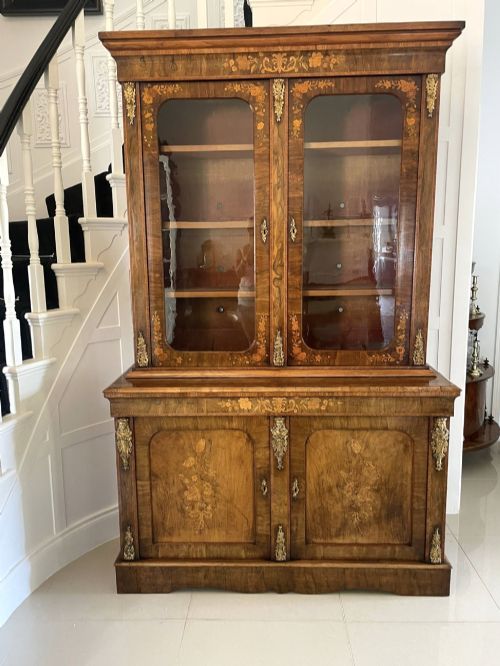
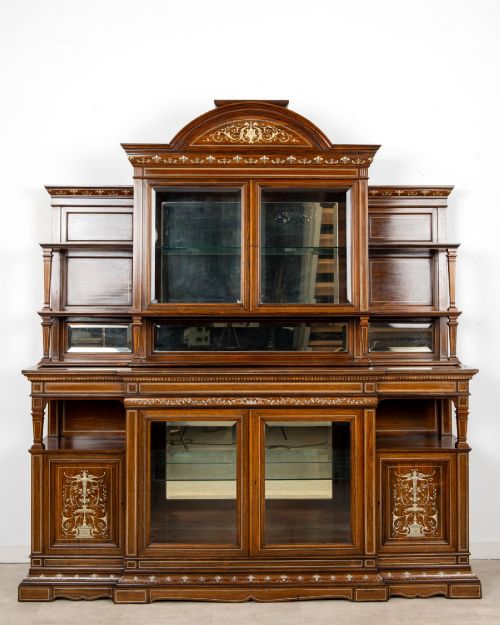
Cabinet makers utilised dense timbers such as burr walnut, rosewood, and ebonised wood as a dark ground for intricate marquetry in satinwood and exotic woods. Gilt bronze and ormolu mounts frame the doors and corners, while brass details reinforce structural edges.
Glass panels enclose display sections to protect contents, sometimes complemented by velvet-lined interiors. Glazing bars and brass stringing divide the timber surfaces into geometric or floral panels.
Many nineteenth-century credenzas conceal velvet-lined interiors designed to make your grandmother's china look remarkably important.
Distinctions in quality
The refinement of the marquetry and the crispness of the ormolu mounts separate standard cabinet work from exceptional productions. Finely cut floral motifs and balanced wood grains indicate superior workshop output.
Carved details, serpentine shaping of the timber, and the weight of the bronze fittings reveal the tier of craftsmanship invested in the construction. The integration of porcelain plaques alongside the woodwork points to ambitious nineteenth-century design.
Collinson and Lock·Gillows·Lamb of Manchester·Maison Gagneau·Edwards and Roberts
The Inlaid Display Credenza Glossary
- Credenza
- A low cabinet designed for domestic display and storage, typically featuring a combination of glazed and panelled doors. The form emerged strongly in the nineteenth century as a principal reception room piece.
- Marquetry
- The art of forming decorative patterns from thin veneers applied to a timber carcass. Makers used contrasting woods to create floral or geometric designs.
- Ormolu
- Gilt bronze mounts applied to furniture to accent corners, friezes, and feet. The technique provides a bright metallic contrast against dark timbers.
- Pier Cabinet
- A narrow upright cabinet designed to fit the wall space between windows. These pieces often match the decorative vocabulary of larger credenzas.
- Burr Walnut
- Timber taken from the growth excrescences of walnut trees, prized for its swirling grain patterns. It serves as the primary veneer on many Victorian pieces.
Inlaid Display Credenza: Frequently Asked Questions
What is a credenza?
A credenza is a low nineteenth-century cabinet combining central storage with glazed display compartments at the sides. It stands against a drawing room wall to hold decorative objects and porcelain.
The form prioritises horizontal surface area and symmetrical arrangement over the height found in traditional bookcases or tall cabinets.
How were these cabinets used?
Owners used these pieces to display fine porcelain, silver, and curiosities behind glass while storing other dining or parlour items in the closed cupboards.
The top surface accommodated lamps, clocks, and decorative bronzes, making the furniture both a display case and a functional side table.
How do I date a credenza?
Dating relies on timber choice, mounting style, and overall proportions, with the majority of pieces belonging to the Victorian period around the middle of the nineteenth century.
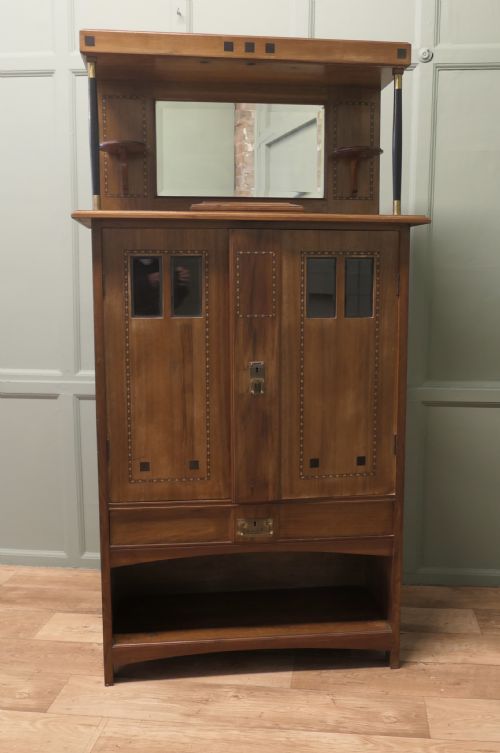
Heavier ormolu mounts and dense burr walnut veneers typically point toward the eighteen-sixties, while later decades introduced ebonised finishes and Aesthetic Movement lines.
Where should I place one?
These cabinets suit dining rooms, living spaces, or wide hallways where a low, long silhouette anchors the surrounding furniture without blocking light.
Because the depth is relatively shallow, a credenza fits well along flat wall spaces where tall bookcases would feel heavy.