
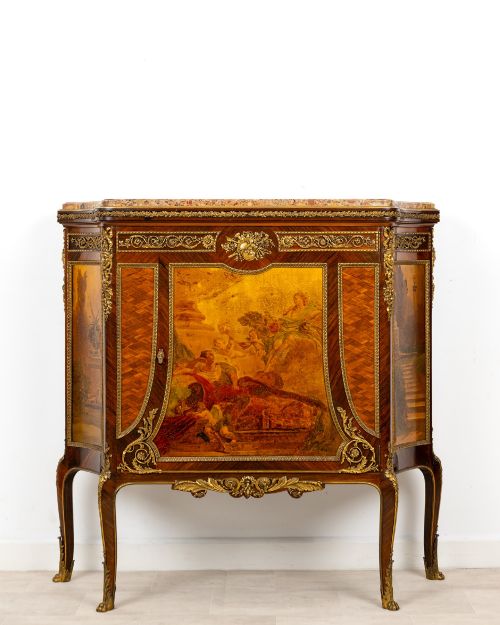
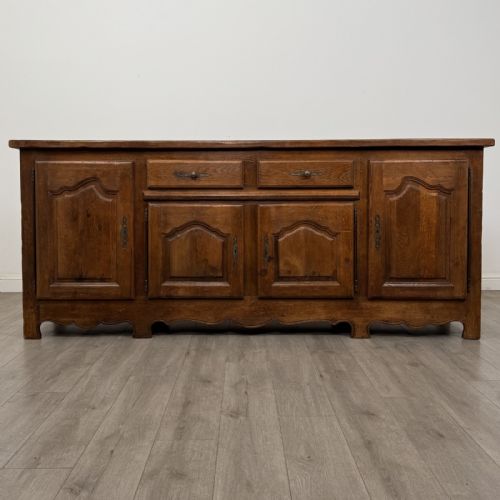
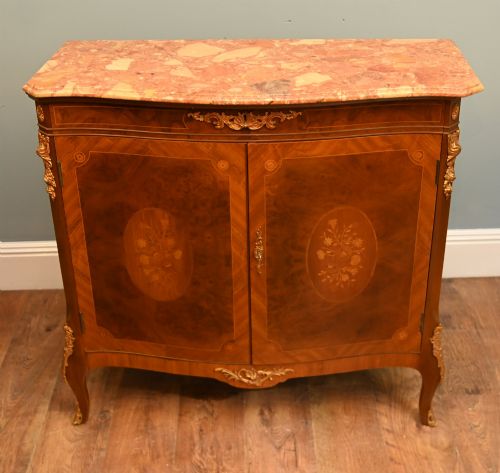
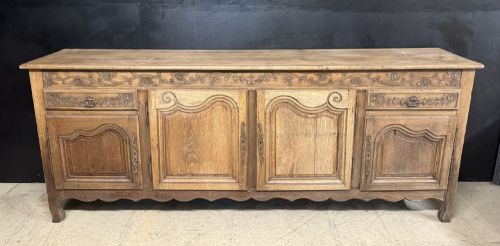
French Credenza
A french credenza brings nineteenth-century Continental elegance to a room, combining rich burr walnut or ebonised wood with polished marble and gleaming ormolu mounts.
French Credenza
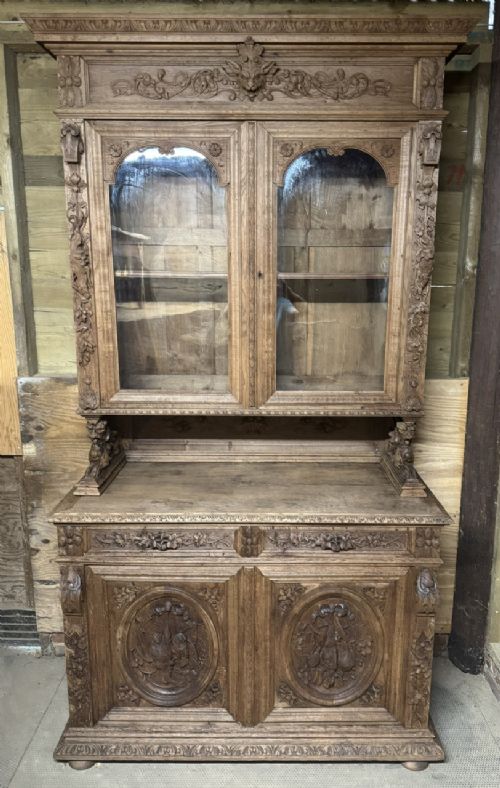
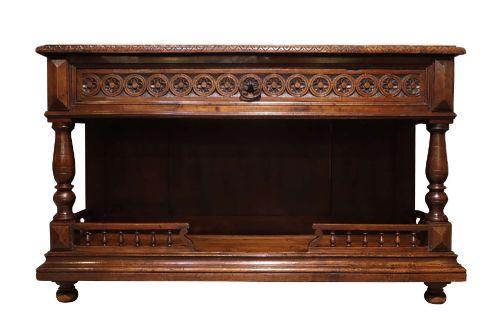
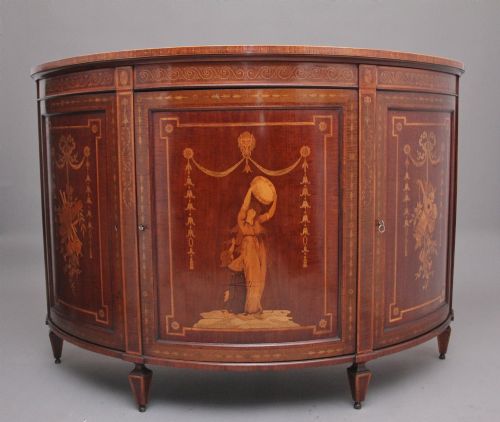
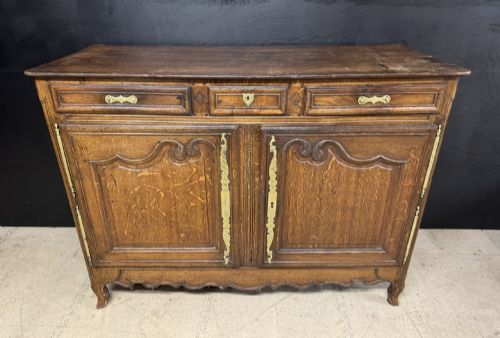
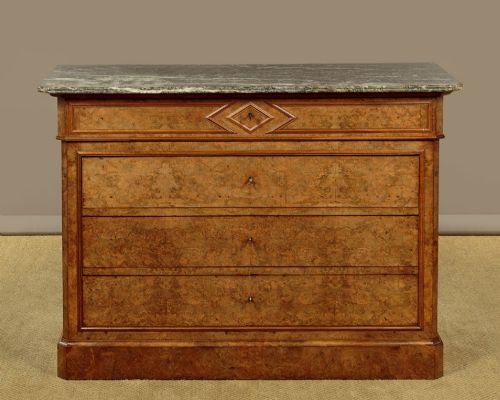
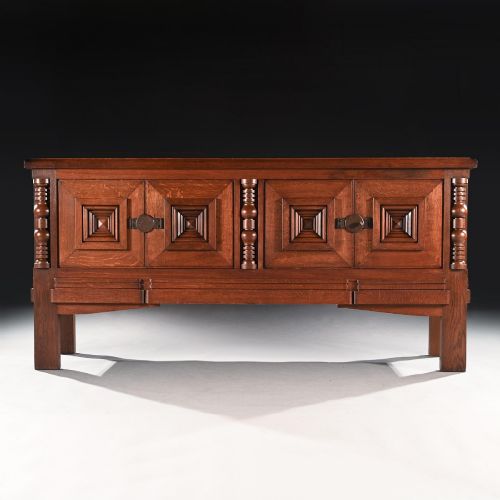
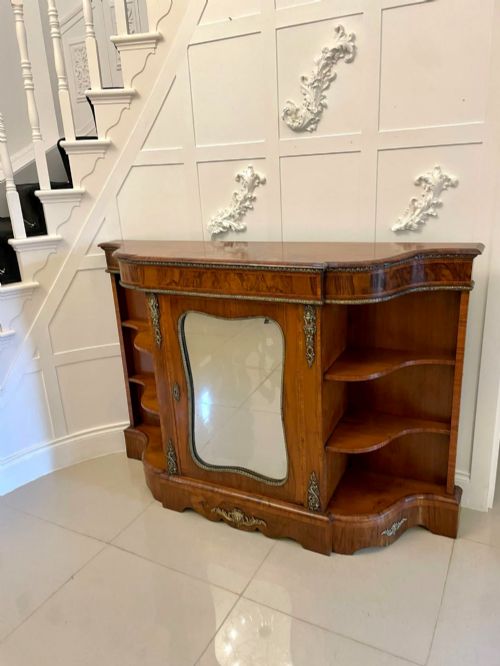
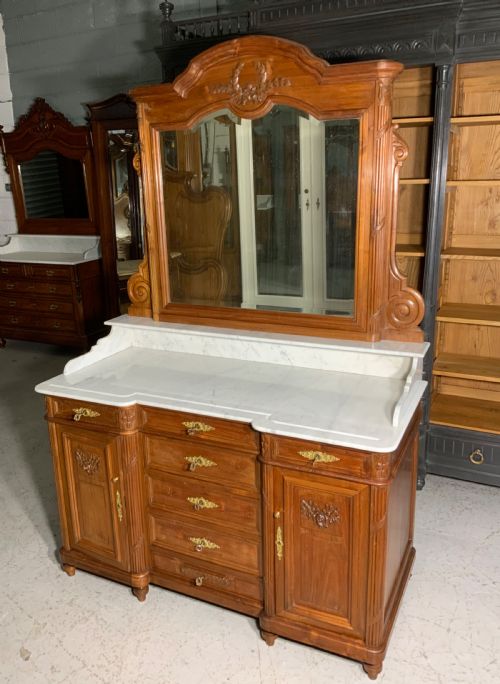
When you search for a french credenza, you encounter substantial display and storage cabinets rooted primarily in nineteenth-century craftsmanship. These pieces span revival styles including Louis XV, Louis XVI, and Napoleon III, reflecting an era of ornate interior decoration.
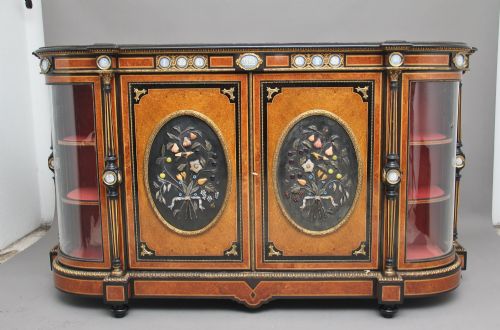
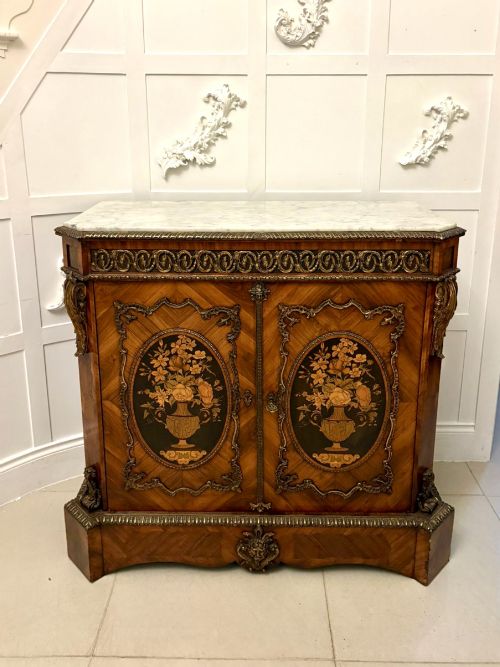
Origins range from formal Victorian interpretations of French design to authentic Continental pieces bearing intricate floral marquetry and porcelain plaques. Selecting one depends on whether you prefer the dark formality of ebonised wood or the warm grain of burr walnut.
Materials and construction methods
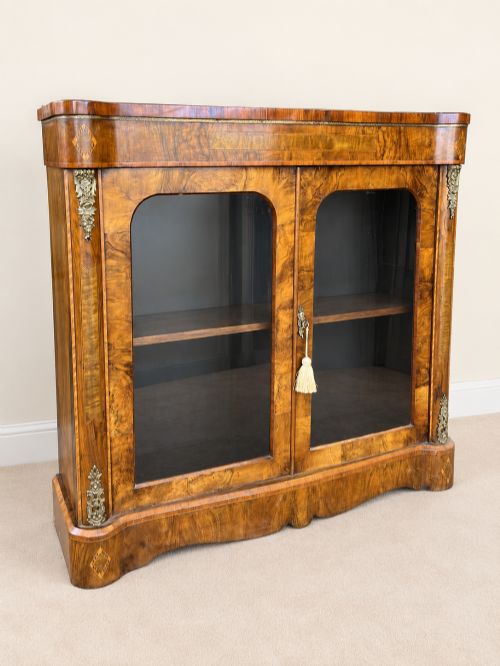
Construction relies heavily on dense timbers like oak and walnut, frequently veneered with burr walnut, kingwood, or amboyna to create striking grain patterns on door fronts and panels. Skilled cabinetmakers applied elaborate parquetry and marquetry inlay, sometimes combining contrasting woods with ebonised elements.
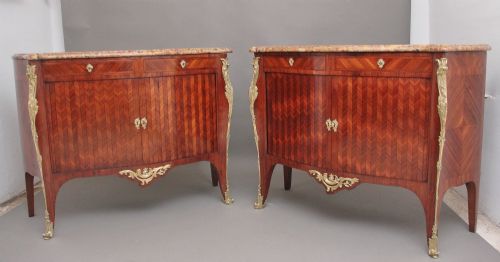
Surface adornment defines these items, using cast ormolu mounts to highlight corners, feet, and friezes. Many pieces incorporate heavy marble slabs fitted precisely to the top surface, whilst others integrate glazed doors for displaying porcelain and glass.
Materials appearing across current selections include marble, ormolu, brass, glass, and mahogany.
Separating standard pieces from exceptional work
Quality rests on the depth and precision of the marquetry and the crispness of the cast ormolu mounts. Finer examples display meticulous hand-chasing on the metalwork and seamless matching of wood veneers across curved surfaces.
Structural integrity and original components dictate overall merit. Pieces retaining their original marble tops, undamaged porcelain plaques, and working locks demonstrate superior workshop provenance from the period.
Henri Dasson·Charles Dudouyt·Gillows
The French Credenza Glossary
- Ormolu
- Gilded bronze used for decorative mounts and accents on furniture. It adds metallic lustre against dark timbers.
- Marquetry
- The art of applying pieces of veneer to a structure to form decorative patterns. Craftsmen use various coloured woods to create floral scenes.
- Enfilade
- A long sideboard or buffet featuring multiple doors, commonly found in French dining rooms. These pieces provide extensive low-level storage.
- Boulle
- A type of marquetry using brass and tortoiseshell, popular in nineteenth-century French cabinet making. It creates a shimmering, contrasting surface pattern.
- Commode
- A low chest of drawers, often fitted with a marble top in French designs. They serve as decorative storage units in reception rooms.
French Credenza: Frequently Asked Questions
What rooms suit a french credenza?
These cabinets work well in dining rooms, living spaces, or wide hallways where their decorative fronts and marble tops can function as display surfaces.
Their substantial presence makes them natural focal points, pairing effectively with both traditional interiors and modern minimalist settings.
How do I clean marble top surfaces?
Wipe the marble gently using a soft, damp cloth and a mild, neutral soap to avoid scratching the polished stone. Acidic liquids like wine or citrus should be wiped away immediately to prevent staining.
Regular dusting keeps the surface clear without requiring harsh commercial polishes that might damage the historical finish.
Are the ormolu mounts original?
Original mounts generally show consistent patination, minor wear to the gilding, and precise fitting to the timber contours. Craftsmen secured them with specific screw types matching the manufacturing period.
Examining the interior back of the wood helps confirm whether mounts have been replaced or repositioned during later restorations.