

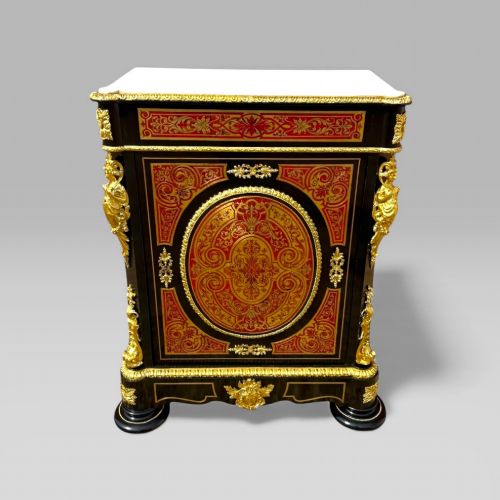


Antique Boulle Furniture
Antique boulle furniture comprises striking nineteenth-century cabinets, tables and desks adorned with intricate brass and tortoiseshell marquetry.
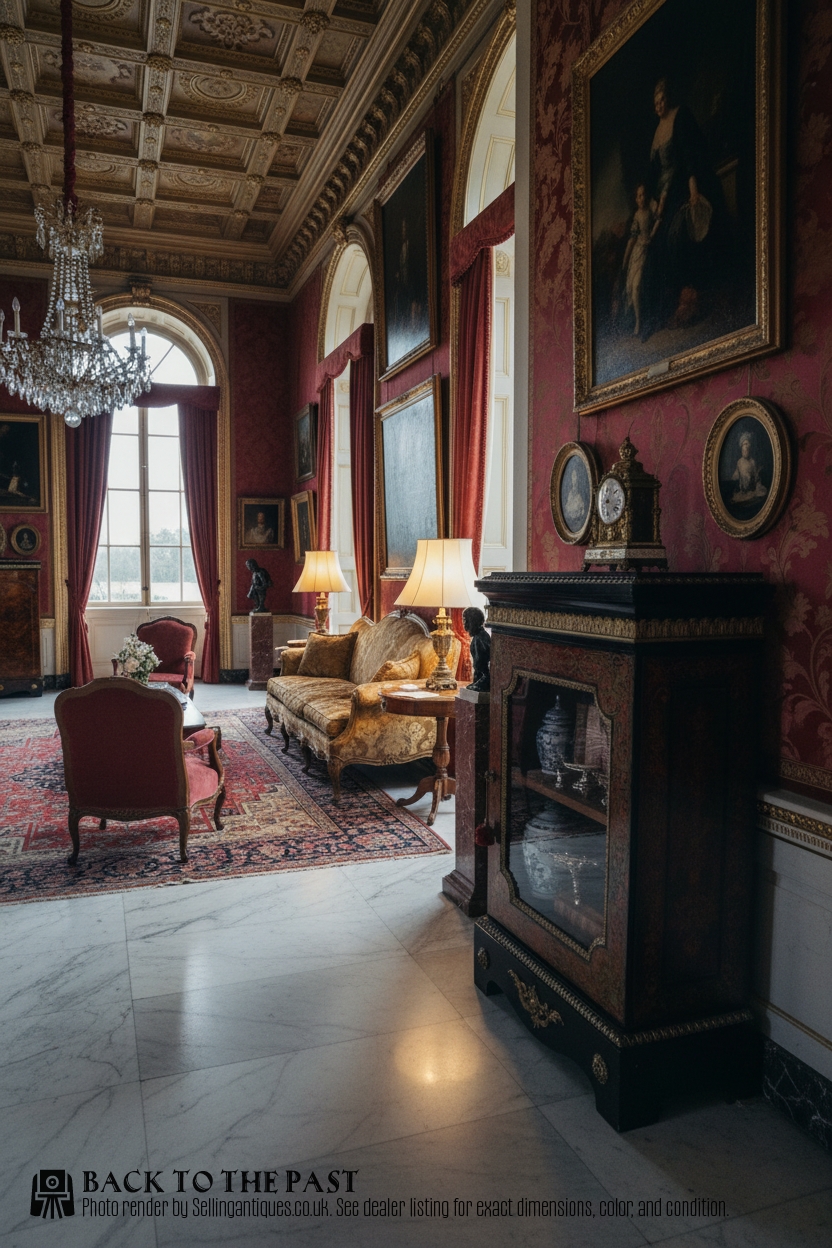
Antique Boulle Furniture
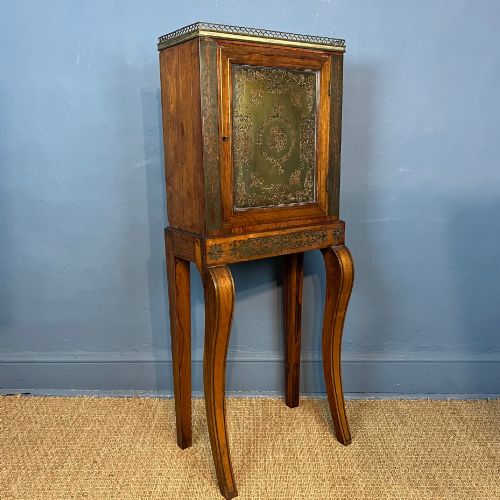
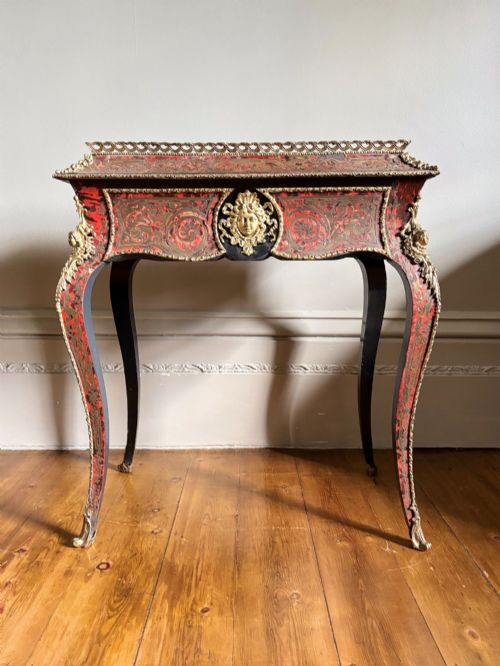
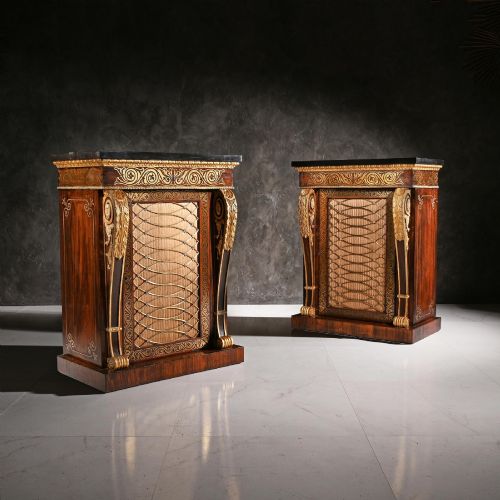
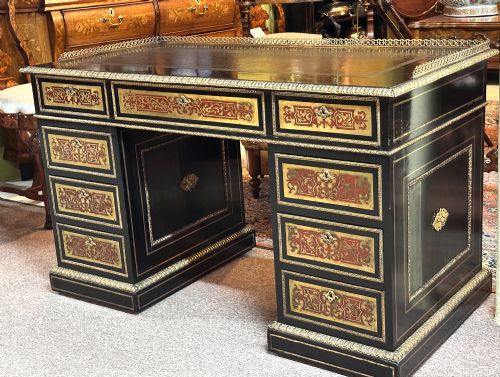
Antique boulle furniture is defined by its ornate brass and tortoiseshell marquetry set into ebonised wood or black lacquer. The pieces available here span various forms from the nineteenth century, including side cabinets, display cabinets, credenzas, desks, pier cabinets, centre tables, settees and sofas, and side tables.
Buyers will most frequently encounter nineteenth-century French examples, particularly those associated with the Napoleon III period and French revival styles. These items range from large display cabinets and side cabinets to smaller pier cabinets and nests of tables.
The selection also reflects distinct stylistic influences beyond standard French designs, incorporating Grand Regency, Islamic Revival, Louis XVI style, and Chinoiserie motifs. Such variety demonstrates the broad decorative appeal these inlaid wooden pieces held throughout the nineteenth century and into the twentieth century.
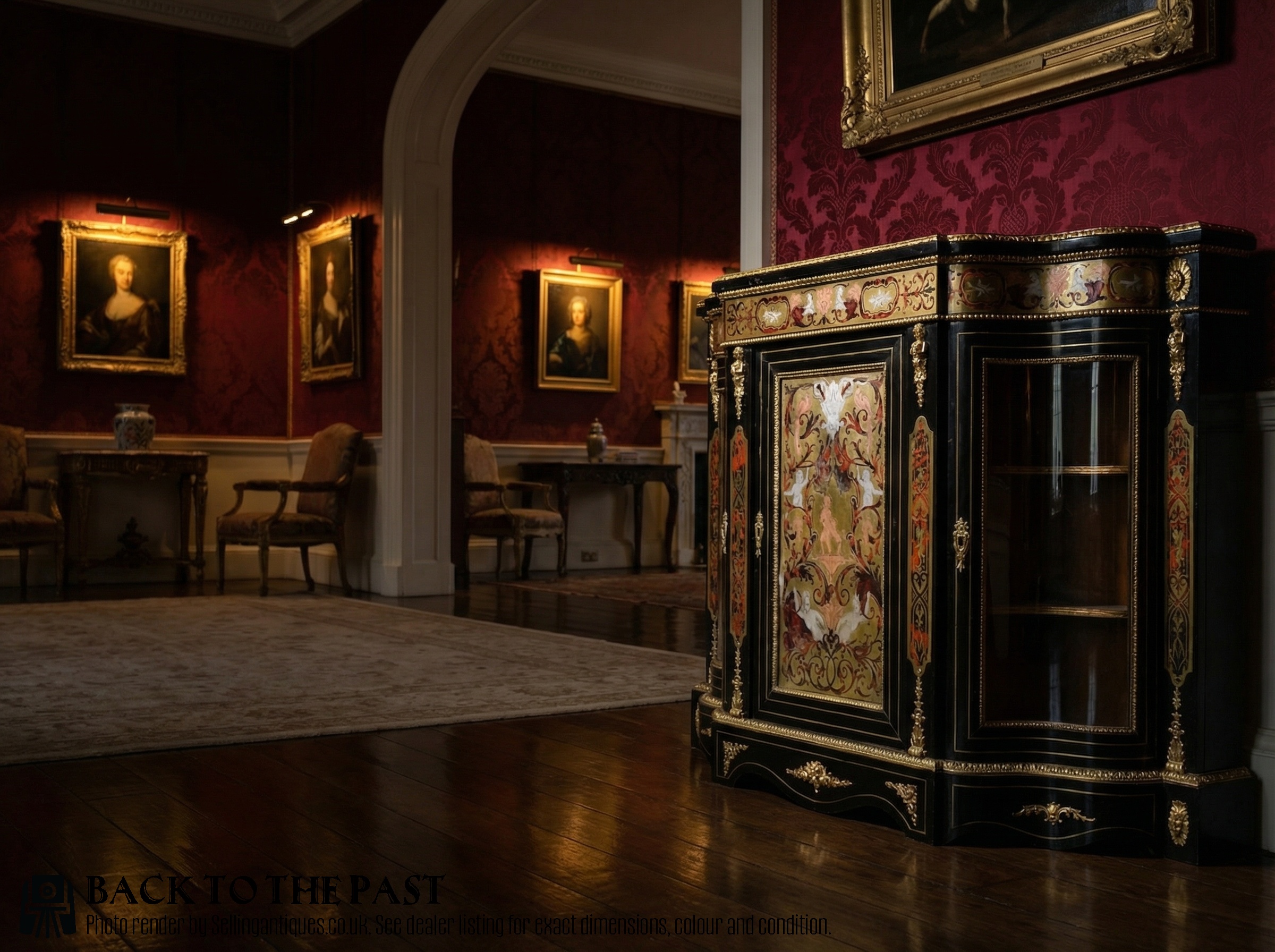
How they were made
The technique relies on the meticulous cutting of thin sheets of brass and tortoiseshell pressed together and sawn into interlocking patterns. This creates contrasting positive and negative panels known as premiere partie and contre-partie, which are then applied to wooden carcases.
Ebonised wood and rosewood serve as the primary foundational timbers for these pieces, providing a dark, uniform background that accentuates the metallic sheen of the brass inlay. Ormolu mounts in cast gilt bronze frequently frame the marquetry panels, along with marble tops fitted to certain cabinets and tables.
Antique Boulle Furniture Retail Price Guide 2026
Typical asking prices for boulle furniture among the pieces listed under this phrase on Sellingantiques today, from the lower quarter to the upper quarter. They describe what is for sale here now, not the wider market.
Listings feature nineteenth-century furniture incorporating brass, tortoiseshell, ebonised wood, ormolu, and marble across forms such as side cabinets, display cabinets, and centre tables.
What varies in quality
Quality in these pieces is dictated by the precision of the brass and tortoiseshell marquetry and the crispness of the engraved details within the metalwork. Superior examples exhibit tightly fitted joints, smooth surface transitions between differing materials, and minimal visible adhesive or filler within the intricate scrollwork.
The caliber of the supporting materials and secondary mounts also distinguishes top-tier examples, particularly the weight, chiselling, and gilding of the ormolu mounts. Finer pieces often feature superior secondary timbers, more complex multi-layered marquetry designs, and well-executed stylistic variations such as Chinoiserie or Islamic motifs.
Louis Constantin Le Gaigneur·Maison Millet
The Antique Boulle Furniture Glossary
- Boulle
- A marquetry technique using brass and tortoiseshell developed in France and named after cabinetmaker André-Charles Boulle. It forms the defining visual characteristic of these items.
- Ebonised
- Wood treated to resemble ebony, providing a deep black finish. This dark surface creates high visual contrast against inlaid brass and tortoiseshell.
- Ormolu
- Gilded bronze used for decorative mounts and accents on furniture. It protects the bronze underneath and provides a bright metallic gold appearance.
- Pier cabinet
- A tall, narrow cabinet designed to fit against the wall space between windows. These pieces often feature glass doors and elaborate boulle marquetry.
- Marquetry
- The art of applying decorative pieces of veneer to a structure to form intricate designs. In this context, it specifically involves brass and tortoiseshell.
Antique Boulle Furniture: Frequently Asked Questions
What is boulle furniture made from?
These items are constructed primarily from timber such as ebonised wood and rosewood, decorated with inlaid sheets of brass and tortoiseshell. Ormolu mounts and marble tops also appear frequently across the selection.
The combination of dark wood and reflective metallic inlay produces a distinctive high-contrast surface finish characteristic of nineteenth-century decorative arts.
How do I identify a Napoleon III piece?
Napoleon III items typically date from the mid-nineteenth century and embrace eclectic revivals of earlier French court styles. They frequently showcase dense brass and tortoiseshell marquetry on ebonised carcases.
Such pieces often incorporate elaborate ormolu mounts and curved silhouettes reflecting mid-nineteenth-century interpretations of Louis XIV, Louis XV, and Louis XVI aesthetics.
Where should I place a side cabinet?
Side cabinets and pier cabinets function well against prominent interior walls where their reflective brass inlay can catch natural light. They suit formal reception rooms, libraries, and hallways.
Because many include glass doors or marble surfaces, positioning them away from direct heat sources helps preserve the delicate tortoiseshell and wood veneers.
How do I clean tortoiseshell inlay?
Tortoiseshell and brass marquetry requires gentle dusting with a soft, dry cloth to prevent scratching the polished surfaces. Avoid using harsh chemical cleaners, alcohol, or excessive water.
Maintaining a stable indoor humidity level prevents the organic shell and wood substrates from expanding or contracting at different rates.
What is a credenza?
A credenza is a long, low sideboard or cabinet used historically for display and storage. Nineteenth-century examples often feature central doors flanked by curved glass end compartments.
In boulle pieces, the flat front surfaces provide an expansive canvas for elaborate brass and tortoiseshell scrollwork patterns.