




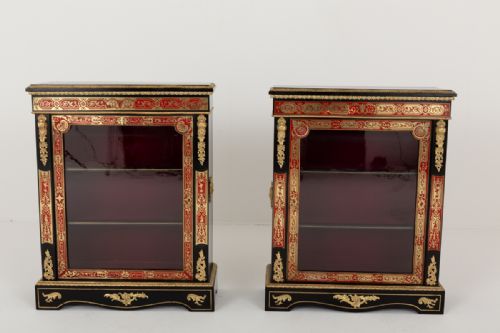


Boulle Marquetry Credenza
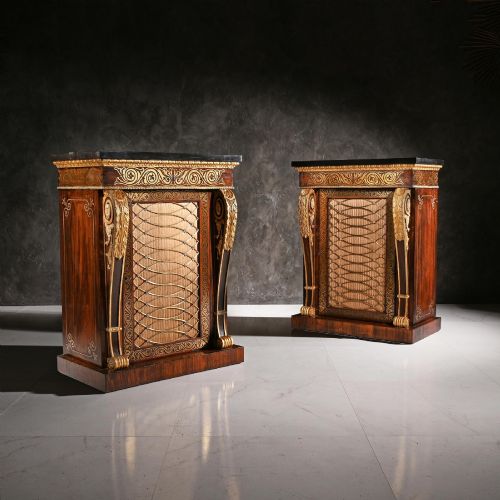
A boulle marquetry credenza brings dramatic French flair to a room through intricate tortoiseshell and brass inlay set into dark wood.
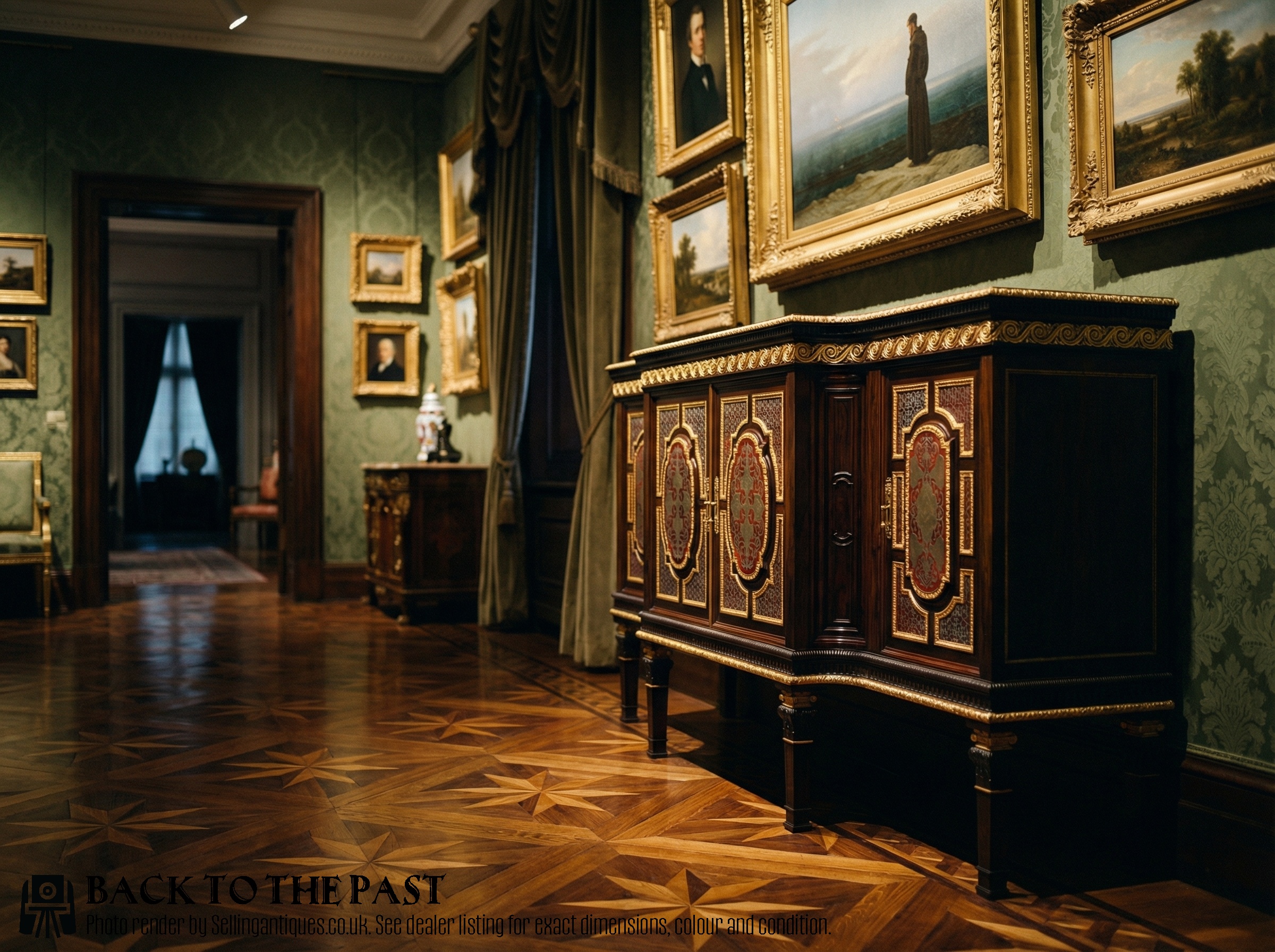
Boulle Marquetry Credenza
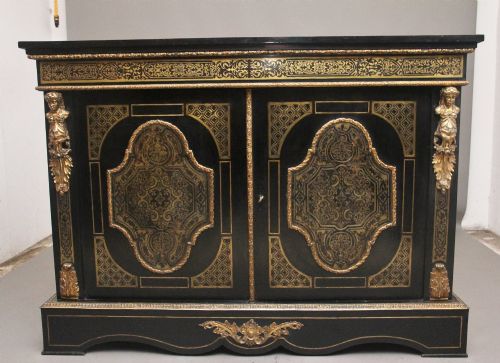
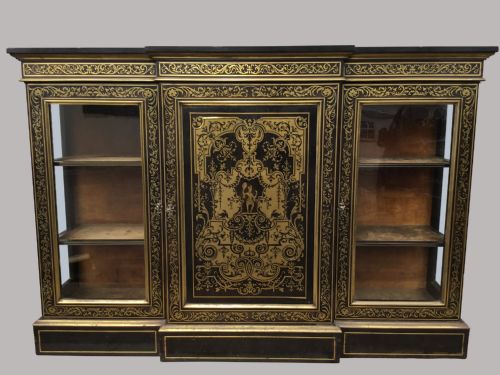
A boulle marquetry credenza combines display space and enclosed storage, typically taking the form of side cabinets, pier cabinets, or breakfront sideboards. These grand statement pieces date primarily from the nineteenth century, spanning Victorian and Napoleon III periods.
French styles dominate the selection, often reflecting Louis XVI influences or French Revival aesthetics. Buyers frequently encounter pieces featuring serpentine fronts, marble tops, and glazed doors designed for ornamental display.
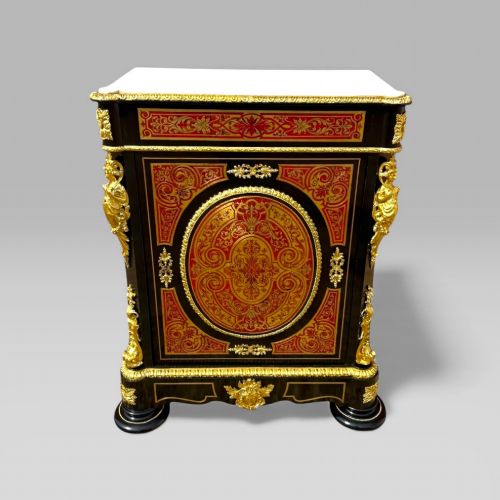
Origins vary between French workshops and English makers adapting the continental style during the Victorian era. The most common format is a single or paired pier cabinet showcasing elaborate metallic and organic inlay against a dark ground.
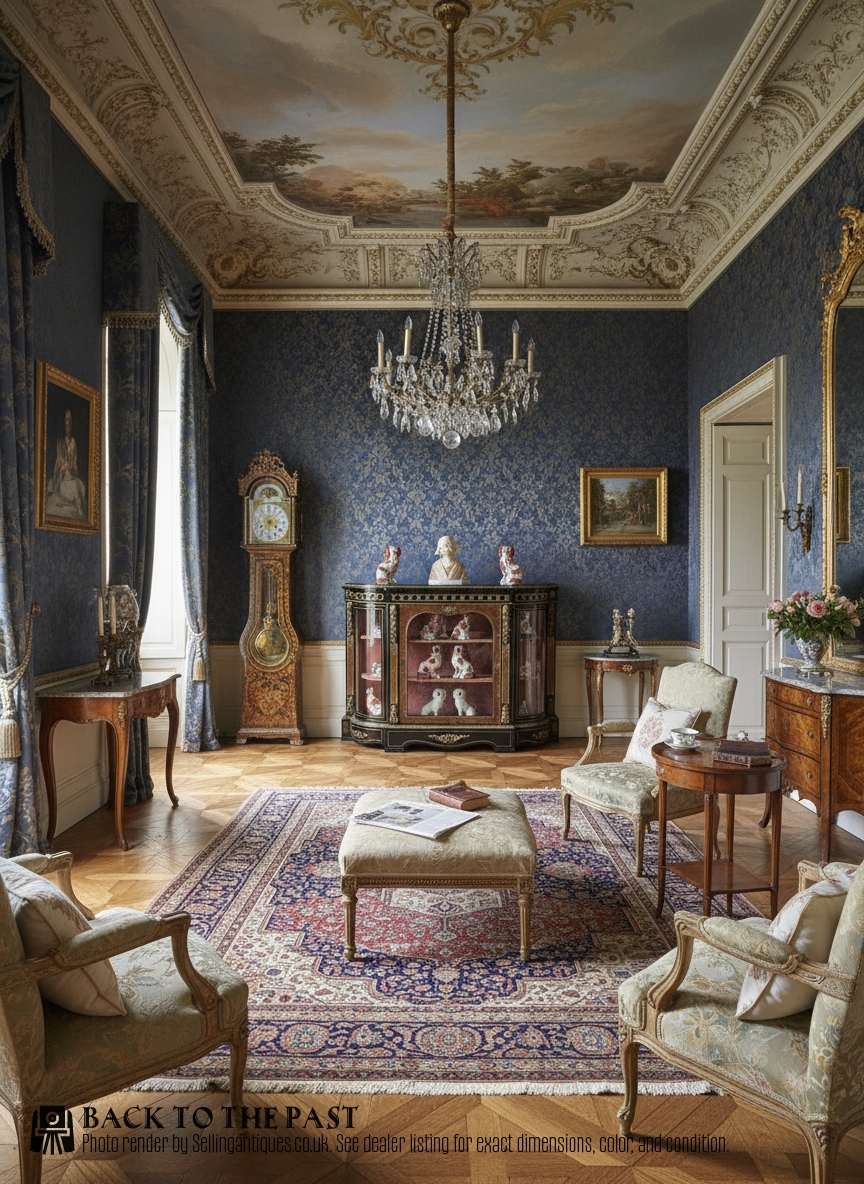
Materials and construction methods
Craftsmen built these cabinets using ebonised wood or ebony as a dark foundation to contrast with metallic decorative elements. Brass and tortoiseshell form the signature marquetry patterns, cut together using precise piercing techniques.
Ormolu and gilt bronze mounts provide structural framing and corner ornamentation, highlighting the curves of serpentine forms. Marble slabs frequently top the cabinets, adding weight and a cool tactile surface to the wooden carcase.
Boulle Marquetry Credenza Retail Price Guide 2026
Typical asking prices for boulle marquetry credenza among the pieces listed under this phrase on Sellingantiques today, from the lower quarter to the upper quarter. They describe what is for sale here now, not the wider market.
Current listings demonstrate a concentration of nineteenth-century pieces, spanning the 1850s to the 1880s with strong representation from the Napoleon III and Victorian periods.
Distinctions in craftsmanship
The precision and complexity of the brass and tortoiseshell inlay dictate the visual success of the piece, separating standard production from master work. Sharply cut lines and tight joints in the marquetry show the hand of a skilled artisan.
The quality of the cast ormolu mounts and the selection of the underlying timber body determine the overall distinction of the cabinet. Integrated architectural details and substantial marble tops indicate higher tier production.
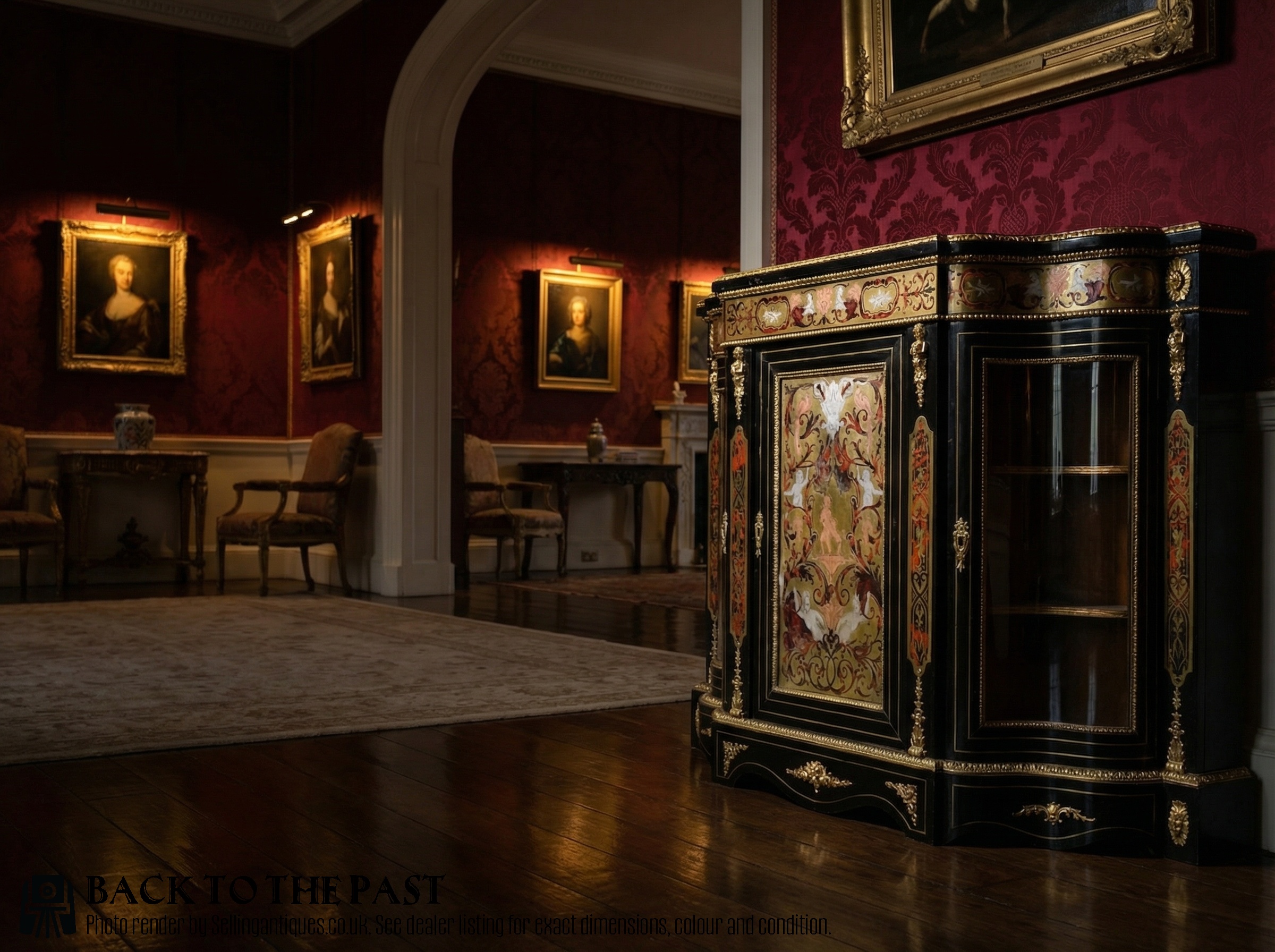
The Boulle Marquetry Credenza Glossary
- Boulle marquetry
- An elaborate form of marquetry using brass and tortoiseshell cut in contrasting patterns, named after the famous French cabinetmaker. This technique creates a rich tortoiseshell ground inlaid with shimmering metal scrolls.
- Ormolu
- Gilded bronze mounts applied to furniture for decorative and protective purposes. These metallic ornaments highlight the corners and panels of the cabinet.
- Pier cabinet
- A narrow cabinet designed to fit against the wall space between windows. These pieces often feature glazed doors for displaying porcelain and curiosities.
- Ebonised wood
- Timber treated with a dark stain or finish to imitate expensive ebony. This process provides a uniform black background that makes the brass inlay stand out.
- Serpentine front
- A furniture front curved with a convex centre flanked by concave sides. This flowing shape adds movement and complexity to the cabinet design.
Boulle Marquetry Credenza: Frequently Asked Questions
What is a boulle marquetry credenza?
A boulle marquetry credenza is a nineteenth-century decorative storage cabinet featuring contrasting brass and tortoiseshell inlay set into ebonised wood. These pieces serve as focal points in a room, combining enclosed storage with display surfaces.
Originating in French and English workshops, they often incorporate ormolu mounts and marble tops. Their distinctive metallic patterns reflect revivalist design movements of the Victorian and Napoleon III eras.
How do I style a credenza in my home?
Position the credenza against a prominent wall where its polished marble top and reflective brass inlay can catch the light. Keep surrounding decor restrained to let the intricate marquetry remain the visual centrepiece of the space.
Use the enclosed shelving behind glass doors to display small ceramics, glassware, or collected curiosities. The dark ebonised wood pairs well with both traditional period interiors and modern transitional rooms.
How do I date a nineteenth-century cabinet?
Examine the secondary timbers inside the carcase and the construction methods used for the drawers and backboards. Nineteenth-century pieces often show specific stylistic indicators like Napoleon III or Victorian revival motifs.
Check the mounts and the style of the brass inlay against known period design books. Date ranges typically span from the mid to late nineteenth century based on these structural clues.
Are these cabinets purely decorative?
While highly ornamental, these cabinets offer practical storage behind doors and display space on top. Pier cabinets and sideboards were designed to hold dining ware or display family collections.
The addition of glazed doors protects interior contents from dust while keeping them visible. The sturdy marble tops provide a durable surface for lamps or decorative objects.