


Black Ebonised Credenza
A black ebonised credenza brings dark, commanding presence to a room through deep wood finishes and gilded mounts.
What a black ebonised credenza is
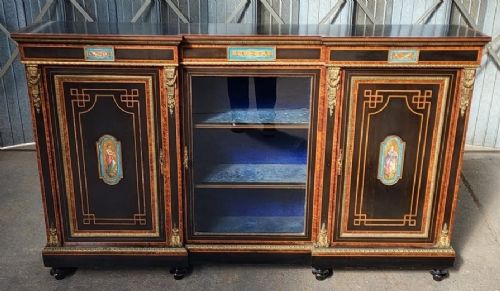
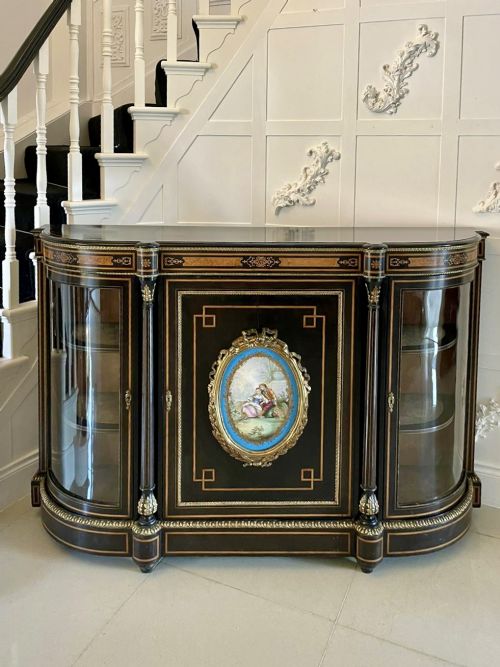
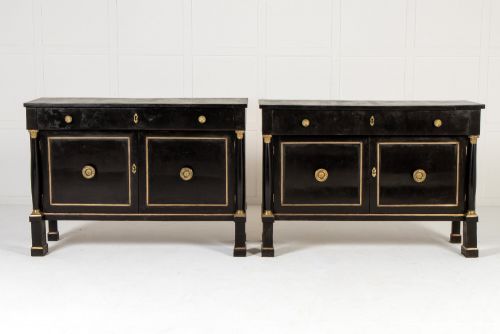
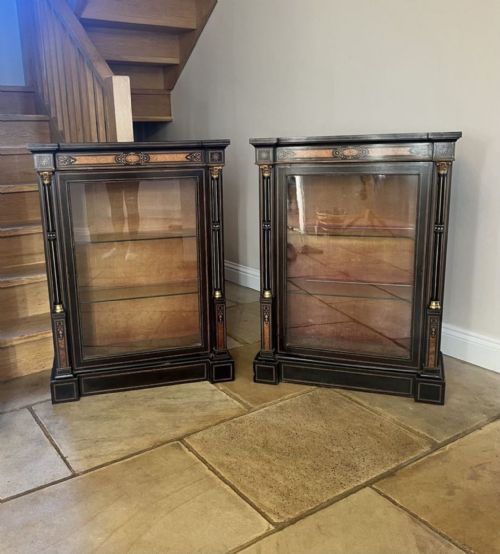
A black ebonised credenza is a sophisticated cabinet designed for display and storage, often featuring glazed doors or central compartments. Buyers searching for this phrase encounter substantial nineteenth-century forms alongside eighteenth-century Italian examples.
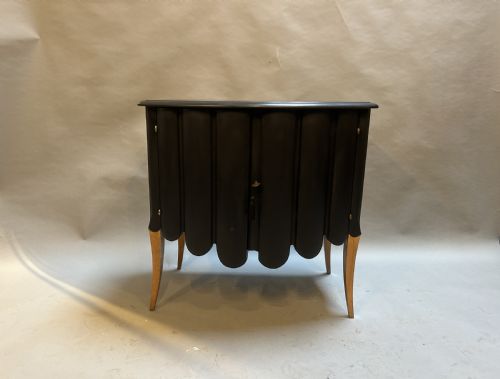
The pieces appearing on this page span several distinct periods including the eighteenth century and the Victorian era. Alongside traditional sideboards and credenzas, the selection includes related side cabinets.
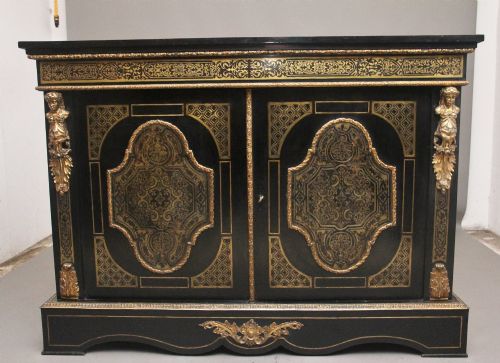
Stylistic influences range across French Napoleon III, Italian Neoclassical, and Victorian aesthetics. These origins shape the character of each cabinet through specific decorative choices.
How they were made
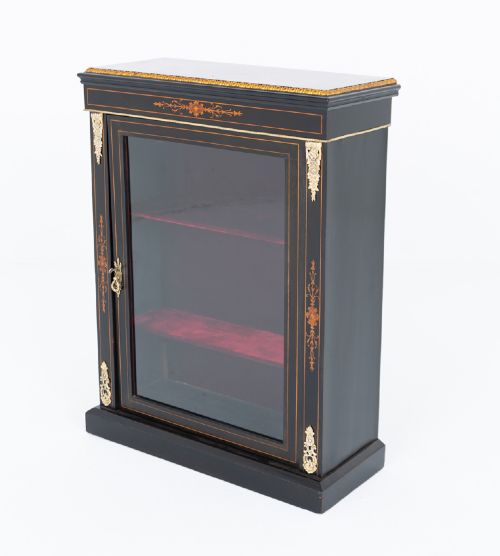
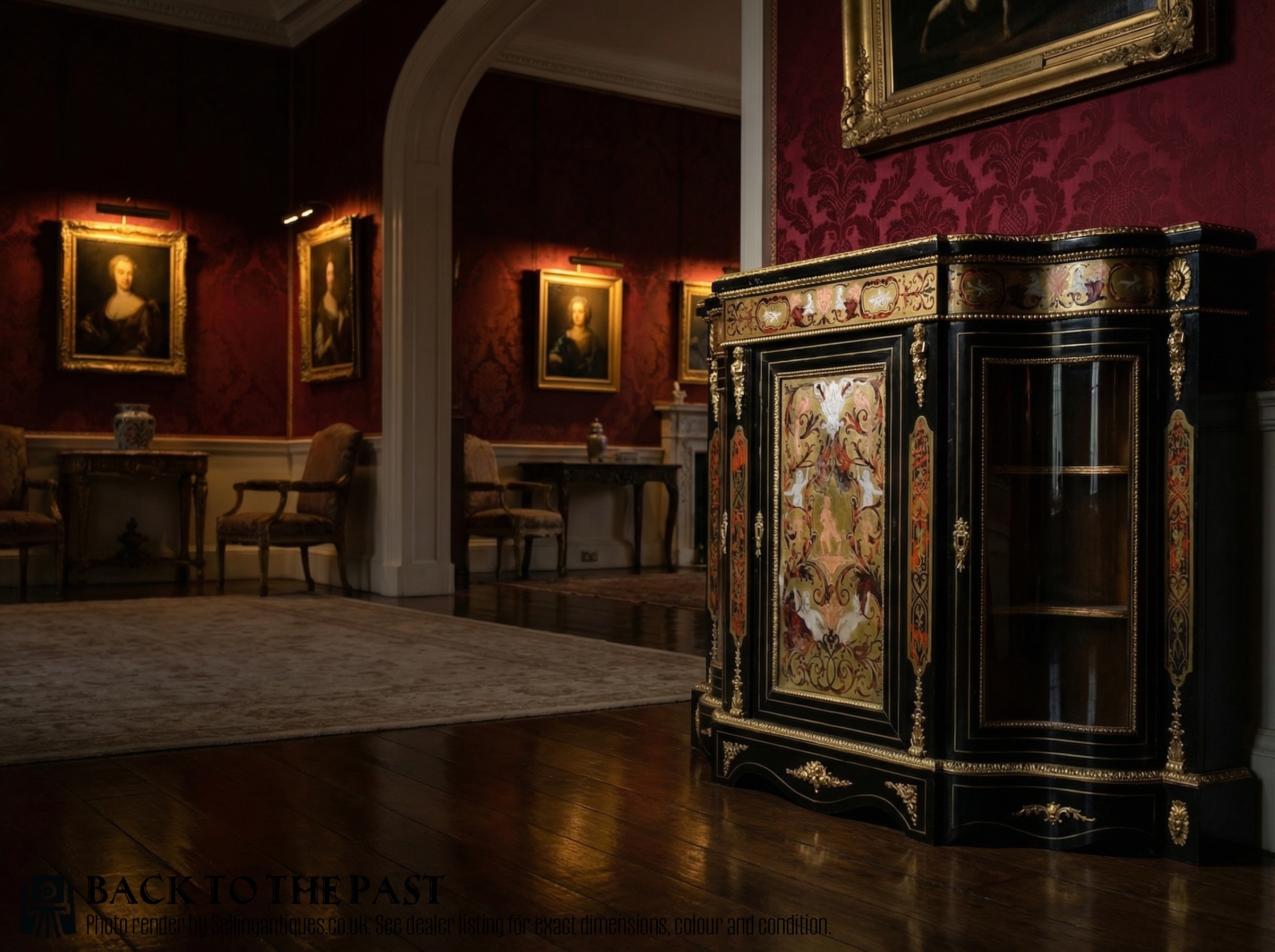
Craftsmen built these cabinets using ebonised wood to simulate expensive ebony, frequently combining the dark finish with marquetry veneers. Surface ornamentation often incorporates tortoiseshell and brass.
Many examples integrate contrasting materials such as marble tops and pietra dura panels into the wooden structure. Gilded ormolu mounts provide structural highlights against the dark surfaces.
Retail Price Guide 2026
Typical UK retail prices for black ebonised credenza, calculated from the Sellingantiques database of over a million retail prices indexed since 2003. This retail price guide relies exclusively on Sellingantiques data; no external sources or auction records are used, so the figures do not describe the wider market.
Some diminutive child-sized cabinets turn up, proving that even miniature nobility needed somewhere grand to tidy their toys away.
What varies in quality
Quality rests in the precision of the marquetry and the integration of delicate materials like tortoiseshell and brass. Finer cabinets display harmonious proportions and sophisticated handling of contrasting inlays.
The refinement of the ormolu mounts and the execution of pietra dura panels elevate certain cabinets above standard production. Material selection and decorative depth separate standard items from ambitious showpieces.
The Black Ebonised Credenza Glossary
- Ebonised wood
- Timber treated to resemble ebony through staining or painting. This dark finish creates a uniform surface that highlights metal mounts and stone inlays.
- Ormolu
- Gilded bronze applied as decorative mounts and trims. This technique adds metallic brilliance to wooden cabinetry.
- Marquetry veneers
- Thin slices of patterned wood applied to a carcase to form decorative pictures or geometric designs. Artisans carefully cut and fit these pieces together by hand.
- Pietra dura
- Inlay work using cut and fitted polished coloured stones to create pictorial designs. This painstaking technique appears on the most elaborate cabinet panels.
- Boulle
- A form of marquetry utilising tortoiseshell and brass developed in France. The contrasting materials create intricate patterns across the cabinet doors.
Frequently Asked Questions
What is a black ebonised credenza?
A black ebonised credenza is a dark-finished display cabinet designed for storage and presentation in formal rooms.
These pieces typically combine rich wood finishes with decorative inlays and metal mounts.
How were these cabinets used?
Historically, these credenzas served to display porcelain, silver, and other prized possessions in dining rooms and drawing rooms.
The enclosed compartments also provided practical storage for household items.
How do I style a black ebonised credenza?
These dark cabinets anchor a room and work well against lighter walls to highlight their silhouettes and metallic mounts.
Keep surface styling balanced to let the intricate veneers and stone panels remain visible.
How do I tell periods apart?
Dating relies on observing construction methods, decorative motifs, and the specific materials used in the inlays.
Victorian and nineteenth-century pieces often feature eclectic influences while eighteenth-century Italian examples display neoclassical restraint.