
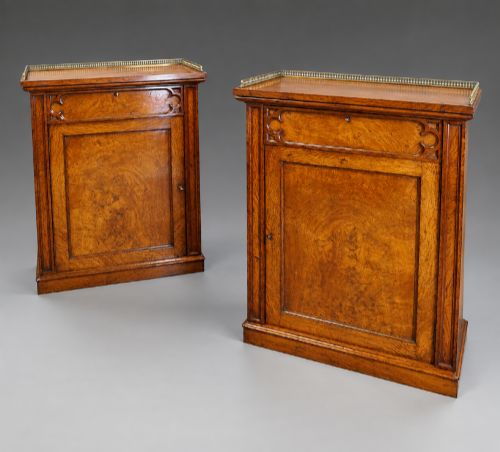
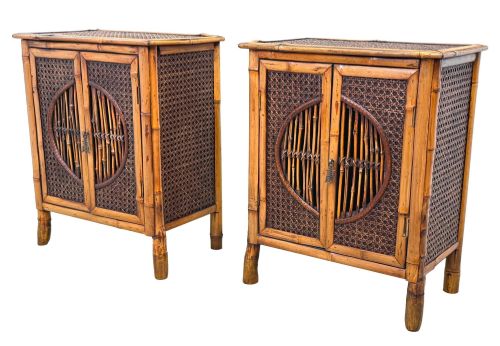
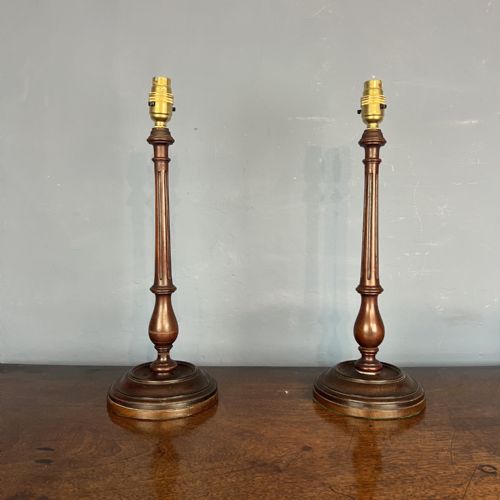
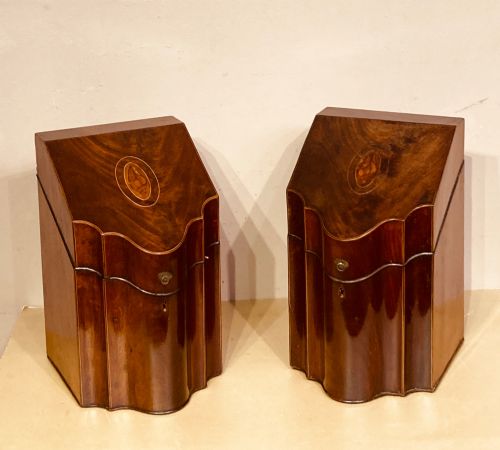
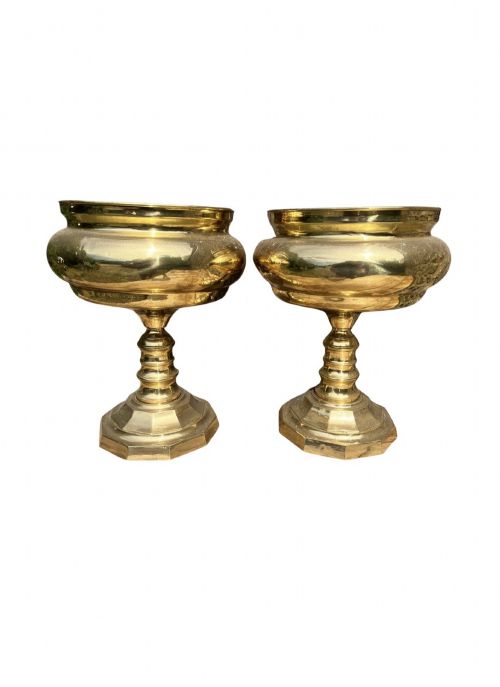
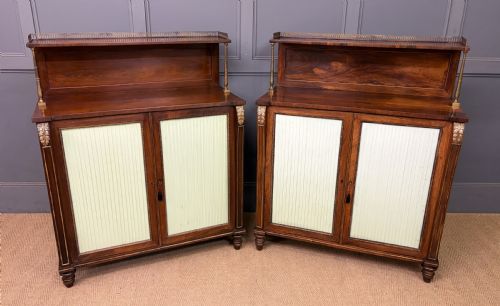
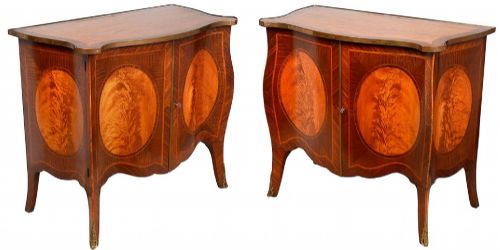
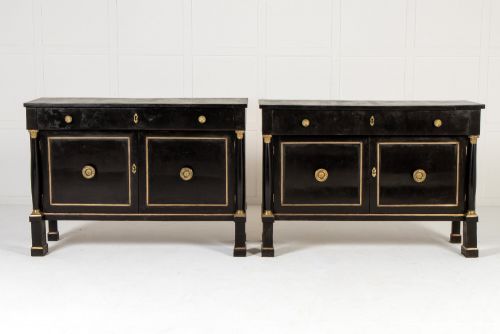
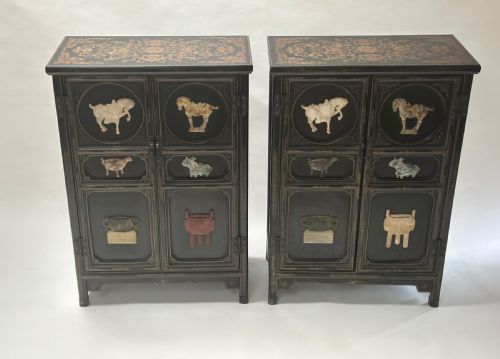
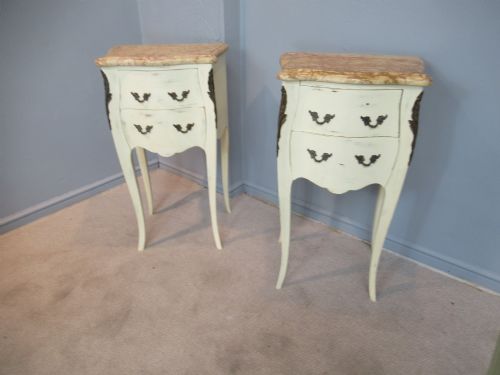
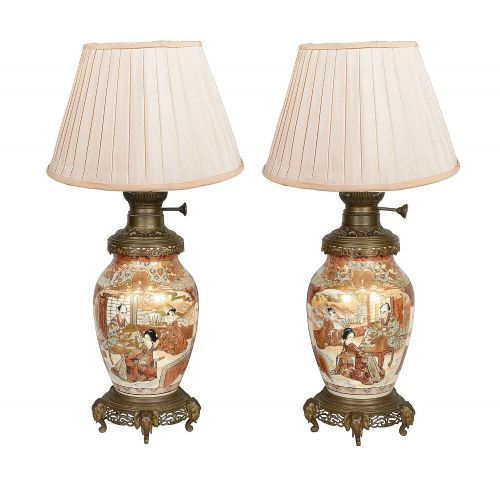

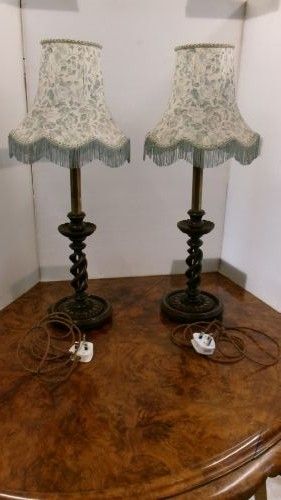


Pair of Sideboards
A pair of sideboards brings symmetrical presence and immense storage to a dining room, uniting fine timbers and classical proportions.
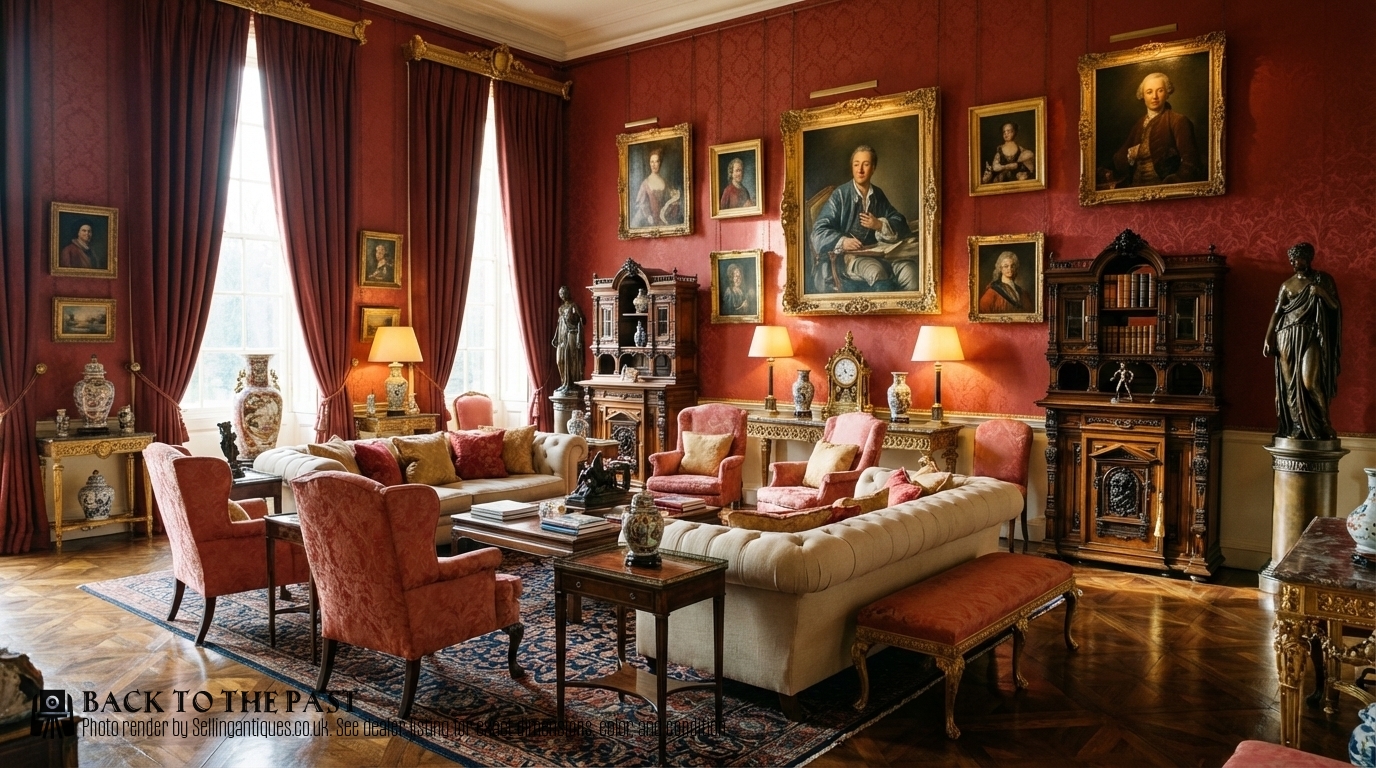
Pair of Sideboards
When searching for a pair of sideboards, collectors encounter large dining room storage pieces as well as smaller side cabinets, credenzas, and commodes spanning the Georgian, Victorian, and Regency periods. These matching items were designed to balance formal interiors, often functioning as serving surfaces or storage for dining silver and linens.
The archive and current listings show these items rendered in dense timbers such as mahogany, rosewood, and burr walnut, alongside French oak and inlaid satinwood. Forms range from breakfront designs and marble-topped commodes to pedestal bases and server sideboards.
While true dual sideboards appear in walnut, mahogany, and oak, the broader selection includes related side cabinets and credenzas that serve an identical decorative function in matching pairs. Buyers find both British and continental European origins, spanning neoclassical lines to heavily figured Victorian marquetry.
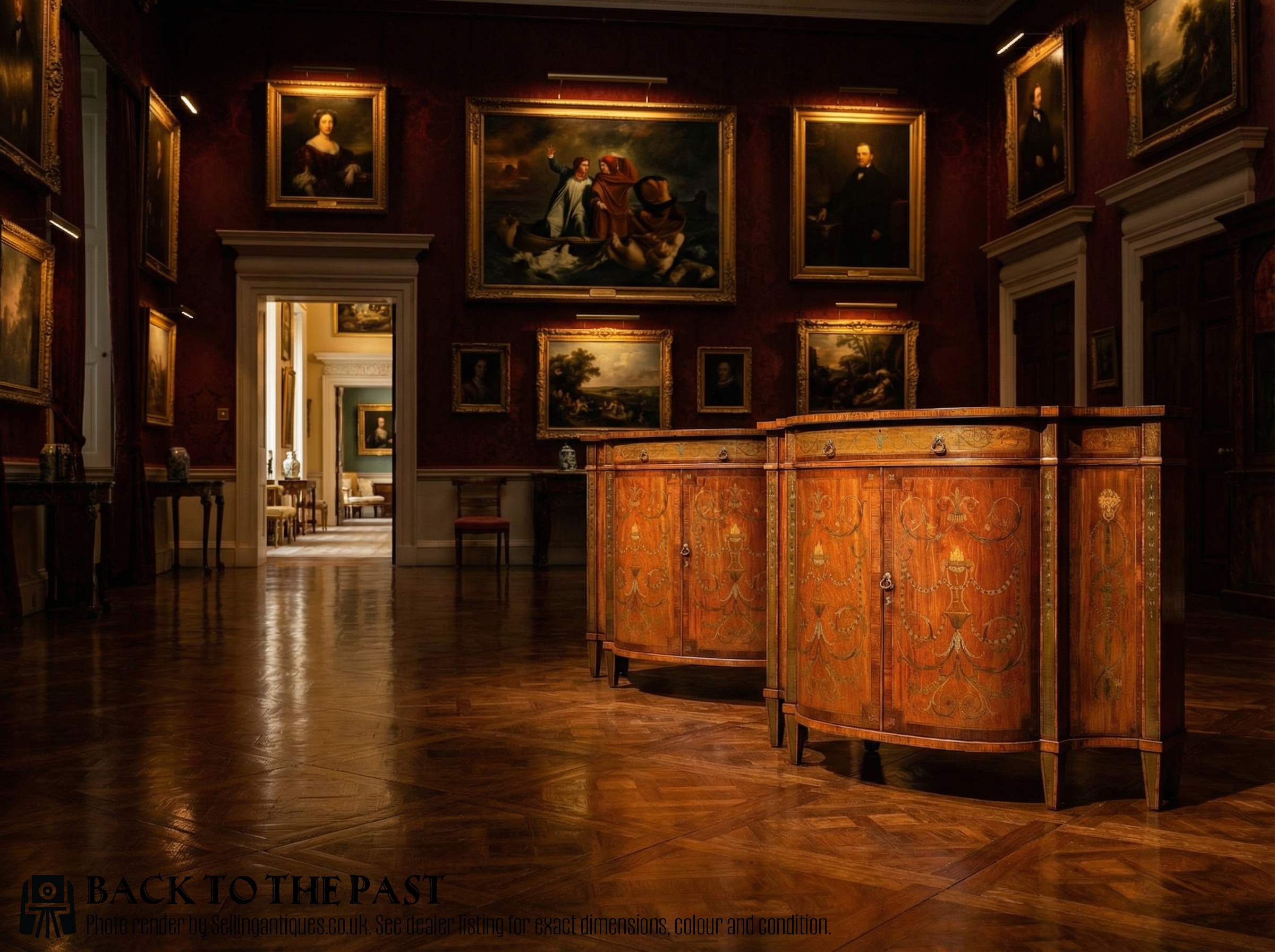
Materials and construction
Cabinet makers utilised dense primary hardwoods like mahogany, rosewood, and walnut for structural carcass work, often applying delicate veneers of satinwood or kingwood across drawer fronts and doors. Surface enrichment relied on contrasting stringing, brass inlay, or ormolu mounts.
Marble slabs feature prominently as heavy counter tops on continental and neoclassical commodes or side cabinets, paired with ebonised wood or gilt bronze details. Joinery techniques ensured large timber panels remained stable across seasonal temperature shifts.
Pair of Sideboards Retail Price Guide 2026
Typical asking prices for pair of sideboards among the pieces listed under this phrase on Sellingantiques today, from the lower quarter to the upper quarter. They describe what is for sale here now, not the wider market.
Listings feature eighteenth and nineteenth-century pieces alongside early twentieth-century revivals, utilising mahogany, rosewood, burr walnut, and marble.
Evaluating quality in matching pairs
The highest tier is distinguished by the harmony of the timber grain across both pieces, ensuring the matched figures mirror each other precisely. Superior examples display crisp marquetry, substantial marble thickness, and heavy fire-gilt ormolu mounts rather than lesser brass stampings.
Construction depth marks the division between standard utility items and exhibition pieces, visible in secondary timbers used for drawer linings and the tightness of dovetail joints. Retaining original hardware and undamaged marble tops elevates the standing of any matching pair.
Joseph Zwiener·Pietro Ferrario·Jean-Henri Riesener·William Grundy
The Pair of Sideboards Glossary
- Credenza
- A grand display and storage cabinet originating in Italy, later adopted by Victorian cabinet makers for formal dining rooms. These pieces often feature glass doors or central cupboards flanked by curved ends.
- Breakfront
- A piece of furniture where the central section projects forward from the flanking outer sections. This architectural arrangement creates deep visual shadows and dynamic proportions.
- Marquetry
- The art of forming decorative patterns using thin veneers of different coloured woods, ivory, or shell. Craftsmen layer these onto the primary carcase to create floral or geometric scenes.
- Ormolu
- Gilt bronze ornamentation applied to furniture mounts, cast and hand-chiseled before receiving a gold amalgam finish. The technique was widely favoured by French cabinet makers.
- Satinwood
- A luminous hardwood with a golden-yellow sheen, frequently used for contrasting crossbanding and detailed inlay work during the Georgian and revival periods.
Pair of Sideboards: Frequently Asked Questions
What is a pair of sideboards used for?
These large furniture pieces provided surface area for serving food and drinks during grand meals while offering enclosed space below for china, glassware, and linens.
In contemporary homes, they serve similar dining functions or act as substantial architectural anchors in long hallways and spacious living rooms.
How do I care for antique timber surfaces?
Maintain the polished finish by applying traditional beeswax sparingly and buffing with a soft lint-free cloth to nourish the old wood.
Keep the timber away from direct heat sources and strong sunlight to prevent the natural veneers from drying out or splitting.
How can I tell Georgian from Victorian pieces?
Georgian furniture leans towards restrained classical lines, architectural proportions, and solid mahogany construction with understated brass hardware.
Victorian pieces frequently display heavier proportions, elaborate burr walnut veneers, dense marquetry, and more exuberant decorative carving.
Why are matching pairs difficult to find?
Dining furniture was typically commissioned as a single large sideboard rather than dual matching units, making symmetrical pairs uncommon.
Over the centuries, pairs often became separated as estates were divided, so finding surviving matching suites requires careful verification of their shared provenance.