

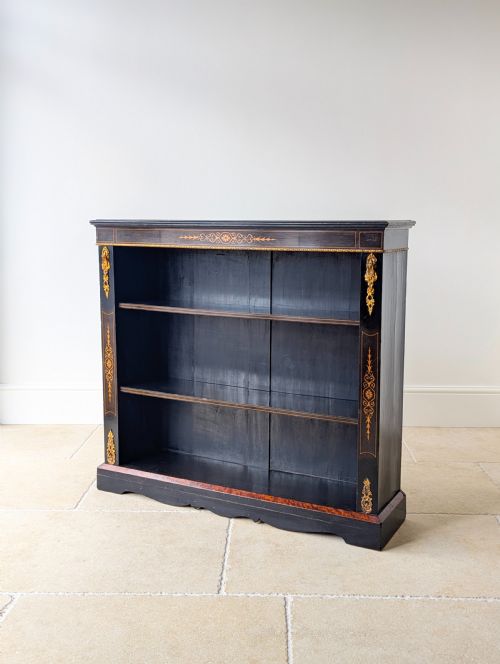


Ebonised Wood Cabinets
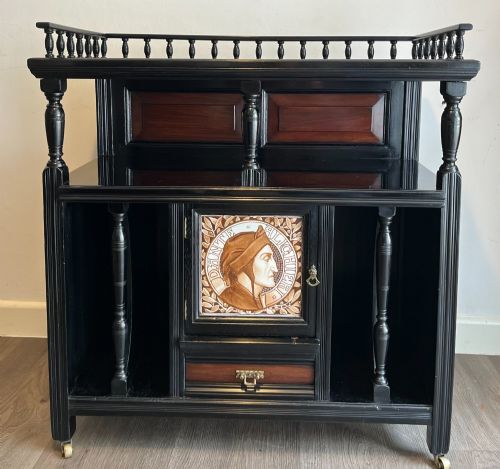
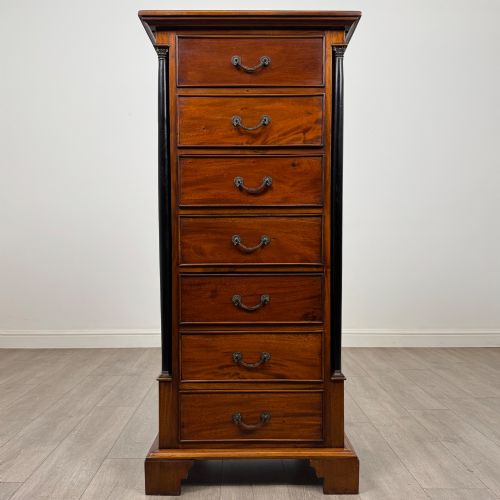
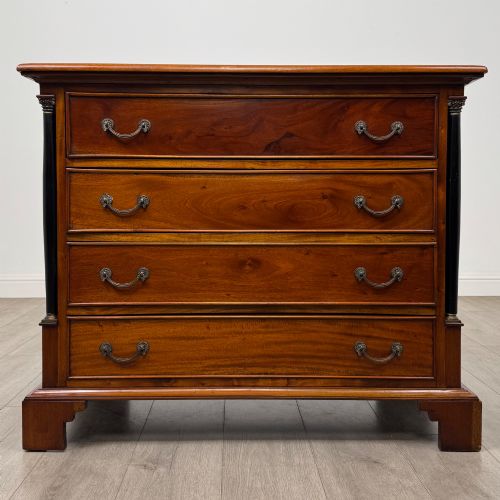
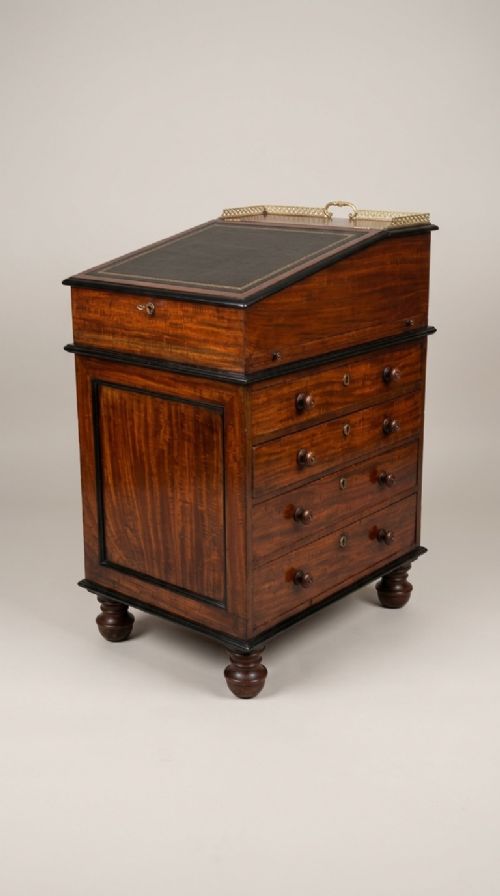
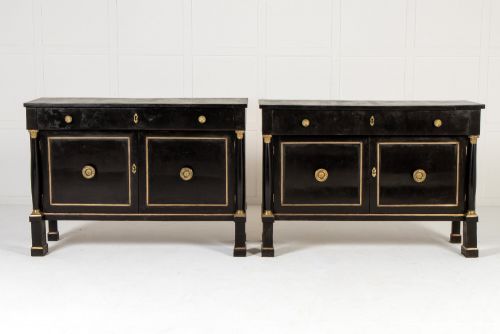
These ebonised wood cabinets bring dark, polished surfaces and crisp lines into a room, drawing the eye with contrasting mounts and inlaid details.
Ebonised Wood Cabinets
Ebonised wood cabinets appear primarily in nineteenth-century Victorian and Aesthetic Movement pieces, offering deep black finishes that mimic costly ebony. Buyers encounter forms ranging from compact pier cabinets and open bookcases to grand mirrored credenzas.
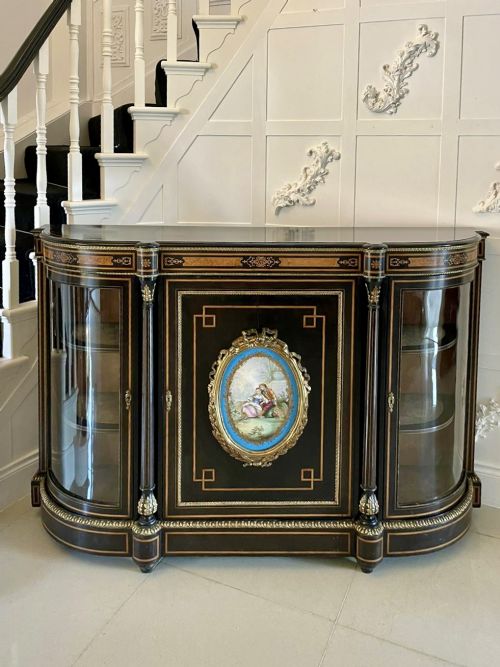
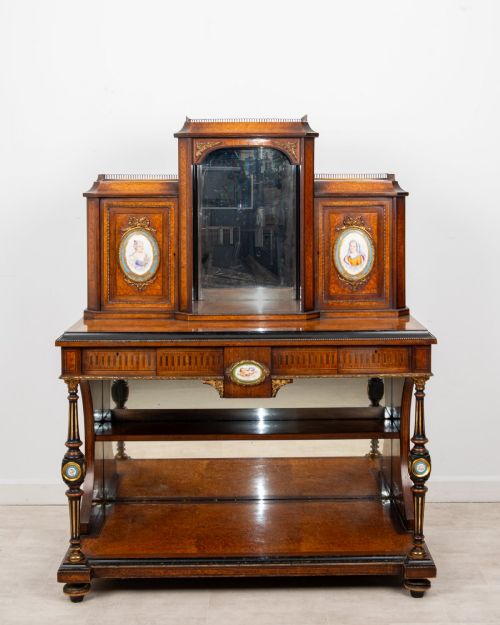
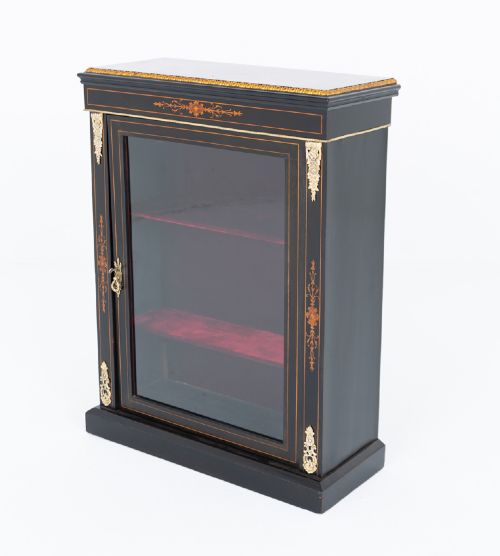
French examples often incorporate contrasting exotic timbers like amboyna alongside gilt bronze mounts and porcelain plaques. English pieces favour inlaid floral marquetry and disciplined geometric carcases suited to period interiors.
Materials and construction methods
Craftsmen utilised close-grained base woods, staining and polishing them repeatedly to achieve an opaque, light-absorbing black surface. This ebonising technique allowed workshops to create the dramatic effect of solid ebony using more accessible timbers.
Makers elevated these dark carcases with brass or ormolu mounts, ceramic plaques, and delicate stringing in contrasting light woods. Glass doors and mirrored backs frequently featured in display cabinets to reflect light within the darkened frames.
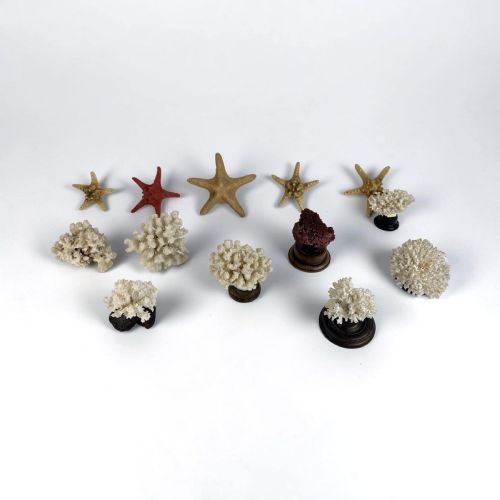
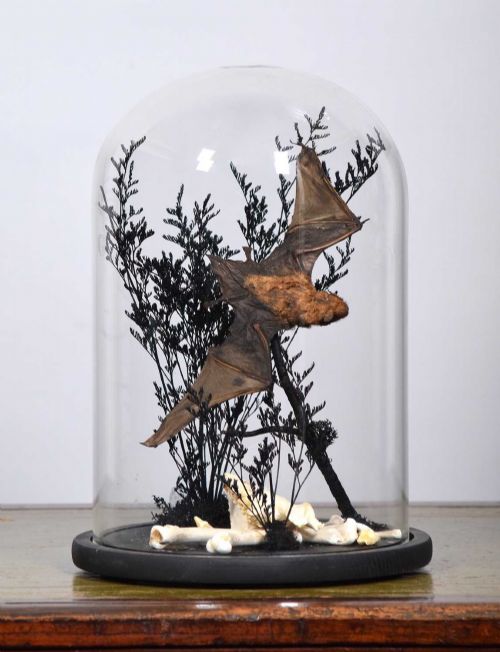
Alongside fine cabinets, the historical record captures stuffed birds under glass domes and a specimen collection of starfish.
Distinctions in craftsmanship
Quality reveals itself in the depth of the ebonised finish and the precision of the underlying timber preparation. Superior examples maintain a smooth, even sheen without obscuring the grain or showing excessive wear to high-stress edges.
The sophistication of the mounts and inlay dictates the standing of a piece. Fine specimens integrate cast ormolu, hand-painted porcelain, and complex marquetry with exact alignment across doors and drawers.
Gillows·James Gardner
The Ebonised Wood Cabinets Glossary
- Ebonised
- Wood treated with stain, dye, or paint to imitate the dark, dense appearance of true ebony. This finish became particularly popular during the Victorian and Aesthetic periods.
- Credenza
- A low cabinet or sideboard often fitted with glass doors and intricate marquetry. These pieces frequently served as display surfaces in formal dining and reception rooms.
- Ormolu
- Gilded bronze mounts applied to furniture for decorative contrast. Skilled artisans chased the metal surfaces by hand before applying gold leaf or mercury gilding.
- Marquetry
- Patterns formed by fitting together contrasting veneers of wood, ivory, or metal onto a structural carcase. Floral and geometric designs appear frequently on nineteenth-century cabinet doors.
Ebonised Wood Cabinets: Frequently Asked Questions
How do I clean ebonised wood?
Dust surfaces regularly with a soft, dry cloth to prevent particulate buildup. Avoid harsh chemical cleaners or excessive moisture, which can degrade the dark finish over time.
Apply a microcrystalline wax sparingly if the surface requires nourishment. Buff gently with a clean cloth to restore the subtle sheen characteristic of period polish.
Where should I place a cabinet?
Position these pieces away from direct sunlight and heat sources to protect the delicate wood veneers and ebonised finish. Stable indoor temperatures prevent timber from warping or cracking.
Ensure the floor is level so doors and drawers operate smoothly without binding in their frames. Wall anchoring may be necessary for taller tower cabinets to ensure stability.
Are these cabinets purely decorative?
While many pieces serve to display porcelain, books, and curiosities behind glass, others offer practical concealed storage. Cupboards and drawers provide enclosed space for household items.
Pier cabinets and credenzas balance functional surface area with compartment storage, making them adaptable for modern living spaces as well as period settings.
How do I identify the period?
Examine the construction methods, secondary woods, and decorative motifs used within the carcase. Victorian and Aesthetic pieces often feature specific brass hardware and characteristic marquetry styles.
Compare the proportions and joinery against known stylistic markers from the nineteenth century. Details like hand-cut dovetails and specific veneer choices help narrow down the date of manufacture.