


18th Century Italian Credenza
An 18th century italian credenza brings the distinct weight and presence of European cabinet-making directly into a room.
18th Century Italian Credenza
An 18th century italian credenza encompasses substantial storage forms including sideboards, cabinets, chests of drawers, and commodes. These pieces serve functional storage roles while displaying regional decorative approaches.
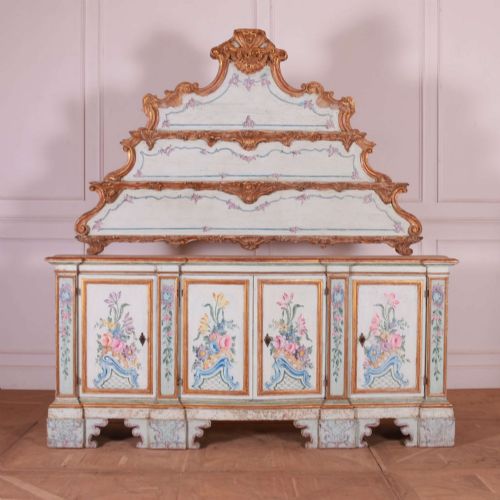
Regional diversity shapes the selection, ranging from Venetian Rococo and Italian Baroque to Italian Neoclassical and provincial styles. Buyers encounter both grand reception pieces and simpler regional interpretations.
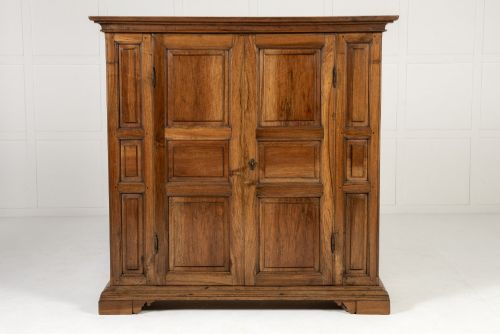
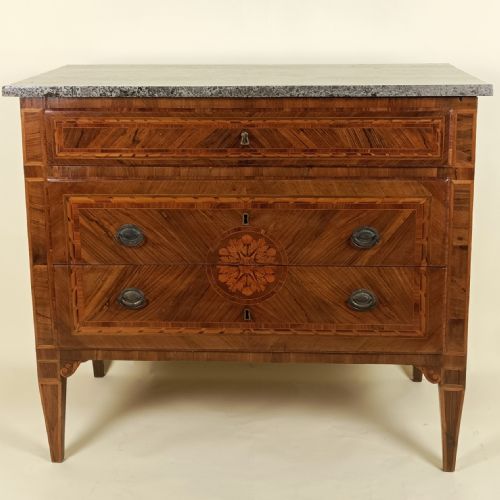
Walnut dominates the material palette alongside painted wood, ebonised wood, fruitwood, and giltwood. Forms span from simple side cabinets to elaborate marquetry chests originating from areas such as Lombardy.
How they were made
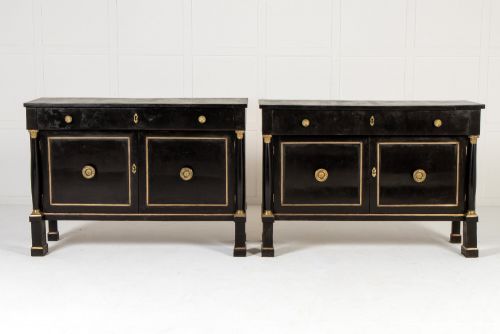
Cabinet-makers relied heavily on walnut and various softwoods or fruitwoods as structural timbers. Surfaces frequently received painted finishes, ebonised treatments, or intricate marquetry patterns.
Metal hardware incorporates brass and iron for hinges, handles, and keyplates. Joinery techniques reflect traditional workshop practices appropriate to each regional style.
Pairs of ebonised cabinets linger quietly in rooms, watching history unfold through centuries of domestic life.
What varies in quality
The sophistication of surface decoration marks the distinction between standard and superior examples. Finely executed marquetry or original painted schemes command greater interest than plain surfaces.
Structural integrity and the retention of original timber elements dictate overall merit. Pieces preserving their early hardware and untouched surface patination represent higher standards.
The 18th Century Italian Credenza Glossary
- Credenza
- A sideboard or cabinet used historically for storing and displaying valuables. These storage items anchor a dining room or hallway.
- Commode
- A low chest of drawers introduced during the eighteenth century. They function as decorative storage units in principal rooms.
- Marquetry
- The art of applying pieces of veneer to a structure to form decorative patterns. Lombardy examples frequently display this detailed craft.
- Giltwood
- Wood carved and coated with gold leaf or a metallic substitute. This finish heightens the decorative impact of Baroque and Rococo forms.
18th Century Italian Credenza: Frequently Asked Questions
Where should I place a credenza?
These substantial storage pieces suit dining rooms, grand hallways, or living spaces where surface area and storage are required.
Ensure adequate wall space is available to accommodate their proportions without crowding surrounding furniture.
How do I clean wooden surfaces?
Dust regularly with a soft, dry cloth to prevent particulate buildup on walnut, fruitwood, or painted finishes.
Avoid modern chemical polishes that can degrade historical wax or paint layers over time.
Are these pieces suitable for daily use?
Daily use is entirely feasible provided the drawers and doors are operated with reasonable care.
Protect the top surfaces from moisture and heat to preserve the original timber or painted decoration.
How do I identify regional styles?
Regional characteristics appear through the choice of ornamentation, such as Venetian painted motifs or Lombardy marquetry.
Comparing the specific structural lines against documented provincial variants assists in identification.