

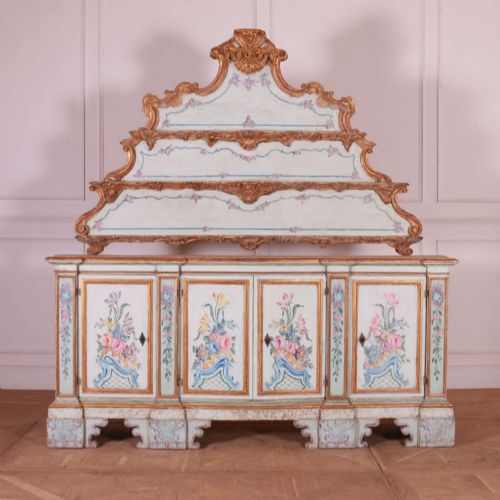
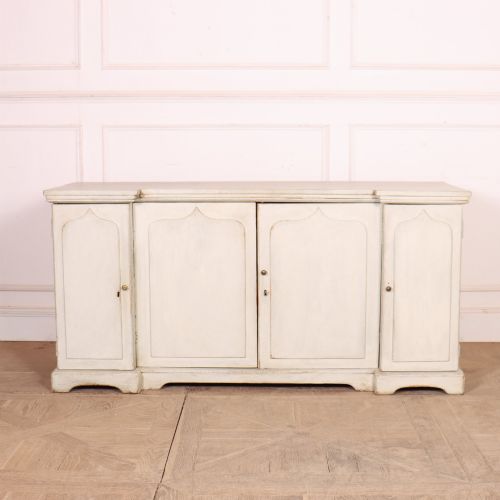
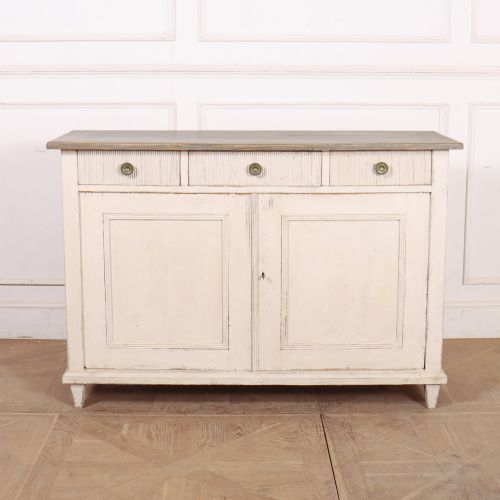
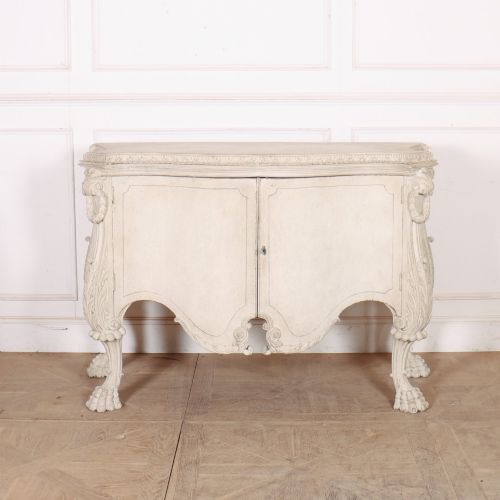
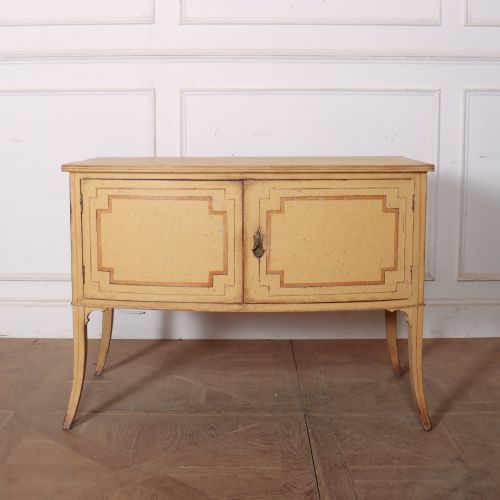
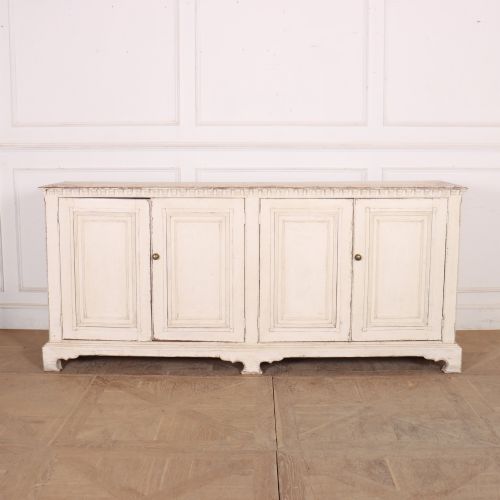
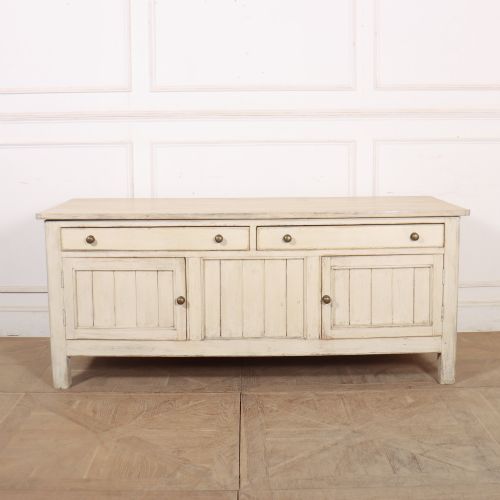


Cream Painted Credenza
A cream painted credenza brings light and generous storage to a room, offering the weathered charm of period painted wood.
Cream Painted Credenza
A cream painted credenza is a substantial storage piece, typically found in forms such as sideboards, buffets, dressers, and side cabinets. These pieces serve as functional foundational furniture for dining rooms and large living spaces.
The selection ranges across several centuries and regional traditions, spanning English country houses, Venetian palazzos, and French provincial homes. Pieces from the eighteenth and nineteenth centuries dominate, bringing aged painted surfaces and classic proportions.
Buyers most frequently encounter nineteenth-century English country examples alongside continental European buffets and side cabinets. These pieces often feature painted pine or hardwood carcasses finished in muted, distressed tones.
How they were made
Construction relies heavily on traditional joinery using timber such as pine and other native woods, often accented with brass hardware and glass panels. Master carpenters built these carcases to endure daily use in busy domestic settings.
The signature cream painted finish is achieved through layered paint applications that age naturally over decades. Artisans sometimes incorporated giltwood, decorative motifs, or majolica panels to elevate the surface design.
Marble tops appear on select continental and English side cabinets, providing a durable and cool surface. These stone additions required careful masonry work to fit flush atop heavy wooden frames.
Cream Painted Credenza Retail Price Guide 2026
Typical asking prices for cream painted credenza among the pieces listed under this phrase on Sellingantiques today, from the lower quarter to the upper quarter. They describe what is for sale here now, not the wider market.
Some nineteenth-century cabinets hide brightly coloured majolica ceramic panels behind their doors, offering a secret splash of vibrancy.
What varies in quality
Quality rests primarily in the integrity of the original timber frame and the authenticity of the painted surface. Credenzas retaining their early or original paint layers command greater interest than heavily restored or later repainted examples.
Proportion and decorative detail also set pieces apart, from simple country pine dresser bases to serpentine Venetian buffets. Finer items integrate hand-carved details, intact brass mounts, and balanced proportions that anchor a room.
The Cream Painted Credenza Glossary
- Credenza
- A side cabinet or sideboard used for storing dining requisites and displaying objects. It typically sits low against a wall.
- Dresser base
- The lower section of a traditional kitchen or dining dresser, featuring cupboards and drawers without upper shelving.
- Serpentine
- A furniture front or top shaped with a curving convex centre flanked by concave sides. This technique demands high skill from the woodworker.
- Demi-lune
- Half-moon shaped furniture, often designed to stand flush against a wall as a side cabinet or console table.
- Majolica
- Opaque tin-glazed earthenware decorated with colourful pigments, frequently used for decorative panels on late nineteenth-century cabinetry.
Cream Painted Credenza: Frequently Asked Questions
Where should I place a credenza?
These large storage pieces traditionally anchor dining rooms, hallways, or spacious living areas where they provide both surface display and deep interior storage.
Ensure you measure the wall space and clearance for opening doors or drawers before positioning one in your home.
How do I care for painted wood?
Dust the surface regularly with a soft, dry cloth and avoid harsh chemical cleaners that can strip or soften historic paint layers.
Keep wooden furniture away from direct heat sources and strong sunlight to prevent the paint from cracking or fading.
What is the difference between a sideboard and a credenza?
While both terms describe low storage furniture for dining rooms, credenzas historically originate from Italian traditions and often feature enclosed cupboards rather than central cutlery drawers.
Regional naming conventions often overlap, so functionality and form remain the best guides when selecting a piece.