

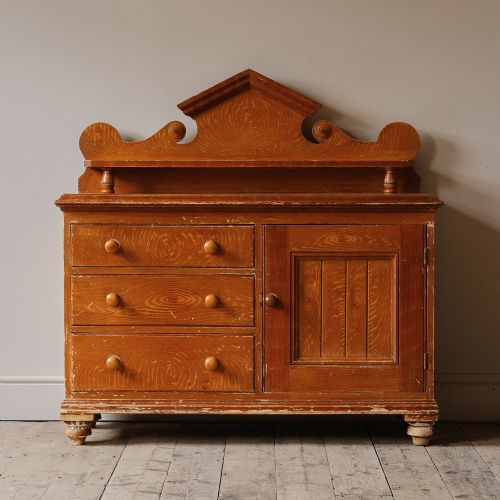
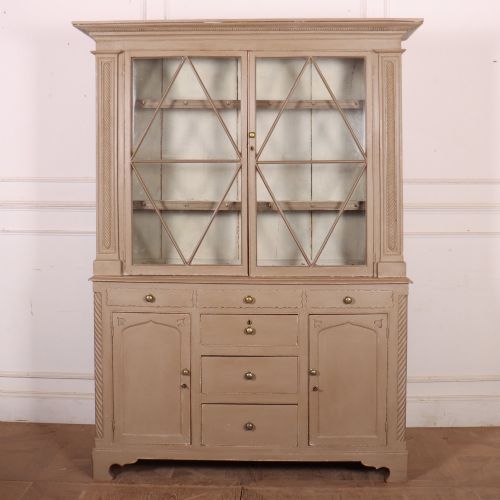

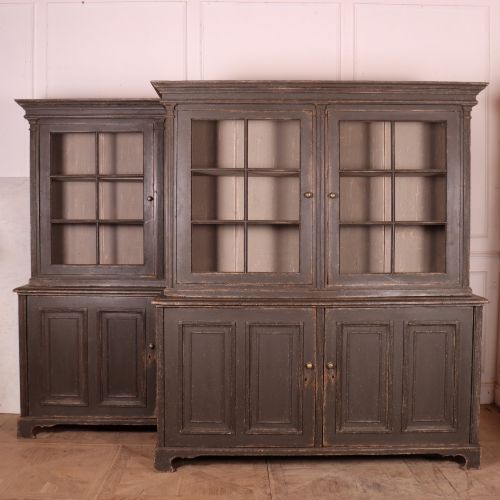
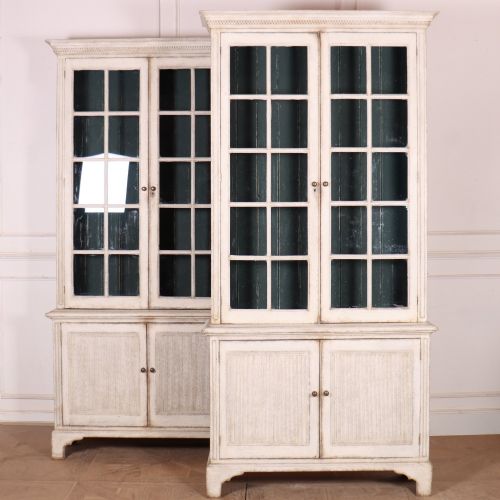
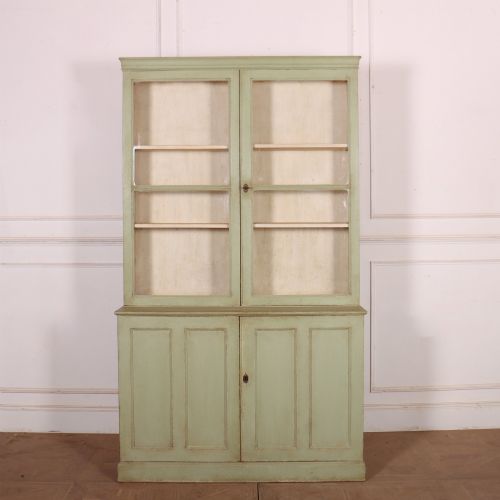
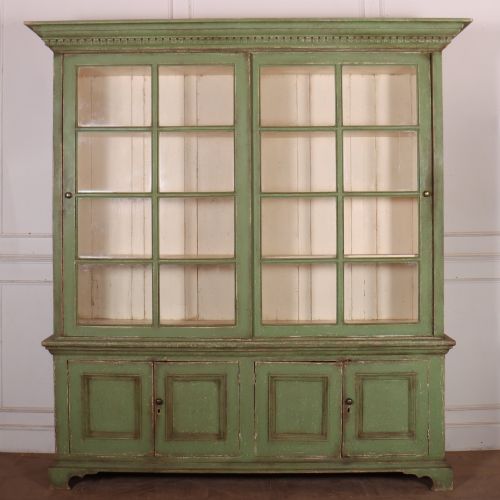
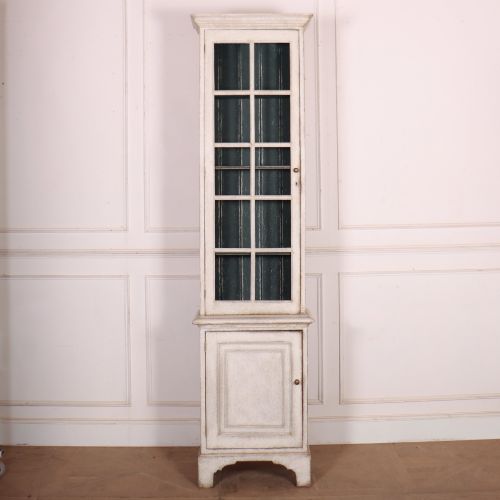
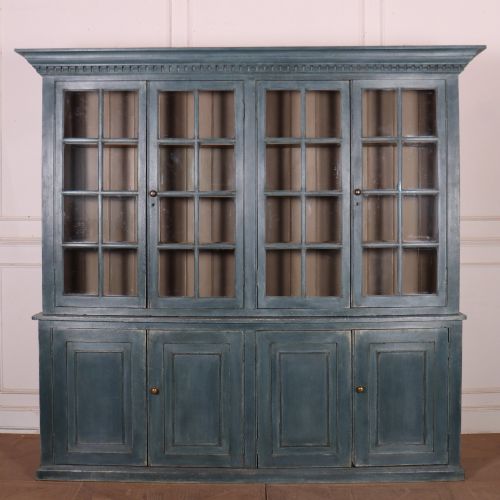
Painted Glazed Cabinet
A painted glazed cabinet brings light and colour into a room, offering both display space and practical storage through glazed doors.

Painted Glazed Cabinet
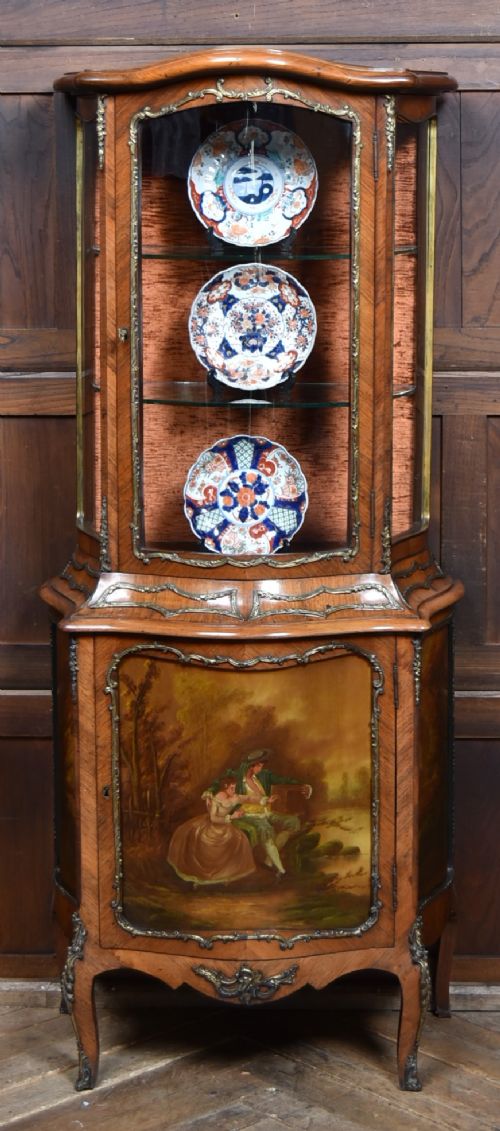
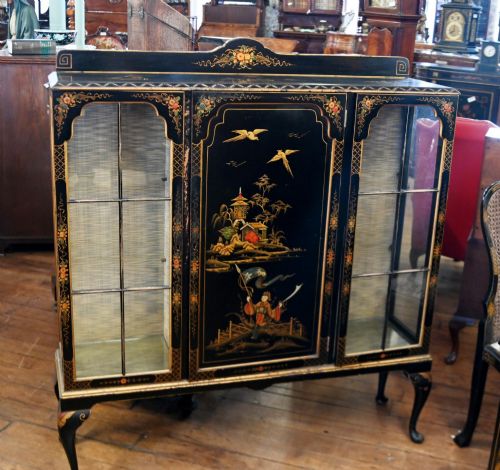
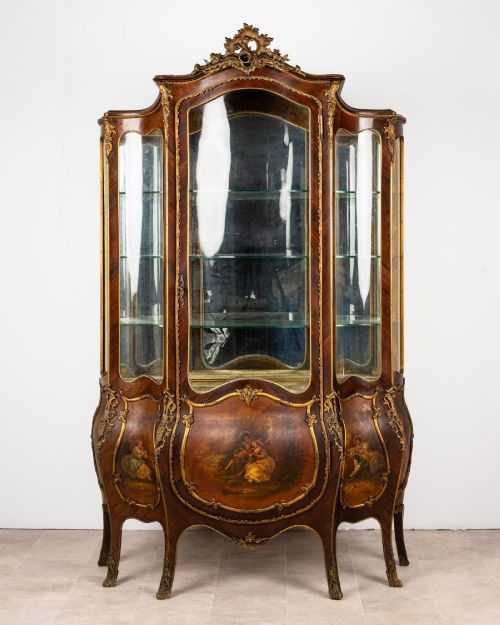
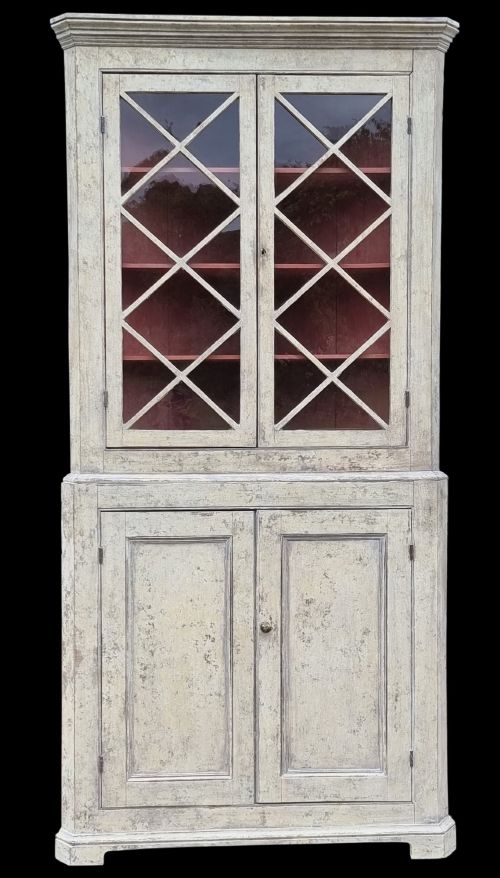
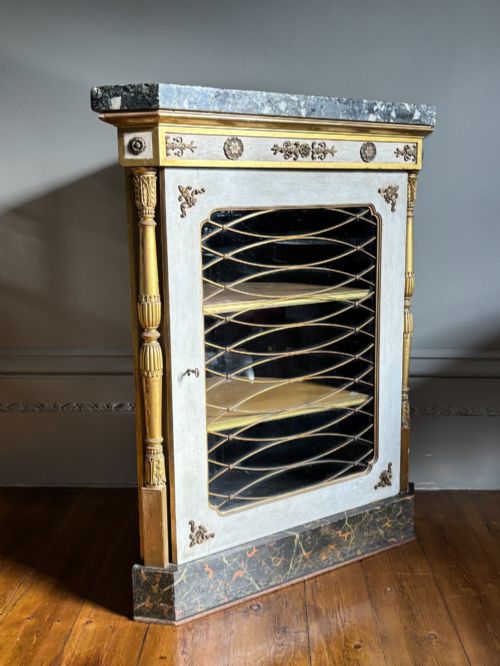
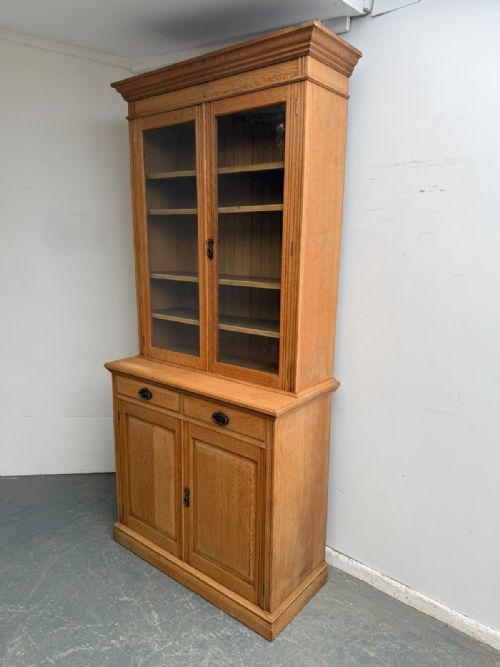
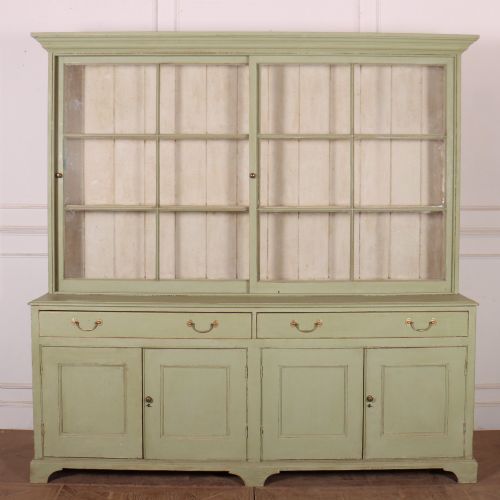
A painted glazed cabinet functions primarily to showcase porcelain, books or curiosities behind transparent panes while keeping dust at bay. When exploring this selection, buyers frequently encounter freestanding display vitrines, kitchen dressers, corner cupboards and tall bookcases.
The objects span multiple centuries, originating from English country workshops, Scottish domestic spaces, Swedish farmhouses and French provincial ateliers. Pieces range from modest pine wall cupboards to large breakfront satinwood furniture decorated with delicate motifs.
Victorian and Edwardian examples dominate the selection, though earlier pieces from the eighteenth century appear alongside twentieth-century variations. Formats vary from narrow single-door cabinets to expansive multi-door bookcases and two-part kitchen dressers.
How They Were Made
Constructed predominantly from solid pine, mahogany or satinwood carcasses, these cabinets rely on traditional joinery techniques such as dovetailed drawers and panelled framing. Glazing bars hold individual glass panes in place, sometimes taking intricate astral or arched geometric forms.
Surfaces feature applied paint finishes, ranging from scumble glazes and distressed rustic layers to refined hand-painted neoclassical decorations and Vernis Martin techniques. Brass handles, iron hinges, ormolu mounts and gilt bronze details complete the hardware and ornamentation.
Painted Glazed Cabinet Retail Price Guide 2026
Typical asking prices for painted glazed cabinet among the pieces listed under this phrase on Sellingantiques today, from the lower quarter to the upper quarter. They describe what is for sale here now, not the wider market.
Some nineteenth-century housekeepers kept their prized reserves safely locked behind glass while pretending the key had simply vanished.
What Varies in Quality
The distinction between tiers rests upon the choice of timber and the execution of the decorative scheme. Finer examples utilise expensive timbers like satinwood and mahogany, featuring hand-painted panels and precise ormolu mounts rather than basic pine.
Integrity of the original painted surface dictates much of the appeal, where untouched period decoration holds greater interest than later repainting. Proportions, the delicacy of the glazing bars and the presence of original glass panes further differentiate standard utilitarian cupboards from bespoke salon vitrines.
Cantagalli·Hampton & Sons
The Painted Glazed Cabinet Glossary
- Astral glazing
- Glass panes divided by slender wooden bars into geometric patterns. These delicate dividers are typical of refined eighteenth and nineteenth-century display furniture.
- Vernis Martin
- A simulated Japanese lacquer technique developed in eighteenth-century France. Artisans applied multiple layers of translucent varnish to achieve a rich, glossy decorative surface.
- Vitrine
- A glass-fronted display cabinet designed specifically for showing porcelain, objets d'art or collections. They often feature glazed sides to maximise interior light.
- Breakfront
- A piece of furniture whose central section projects forward from the flanking wings. This architectural arrangement creates depth and visual rhythm.
- Scumble paint
- A decorative glazing method where a translucent top layer of paint is manipulated with tools to create textured grain or mottled effects.
Painted Glazed Cabinet: Frequently Asked Questions
What were painted glazed cabinets used for?
These cabinets served primarily to store and display household valuables, such as fine ceramics, books, glassware and linens. Placing items behind glass protected them from soot and dust while allowing guests to admire them.
In domestic settings, they transitioned between formal reception rooms, libraries and country kitchens. Smaller wall-mounted versions kept everyday items accessible yet secure.
How do I style a painted cabinet at home?
Pair the cabinet with neutral walls to let the painted finish and decorative motifs stand out. Use the interior shelves to display collections of ceramics or books with complementary colour schemes.
Ensure the room receives balanced light to highlight the glass panes and any internal paintwork. Keep surrounding furniture simple to avoid competing with the architectural lines of the piece.
How do I tell Victorian cabinets apart from Edwardian ones?
Victorian cabinets often feature heavier proportions, darker varnishes or denser painted pine finishes. They lean towards robust utility or ornate revival styles like French Rococo.
Edwardian pieces generally exhibit lighter satinwood construction, tapered legs and more delicate neoclassical hand-painted panels. The overall aesthetic shifts from heavy presence to refined elegance.
Are painted finishes on these cabinets original?
Many pieces retain their original painted decoration, scumble glazes or hand-painted panels applied during manufacture. Others have been repainted or waxed over the decades during household updates.
Examining the wear patterns, underlying timber and paint adhesion helps determine whether the finish dates to the period of construction or represents later work.