





Green Kitchen Dresser
A green kitchen dresser brings enduring utility and painted character to a room, offering practical storage through open shelves, cupboards, and deep bases.
Green Kitchen Dresser
A green kitchen dresser provides substantial storage through fitted cupboards, serving tables, and plate racks designed for daily domestic use. These sturdy utility furniture pieces originate primarily from the eighteenth and nineteenth centuries, spanning eras from the Georgian period through the Victorian and Edwardian decades. Buyers encounter diverse regional expressions, including English country house pieces, French provincial designs, and alpine folk art variants.
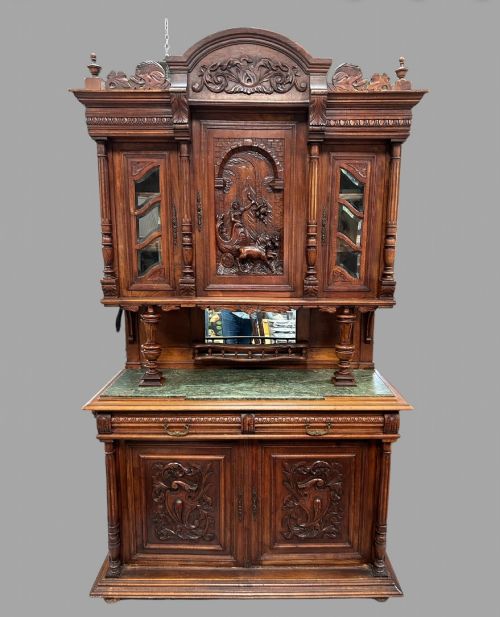
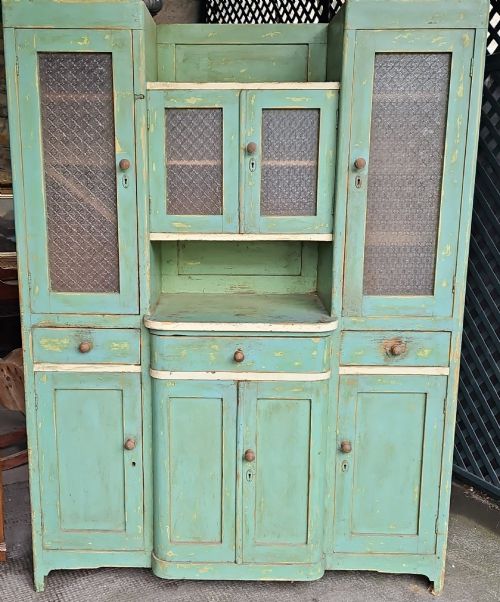
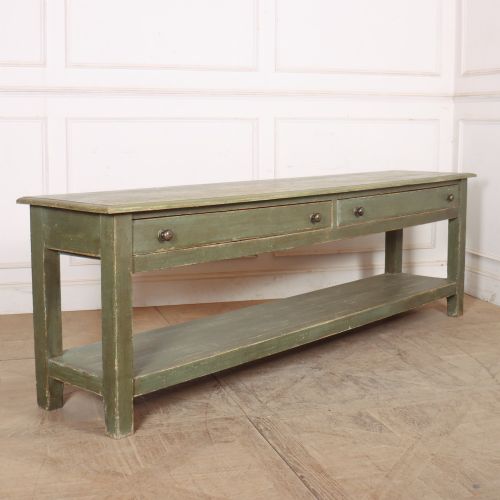
The green kitchen dresser most commonly met on this page is constructed from pine or oak, featuring painted surfaces in various muted or lime tones. Forms range from large potboard serving tables and dresser bases to glazed cupboards and housekeepers cupboards. These functional items reflect the practical domestic requirements of past rural and provincial households.
How they were made
Makers built these pieces using traditional timber construction methods, predominantly employing solid pine, oak, and walnut. Boards were joined with pegged mortise and tenon joints, whilst drawers often feature hand-cut dovetails that demonstrate the joiner's competency.
Surfaces were traditionally treated with layers of paint or left as bare wood, frequently finished with brass or metal hardware. Many surviving examples retain original painted finishes or early decorative layers applied over pine and wood carcases.
The listings span the eighteenth and nineteenth centuries, featuring pine, oak, and painted wood across English, French, and Alpine styles.
What varies in quality
The distinction between standard utility pieces and finer examples rests upon the integrity of the original timber and the preservation of authentic painted surfaces. Pieces retaining undisturbed early paintwork and original brass or metal hardware command greater interest from buyers.
Structural robustness also defines the range, with superior items displaying clean joinery, balanced proportions, and integrated potboards or carved details such as green man motifs. Original backboards, unaltered shelving tiers, and intact glazing further distinguish the construction standards.
The Green Kitchen Dresser Glossary
- Potboard
- A lower open shelf built into the base of a dresser, originally designed for storing heavy pots and pans. This platform sits just above the floor, supported by the legs of the dresser base.
- Dresser base
- The lower section of a kitchen dresser, functioning as a standalone sideboard or serving table with cupboards and drawers. It lacks the upper plate rack superstructure.
- Housekeepers cupboard
- A large tall storage cabinet traditionally used for linens, dry goods, and provisions in country houses. These enclosed cupboards often feature multiple panelled doors.
- Folk art
- Decorative or utilitarian objects made within a regional tradition by self-taught makers or local craftsmen. These pieces frequently incorporate distinctive hand-painted or carved motifs unique to their local culture.
Green Kitchen Dresser: Frequently Asked Questions
Where were green kitchen dressers used?
These utility pieces served primarily in domestic kitchens, sculleries, and dining rooms of houses, farms, and provincial dwellings.
They provided essential storage for utilitarian crockery, food stores, and household linens used daily by the household.
How do I clean a painted dresser?
Dust surfaces regularly with a soft, dry cloth to prevent the accumulation of dirt on painted wood.
Avoid harsh chemical cleaning agents or excessive moisture, which can damage historic paint finishes and dry timber surfaces.
Are these dressers made of solid wood?
Traditional pieces are constructed entirely from solid timbers such as pine, oak, or walnut rather than modern manufactured boards.
Joinery methods typically include pegged joints and hand-cut dovetails on drawer construction.
How do I date an antique dresser?
Dating relies upon examining construction traits, tool marks, timber types, and the style of hardware or decorative carvings.
Eighteenth-century examples often exhibit hand-sawn boards and pegged joinery, whereas Victorian and Edwardian pieces show machine-sawn components and different fastening methods.