

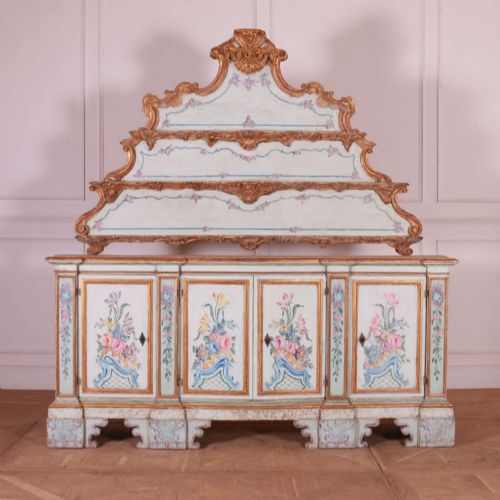
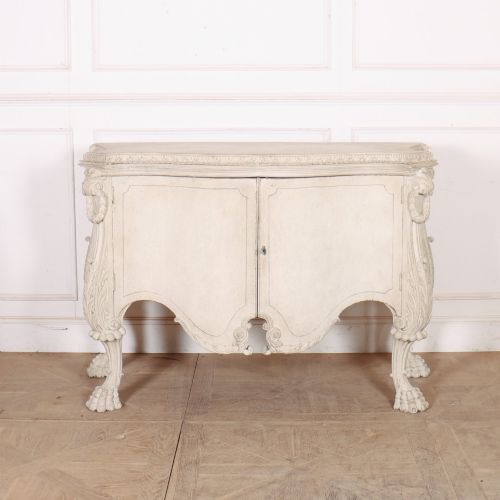
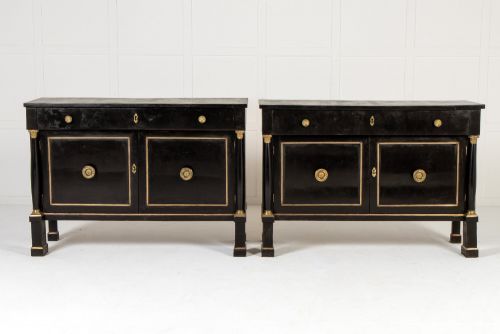
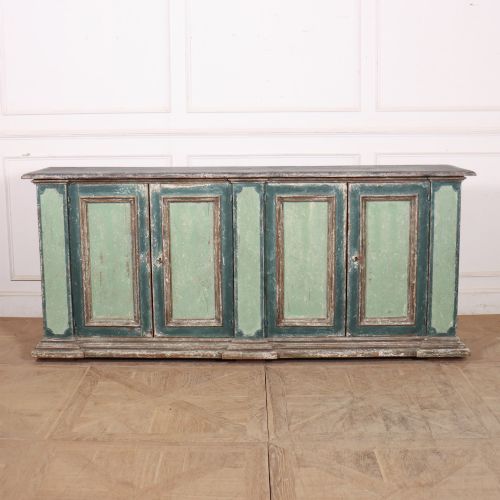
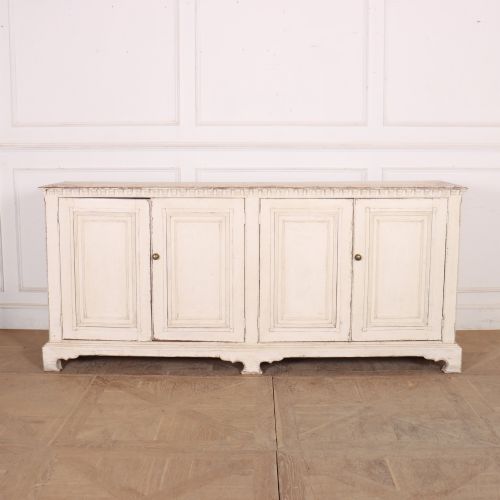


Antique Italian Sideboard
An antique italian sideboard brings immediate gravity to a room through heavy walnut timber, painted finishes, and generous proportions.
Antique Italian Sideboard
The antique italian sideboard category encompasses case pieces primarily built in walnut, alongside painted wood surfaces and marble tops. These items span periods from the seventeenth century through to the mid-twentieth century, with eighteenth-century examples appearing frequently alongside nineteenth-century iterations.
Makers and workshops constructed these forms to serve practical storage functions in dining rooms, halls, and living spaces. Common configurations on this page include commodes, enfilades, side cabinets, and buffets featuring serpentine fronts, bombé shapes, and demi-lune profiles.
Quality and Execution
Distinctions in quality rest on the precision of the cabinet maker's joinery and the depth of carved detail across walnut surfaces. Master craftspeople achieved fluid serpentine and bombé curves that maintained structural balance without distortion.
The refinement of original painted finishes or applied marquetry dictates the tier of the piece. Superior examples display sophisticated proportion and integration of specialised stone or gilt elements rather than repetitive ornamentation.
Antique Italian Sideboard Retail Price Guide 2026
Typical asking prices for italian sideboard among the pieces listed under this phrase on Sellingantiques today, from the lower quarter to the upper quarter. They describe what is for sale here now, not the wider market.
Some nineteenth-century cabinets hide their contents behind such severe ebonised surfaces that opening a door feels like unlocking a monastic archive.
Pietro Ferrario
The Antique Italian Sideboard Glossary
- Commode
- A low chest of drawers or cabinet designed for domestic storage. These pieces frequently feature shaped fronts and marble tops.
- Enfilade
- A long suite of cabinets or a long sideboard designed to stand along a principal wall. The form offers extensive surface and interior capacity.
- Pietra dura
- An artistic technique using cut and fitted, highly polished coloured stones to create geometric or figurative images. Craftsmen inlaid these panels directly into cabinet doors and drawer fronts.
- Serpentine
- A furniture front profile characterised by a concave centre flanked by two convex ends, or the reverse. This contour requires skilled shaping of solid timber.
- Bombe
- A swollen or bulging outward curve on the vertical sides of a chest or cabinet. The silhouette demands advanced woodworking capability.
Antique Italian Sideboard: Frequently Asked Questions
Where should an antique italian sideboard go?
These pieces suit dining rooms, grand hallways, or living areas where substantial storage and a strong visual anchor are required. Their generous proportions demand adequate wall space to sit comfortably without crowding adjacent furniture.
Pairing a walnut or painted buffet with neutral walls allows the carved details, marble tops, or painted panels to remain the focal point of the interior.
How do I care for marble top sideboards?
Marble surfaces require gentle cleaning with warm water and a soft cloth to avoid scratching the polished stone. Acidic liquids like wine or citrus juice should be wiped away immediately to prevent staining.
Applying a specialist stone wax periodically helps protect the marble from moisture and everyday wear while preserving its natural lustre.
What is the difference between a commode and a buffet?
A commode typically functions as a low chest of drawers with fitted compartments, frequently topped with marble. Buffets and enfilades generally offer cupboard storage behind doors, designed specifically for serving dining provisions.
Both forms share similar eighteenth and nineteenth-century Italian origins, yet serve distinct functional roles within a home.
How can I identify eighteenth-century walnut pieces?
Eighteenth-century walnut displays deep grain patterns, hand-cut joinery marks, and patination developed over centuries of handling. Carved elements on these pieces are executed entirely by hand rather than with mechanical routers.
Examining the interior timbers and drawer construction reveals the hand tools utilised by period craftsmen during assembly.