
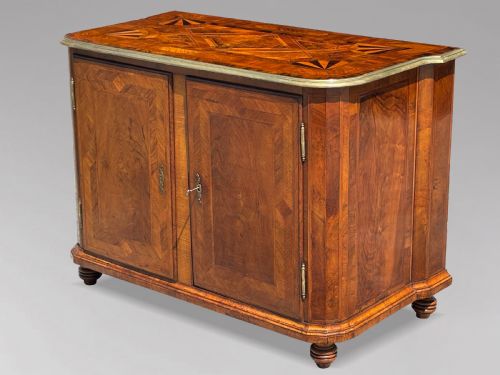
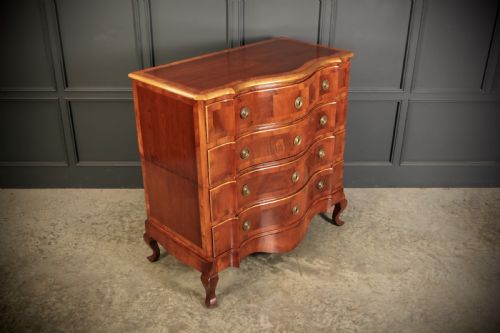


Continental Walnut Sideboard
A continental walnut sideboard brings heavy timber and regional carved flourish straight into a dining room.
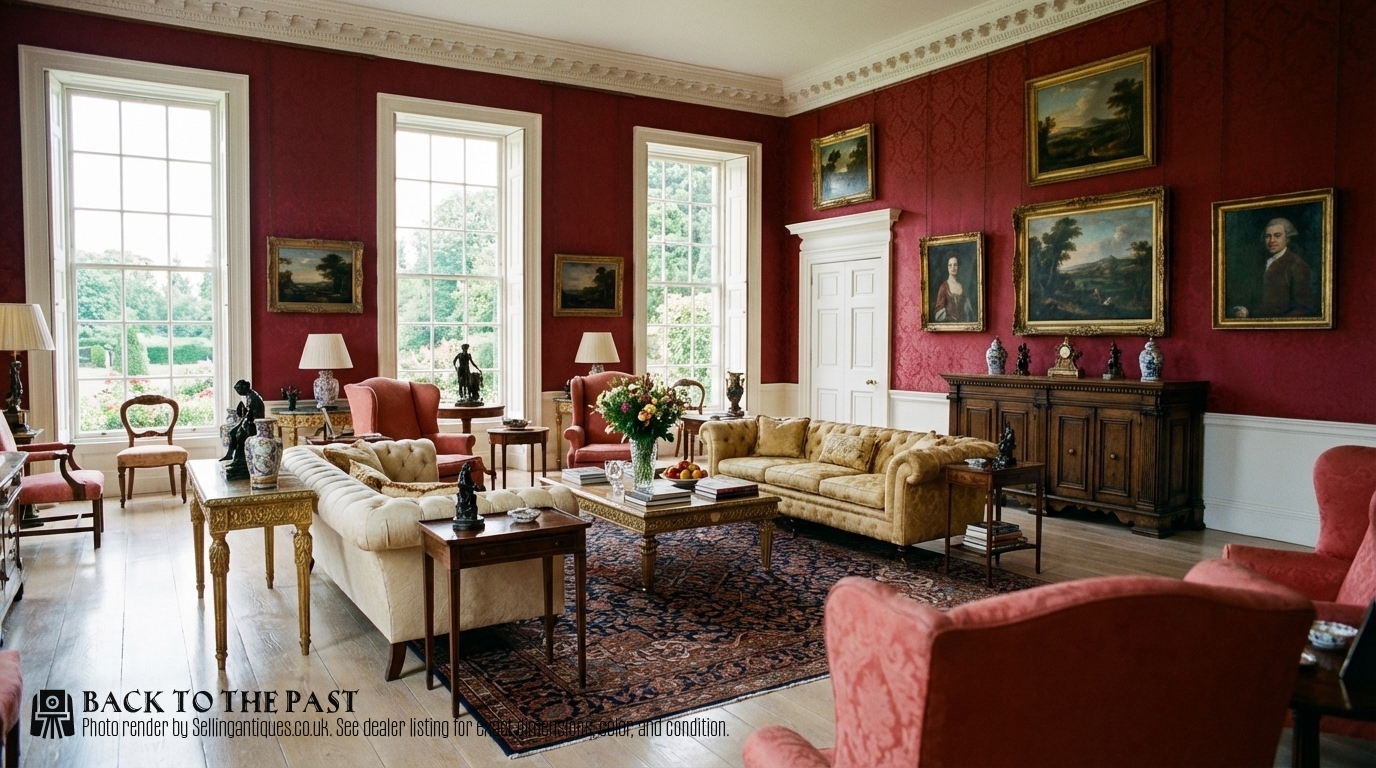
Continental Walnut Sideboard
A continental walnut sideboard represents large storage furniture imported from European mainland workshops, encompassing forms listed across this page as commodes, credenzas, and cabinets. These pieces anchor a room with dense dark wood and commanding proportions.
Most examples found here date from the eighteenth century, though later nineteenth-century revival and early twentieth-century interpretations also appear regularly. Italian origins dominate the selection, bringing distinctive regional shaping and deep grain patterns to the surface.
Makers utilised alternative designations such as serpentine chests and breakfront bookcases for pieces fulfilling the exact same functional role in historic European interiors. Buyers select them for monumental presence and rich natural colour.
How they were made
Carpenters built these carcasses primarily from solid walnut and burr walnut, often applying fruitwood inlay, floral marquetry, or geometric parquetry across the exterior surfaces. Iron and brass hardware provided structural reinforcement and operational fastenings.
Many elite examples feature heavy Carrara marble tops fitted directly onto the timber base, requiring precise stone masonry alongside traditional joinery. Ormolu mounts and detailed carved elements further embellished select grand commissions.
Some nineteenth-century cabinets hide secret compartments behind intricately carved fruitwood inlay, designed for safekeeping family silver.
What varies in quality
The sophistication of the timber selection dictates much of the visual hierarchy, distinguishing plain grain boards from intensely figured burr walnut surfaces and intricate marquetry. Master carvers achieved deep, crisp relief work that lesser workshops merely sketched out.
Structural integrity depends upon the original execution of complex forms like bombe curves and serpentine fronts, where poor alignment exposes hasty construction. Integration of quality marble tops and cast ormolu mounts elevates the standing of an individual piece.
The Continental Walnut Sideboard Glossary
- Bombe
- A swelling, outward-curved furniture shape that bulges on the sides and front. This profile demands advanced woodworking skill to construct from solid timber.
- Serpentine
- A furniture front featuring a wavy line with a convex centre flanked by concave curves. It creates dynamic movement across the face of a cabinet.
- Parquetry
- Geometric wood inlay patterns assembled from small veneer tiles. Artisans arranged contrasting timbers to form precise tiled floors or geometric motifs.
- Ormolu
- Gilded bronze mounts applied to furniture for decorative effect. The technique involves treating metal with gold amalgam.
- Credenza
- A sideboard or buffet cabinet used historically for storing and serving food. Italian examples often display monumental proportions and heavy carving.
Continental Walnut Sideboard: Frequently Asked Questions
What is a continental walnut sideboard?
A continental walnut sideboard is a large storage furniture piece originating from mainland European workshops, constructed primarily from walnut timber. These items frequently manifest as commodes, credenzas, and cabinets.
They provide substantial storage capacity while serving as decorative focal points within dining rooms and grand hallways.
How do I style a walnut sideboard?
Styling these pieces involves balancing their dark timber tones and heavy proportions with simpler surrounding decor. Placing a mirror or large artwork above creates a balanced vertical axis.
Because many feature marble tops or intricate marquetry, keeping surface objects minimal lets the wood grain and craftsmanship remain visible.
Where were these sideboards made?
The pieces originate from various European mainland regions, with Italian workshops producing a significant portion of the selection found here. Austrian and Maltese regional centres also contributed distinct regional interpretations.
Workshops in these areas utilised local timber stocks and traditional domestic joinery methods characteristic of their specific eras.
How do I identify an eighteenth-century piece?
Eighteenth-century pieces typically display hand-cut joinery, aged patina, and traditional timber preparation methods visible upon close inspection. Carved details and hardware configurations match the specific stylistic periods of that century.
Proportions and construction techniques align with historical cabinetmaking standards rather than later industrial replication.