

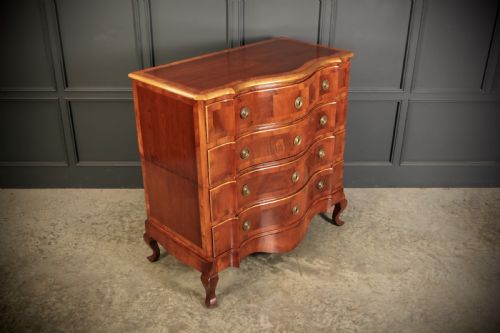


Large Walnut Sideboard
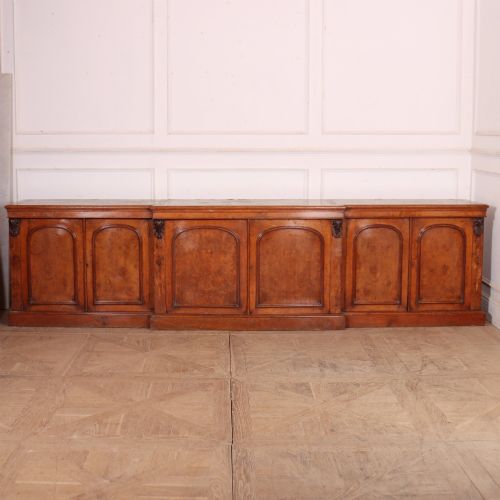
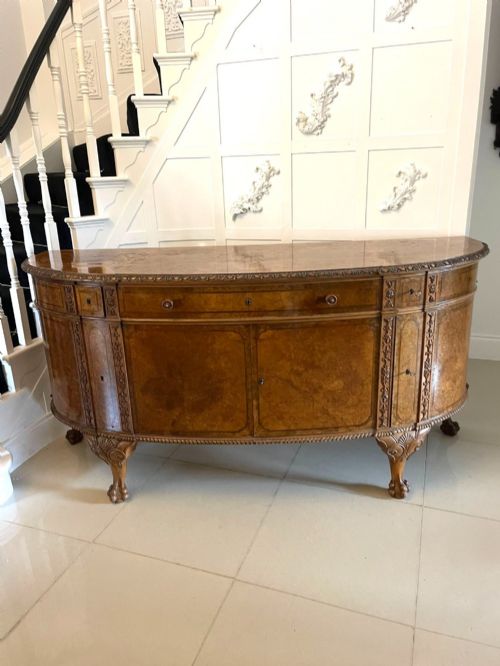
A large walnut sideboard anchors a dining room or hall with deep timber tones, generous surface space, and substantial storage.
Large Walnut Sideboard
A large walnut sideboard serves as a commanding storage piece for dining rooms, reception halls, and principal living spaces. These pieces emerge from the eighteenth century onward, traversing Victorian, Edwardian, and Art Deco periods with distinct regional interpretations.
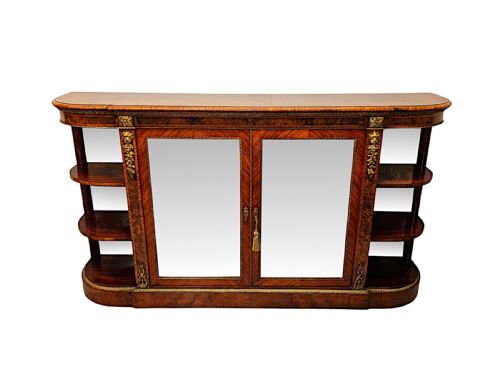
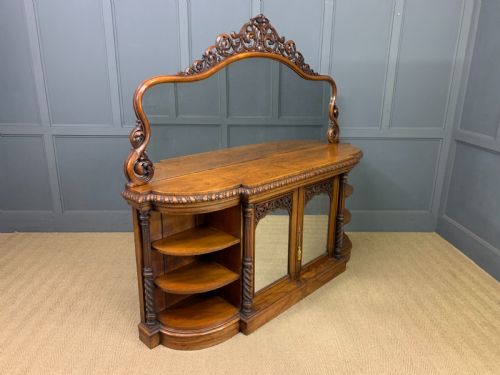
The form encompasses credenzas, chiffoniers, breakfront bookcases, and fitted servers, often featuring burr walnut veneers, mirror backs, and marble tops. English, French, and Italian examples dominate the selection, showing carved ornamentation, marquetry, and ormolu mounts.
How they were made
Cabinet makers utilised solid walnut and decorative burr walnut veneers applied to stable secondary timbers, enhancing the grain patterns across wide drawer fronts and cupboard doors. Marquetry, boxwood inlay, and mother-of-pearl details punctuate the dark timber surfaces.
Mounts in cast ormolu, brass fixtures, and inset marble tops integrate with carved wooden frames and glass panels, reflecting French Chateau, Louis XV, and Renaissance Revival design influences.
Large Walnut Sideboard Retail Price Guide 2026
Typical asking prices for large walnut sideboard among the pieces listed under this phrase on Sellingantiques today, from the lower quarter to the upper quarter. They describe what is for sale here now, not the wider market.
Several sideboards include fitted spaces for billiards accessories and pool cues alongside traditional cutlery drawers.
What varies in quality
The excellence of a large walnut sideboard depends upon the selection of burr veneers, the precision of the boxwood inlay or floral marquetry, and the crispness of the hand carving. Maker attribution and firm stamps elevate the status of individual pieces.
The integration of heavy materials such as marble tops and ormolu mounts alongside secondary details like mirror backs and original brass hardware determines the visual and structural standard of the construction.
Gillows·Maple & Co·Whytock & Reid·Shapland & Petter
The Large Walnut Sideboard Glossary
- Burr walnut
- A figured wood veneer taken from the growth excrescences of the walnut tree. It produces intricate, swirling grain patterns highly prized for cabinet fronts.
- Ormolu
- Gilded bronze ornamentation applied to furniture mounts, feet, and borders. It appears frequently on nineteenth-century pieces influenced by French design.
- Credenza
- A low dining or reception room cabinet enclosed by doors, often featuring glass panels or mirror backs. The form frequently incorporates elaborate marquetry and ormolu.
- Marquetry
- Decorative patterns formed by the insertion of different coloured wood veneers into a solid ground. Floral and geometric designs typify nineteenth-century examples.
- Breakfront
- A cabinet construction where the central section projects forward from the flanking wings. This architectural arrangement creates depth and shadow on large sideboards.
Large Walnut Sideboard: Frequently Asked Questions
Where do you put a large walnut sideboard?
These substantial pieces fit best in spacious dining rooms, grand hallways, or large reception rooms where they provide surface area and storage.
Ensure adequate wall space and clearance for opening doors and drawers before placement.
How do I clean walnut furniture?
Dust the timber regularly with a soft, dry cloth to prevent particulate buildup on the carved surfaces and veneers.
Apply quality beeswax periodically to nourish the walnut grain and maintain the natural lustre of the finish.
What is the difference between a sideboard and a credenza?
Sideboards generally offer a combination of drawers and cupboards designed specifically for dining room service and storage.
Credenzas often feature enclosed central cupboards flanked by glass display sections, frequently incorporating decorative mounts and mirror backs.
How do I identify Victorian walnut furniture?
Victorian pieces in walnut frequently display rich burr veneers, floral marquetry, and ormolu mounts influenced by revived historical styles.
Look for heavy construction, mirror backs on chiffoniers, and stamp marks from nineteenth-century cabinet makers.
Can I use a sideboard in a hallway?
Large sideboards and servers function effectively in wide entrance halls to provide surface space for lamps and decorative objects.
Measure the depth of the piece carefully to ensure it leaves sufficient clearance for foot traffic.