
Antique Inlaid Buffet
An antique inlaid buffet brings polished mahogany, satinwood, and burr walnut into a dining space with the quiet authority of Georgian and Victorian craftsmanship.
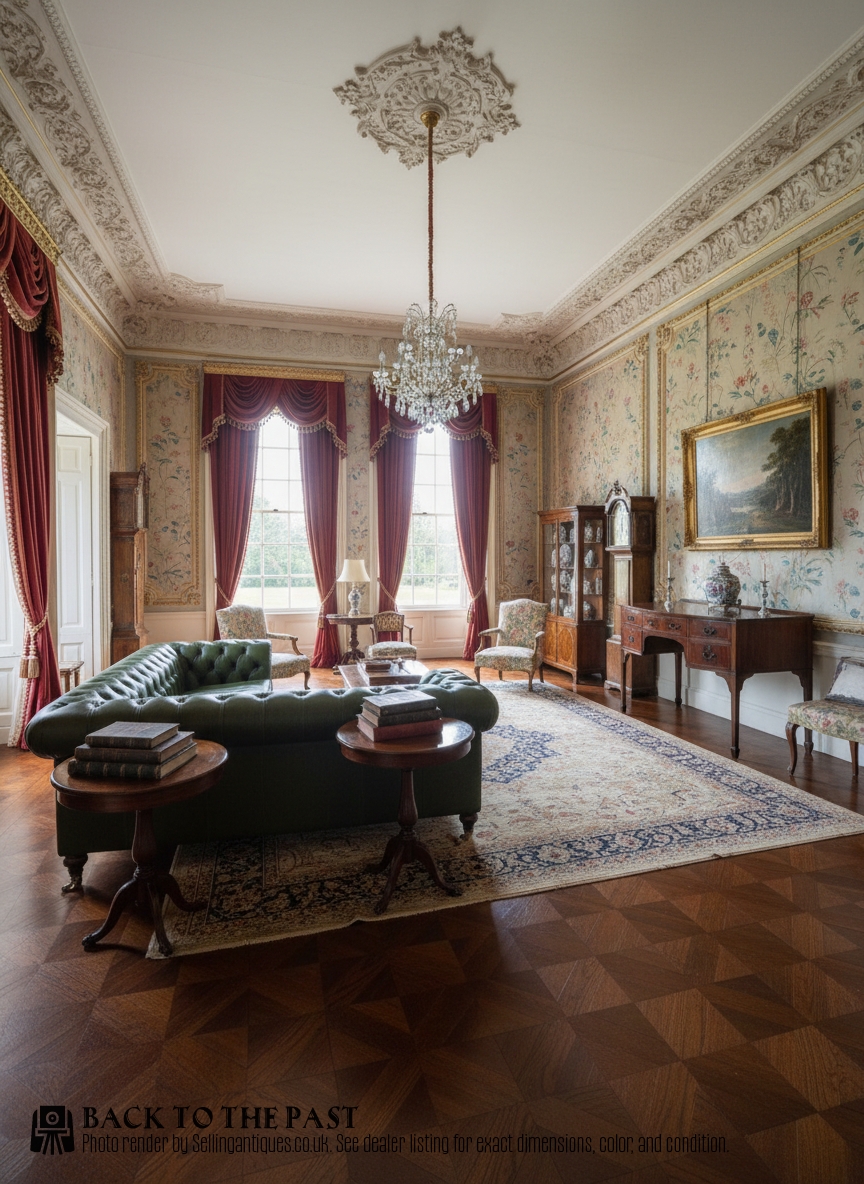
Antique Inlaid Buffet
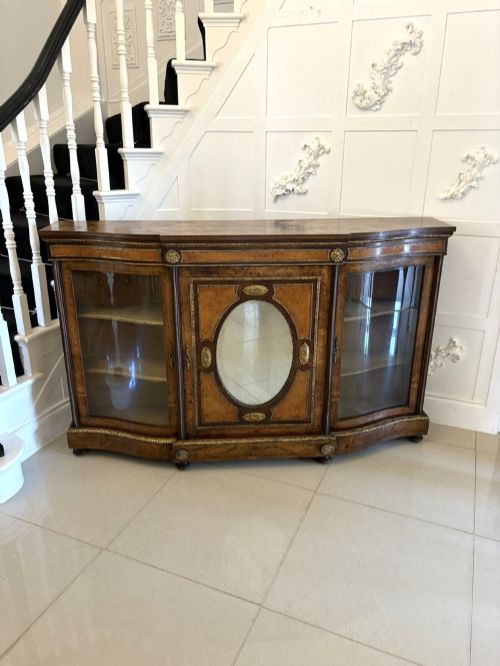
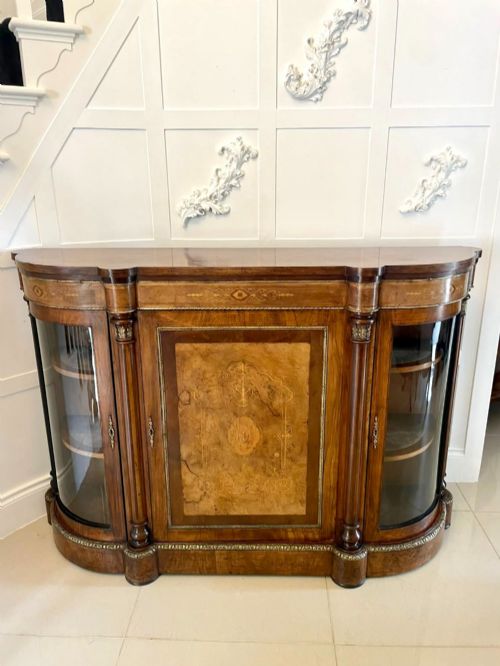
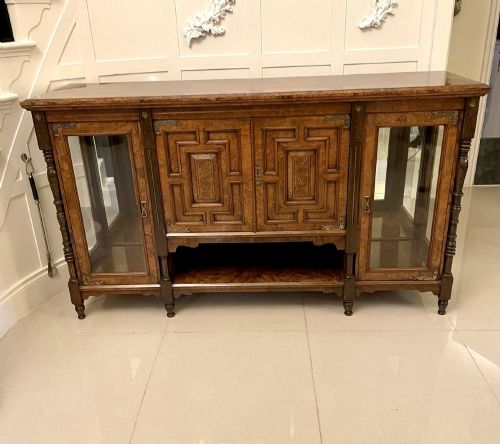
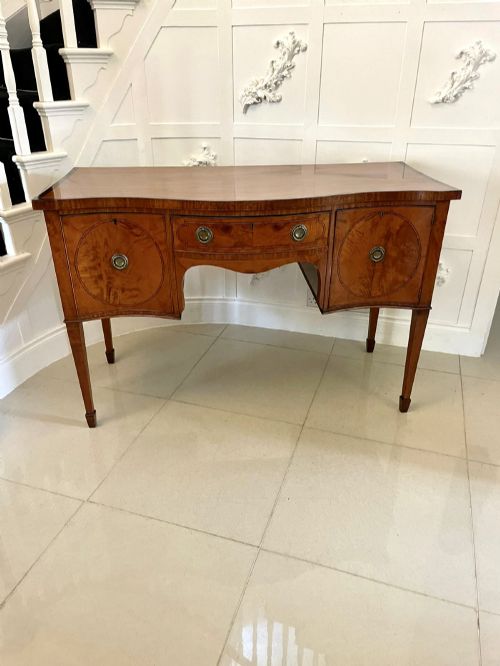
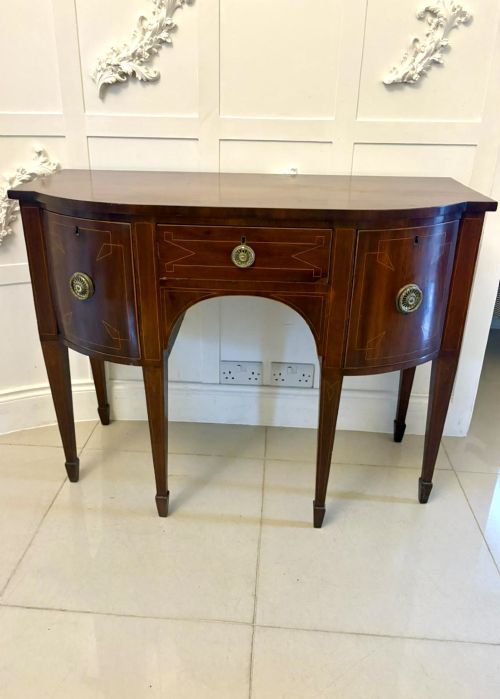
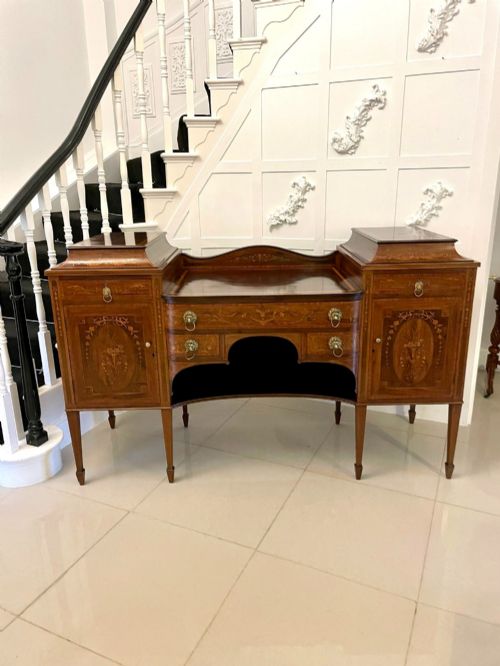
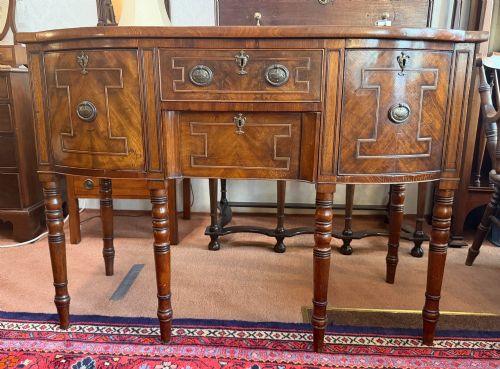
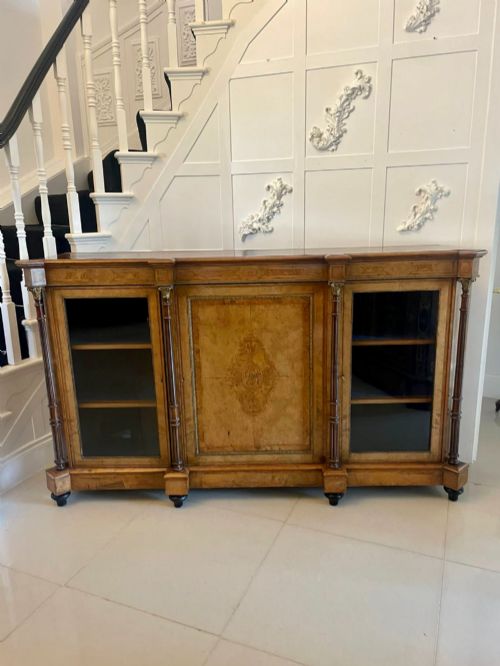
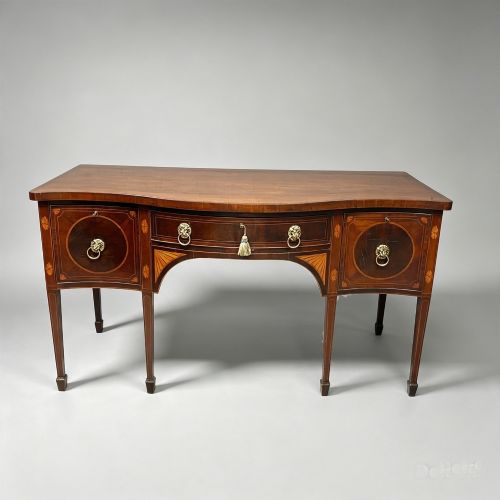
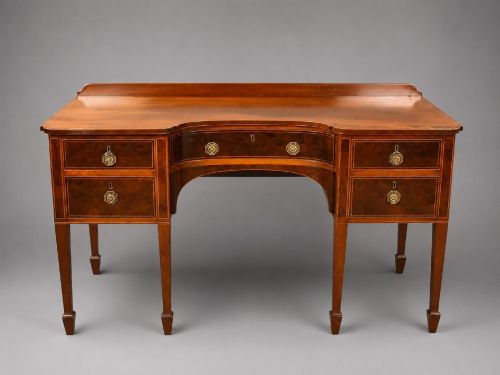
When you search for an antique inlaid buffet, you are looking at substantial dining room and drawing room storage pieces, most commonly encountered as sideboards, credenzas, and server cabinets. These forms span the Georgian, Regency, and Victorian periods, alongside later Edwardian and Sheraton Revival interpretations.
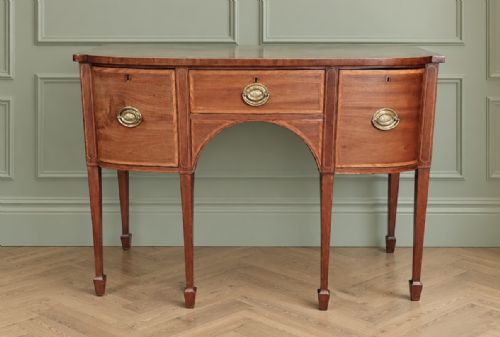
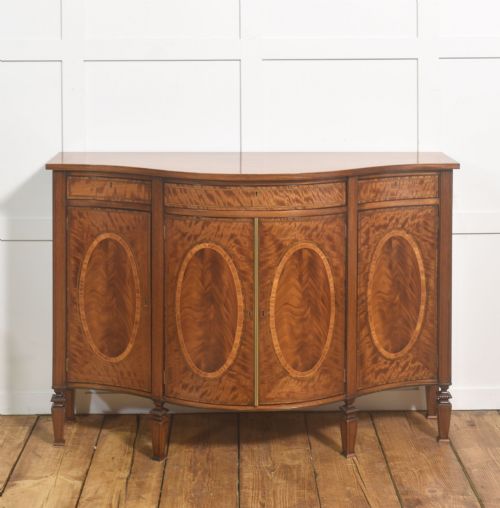
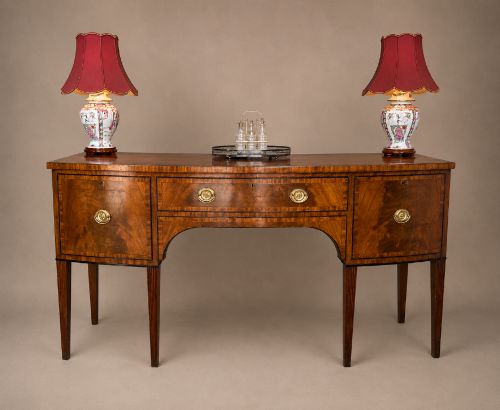
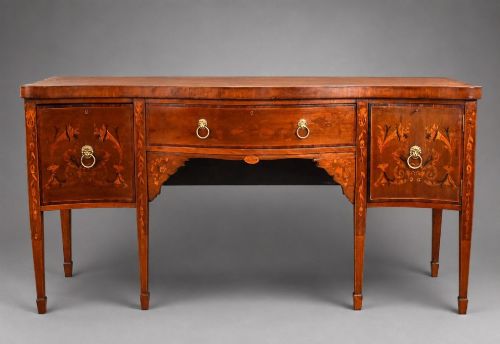
The pieces on this page lean heavily towards mahogany and burr walnut carcases, punctuated by lighter satinwood and boxwood inlay. Sideboards with bow-front and serpentine shapes dominate the selections, offering deep cupboards and drawers designed for dining service.
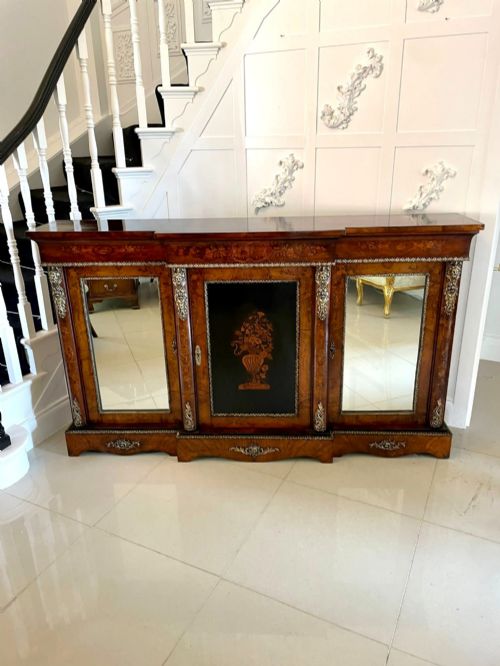
Originating as practical furniture for country houses and town residences alike, these items range from austere George III designs to ornate Victorian credenzas mounted in ormolu and glass. Buyers choose them to anchor a room with period proportion and figured timber surfaces.
Materials and construction
Cabinet makers built these pieces using solid timbers and sound framing, applying veneers of figured mahogany, burr walnut, and satinwood to primary display surfaces. Flame mahogany and crossbanded borders provided natural pattern, while boxwood and contrasting woods formed fine linear stringing.
Marquetry panels introduced pictorial floral and scroll motifs set directly into the timber ground. Brass handles, escutcheons, and occasional ormolu mounts completed the hardware, secured to structural carcases of oak and secondary woods.
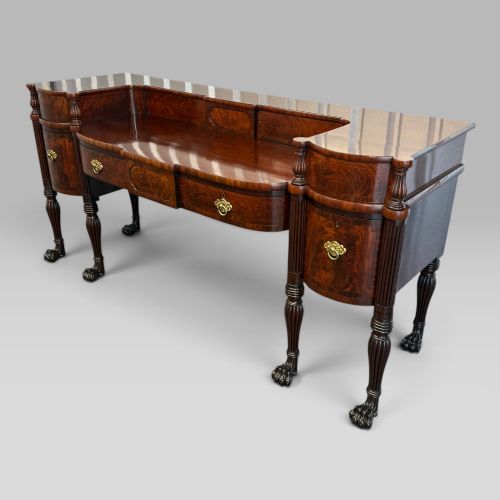
Some Scottish pieces arrived with stage-backs designed to display silver platters safely away from the carving knives.
Judging quality and execution
Quality rests upon the selection of timber veneers and the precision of the inlay work. Finer examples display continuous grain across drawer fronts and tightly fitted botanical marquetry that sits completely flush with the surrounding wood.
Structural integrity and original mounts also separate standard production from superior pieces. Well-executed serpentine and bow-front carcases require expert bending and jointing of timber, whilst secondary woods inside drawers indicate the care taken by the workshop.
Hewetsons London
The Antique Inlaid Buffet Glossary
- Serpentine
- A front shape curving outward in the centre and inward at the sides. This fluid profile demands precise carpentry and creates dynamic shadow lines across the timber.
- Marquetry
- The art of fitting decorative veneer pieces into a shaped ground to form pictures or patterns. It transforms plain timber surfaces into detailed floral or geometric displays.
- Credenza
- A low cabinet, often enclosed by glass or panelled doors, originally used for displaying plate. Victorian examples frequently incorporate ormolu mounts and Burr Walnut.
- Crossbanding
- A border of veneer laid around the main panel with the grain running at right angles to the centre. This frames the timber face and adds visual depth to drawer fronts.
- Ormolu
- Gilt-bronze applied as decorative mounts on furniture. It provides bright metallic contrast against dark walnut and mahogany carcases.
Antique Inlaid Buffet: Frequently Asked Questions
What is the difference between a buffet and a sideboard?
Buffets and sideboards both serve dining rooms for storage and serving, though traditional buffets often emphasise lower cupboard space whilst sideboards incorporate a mix of central drawers and flanking cupboards.
Over centuries, the terminology merged as makers adapted forms for changing domestic habits, resulting in overlapping titles across Georgian and Victorian inventories.
How do I spot a Sheraton Revival piece?
Sheraton Revival pieces date from the late nineteenth and early twentieth centuries, mimicking the lighter satinwood and painted or inlaid neoclassical motifs popular in the late eighteenth century.
They use cleaner structural lines, often combining mahogany with satinwood crossbanding and delicate bellflower or urn inlay patterns.
Where should I place a credenza sideboard?
Credenza sideboards suit dining rooms, wide hallways, or living spaces where low profiles allow surface display without blocking sightlines.
Their enclosed cabinets provide practical storage for glassware, linens, or books while keeping the decorated timber top clear for lamps or decorative objects.
How do I care for inlaid wood surfaces?
Inlaid wood requires stable indoor humidity away from direct sunlight and heat sources to prevent timber shrinkage and veneer lifting.
Regular dusting with a dry, soft cloth and occasional application of traditional beeswax maintain the natural lustre of the polish without harming the delicate boxwood stringing.