


Long Wooden Sideboard
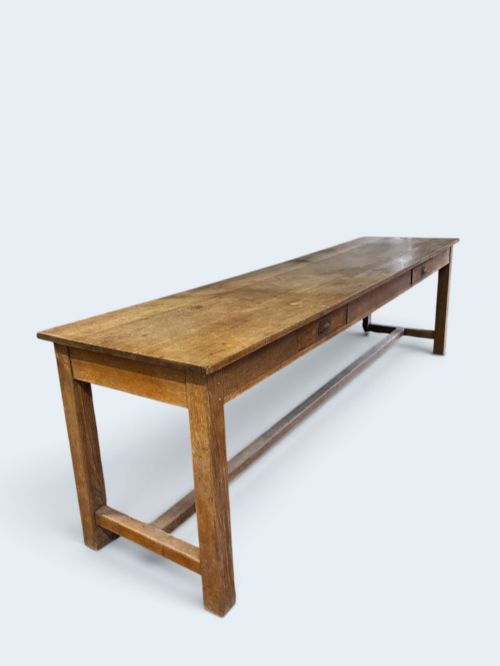
A long wooden sideboard provides generous surface space and storage, bringing historic character and practical function to a hallway or dining room.
Long Wooden Sideboard
When you search for a long wooden sideboard, you encounter an array of utilitarian and formal furniture designed for serving, display, and storage. The selection spans robust serving tables, console tables, and dresser bases originating from English, French, and Italian traditions.
Period examples stretch across the eighteenth, nineteenth, and early twentieth centuries, encompassing Georgian craftsmanship alongside rustic farmhouse and provincial styles. Their extended proportions suit large dining spaces, hallways, and kitchens requiring significant surface area.
Materials and construction
Construction relies heavily on solid timbers such as oak and pine, frequently chosen for their structural strength and availability during the eighteenth and nineteenth centuries. Carpenters utilised traditional joinery methods to build heavy frames capable of supporting daily commercial or domestic workloads.
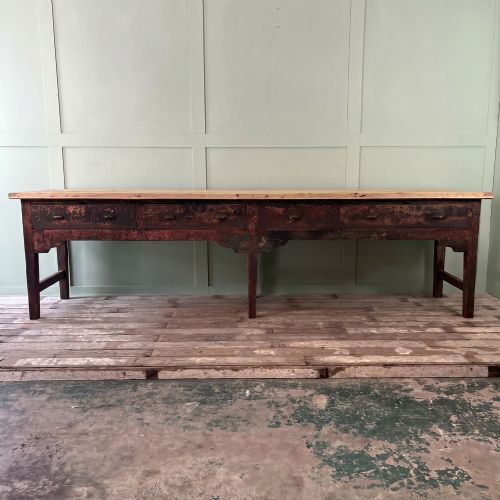
Surface treatments range from natural waxed or bleached oak to layered paint finishes that often show decades of patination. Iron and brass hardware, including handles and drawer pulls, complete the construction of these utilitarian and formal pieces.
Several items retain ink stains and worn paint from their former lives as working drapers counters and provincial shop banks.
Distinguishing quality and character
Quality in these extended timber pieces rests upon the integrity of the original construction, the thickness of the solid wood used for the top, and the retention of authentic surface finishes. Pieces featuring untouched patination and original hardware hold greater interest than those with extensive modern restorations.
The sophistication of the joinery and the proportions of the base, such as integrated potboards or banks of drawers, separate standard workshop output from exceptional country house or provincial examples.
The Long Wooden Sideboard Glossary
- Potboard
- A lower open shelf built into a serving table or dresser base for storing pots and heavy vessels. This practical feature defines many English and French country pieces.
- Dresser base
- The lower section of a kitchen dresser featuring cupboards or drawers without the upper plate rack. These sturdy items function effectively as sideboards.
- Enfilade
- A long sideboard or cabinet featuring a succession of doors in a single line, common in continental European interiors. They offer substantial interior storage.
- Console table
- A table designed to stand against a wall, sometimes secured to it, often featuring slender proportions suitable for hallways and reception rooms.
Long Wooden Sideboard: Frequently Asked Questions
Where should I place a long wooden sideboard?
These extended pieces suit large hallways, dining rooms, and spacious kitchens where their length balances wide wall spaces.
They function well for serving food during gatherings or for displaying lamps, ceramics, and books in living areas.
How do I care for a painted wooden sideboard?
Dust regularly with a soft, dry cloth and avoid harsh chemical cleaners that can damage historic painted surfaces.
Keep the timber away from direct heat sources and strong sunlight to prevent the wood and paint from drying out.
What is the difference between a console and a sideboard?
Consoles are typically shallower tables designed primarily for display against a wall, whereas sideboards offer deeper surfaces and enclosed storage for dining utensils.
Many nineteenth-century provincial tables combine elements of both forms, serving multiple domestic functions.
How can I tell the period of a wooden sideboard?
Examine the construction methods, tool marks on the timber, and the style of the hardware or paint finish.
Georgian pieces display more formal architectural details, while nineteenth-century country examples tend to show heavier utilitarian construction.